
The United States is a land of incredible diversity, stretching from the sunny beaches of Florida to the rugged peaks of the Rocky Mountains. However, two of its most unique and geographically distinct states, Alaska and Hawaii, stand apart not only in their breathtaking landscapes but also in their relatively recent integration into the Union. These two states, added in quick succession in the mid-20th century, transformed the map of the United States forever, expanding its reach into the Arctic and across the Pacific Ocean. Their journeys to statehood are fascinating tales of geopolitics, cultural identity, and the relentless pursuit of self-determination, each paving the way for unprecedented tourism and travel opportunities that continue to captivate millions today.
For travel enthusiasts, history buffs, and those simply curious about the evolution of the United States, understanding when and why Alaska and Hawaii became states offers a deeper appreciation for their distinct character and their significant contributions to the nation. Beyond the dates, their statehood ushered in new eras for local economies, primarily through enhanced accessibility for visitors, increased investment in infrastructure, and the global promotion of their unparalleled natural and cultural landmarks. From luxury resorts nestled on pristine beaches to rustic wilderness lodges deep in the tundra, the options for accommodation and experiences exploded, cementing their status as premier destinations.
The Last Frontier: Alaska’s Journey to Statehood
Alaska, often referred to as “The Last Frontier,” is a land of superlatives. It is the largest state by land area, boasts some of the wildest and most pristine landscapes on Earth, and is home to North America’s highest peak. Its path to becoming the 49th state was a long and arduous one, marked by periods of neglect, strategic importance, and a determined local population.
A Land of Rugged Beauty and Strategic Importance
The history of Alaska as a part of the United States begins not with expansion, but with a purchase. Originally a Russian colony, the vast territory was sold to the United States in 1867 for a mere $7.2 million, an acquisition famously derided as “Seward’s Folly” or “Seward’s Icebox,” after then-Secretary of State William H. Seward. Despite initial skepticism, the purchase proved to be a monumental bargain. The late 19th century saw the Klondike Gold Rush transform parts of Alaska, attracting prospectors and settlers and proving the region’s immense resource wealth. This influx of population, though temporary for many, laid the groundwork for future development.
Throughout the first half of the 20th century, Alaska’s strategic importance grew, particularly during World War II and the subsequent Cold War. Its proximity to Asia and the Soviet Union made it a critical military outpost, leading to significant federal investment in infrastructure and a growing civilian population. Veterans who had served in Alaska often returned, drawn by its unique lifestyle and opportunities. This growth spurred a stronger desire among residents for greater political representation and self-governance, feeling that as a territory, their voices were not adequately heard in Washington, D.C.
The Path to the 49th State
The movement for statehood gained significant momentum after World War II. Alaskans argued that territorial status limited their economic development, denied them full voting rights, and made them vulnerable to federal control without adequate representation. Leading figures like Ernest Gruening, the territorial governor, championed the cause, pushing tirelessly for congressional action. A constitutional convention was held in Fairbanks in 1955-1956, producing a progressive state constitution that served as a model for others.
Despite strong local support, the statehood bill faced resistance in the United States Congress. Concerns included Alaska’s sparse population, vast distances, and potential economic dependence on the federal government. However, the relentless advocacy of Alaskans, combined with growing national sentiment for self-determination for territories, eventually turned the tide.
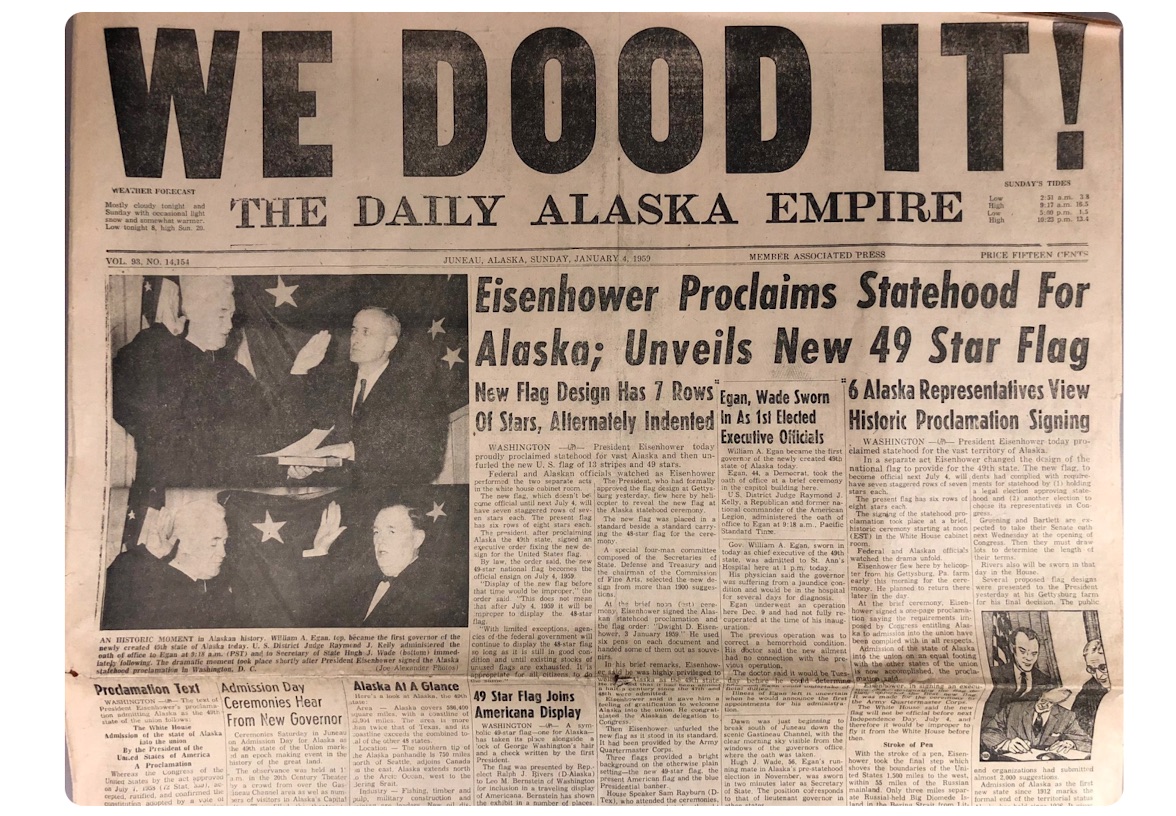
Finally, after years of debate and lobbying, the Alaska Statehood Act was passed by Congress and signed into law by President Dwight D. Eisenhower on July 7, 1958. The official proclamation making Alaska the 49th state came on January 3, 1959. This historic moment marked a new chapter for the vast northern territory, granting its residents full citizenship rights and control over their own destiny.
Alaska Today: An Unforgettable Travel Destination
Statehood significantly boosted Alaska’s appeal as a travel destination. With the stability and infrastructure that came with becoming a state, tourism flourished. Today, Alaska is synonymous with unparalleled adventure travel, offering experiences that range from luxury cruises along the Inside Passage to rugged wilderness expeditions.
Key Attractions and Experiences:
- Denali National Park and Preserve: Home to Denali, North America’s highest peak, this park offers incredible wildlife viewing (grizzly bears, moose, caribou, wolves) and majestic landscapes. Accommodation options range from campgrounds to exclusive backcountry lodges.
- Glacier Viewing: Iconic glaciers like the Mendenhall Glacier near Juneau and those in Prince William Sound are accessible by boat tours, helicopter, or even hiking.
- Wildlife Safaris: Whether it’s bear viewing in Katmai National Park, whale watching in Seward, or seeing bald eagles in Homer, Alaska is a paradise for nature photographers and animal lovers.
- Northern Lights: During the colder months, especially around Fairbanks, the aurora borealis paints the night sky in spectacular fashion, a bucket-list experience for many. Special tours and remote cabins offer prime viewing.
Accommodation and Lifestyle:
From bustling city hotels in Anchorage to remote wilderness resorts accessible only by floatplane, Alaska caters to diverse travel styles. Luxury travelers can find boutique hotels and upscale lodges offering gourmet dining and guided excursions. Budget-conscious travelers can opt for hostels, guesthouses, or camping within national parks. Many visitors choose a mix of experiences, combining a city stay with a multi-day cruise or an extended stay in a cozy cabin. The unique lifestyle embraced by Alaskans, a blend of rugged independence and community spirit, also draws travelers interested in local culture and traditions, especially those of the Alaska Native peoples.
Paradise Found: Hawaii’s Road to the Union
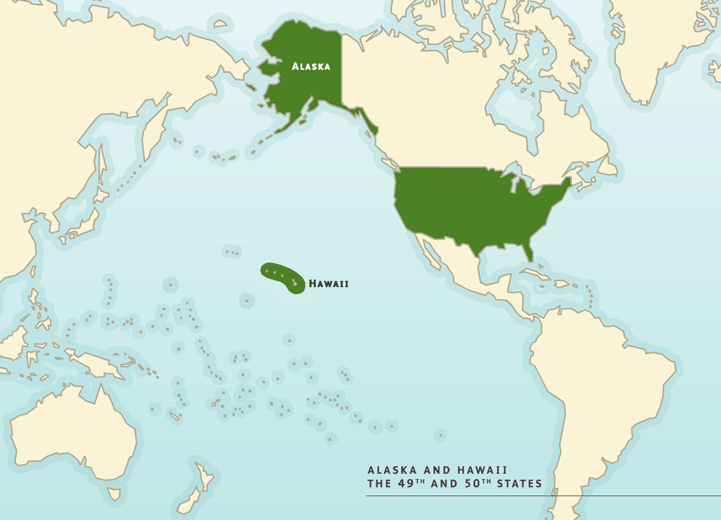
Thousands of miles southwest of Alaska, another distant territory was also campaigning for statehood. The Hawaiian Islands, a volcanic archipelago renowned for its stunning beaches, lush rainforests, and vibrant culture, had a history far different from Alaska’s, but shared a similar desire for full integration into the United States.
A Rich History of Monarchy and Cultural Heritage
The story of Hawaii is deeply rooted in its Polynesian heritage and a proud history as an independent kingdom. For centuries, the islands were ruled by a sophisticated monarchy, developing a unique culture, language, and social structure. European and American contact began in the late 18th century, gradually leading to increased foreign influence. By the late 19th century, American businessmen and sugar planters had gained considerable economic and political power.
In a controversial move, the Kingdom of Hawaii was overthrown in 1893 by a group of American and European businessmen, with the backing of the United States military. After a brief period as a republic, Hawaii was annexed by the United States in 1898, becoming a U.S. territory. This period was marked by significant social and economic changes, including the growth of the sugar and pineapple industries, and a multi-ethnic population influx.
Despite its territorial status, Hawaii became an increasingly vital strategic outpost for the United States in the Pacific. The attack on Pearl Harbor on December 7, 1941, thrust Hawaii onto the world stage and solidified its unbreakable link to American national security. The bravery and loyalty of Hawaiian residents during World War II played a crucial role in dispelling doubts about their readiness for statehood.
The Birth of the 50th State
The movement for Hawaiian statehood gained traction after World War II. Hawaiians felt that as a territory, they lacked full representation, were subject to federal laws without a vote, and suffered from economic disadvantages. Proponents argued that statehood would bring political equality, economic prosperity, and recognition of the islands’ unique multicultural identity.
Similar to Alaska, the statehood initiative faced opposition in Congress. Some concerns included Hawaii’s distance from the mainland, its multi-ethnic population (which some viewed with suspicion during a period of racial segregation on the mainland), and worries about its strategic implications in the Pacific. However, the compelling arguments of Hawaiian delegates, coupled with a national mood favoring the expansion of American democratic ideals, eventually overcame these obstacles.
Following the passage of the Alaska Statehood Act, momentum for Hawaii grew rapidly. The Hawaii Admission Act was passed by the United States Congress and signed by President Dwight D. Eisenhower in March 1959. A plebiscite was then held in Hawaii on June 27, 1959, where residents overwhelmingly voted in favor of statehood. Consequently, on August 21, 1959, President Eisenhower issued the proclamation, officially making Hawaii the 50th state of the United States.
Hawaii Today: A Tropical Dream for Every Traveler
Hawaii’s statehood propelled it into the global spotlight as a premier tropical destination. The ensuing decades saw an explosion in tourism, with airlines expanding routes and hotels and resorts blossoming across its main islands. Today, Hawaii offers a diverse range of travel experiences, blending adventure, relaxation, and cultural immersion.
Key Attractions and Experiences:
- Oahu: Home to Honolulu and the iconic Waikiki Beach, offering world-class surfing, dining, and shopping. Don’t miss the historical significance of Pearl Harbor National Memorial and the panoramic views from Diamond Head State Monument. The Polynesian Cultural Center provides a deep dive into Pacific Island cultures.
- Maui: Known for its stunning beaches, the scenic Hana Highway, and the majestic sunrise from Haleakala National Park. It’s a prime spot for whale watching during winter months.
- Kauai: “The Garden Isle,” famous for its dramatic Na Pali Coast, lush rainforests, and the impressive Waimea Canyon. Perfect for hiking, kayaking, and helicopter tours.
- Hawaii Island (The Big Island): Features diverse climates, active volcanoes at Hawaii Volcanoes National Park, black sand beaches, and world-renowned coffee farms in Kona.
Accommodation and Lifestyle:
Hawaii boasts an array of accommodation options, from opulent five-star resorts like the Four Seasons Resort Maui at Wailea or the Hilton Hawaiian Village Waikiki Beach Resort to charming boutique hotels, vacation rentals, and budget-friendly guesthouses. Whether you seek a luxurious spa retreat, a family-friendly resort with kids’ clubs, or a secluded villa for a romantic getaway, Hawaii has it all. The local culture, known as “Aloha Spirit,” emphasizes hospitality, respect, and a connection to nature, making every visit a memorable experience. Travelers can delve into local food, learn to surf, or simply relax on the beach, embracing the laid-back island lifestyle.
The Impact of Statehood on Travel and Tourism
The statehood of Alaska and Hawaii in 1959 was more than just a political milestone; it fundamentally reshaped the landscape of American travel and tourism. It opened up these two remote and previously less accessible territories to a broader range of visitors, transforming them into global icons for diverse travel lifestyles.
Opening Doors to New Adventures
Before statehood, both Alaska and Hawaii were perceived as distant, somewhat exotic territories. Statehood conferred legitimacy, stability, and an immediate sense of belonging to the national consciousness. This shift brought several direct benefits to the travel and tourism sectors:
- Improved Infrastructure: Statehood often led to increased federal funding and local investment in roads, airports, and port facilities. For Alaska, this meant better access to wilderness areas and coastal towns, facilitating the growth of cruise lines and road-based tours. For Hawaii, it meant expanded airports and better inter-island transport, accommodating the growing number of tourists.
- Easier Travel: For American citizens, traveling to a state is generally less complicated than traveling to a territory. The psychological barrier of “going abroad” was removed, encouraging more mainland Americans to explore these new additions to their country. Passport requirements, customs procedures, and currency exchanges were non-issues, simplifying the travel process.
- Economic Development: Statehood spurred economic growth, attracting investments in hotels, resorts, and tourism-related businesses. This created jobs for local residents and diversified the economies beyond traditional industries like fishing, logging, or agriculture.
- National Promotion: As states, Alaska and Hawaii gained more prominence in national marketing campaigns and travel guides, significantly boosting their visibility and appeal to a wider audience both domestically and internationally.

Preserving and Promoting Unique Lifestyles
Beyond the practical benefits, statehood also played a critical role in how Alaska and Hawaii could leverage their unique natural and cultural assets for tourism while simultaneously working towards their preservation.
- Environmental Protection: With statehood, local governments gained more control over land management, allowing them to establish state parks, implement conservation programs, and protect pristine wilderness areas and marine ecosystems that are now major tourist draws. For instance, the creation of Alaska State Parks and the protection of Hawaii’s coral reefs became more robust.
- Cultural Tourism: Statehood allowed both states to more effectively promote and preserve their distinct cultural heritages. In Hawaii, this meant a resurgence of Hawaiian language and traditional arts, which became integral to the tourism experience. In Alaska, it highlighted the rich traditions of the Alaska Native cultures, offering unique insights for visitors.
- Diverse Travel Lifestyles: The stable framework of statehood fostered an environment where a wide array of travel and accommodation options could flourish. For the adventurous, Alaska became the ultimate destination for heli-skiing, glacier trekking, and remote fishing charters, with specialized lodges and guides. For those seeking relaxation and luxury, Hawaii solidified its status as a top choice for destination weddings, honeymooners, and family vacations, complete with sprawling resorts offering every amenity imaginable. Budget travelers also found options, from camping under the aurora borealis to staying in hostels in Waikiki.
In conclusion, the decision to grant statehood to Alaska on January 3, 1959, and to Hawaii on August 21, 1959, was a pivotal moment in American history. It not only completed the political map of the United States but also unleashed the full potential of these extraordinary regions as world-class travel destinations. Both states continue to enchant visitors with their unique blend of natural wonders, rich history, and vibrant cultures, offering unforgettable experiences that cater to every type of traveler. From the rugged wilderness of the far north to the tropical paradise of the mid-Pacific, Alaska and Hawaii remain jewels in the American crown, inviting exploration and discovery year after year.
LifeOutOfTheBox is a participant in the Amazon Services LLC Associates Program, an affiliate advertising program designed to provide a means for sites to earn advertising fees by advertising and linking to Amazon.com. Amazon, the Amazon logo, AmazonSupply, and the AmazonSupply logo are trademarks of Amazon.com, Inc. or its affiliates. As an Amazon Associate we earn affiliate commissions from qualifying purchases.