
Embarking on a teaching career in the Golden State is an aspiration for many, promising not just a rewarding profession but also a vibrant California lifestyle. The state, renowned for its diverse landscapes, innovative spirit, and cultural richness, offers an unparalleled backdrop for educators. Whether you envision yourself shaping young minds in the bustling urban centers of Los Angeles or San Francisco, amidst the coastal charm of San Diego, or within the close-knit communities of its sprawling valleys and mountains, California presents a mosaic of opportunities. Beyond the classroom, becoming a teacher here opens doors to an incredible array of experiences, from exploring world-famous landmarks to indulging in unique tourism and travel adventures during school breaks. This guide will walk you through the essential steps to achieve your dream of teaching in California, highlighting how this career path integrates seamlessly with a life of discovery and enrichment.
Embarking on Your California Teaching Journey: An Overview
The journey to becoming a credentialed teacher in California is a structured process managed by the California Commission on Teacher Credentialing (CTC)). This regulatory body oversees all aspects of teacher preparation, credentialing, and professional practices in the state, ensuring that all educators meet rigorous standards. Understanding their requirements is the cornerstone of your path. The process generally involves obtaining a bachelor’s degree, completing an approved teacher preparation program, passing various examinations, demonstrating proficiency in the U.S. Constitution, and undergoing a thorough background check. While it may seem daunting at first glance, each step is designed to equip you with the knowledge, skills, and dispositions necessary to thrive in California’s diverse educational settings.
The Allure of California’s Classrooms
Teaching in California is more than just a job; it’s a lifestyle. The state’s commitment to education, coupled with its forward-thinking approach to pedagogy, creates dynamic and engaging learning environments. Educators here have the opportunity to serve a richly diverse student population, representing cultures and backgrounds from across the globe. This cultural tapestry enriches the classroom experience, fostering an environment of global awareness and mutual respect. Furthermore, California schools are often at the forefront of educational innovation, embracing technology, project-based learning, and social-emotional development.
Beyond the professional rewards, the geographical splendor of California offers an unparalleled quality of life. Imagine spending your weekends hiking in Yosemite National Park, surfing along the Pacific Coast, exploring the vineyards of Napa Valley, or soaking up the sun in Palm Springs. The state’s extensive network of national parks, beaches, and vibrant cities means that adventure is always within reach. Teachers in California benefit from competitive salaries and robust benefits packages, providing the financial stability to enjoy these myriad experiences. The prospect of blending a fulfilling career with a life of adventure and cultural immersion makes teaching in California an incredibly attractive proposition for educators worldwide.
Essential Steps to Credentialing
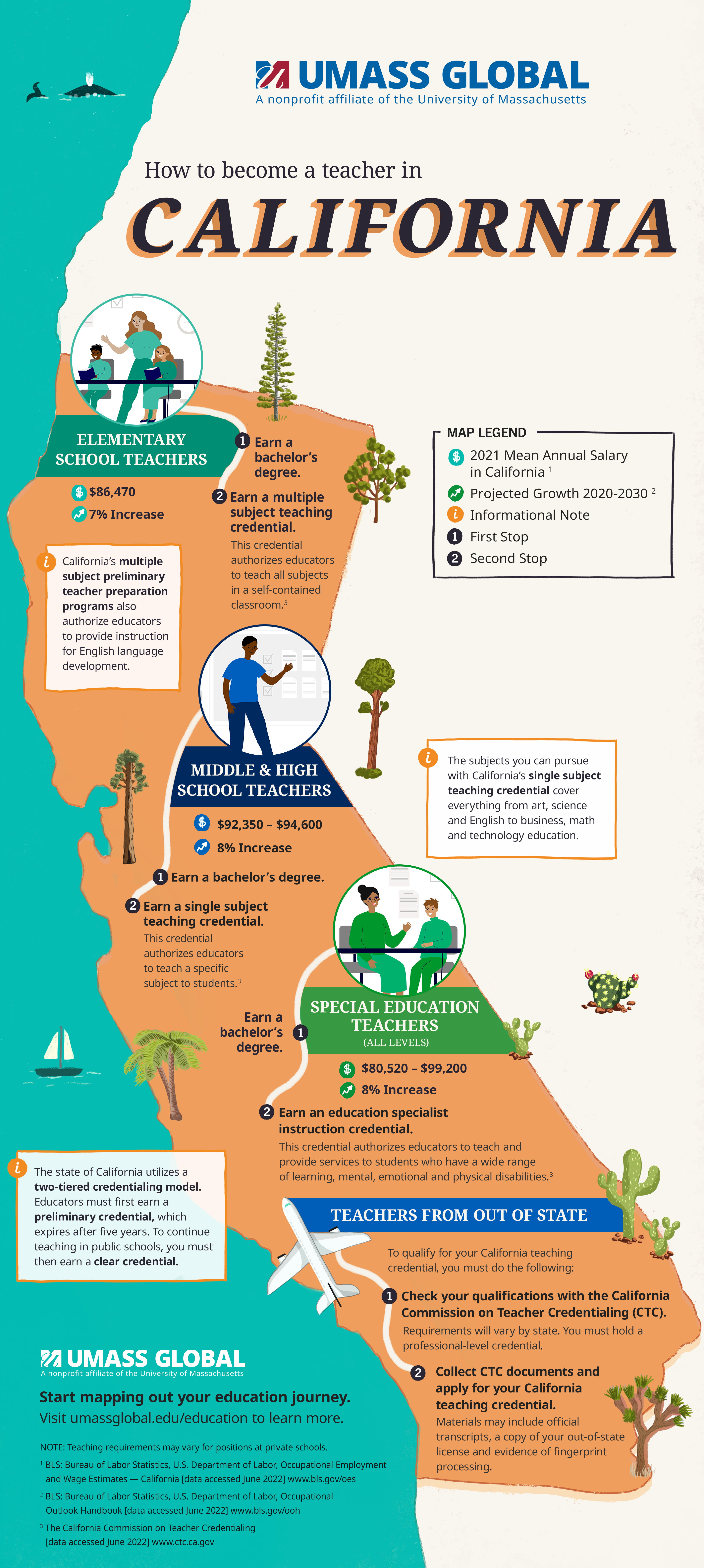
Navigating the specific requirements for a California teaching credential involves several key components, each designed to ensure you are well-prepared to lead a classroom. The CTC offers various credential types, primarily the Multiple Subject Credential for elementary school teaching, the Single Subject Credential for secondary school teaching (specializing in a particular subject like English, Math, or Science), and the Education Specialist Instruction Credential for special education. Your choice of credential will depend on your desired age group and subject area.
Foundational Requirements
The first and most fundamental requirement is a bachelor’s degree from a regionally accredited college or university. While the specific major isn’t always prescribed for a teaching credential, a strong academic background, particularly in the subject area you wish to teach for a Single Subject Credential, is highly beneficial. Many aspiring teachers opt for degrees in education, child development, or a core academic discipline. Along with your degree, you’ll need to demonstrate basic skills proficiency. This is typically achieved by passing the California Basic Educational Skills Test (CBEST), which assesses reading, writing, and mathematics skills essential for all educators. Alternatively, other options like specific coursework, SAT/ACT scores, or successful completion of an approved basic skills examination from another state may fulfill this requirement.
Another critical foundational element is demonstrating knowledge of the U.S. Constitution. This can be satisfied by completing a college-level course in the U.S. Constitution or by passing an examination administered by a regionally accredited college or university. This requirement underscores the importance of civics education for all California teachers. Finally, a crucial step for the safety of students is a thorough background check, which involves submitting your fingerprints via Live Scan for review by both the California Department of Justice and the FBI. This comprehensive screening ensures that only suitable individuals are entrusted with the responsibility of educating children.
Navigating Teacher Preparation Programs
Once you have your bachelor’s degree and have met the basic skills requirements, the next pivotal step is to complete an approved teacher preparation program. These programs are designed to provide you with the pedagogical knowledge, practical skills, and supervised teaching experience necessary to be an effective educator. California offers a variety of program types to suit different needs and life stages:
- Traditional University-Based Programs: These are typically graduate-level programs (often leading to a master’s degree) offered by public and private universities across the state. They combine academic coursework with extensive supervised student teaching placements. Examples include programs at institutions within the University of California (UC) and California State University (CSU) systems, as well as private universities. These programs often take one to two years to complete on a full-time basis.
- Internship Programs: For those who already have a bachelor’s degree and wish to enter the classroom more quickly, internship programs offer a unique pathway. Interns are hired by school districts as teachers of record while simultaneously completing their credential coursework and receiving mentorship. This “earn while you learn” model is highly appealing, especially for individuals making a career change or seeking practical experience from day one. These programs are rigorous, balancing full-time teaching responsibilities with academic demands.
- Alternative Programs: Some districts and non-profit organizations offer specialized pathways that cater to specific needs, such as teaching in high-need subjects or areas. These programs are also CTC-approved and lead to the same credential.
Choosing the right program involves considering your personal circumstances, financial situation, and preferred learning style. Many universities, especially in major cities like San Jose, Oakland, and Sacramento, offer both traditional and intern pathways, providing flexibility for aspiring educators. The experience gained during these programs, whether through student teaching or an internship, is invaluable, preparing you for the realities and rewards of the classroom.
Conquering California’s Standardized Exams
Beyond the CBEST, subject matter competence is a critical component of becoming a teacher in California. This is primarily demonstrated by passing the California Subject Examinations for Teachers (CSET). The specific CSET exams you need to take depend on the type of credential you are pursuing:
- Multiple Subject Credential: Candidates typically take the CSET Multiple Subjects exam, which is divided into three subtests covering a broad range of subjects including reading, language arts, history, social science, science, mathematics, visual and performing arts, physical education, and human development.
- Single Subject Credential: Candidates must pass the CSET exam specific to their teaching subject (e.g., CSET English, CSET Mathematics, CSET Science). These exams are designed to assess a deep understanding of the chosen discipline.
- Education Specialist Instruction Credential: Depending on the specialization (e.g., Mild/Moderate, Extensive Support Needs), candidates may need to pass specific CSET exams in addition to fulfilling other requirements.

It’s important to note that while passing the CSET is the most common way to demonstrate subject matter competence, some approved teacher preparation programs offer coursework that can waive the CSET requirement. It is crucial to check with your program coordinator for the most up-to-date information on subject matter competency options. Preparing for these exams requires dedicated study, often utilizing official study guides, practice tests, and review courses. Successfully passing these exams is a significant milestone, confirming your readiness to impart knowledge effectively to California’s students.
From Credential to Classroom: Securing Your Dream Job
With your teacher preparation program complete and all exams passed, you’re on the cusp of becoming a fully credentialed teacher. The final steps involve formally applying for your credential and then embarking on the exciting journey of finding your first teaching position in the diverse educational landscape of California.
The Credential Application Process
Once all requirements are met, you will apply for your teaching credential directly through the California Commission on Teacher Credentialing (CTC) website. This involves submitting an online application, providing documentation of your bachelor’s degree, successful completion of your teacher preparation program, passing exam scores, U.S. Constitution proficiency, and Live Scan results. The CTC processes thousands of applications annually, so it’s wise to apply well in advance of when you plan to start teaching. Patience during this administrative phase is key, but once approved, you will officially be a California credentialed teacher, ready to make a profound impact.
Discovering Teaching Opportunities Across the Golden State
California offers a vast and varied job market for teachers. School districts range from large urban systems to smaller, rural communities, each with its unique culture and needs. The primary platform for finding teaching positions is EDJOIN, an online job board used by virtually all public school districts in California. On EDJOIN, you can search for openings by credential type, subject area, geographic region, and school district.
Beyond EDJOIN, consider the following strategies:
- District Websites: Many districts post openings directly on their own websites, sometimes even before they appear on EDJOIN. Researching specific districts where you’d like to work is a proactive approach.
- Career Fairs: University career services departments and various educational organizations often host teacher job fairs. These events provide excellent opportunities to network with principals and human resources representatives from multiple districts.
- Networking: Leverage connections made during your teacher preparation program, student teaching placements, or through professional organizations. Word-of-mouth and personal recommendations can be incredibly powerful.
- Private Schools: Don’t limit your search to public schools. California has a vibrant private school sector, from independent schools to religious institutions, many of which offer competitive salaries and unique educational philosophies.
When applying, tailor your resume and cover letter to each specific position, highlighting how your skills and experiences align with the district’s mission and the school’s needs. Showcase your passion for education, your understanding of diverse learners, and your enthusiasm for contributing to the California educational community. The job search process can take time, but the abundance of opportunities and the rewarding nature of the profession make it a worthwhile endeavor. Finding the right school where you can thrive and connect with students is a significant step toward building a fulfilling teaching career.
Living the California Teacher Lifestyle
Becoming a teacher in California is not just about a career; it’s about embracing a distinctive lifestyle that merges professional fulfillment with personal enrichment. The unique geography and vibrant culture of the state provide an unparalleled backdrop for educators to live, learn, and explore.
Beyond the Classroom: Exploring California’s Riches
Imagine a career where your professional breaks align perfectly with opportunities to explore some of the world’s most iconic destinations. As a California teacher, your summers and holiday breaks become prime opportunities for travel and tourism within the state and beyond. Whether you crave the thrill of a rollercoaster at Disneyland, the serene beauty of Lake Tahoe in winter, or the dramatic coastline of Big Sur, California has it all.
During your time off, you could:
- Explore National Parks: California is home to more national parks than any other state, including Yosemite National Park, Joshua Tree National Park, and Redwood National Park. These natural landmarks offer unparalleled opportunities for hiking, camping, and connecting with nature.
- Discover Urban Adventures: From walking across the Golden Gate Bridge in San Francisco to experiencing the glamour of Hollywood in Los Angeles, California’s cities are brimming with attractions, diverse food scenes, and cultural events.
- Relax on the Coastline: With over 800 miles of coastline, there are endless beaches to enjoy. Spend a day at Santa Monica Pier, explore the artistic vibe of Venice Beach, or discover the hidden coves of Laguna Beach.
- Indulge in Wine Country: The rolling vineyards of Napa Valley and Sonoma offer exquisite wine-tasting experiences, often combined with gourmet dining and stunning scenery.
This blend of a demanding yet deeply rewarding profession with abundant opportunities for leisure and exploration defines the California teacher’s lifestyle.

Building a Life in the Golden State
Beyond attractions and travel, building a life in California also involves practical considerations like accommodation. Depending on your chosen region, options range from vibrant city apartments in San Francisco or Los Angeles, suburban homes in family-friendly communities, to more rural settings that offer peace and quiet. Many teachers, especially when relocating, start by researching initial hotel stays or short-term apartment rentals to get a feel for different neighborhoods before committing to long-term accommodation. Websites dedicated to booking and reviews are invaluable resources during this phase, offering insights into various districts and the types of housing available.
The communities in California are as diverse as its geography. From the tech-driven hub of Silicon Valley to the artistic enclaves of Laguna Beach, you can find a place that truly feels like home. Teachers often find themselves integrated into the fabric of their local communities, becoming respected figures and contributing to local culture. The opportunity to participate in local activities, enjoy the fresh produce from farmers’ markets, and engage with the vibrant local arts scene further enriches the California living experience.
Ultimately, becoming a teacher in California is an invitation to a career filled with purpose and a life brimming with possibility. It’s a journey that challenges, inspires, and rewards, all set against the breathtaking backdrop of one of the world’s most dynamic and beautiful states. If you’re ready to make a difference in the lives of students while embracing a life of adventure and discovery, the Golden State awaits.
LifeOutOfTheBox is a participant in the Amazon Services LLC Associates Program, an affiliate advertising program designed to provide a means for sites to earn advertising fees by advertising and linking to Amazon.com. Amazon, the Amazon logo, AmazonSupply, and the AmazonSupply logo are trademarks of Amazon.com, Inc. or its affiliates. As an Amazon Associate we earn affiliate commissions from qualifying purchases.