
The allure of the Golden State is undeniable. From its sun-drenched beaches and vibrant cities to its world-class universities, California represents a dream destination for many aspiring students. However, for those coming from outside its borders, the financial reality can be daunting. Out-of-state tuition fees for public universities in California can be substantially higher than in-state rates, often amounting to tens of thousands of dollars more per year. This significant cost difference makes becoming an in-state student a highly sought-after goal, transforming the pursuit of education into an exciting journey of relocation and integration into the unique California lifestyle.

Establishing residency in California for tuition purposes is not merely a matter of moving to the state. It involves a complex set of legal requirements designed to ensure that those benefiting from reduced tuition genuinely intend to make California their permanent home. For prospective students and their families, understanding these rules is crucial, as is the commitment to fulfilling them over a sustained period. This comprehensive guide will walk you through the essential steps, considerations, and strategies to navigate the path toward in-state tuition, helping you turn your California dream into an affordable reality. Beyond the bureaucratic hurdles, we’ll also explore how embracing the state’s culture, finding the right accommodation, and exploring its many wonders can become integral parts of proving your genuine intent to reside.
Understanding California Residency: More Than Just Moving In
The journey to becoming an in-state student in California begins with a clear understanding of what “residency” truly means in the eyes of the state’s higher education system. It’s a legal status that requires demonstrating not only physical presence but also a clear and unequivocal intent to make California your permanent home. This is a critical distinction, as simply residing in the state for a period while primarily maintaining ties to another state will not suffice.
The Golden Ticket: Why In-State Tuition Matters
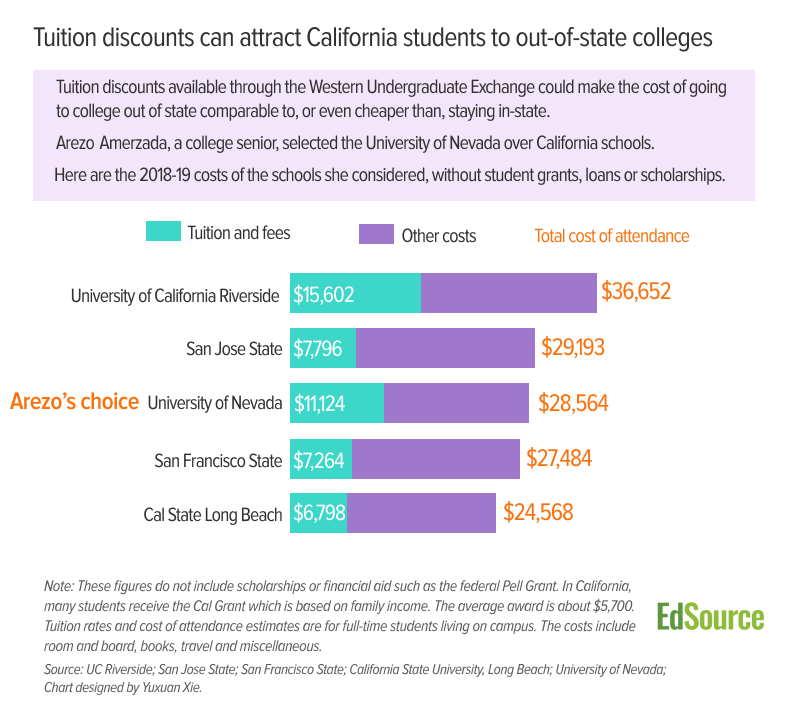
The financial incentive for achieving in-state residency cannot be overstated. The difference in tuition fees between in-state and out-of-state students at public institutions like the University of California (UC) and California State University (CSU) systems is substantial. For example, a student attending a University of California campus might pay approximately $14,000 for in-state tuition per year, while an out-of-state student could face costs upwards of $44,000 – a difference of around $30,000 annually. Over a four-year degree program, this amounts to a staggering $120,000 in savings, making the effort to establish residency a truly worthwhile investment in your future. This financial relief opens doors to broader educational opportunities and reduces the burden of student debt, allowing you to focus more on your studies and less on financial strain. It’s a key aspect of making your extended stay in California sustainable and enjoyable, fitting perfectly within a budget travel lifestyle while still experiencing the best of the state.
Basic Requirements: The 366-Day Rule
At the heart of California’s residency requirements is the “one year and one day” rule, commonly referred to as the 366-day rule. To be considered a resident for tuition purposes, an adult student must establish physical presence in California and demonstrate intent to make it their permanent home for at least one year and one day prior to the residence determination date of the term for which they seek in-state tuition. For most universities, this means that if you enroll for the fall semester, you must have established residency by the fall of the previous year. This timeline is non-negotiable and highlights the importance of planning and proactive action. It’s not simply a matter of counting days; throughout this period, your actions must consistently reflect your intent to reside permanently in California, severing ties with your previous state of residence.
Intent to Establish Residency: Proving Your California Dream
Proving intent is arguably the most challenging and crucial aspect of establishing residency. Universities require compelling evidence that you have abandoned your previous state of residence and fully committed to making California your permanent home. This goes beyond simply signing a lease; it involves a series of concrete steps that collectively paint a picture of genuine intent.
Key actions that demonstrate intent include:
- Obtaining a California Driver’s License or ID Card: This is often one of the first and most critical steps. It signifies your formal connection to the state’s legal and administrative systems. Ensure you apply for this promptly after your arrival.
- Registering to Vote in California: Participating in local and state elections is a strong indicator of civic engagement and a commitment to your new community.
- Opening Bank Accounts in California: Shifting your primary financial operations to California-based banks helps solidify your financial presence in the state.
- Filing California State Tax Returns: Even if you have minimal income, filing as a California resident (and not as a non-resident or part-year resident of another state) is a powerful piece of evidence.
- Registering Your Vehicle in California: If you own a car, promptly registering it with the California Department of Motor Vehicles (DMV) and obtaining California license plates is essential.
- Obtaining Employment in California: Full-time or part-time employment, even if it’s a student job, demonstrates your integration into the state’s economy and your reliance on California for your livelihood.
- Severing Ties with Your Previous State: This is as important as establishing ties with California. It includes selling property in your former state, cancelling memberships, changing your permanent mailing address, and updating all official documents to reflect your new California address.
- Establishing Your Permanent Home: This relates directly to the “Accommodation” aspect of our website. Your long-term rental agreement, utility bills in your name, and other documentation proving your continuous physical presence in a California residence are crucial.
The more evidence you can provide, the stronger your case for establishing intent. Each document acts as a piece of the puzzle, proving your genuine commitment to making California your home, not just a temporary stop for education.
Navigating the Golden State: Accommodation and Lifestyle for Prospective Residents
Moving to California involves more than just fulfilling legal requirements; it’s about immersing yourself in a new environment and adopting a new way of life. For students, this often means finding suitable accommodation and embracing the diverse cultural and recreational opportunities the state offers. These aspects of your life in California can also inadvertently contribute to demonstrating your intent to establish residency.
Finding Your Home Base: Accommodation Strategies
Securing accommodation is a fundamental step when planning your move to California. The “Accommodation” section of our website emphasizes the importance of long-term stays, and this is particularly relevant for prospective in-state students. Renting an apartment or house is generally preferred over short-term hotel stays or temporary arrangements, as a long-term lease in your name provides strong evidence of intent to reside permanently.
California offers a vast array of living environments, each with its own charm and cost implications. Major metropolitan areas like Los Angeles, San Francisco, and San Diego offer vibrant urban living but come with higher price tags. University towns such as Berkeley, Santa Barbara, and Irvine provide convenient access to campuses, often with a student-friendly atmosphere. Consider less central but still accessible cities like Oakland or Sacramento if budget is a primary concern.
When searching for accommodation, focus on:
- Long-Term Leases: Aim for a 12-month or longer rental agreement, as this is stronger evidence than month-to-month arrangements.
- Utilities in Your Name: Ensure all utility bills (electricity, water, internet) are under your name, linking you directly to the residence.
- Proof of Payment: Keep records of rent payments and utility bills as documented proof of your continuous residency.
Exploring various types of accommodation, from shared apartments and co-living spaces to traditional rentals, is part of the “Lifestyle” aspect of managing your move. Budgeting for housing is critical, as rent can be a significant expense. Researching different neighborhoods and commuting options is also essential, especially in sprawling cities like Los Angeles, to ensure your chosen home base is practical for your student life.
Embracing the California Lifestyle: Beyond the Classroom
Establishing residency is also about becoming part of the fabric of California. This involves actively engaging with the local culture, exploring attractions, and participating in community life, all of which align perfectly with the “Travel,” “Tourism,” and “Landmarks” aspects of our website.
- Explore Local Culture and Attractions: Take advantage of California’s diverse offerings. Visit iconic landmarks like the Golden Gate Bridge in San Francisco, stroll along the Hollywood Walk of Fame in Los Angeles, or spend a day at [Disneyland Park](https://lifeoutofthebox.com/disneyland-park] in Anaheim. For nature lovers, weekend trips to Yosemite National Park or the beaches of San Diego offer incredible experiences. These experiences are not just for leisure; they integrate you into the state’s identity.
- Engage with the Local Food Scene: California is a culinary paradise. Explore farmers’ markets, discover diverse ethnic cuisines, and embrace the farm-to-table movement. Sharing these experiences with new friends or documenting them can subtly reinforce your integration into the local scene.
- Get Involved in the Community: Volunteering for local organizations, joining community sports leagues, or finding a part-time job related to your interests can deepen your roots in California. This demonstrates active participation beyond just attending university.
- Transportation: While exploring the state, understanding California’s transportation landscape is key. Major cities offer public transport, but much of California is car-dependent. Owning and registering a vehicle in California is another piece of evidence for residency, but even relying on local public transit or ride-sharing services for daily commutes to school and work contributes to your physical presence.

By actively participating in these aspects of California life, you not only enrich your personal experience but also build a compelling portfolio of evidence that supports your claim of permanent residency. This holistic approach underscores your commitment to making the Golden State your true home.
Special Considerations and Common Pitfalls
While the general principles of establishing residency are clear, several specific scenarios and potential challenges often arise for students. Being aware of these can help you avoid common pitfalls and strengthen your application for in-state tuition.
Financial Independence: A Key Component
For undergraduate students, financial independence is a critical factor, especially if your parents reside outside California. If you are claimed as a dependent on your parents’ out-of-state tax returns, or if your parents provide substantial financial support, universities may consider you dependent on them, and thus your residency would be tied to theirs. To establish financial independence, students typically need to prove that they are self-supporting, meaning they earn enough income to cover their educational and living expenses without significant parental contributions. This usually involves:
- Demonstrating Sufficient Income: You must have enough personal income (from employment, not loans or gifts from non-California residents) to cover at least 51% of your expenses for the entire 366-day period preceding the residence determination date.
- Not Being Claimed as a Dependent: You should not be claimed as a dependent on anyone’s federal or state income tax returns for the previous two tax years.
- Living Independently: Your living situation should reflect financial independence, which often means having your own lease and managing your own finances.
This aspect often requires meticulous financial record-keeping and careful planning. It is a frequent point of contention in residency applications, so understanding and preparing for it is paramount, aligning with a “Budget Travel” or “Budget Living” approach to your lifestyle.
The Impact of Student Visas (for International Students)
For international students, establishing in-state residency can be particularly complex, and in many cases, impossible. Individuals holding non-immigrant visas (such as F-1 student visas, J-1 exchange visitor visas, or H-1B temporary worker visas) are generally considered temporary residents by federal law and are therefore ineligible to establish intent to reside permanently in California for tuition purposes. This means that while they may live in [California](https://lifeoutofthebox.com/california] for many years, their visa status prevents them from meeting the “intent” requirement for in-state tuition. There are some exceptions for certain visa categories that allow for the possibility of permanent residency (e.g., those on visas that can lead to a green card), so it’s essential for international students to consult with university admissions and international student offices for specific guidance related to their individual immigration status.
Documenting Your Journey: Evidence is Everything
The adage “if it’s not documented, it didn’t happen” holds true for residency applications. The university will require extensive documentation to support your claim. Throughout your 366-day period of establishing residency, meticulously collect and organize all relevant paperwork. This includes, but is not limited to:
- Rental Agreements and Housing Records: Copies of your lease, rent receipts, and utility bills (electricity, gas, water, internet) in your name.
- Financial Records: Bank statements from California-based accounts, pay stubs from California employment, and your California state tax returns.
- Vehicle Information: California vehicle registration and driver’s license.
- Voter Registration: Proof of voter registration in California.
- Other Personal Ties: Any other documents that demonstrate your connection to California, such as local library cards, gym memberships, or professional licenses.
Maintaining a clear and organized folder of these documents will streamline the application process and provide strong, verifiable proof of your actions. Universities take residency determinations very seriously, and a well-supported application significantly increases your chances of success.
Making the Most of Your California Experience
Establishing residency for tuition purposes is a significant administrative undertaking, but it is also an opportunity to fully immerse yourself in the vibrant tapestry of California life. Beyond the classrooms and libraries, the Golden State offers an unparalleled array of experiences that complement your academic journey and reinforce your commitment to your new home.
Exploring California’s Diverse Regions
California’s geography is as varied as its culture, offering everything from stunning coastlines to majestic mountains and serene deserts. This aligns perfectly with the “Travel” and “Destinations” themes of our website. Once you’ve settled into your accommodation, take the opportunity to explore.
- Northern California: Beyond San Francisco and its iconic Golden Gate Bridge, venture into the world-renowned Napa Valley for exquisite wine tours, or escape to the rugged beauty of Big Sur along Highway 1. For winter sports enthusiasts or summer lake activities, Lake Tahoe offers breathtaking scenery and top-tier resorts.
- Southern California: While Los Angeles and San Diego are major hubs, consider a trip to the serene desert oasis of Palm Springs, known for its mid-century modern architecture and luxurious resorts. Discover hidden coves along the Orange County coast or explore the vibrant arts scene in Joshua Tree National Park.
- Central California: Don’t overlook the agricultural heartland, home to charming towns and access to natural wonders like Yosemite National Park, where you can hike, camp, and witness some of the most spectacular landscapes in the country.
Each trip you take, each city you visit, adds to your understanding and appreciation of California, further solidifying your connection to the state. These “Experiences” are an invaluable part of becoming a true Californian.
Finding Community and Resources
Integrating into your new California community goes hand-in-hand with proving your residency. Look for ways to connect beyond your university campus.
- Student Organizations: Join clubs and societies at your university that cater to your interests.
- Local Events: Attend town hall meetings, community festivals, and local sporting events.
- Work Opportunities: Part-time jobs not only provide income but also connect you with local employers and colleagues.
- Outdoor Activities: Embrace California’s outdoor lifestyle by joining hiking groups, surf clubs, or cycling communities.
These engagements will not only enrich your life but also help you build a network of local ties, further supporting your claim of permanent residency. Your active participation in the social and economic life of California demonstrates a profound commitment that extends beyond mere academic aspirations.
In conclusion, becoming an in-state student in California is a journey that demands patience, meticulous planning, and a genuine commitment to making the state your permanent home. While the financial benefits are a powerful motivator, the process itself offers an opportunity to fully embrace the “Life Out of the Box” philosophy—to embark on a new chapter, explore diverse landscapes, and integrate into a vibrant community. By understanding the rules, diligently documenting your intent, and actively engaging with your new surroundings, you can successfully navigate the path to in-state tuition and unlock the full potential of your California dream.
LifeOutOfTheBox is a participant in the Amazon Services LLC Associates Program, an affiliate advertising program designed to provide a means for sites to earn advertising fees by advertising and linking to Amazon.com. Amazon, the Amazon logo, AmazonSupply, and the AmazonSupply logo are trademarks of Amazon.com, Inc. or its affiliates. As an Amazon Associate we earn affiliate commissions from qualifying purchases.