
Life’s journey through the vibrant landscapes of California is often filled with breathtaking travel experiences, luxurious accommodations, and unforgettable cultural encounters. From the sun-kissed beaches of Southern California to the majestic redwoods of the north, the Golden State offers an unparalleled tapestry of destinations. Yet, amidst the myriad wonders and the pursuit of adventure, life also presents its inevitable challenges and administrative necessities. For residents, long-term visitors, or even those temporarily staying in California, understanding the process of obtaining a death certificate is a crucial, albeit somber, piece of knowledge. This document serves as a cornerstone for legal, financial, and personal affairs following a loved one’s passing, ensuring a smoother transition during a difficult time. While perhaps not directly related to booking a suite in Beverly Hills or exploring the historic landmarks of San Francisco, the ability to navigate such essential bureaucratic processes is an integral part of responsible living and managing one’s affairs, whether at home or far afield. This guide aims to demystify the steps involved in obtaining a death certificate in California, providing clarity and practical advice for those who find themselves in need of this vital record.

Understanding the Importance of a Death Certificate in California
A death certificate is far more than just a piece of paper; it is a fundamental legal document that confirms the death of an individual, stating the time, date, place, and cause of death. In a state as dynamic and diverse as California, where people from all walks of life—from international tourists to established residents—reside and travel, the implications of this document are profound and far-reaching. Its absence can halt critical processes, create legal entanglements, and prolong the emotional distress of grieving families.
More Than Just a Document: Its Multifaceted Role
The utility of a death certificate spans numerous critical areas:
- Legal and Estate Settlement: This is perhaps the most prominent function. To settle an estate, validate a will, or initiate probate proceedings, a death certificate is an absolute requirement. Without it, assets cannot be distributed, debts cannot be resolved, and the legal recognition of the death is incomplete. Whether dealing with property in Los Angeles County, investments managed in San Francisco, or even a modest bank account in San Jose, the certificate is the key to unlocking these processes.
- Insurance Claims: Life insurance policies, annuities, and accidental death and dismemberment policies all require a certified copy of the death certificate before benefits can be disbursed to beneficiaries. This financial support is often critical for families to maintain their lifestyle and cover immediate expenses.
- Government Benefits and Services: The Social Security Administration (SSA) requires a death certificate to terminate benefits for the deceased and to process survivor benefits for eligible family members. Similarly, pension plans, veterans’ benefits, and other government-issued entitlements depend on this official record.
- Property and Asset Transfer: Transferring ownership of real estate, vehicles, or other significant assets from the deceased to their heirs or beneficiaries necessitates a death certificate. This applies whether the property is a dream home in Orange County or a vacation condo in Palm Springs.
- Personal and Administrative Matters: Beyond the major financial and legal implications, a death certificate is needed for a multitude of other administrative tasks. These include closing bank accounts, canceling credit cards, updating passports, managing utilities, and changing names on joint accounts. For families, it can also be a vital document for genealogical research or simply for personal records and remembrance.
Navigating Life’s Unforeseen Circumstances in the Golden State
California’s allure as a travel destination and a place to live means it hosts a diverse population, including many who might be far from their original homes or handling affairs on behalf of loved ones from a distance. The state’s vastness and population density mean that county-specific procedures can sometimes vary slightly, adding a layer of complexity. Understanding the standard statewide process, however, provides a solid foundation for anyone needing to obtain this crucial document. For those who travel extensively or have family members who do, being prepared for such eventualities, even if unforeseen, becomes an important aspect of responsible lifestyle management. Whether a family member passes away during an extended stay near Disneyland in Anaheim or after a long life in Sacramento, the same fundamental principles apply.
The Step-by-Step Process: A Guide to Obtaining a California Death Certificate
Obtaining a death certificate in California involves a structured process designed to ensure accuracy and prevent fraud. While the specifics can sometimes feel daunting, particularly during a period of grief, breaking it down into manageable steps makes it more navigable.
Initial Registration and Reporting the Death
The process officially begins with the registration of death. In California, this is primarily handled by the funeral director or the person in charge of disposition of remains.
- Medical Certification: A physician, coroner, or medical examiner is responsible for certifying the cause of death. They must sign the medical certificate section of the death record within 15 days of the death. If the death is due to unusual circumstances, an investigation by the county coroner’s office in Los Angeles, San Diego County, or any other county, may be required.
- Funeral Director’s Role: The funeral director typically gathers demographic information about the deceased from the family or next of kin. This includes details such as name, date of birth, place of birth, occupation, marital status, and parents’ names. They then complete the remaining sections of the death record and electronically submit it to the local registrar of births and deaths within eight days of receiving the medical certification or 24 hours after the body is released to them.
- Local Registrar Review: The local registrar reviews the death record for completeness and accuracy. Once approved, the death is officially registered, and the information is sent to the California Department of Public Health (CDPH).
This initial phase is largely handled by professionals, alleviating much of the immediate administrative burden from grieving families.
Identifying Eligible Applicants and Required Documentation
Once the death is registered, certified copies of the death certificate can be requested. However, access to “authorized” certified copies is restricted by California Health and Safety Code to prevent identity theft and ensure privacy.
Who Can Obtain an Authorized Certified Copy?
An authorized certified copy of a death certificate can only be obtained by specific individuals:
- A parent or legal guardian of the deceased.
- A child, grandchild, sibling, spouse, or domestic partner of the deceased.
- A legal representative of the deceased’s estate or a person by court order.
- A representative of a government agency (as provided by law) who is conducting official business.
- A party entitled to receive the record as a result of a court order.
- An heir, beneficiary, or person with a compelling interest (as defined by regulation).
- A law enforcement agency or a representative of a law enforcement agency, as provided by law, who is conducting official business.
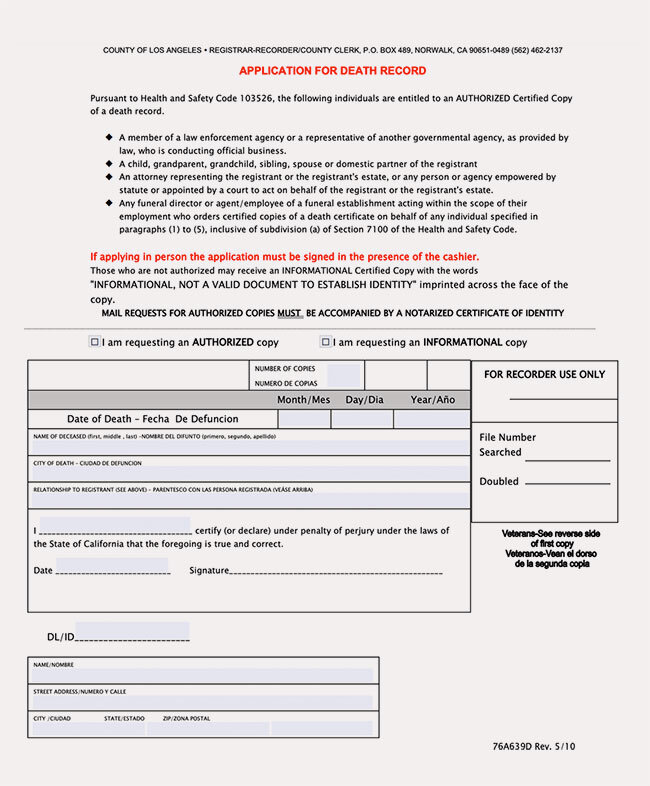
If you do not meet these criteria, you may only obtain an “informational” certified copy. This copy will have the words “INFORMATIONAL, NOT A VALID DOCUMENT TO ESTABLISH IDENTITY” printed across its face and will not be accepted for legal purposes such as claiming insurance benefits or settling estates.
Required Documentation for Authorized Copies:
Applicants for an authorized certified copy must typically provide:

- A completed application form: This is usually the “Application for Certified Copy of Death Record.”
- Valid photo identification: This is crucial. Acceptable IDs include a driver’s license, state-issued ID card, passport, or military ID.
- A sworn statement: This statement, often part of the application form, declares under penalty of perjury that the applicant is an authorized person as defined by law. This statement may need to be notarized if applying by mail.
- Proof of relationship or legal interest: Depending on the relationship, this might include a birth certificate, marriage certificate, or legal documentation such as letters testamentary, letters of administration, or a court order.
Where to Apply: Vital Records and County Offices
Certified copies of death certificates can be obtained from two primary sources in California:
- The County Recorder/Clerk’s Office: For deaths that occurred relatively recently (typically within the last two years), the county recorder’s office in the county where the death occurred is often the fastest and most accessible option. For example, if the death occurred in Santa Monica, you would contact the Los Angeles County Registrar-Recorder/County Clerk’s office. Many county offices allow in-person applications, mail-in requests, and some offer online ordering through third-party services.
- The California Department of Public Health – Vital Records (CDPH-VR): The CDPH, located in Sacramento, maintains death records for the entire state dating back to July 1905. While they process all death record requests, they may have longer processing times than county offices, especially for more recent deaths. Applications to the CDPH can be submitted by mail or, for faster service, online through authorized third-party vendors (though these usually incur additional service fees).
Costs, Processing Times, and Expedited Services
- Fees: The cost for a certified copy of a death certificate in California is generally uniform across county offices and the CDPH, usually around $21. Some third-party online services will charge additional processing fees. It’s advisable to check the specific fees with the chosen office before applying, as they are subject to change.
- Processing Times: Processing times can vary significantly based on the method of application and the volume of requests.
- In-person at a county office: Often, you can receive a certified copy on the same day if all documentation is in order. This is the quickest option for urgent needs.
- Mail-in requests to county offices or CDPH: These can take several weeks, sometimes even months, particularly if there are issues with the application or during peak periods.
- Online via third-party services: These can expedite the process, but as mentioned, come with extra costs.
- Expedited Services: For urgent situations, such as needing a certificate for immediate travel, funeral arrangements, or legal deadlines, some county offices offer expedited services for an additional fee. It’s best to inquire directly with the specific county recorder’s office about their expedited options and requirements.
Special Considerations for Travelers and Non-Residents in California
California’s status as a premier global destination means that, regrettably, some individuals may pass away while visiting or during an extended stay. This introduces additional layers of complexity, especially for international travelers or their families.
International Implications and Consular Services
When a foreign national passes away in California, the process of obtaining a death certificate remains largely the same domestically. However, the subsequent steps often involve international coordination:
- Notification of Consulate: The family, funeral home, or local authorities will typically notify the consulate or embassy of the deceased’s home country. Major cities like Los Angeles and San Francisco host numerous foreign consulates, which can provide invaluable assistance.
- Repatriation of Remains: Consular services play a critical role in facilitating the repatriation of the deceased’s remains to their home country, if requested. This often requires multiple certified copies of the death certificate, embalming certificates, and other documents, often translated and apostilled (certified for international use).
- Legal Formalities Abroad: The California death certificate, once obtained and potentially apostilled by the California Secretary of State, will be necessary for settling the deceased’s affairs in their home country, which may have its own unique legal and administrative requirements. This is especially pertinent for individuals who might have been enjoying a long-term stay in Napa Valley or exploring the natural wonders of Yosemite National Park.
Estate Planning and Long-Term Stays
For individuals who frequently travel, have multiple residences, or are engaging in long-term stays in California, proactive estate planning becomes even more vital.
- Wills and Trusts: Having a clearly defined will or trust, perhaps with provisions for assets held in different jurisdictions, can significantly ease the burden on family members.
- Power of Attorney: Granting a trusted individual power of attorney can ensure that financial and medical decisions can be made seamlessly, even if the primary individual is incapacitated or deceased.
- Digital Assets: In today’s digital age, considering how digital assets (online accounts, cryptocurrency, intellectual property) will be handled is also a growing concern.
- Accommodation and Lifestyle Relevance: While booking a luxury suite or an extended villa rental in California, such considerations might seem distant. However, for those planning extended stays or contemplating retirement in the Golden State, integrating these administrative realities into overall lifestyle planning is a mark of foresight and responsibility.
Beyond the Certificate: Related Administrative Tasks
Obtaining the death certificate is a critical first step, but it often paves the way for a series of other important administrative responsibilities.
Notifying Government Agencies and Financial Institutions
With certified copies of the death certificate in hand, the next phase involves systematically notifying relevant organizations:
- Social Security Administration (SSA): It is crucial to inform the Social Security Administration of the death. While funeral homes often report deaths to the SSA, it’s wise for families to confirm this, especially to inquire about survivor benefits.
- Banks and Financial Institutions: Close accounts, transfer funds, and update account ownership at banks, credit unions, and investment firms.
- Credit Card Companies: Cancel credit cards to prevent fraud and stop recurring charges.
- Insurance Providers: In addition to life insurance, notify health insurance, auto insurance, and homeowner’s insurance providers to adjust policies or process claims.
- Employer/Pension Administrator: Inform the deceased’s employer or pension administrator to inquire about final paychecks, retirement benefits, or any remaining benefits.
- Department of Motor Vehicles (DMV): For deceased drivers, their driver’s license should be surrendered or canceled. Vehicle titles may also need to be transferred.
- Internal Revenue Service (IRS): Ensure that final tax returns are filed and any tax obligations are met.
Navigating Legal and Estate Matters in California
Depending on the complexity of the deceased’s estate, further legal processes may be necessary:
- Probate: If the deceased had a will but assets were not held in a trust, the estate may need to go through probate, a court-supervised process for authenticating a will and administering the estate. This process occurs in the California Superior Courts.
- Trust Administration: If assets were held in a trust, the designated trustee would administer the trust according to its terms, often bypassing the need for probate.
- Wills and Succession: Without a will, the deceased’s assets will be distributed according to California’s laws of intestate succession, which specifies how property passes to heirs when there is no will.
While these topics might seem a world away from the luxury travel guides for Big Sur or architectural tours of the Golden Gate Bridge, they are nonetheless integral to the complete picture of managing one’s life and affairs in California.
In conclusion, obtaining a death certificate in California is a clear, structured process, though it requires attention to detail and adherence to specific legal requirements. From the initial reporting of death by medical professionals and funeral directors to the application process for certified copies at county recorder offices or the CDPH, each step serves to establish a legally recognized record. For residents, long-term visitors, or even those just passing through, understanding these procedures is an essential part of responsible living and navigating life’s most challenging transitions. While we often focus on the joys of travel and the excitement of exploring new destinations like Universal Studios Hollywood or the serene beauty of Lake Tahoe, acknowledging and preparing for life’s administrative realities, even the difficult ones, ensures that when the unexpected happens, we are equipped to handle it with clarity and efficiency.
LifeOutOfTheBox is a participant in the Amazon Services LLC Associates Program, an affiliate advertising program designed to provide a means for sites to earn advertising fees by advertising and linking to Amazon.com. Amazon, the Amazon logo, AmazonSupply, and the AmazonSupply logo are trademarks of Amazon.com, Inc. or its affiliates. As an Amazon Associate we earn affiliate commissions from qualifying purchases.