
Life in California is often envisioned as a vibrant tapestry of sun-drenched beaches, bustling cities like Los Angeles and San Francisco, and awe-inspiring natural wonders from Yosemite National Park to the serene deserts. It’s a lifestyle many aspire to, filled with opportunities for adventure, relaxation, and cultural immersion. However, even in this idyllic setting, unforeseen circumstances can arise, such as a workplace injury. When an injury occurs, understanding the intricacies of workers’ compensation in California becomes crucial, not just for financial stability, but for maintaining a semblance of your desired lifestyle, even if it means adjusting your travel plans or finding comfortable long-term accommodation during recovery.

The question “How long can you be on workers’ compensation in California?” isn’t just a legal query; it deeply impacts one’s ability to live, plan, and experience the world. For those accustomed to the freedom of spontaneous weekend getaways to Napa Valley, a luxurious stay at the Ritz-Carlton Laguna Niguel, or even a budget-friendly road trip along Highway 1, an injury can bring a sudden halt to these cherished lifestyle elements. This article delves into the duration of workers’ compensation benefits in the Golden State, exploring the types of benefits, their time limits, and crucially, how these factors can influence your lifestyle, travel dreams, and accommodation choices during a period of recovery and beyond.
Navigating the Workers’ Compensation Landscape in California
California’s workers’ compensation system is designed to provide benefits to employees who suffer job-related injuries or illnesses. These benefits typically cover medical treatment, temporary disability payments to compensate for lost wages, permanent disability payments for lasting impairments, and vocational rehabilitation if retraining is needed. Understanding the duration of these benefits is key to managing your expectations and planning your future, whether that future involves exploring the vibrant art scene in Palm Springs or simply finding a comfortable apartment for a long-term stay in a quieter California town.
Understanding Temporary Disability Benefits
Temporary disability (TD) benefits are paid when a work injury prevents you from performing your usual job duties, or your employer does not offer modified work. These payments are crucial for covering daily living expenses, much like how a well-planned travel budget covers accommodation and activities. In California, TD benefits are generally paid at two-thirds of your average weekly wages, up to a statutory maximum.
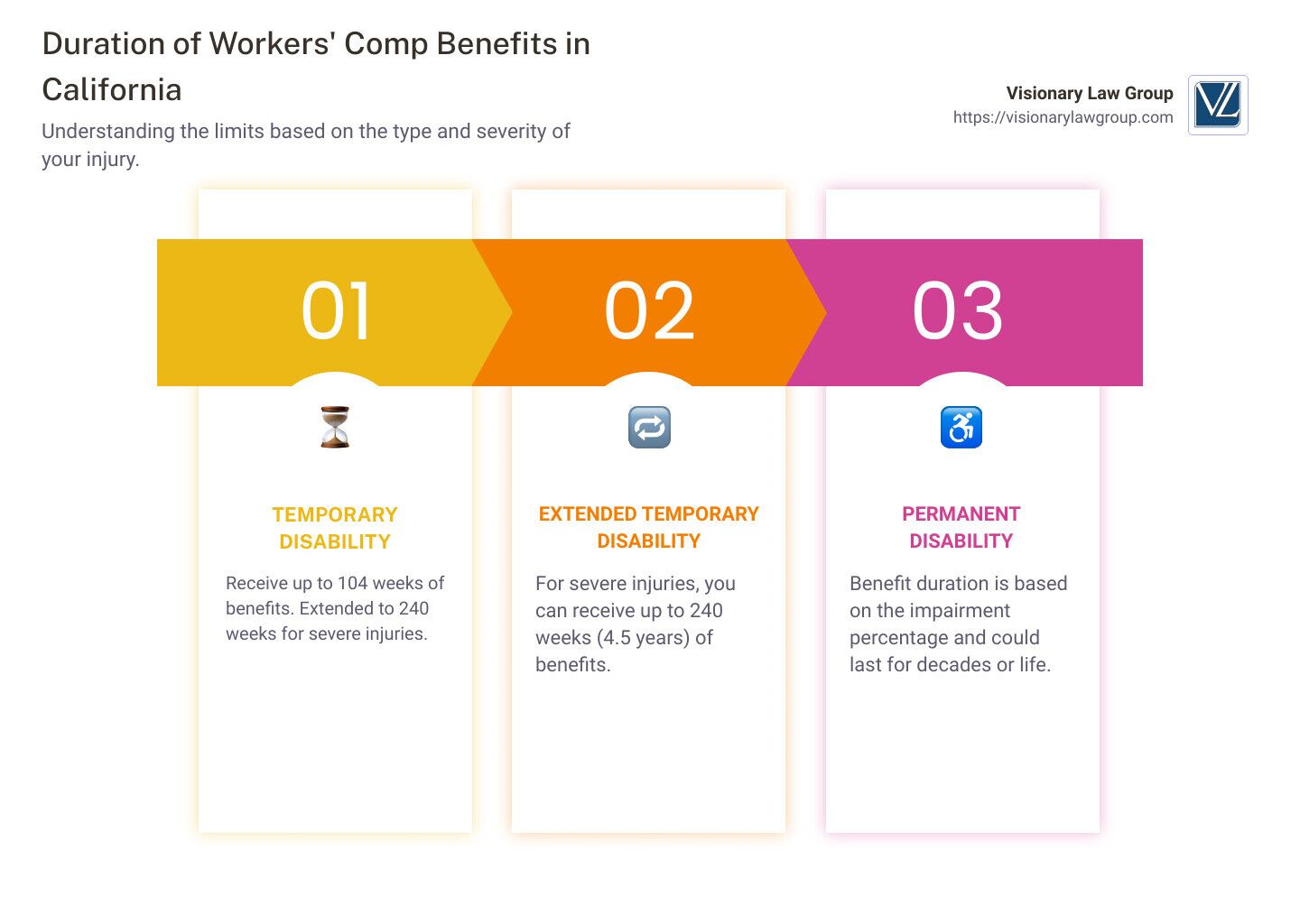
The most significant time limit for TD benefits is generally 104 weeks (two years). This period typically begins from the first date you lost wages due to the injury. However, for certain severe injuries, such as specific burns or chronic lung disease, the payment period can be extended to 240 weeks (nearly five years) from the date of injury. This extended period is rare and applies to a very limited set of circumstances.
Imagine planning an extended trip or a long-term relocation; the stability offered by these payments, even if temporary, is invaluable. Knowing you have up to 104 weeks of income can provide a sense of security, allowing you to focus on recovery without the immediate stress of financial instability. This might mean you can afford a more comfortable, accessible hotel suite or a serviced apartment in a place like Santa Monica during your recovery, rather than being forced into less suitable living arrangements. The duration of these benefits directly influences your ability to maintain a certain standard of living or even consider short, restorative trips within California if your medical condition permits.
The Role of Permanent Disability and Future Planning
Once your medical condition has stabilized and your doctor determines you have reached maximum medical improvement (MMI) – meaning your condition is not expected to improve further – temporary disability payments will stop. At this point, if your injury has resulted in a lasting impairment, you may be entitled to permanent disability (PD) benefits.
The duration of PD benefits varies significantly because it’s calculated based on a percentage rating of your disability. This rating considers the nature of your injury, your age, occupation, and how much your injury affects your ability to earn a living. The higher your PD rating, the more weeks of benefits you will receive. Unlike TD benefits, there isn’t a fixed maximum duration like 104 weeks for all PD claims. Instead, the total amount of PD benefits is calculated, and then it’s paid out weekly over a specified number of weeks. For example, a minor disability might result in benefits for a few dozen weeks, while a more significant permanent impairment could mean benefits paid out for hundreds of weeks.
This transition from temporary to permanent benefits marks a crucial point for lifestyle planning. For someone who once envisioned backpacking through Big Sur or embarking on a cruise from San Diego, a permanent disability might necessitate a re-evaluation of travel styles and accommodation needs. PD benefits, while sometimes substantial, are designed to compensate for lost earning capacity, not to fully replace a pre-injury income or lifestyle. Therefore, understanding the potential payout duration and amount is vital for long-term financial planning, including saving for future accessible travel, adapting a home for comfort, or planning extended stays in destinations that cater to specific needs.
Lifestyle Adjustments and Travel Considerations During Recovery
A workers’ compensation claim in California often entails a period of recovery, which can range from a few weeks to several years. During this time, your lifestyle inevitably shifts. For avid travelers and those who cherish experiences, this can be particularly challenging. However, it also presents an opportunity to explore new facets of lifestyle, focusing on well-being, comfort, and local tourism that might have been overlooked before.
Planning for Long-Term Accommodation and Comfort
When dealing with an injury, your choice of accommodation becomes paramount. Whether you’re recovering at home or considering a temporary relocation for specialized treatment or a change of scenery, comfort and accessibility are key. For individuals on workers’ compensation, especially those facing long recovery periods, options like extended-stay hotels or furnished apartment rentals in areas known for their tranquility or medical facilities can be ideal.
Consider a long-term stay at a hotel like the Residence Inn by Marriott in a city like Sacramento, which offers kitchenettes and spacious suites, providing a home-like environment. Or perhaps a serene villa in Laguna Beach if your budget and medical condition allow for a more luxurious, yet restorative, setting. Booking platforms and accommodation guides often feature filters for accessibility and amenities, helping you find a space that supports your recovery journey. This includes features like roll-in showers, grab bars, and proximity to medical centers or quiet parks.
The duration of your workers’ compensation benefits directly influences your ability to afford such comforts. For those with extended temporary disability or substantial permanent disability benefits, planning for a comfortable, accessible living situation for a significant period becomes a realistic and beneficial part of the recovery process. It’s about turning a challenging time into an opportunity for restorative living, even if it’s within the familiar confines of California.
Exploring Accessible California During Your Journey
While extensive international travel might be on hold, California itself offers a wealth of accessible attractions and experiences suitable for various levels of mobility. This period can be an excellent opportunity to explore local culture and landmarks that are easier to navigate.
For instance, many of California’s state parks, like Hearst Castle or certain trails in Lake Tahoe National Forest, offer accessible pathways and facilities. Major tourist attractions such as Disneyland Park in Anaheim or the Santa Monica Pier are renowned for their disability access services, ensuring everyone can enjoy the magic. Even a visit to the Getty Center in Los Angeles with its stunning architecture and gardens can be a rewarding, accessible outing.
This period of recovery can redefine “travel” from grand adventures to meaningful local explorations. It’s about discovering the hidden gems within your own state, finding joy in accessible beaches, museums, or botanical gardens. Websites dedicated to accessible travel can be invaluable resources, helping you plan outings that are both enjoyable and medically appropriate. By embracing local tourism, you can maintain a sense of adventure and connection to the world, even when your physical capabilities are limited.
Maximizing Your Well-being: Beyond the Financial Aspects
Workers’ compensation in California provides a financial safety net, but true recovery encompasses more than just monetary support. Emotional and mental well-being are paramount, especially during prolonged periods of injury and lifestyle adjustment. Integrating wellness activities and envisioning future adventures can significantly contribute to a holistic recovery.
Mental Health and Wellness Retreats
The emotional toll of a workplace injury, coupled with the uncertainties of the workers’ compensation process, can be substantial. For individuals managing long-term claims, prioritizing mental health is as important as physical rehabilitation. California is home to numerous wellness retreats and resorts that cater to relaxation, mindfulness, and healing.
While some luxury options like The Ranch Malibu might be beyond the scope of workers’ compensation benefits, there are many accessible alternatives. Consider a weekend escape to a hot springs resort in Big Bear Lake or a meditation center in the tranquil hills of Ojai. Many establishments, including boutique hotels and eco-lodges, now offer wellness packages that focus on stress reduction, gentle movement, and nutritious eating, which can be immensely beneficial during a recovery period. Investing in these experiences, even for short durations, can significantly improve your mental outlook and contribute positively to your overall healing.
Envisioning Future Adventures: Post-Recovery Travel Dreams
Even if extensive travel is currently on hold, dreaming and planning for future adventures can be a powerful motivator. The prospect of once again exploring a bustling city like Tokyo, relaxing on the beaches of Maui, or experiencing the rich history of Rome can provide a vital psychological boost.
Use this time to research destinations, compile wish lists of hotels and resorts, and learn about different cultures. Perhaps you’ll discover a newfound interest in accessible travel to specific regions or find inspiration for a unique long-term stay once you’ve fully recovered. Many travel companies and online communities are dedicated to helping individuals with varying physical abilities plan their dream trips. This period of recovery, supported by workers’ compensation benefits, can be transformed into a strategic planning phase for a future filled with renewed travel and lifestyle experiences. The goal isn’t just to recover; it’s to recover with a vision for a fulfilling life, which often includes the joy of discovery and travel.

Essential Resources and Support for Your California Journey
Navigating the workers’ compensation system in California can be complex, and ensuring you receive the appropriate benefits for the correct duration is crucial. Beyond the legal aspects, finding resources that support your lifestyle and travel aspirations during and after recovery is equally important.
The California Division of Workers’ Compensation (DWC) website is the official source for information regarding benefits, rights, and responsibilities. Consulting with a qualified workers’ compensation attorney in California can provide personalized guidance, helping you understand the specifics of your claim, including the potential duration of temporary and permanent disability benefits. They can ensure your rights are protected and that you receive all entitled compensation, which directly impacts your financial ability to manage your lifestyle and plan for future travel.
Additionally, don’t overlook local community resources. Many organizations offer support groups, rehabilitation services, and even adaptive sports programs that can help you regain physical function and reconnect with activities you love. For travel planning, specialized travel agencies and online forums focused on accessible travel provide invaluable tips and recommendations for destinations, hotels, and experiences that cater to various needs. Exploring options for long-term stays in accessible accommodations, such as those found through platforms specializing in furnished apartments or vacation rentals in areas like San Clemente or Monterey, can make a significant difference in your comfort and quality of life during recovery.
In conclusion, the question of “How long can you be on workers’ compensation in California?” has nuanced answers primarily tied to the type and severity of your injury. Temporary disability benefits generally have a 104-week limit (or 240 weeks for specific injuries), while permanent disability benefits vary significantly based on your impairment rating. These durations profoundly influence your ability to maintain your desired lifestyle, make travel plans, and secure comfortable accommodation during your recovery. By understanding these timeframes and proactively planning for both your financial and personal well-being, you can navigate the workers’ compensation journey in California with greater confidence, transforming a challenging period into an opportunity for growth, self-care, and ultimately, a return to the adventures you cherish.
LifeOutOfTheBox is a participant in the Amazon Services LLC Associates Program, an affiliate advertising program designed to provide a means for sites to earn advertising fees by advertising and linking to Amazon.com. Amazon, the Amazon logo, AmazonSupply, and the AmazonSupply logo are trademarks of Amazon.com, Inc. or its affiliates. As an Amazon Associate we earn affiliate commissions from qualifying purchases.