
For individuals contemplating a career in security, particularly within the dynamic and diverse environment of California, obtaining a security guard card is an essential credential. While our platform often explores the vibrant destinations, luxurious hotels, and rich tourism experiences that the Golden State offers, it’s equally important to understand the underlying infrastructure that ensures these experiences remain safe and enjoyable for everyone. Security professionals play an indispensable role in safeguarding everything from bustling urban centers to serene resorts, iconic landmarks, and critical business establishments across California.

This guide is designed for anyone aspiring to become a licensed security guard in California, offering a clear, step-by-step pathway through the requirements and application process. Embracing a career in security in California opens doors to a wide array of opportunities, from protecting high-profile events and celebrity residences in Beverly Hills to ensuring the safety of guests at world-class hotels or families enjoying theme parks like Disneyland Resort. It’s a commitment to a vital profession that contributes significantly to the overall lifestyle and peace of mind for residents and visitors alike.
Understanding the Landscape: The Role of a Security Professional in California’s Diverse Economy
California’s economy is vast and varied, encompassing everything from world-renowned entertainment industries and technological hubs to expansive agricultural lands and stunning natural attractions. This diversity creates a consistent and pressing demand for skilled security professionals across numerous sectors. A guard card is not merely a piece of identification; it is a testament to an individual’s training, background, and legal authorization to perform security duties within the state.
The security industry in California is regulated by the Bureau of Security and Investigative Services (BSIS), a division of the California Department of Consumer Affairs. The BSIS is responsible for licensing and regulating security guards, private investigators, and other security-related professions, ensuring that all licensed individuals meet stringent standards of training and conduct. This regulatory framework is crucial for maintaining public safety and professional integrity across the state, from the bustling streets of Los Angeles to the scenic beauty of San Francisco and beyond.
Securing California’s Icons: From Hollywood Studios to Disneyland Resort
California is home to some of the world’s most recognizable landmarks and busiest tourist attractions. These sites, which draw millions of visitors annually, rely heavily on professional security personnel to ensure a safe and orderly environment. Consider the security needs of major entertainment complexes. At Universal Studios Hollywood, for instance, security guards manage crowds, respond to incidents, and protect valuable property and intellectual assets. Similarly, the magic of Disneyland Resort in Anaheim is meticulously guarded, with security teams playing a crucial role in guest safety, access control, and emergency response, allowing visitors to fully immerse themselves in the experience without concern.
Beyond theme parks, the glamour of Hollywood requires a sophisticated level of security. From film studios like Warner Bros. Studio Tour Hollywood to high-profile events, premieres, and celebrity residences, security guards are essential for crowd management, VIP protection, and maintaining order. Even iconic structures such as the Golden Gate Bridge in San Francisco or the lively Santa Monica Pier in Los Angeles have security protocols in place to ensure public safety. A guard card empowers individuals to be part of these critical operations, protecting the very fabric of California’s identity and its global appeal.
Protecting Hospitality and Luxury Establishments
The hospitality sector in California is robust, catering to a diverse clientele ranging from luxury travelers and business professionals to families on vacation. This industry, which includes world-class hotels, boutique resorts, and sprawling convention centers, presents significant opportunities for security guards. High-end establishments, such as the Beverly Wilshire, A Four Seasons Hotel in Beverly Hills, or The Ritz-Carlton, Laguna Niguel overlooking the Pacific Ocean, demand a discreet yet highly effective security presence. Guards in these environments are often the first point of contact for guests, requiring exceptional customer service skills alongside their security expertise.
Similarly, the Waldorf Astoria Beverly Hills and the prestigious Pebble Beach Resorts along the Monterey coastline are examples of venues where security ensures the safety and privacy of high-net-worth individuals and discerning guests. Security guards are vital for maintaining exclusive access, responding to unforeseen circumstances, and safeguarding valuable assets, contributing directly to the luxury lifestyle experience these establishments promise. The role extends beyond basic patrols to include surveillance, incident reporting, and working collaboratively with hotel staff to create an atmosphere of safety and comfort.
The Official Journey: Step-by-Step Towards Your Guard Card
The process of obtaining a guard card in California is systematic and requires attention to detail. It’s a journey that ensures every licensed professional is adequately trained and vetted to uphold public trust. Prospective security guards must meticulously follow the guidelines set forth by the Bureau of Security and Investigative Services.
Meeting the Prerequisites and Training Requirements
Before embarking on the application process, there are fundamental prerequisites one must meet:
- Age Requirement: Applicants must be at least 18 years old.
- Criminal Background: A thorough background check will be conducted. Individuals with certain criminal convictions may be disqualified. It’s important to understand that the BSIS evaluates convictions on a case-by-case basis, considering factors like the nature of the crime, the time elapsed, and evidence of rehabilitation.
- Legal Work Status: Applicants must be legally eligible to work in the United States.
Once these basic requirements are met, the next crucial step is completing the mandatory training. California mandates a specific amount of training, which is divided into an initial phase and ongoing continuing education:
- “Power to Arrest” Training (8 Hours): This is the foundational course required before applying for the guard card. It covers critical topics such as legal powers and limitations of a security guard, observation and reporting, public relations, and how to make a lawful arrest. This training must be provided by a BSIS-approved training facility or instructor.
- Additional Training (32 Hours): After obtaining the initial guard card, an additional 32 hours of training is required within the first six months. This extended training delves into more specialized areas relevant to various security duties. Typically, 16 hours of this training must be completed within 30 days of receiving the guard card, and the remaining 16 hours within 60 days. These topics can include:
- Patrol procedures and observation
- Access control
- Terrorism awareness
- Handling hazardous materials
- Emergency response and first aid
- Communication and report writing
- Preserving incident scenes
- Crowd control and defensive tactics
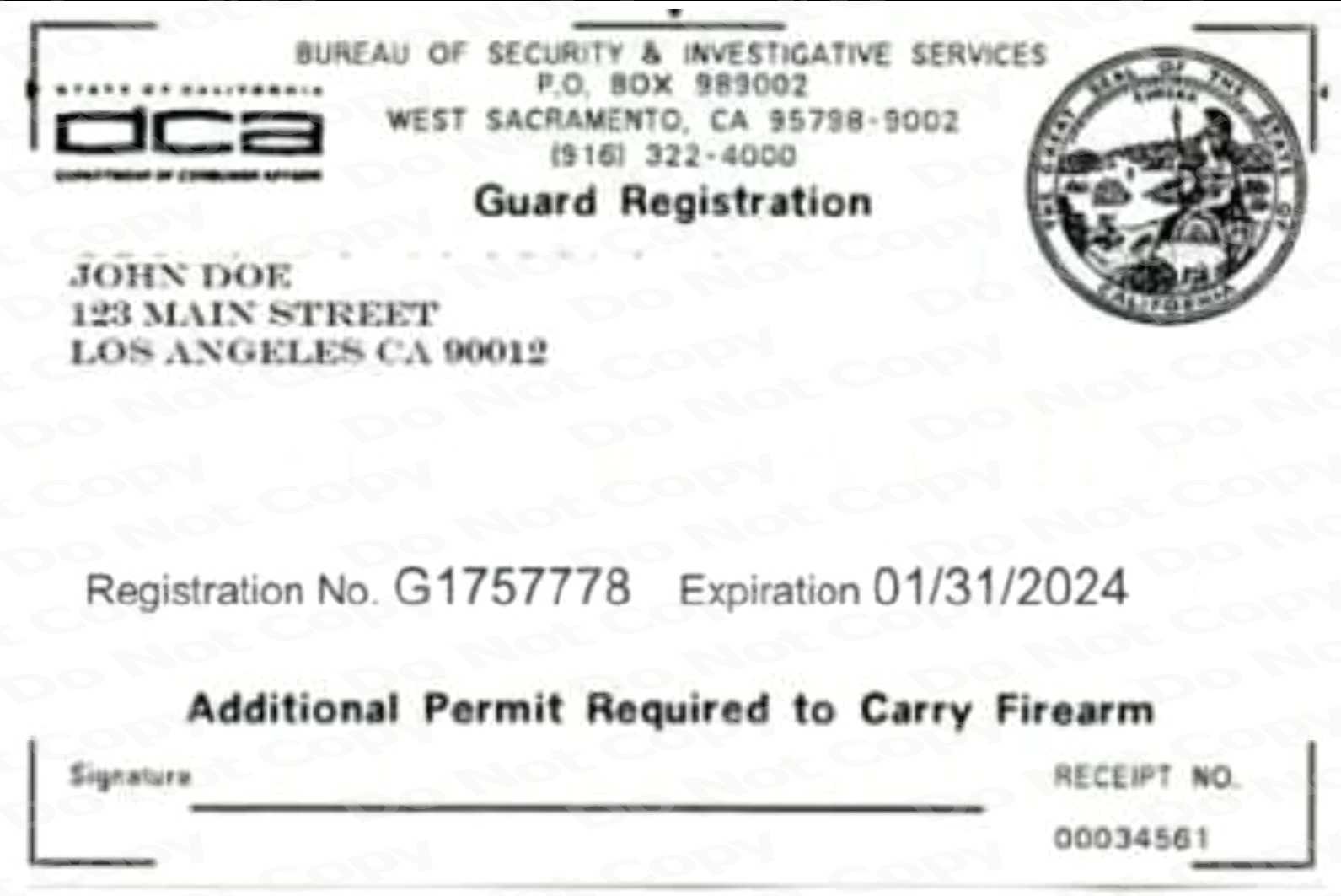
Many training providers in California offer comprehensive 40-hour packages that cover all initial training requirements, streamlining the process for aspiring guards. These facilities are often located in major metropolitan areas such as Los Angeles, San Francisco, and San Diego, making them accessible to a broad range of applicants.
Navigating the Application Process
With the training completed, the focus shifts to the official application submission:
-
Submit Your Application to BSIS:
- Online Application: The most efficient method is to apply online through the BSIS BreEZe system. This digital portal allows for faster processing and easier tracking of your application status.
- Mail-in Application: Alternatively, you can download and mail a paper application, though this typically involves longer processing times.
- Fees: A non-refundable application fee is required, payable at the time of submission. Be sure to check the current fee schedule on the BSIS website, as it can be subject to change.
-
Live Scan Fingerprinting:
- As part of the background check, all applicants must undergo Live Scan fingerprinting. This digital fingerprinting service electronically transmits your fingerprints to the California Department of Justice (DOJ) and the Federal Bureau of Investigation (FBI) for criminal history clearance.
- You will need a Request for Live Scan Service form, which includes the agency’s Applicant ID and ORI number. This form is typically provided by your training facility or can be downloaded from the BSIS website.
- Live Scan locations are widely available throughout California, often at local police departments, sheriff’s offices, or private Live Scan service providers. You will pay a fee at the Live Scan facility for this service.
-
Wait for Background Check Clearance:
- The background check is a critical part of the process and can take several weeks or even months, depending on the volume of applications and the complexity of individual cases. The BSIS will not issue a guard card until both the DOJ and FBI clearances are received.
-
Receive Your Guard Card:
- Once your application is approved and background checks are cleared, the BSIS will mail your guard card to the address provided in your application. The guard card is typically a plastic ID card, similar to a driver’s license.
It is important to note that you cannot begin working as a security guard until you have officially received your guard card. While some employers might hire you conditionally, your actual deployment for security duties must await the issuance of the physical card.
Beyond the Card: Career Opportunities and Continuing Education
Obtaining your guard card is just the first step in what can be a rewarding and diverse career. The security industry in California offers numerous avenues for growth, specialization, and professional development.
Specializations and Advanced Training for Enhanced Opportunities
For those looking to expand their capabilities and increase their earning potential, several advanced certifications and specializations are available:
- Armed Guard Permit (Firearms Permit): To carry a firearm on duty, a separate permit is required. This involves additional extensive training, including specific firearm proficiency courses, and a separate application process with the BSIS. Carrying a firearm is a significant responsibility and comes with strict legal and ethical guidelines.
- Baton Permit: Similar to the firearms permit, training and a permit are required to carry a baton as a security guard.
- Pepper Spray/OC Spray Certification: While often included in general security training, some employers may require specific certification for the use of less-lethal force options.
- Proprietary Security Officer (PSO): For those working directly for a single employer (not a contract security company) and carrying a firearm, a PSO registration may be required in addition to the guard card.
- Executive Protection: This specialization involves providing close-quarters security for high-net-worth individuals, celebrities, or corporate executives. It requires advanced tactical training, threat assessment skills, and often, a higher level of discretion and professionalism. California’s concentration of prominent figures in Los Angeles and Silicon Valley makes this a highly sought-after specialization.
- Loss Prevention: Focuses on preventing theft and inventory shrinkage in retail environments. This often involves surveillance, covert operations, and working closely with law enforcement.
Beyond these specializations, continuing education is a mandatory aspect of maintaining a valid guard card. Every two years, when renewing your guard card, you must demonstrate completion of 8 hours of continuing education training. This ensures that guards stay current with industry best practices, legal updates, and evolving security threats. Many BSIS-approved training providers offer online and in-person courses to fulfill these renewal requirements.

A Career in a Golden State: Working Across California’s Regions
A guard card in California opens up opportunities across the entire state, offering diverse working environments that cater to various preferences and lifestyles.
- Southern California: In bustling metropolises like Los Angeles, San Diego, and Orange County, security professionals are in high demand across a multitude of sectors. This includes protecting film studios, private estates, major sporting venues like Dodger Stadium, luxurious hotels such as the Waldorf Astoria Beverly Hills, and the myriad of tourist attractions that draw visitors from around the globe. The vibrant nightlife, extensive commercial districts, and numerous event spaces in cities like Palm Springs also necessitate a robust security presence.
- Northern California: San Francisco and the Bay Area offer different, but equally compelling, opportunities. Here, security roles often involve safeguarding tech campuses in Silicon Valley, protecting biotech firms, ensuring safety at cultural institutions, and providing security for major events and conferences. The picturesque Napa Valley also requires security for its world-renowned wineries and luxury resorts, blending a professional security role with a stunning backdrop.
- Central California and Beyond: Even in less densely populated areas, such as those surrounding Lake Tahoe or near national parks like Yosemite National Park, security guards play a role in protecting natural resources, managing visitor access, and ensuring safety at remote accommodations and facilities. The state capital, Sacramento, also has consistent demand for security services in government buildings, commercial centers, and residential communities.
The ability to move and work across these varied environments, embracing the diverse lifestyles and professional challenges California presents, is a significant advantage of holding a California guard card. It allows for flexibility, career growth, and the chance to contribute to the safety and enjoyment of one of the world’s most dynamic states.
In conclusion, obtaining a guard card in California is a straightforward yet critical process for anyone looking to enter the security profession. It requires adherence to specific training, diligent application submission, and a commitment to ongoing professional development. While the path involves bureaucratic steps, the rewards are substantial: a stable career in a high-demand field, the opportunity to protect some of the most iconic locations and valuable assets in the world, and the chance to live and work in the incredibly diverse and vibrant state of California. For those who value safety, responsibility, and service, securing a California guard card is a pivotal step towards a fulfilling professional journey.
LifeOutOfTheBox is a participant in the Amazon Services LLC Associates Program, an affiliate advertising program designed to provide a means for sites to earn advertising fees by advertising and linking to Amazon.com. Amazon, the Amazon logo, AmazonSupply, and the AmazonSupply logo are trademarks of Amazon.com, Inc. or its affiliates. As an Amazon Associate we earn affiliate commissions from qualifying purchases.