
Embarking on a journey through the sun-drenched landscapes of California often conjures images of scenic drives along the Pacific Coast Highway, exploring vibrant cityscapes like Los Angeles and San Francisco, or venturing into the dramatic beauty of national parks like Yosemite or Death Valley National Park. Whether you’re a lifelong resident or a visitor renting a car for an unforgettable California road trip, understanding the state’s vehicle regulations is paramount. Among these, the laws governing window tinting are often a point of confusion, yet crucial for ensuring a hassle-free experience. Window tint isn’t just about aesthetics; it plays a significant role in comfort, privacy, and protection against the intense California sun. For those deeply invested in Travel and a discerning Lifestyle, ensuring your vehicle adheres to local laws is a subtle yet important aspect of responsible exploration. This comprehensive guide will demystify California’s window tint laws, providing clarity for every motorist.
Understanding California’s Window Tint Laws
The state of California has specific regulations in place to govern the darkness and type of tint allowed on vehicle windows. These laws are primarily designed to ensure driver visibility and public safety, allowing law enforcement officers to see into a vehicle. The key metric used to define tint darkness is Visible Light Transmission (VLT), which measures the percentage of light that passes through the tinted window. A lower VLT percentage indicates a darker tint. For instance, 50% VLT means 50% of visible light passes through, while 5% VLT (often called “limo tint”) means only 5% of light gets through, making it very dark. California distinguishes between different windows on a vehicle, applying varying rules to each.
Front Side Windows: The Crucial Rules
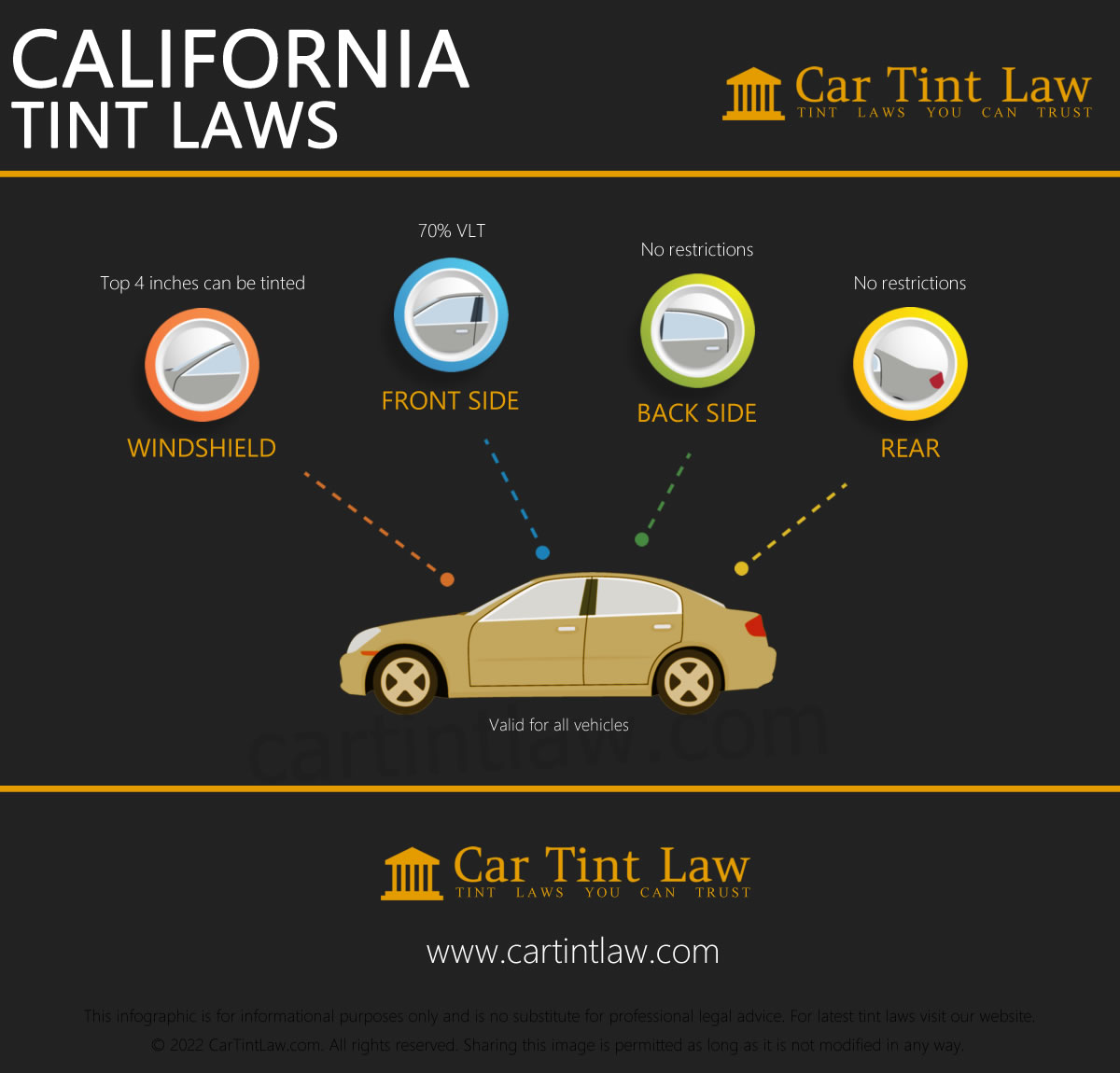
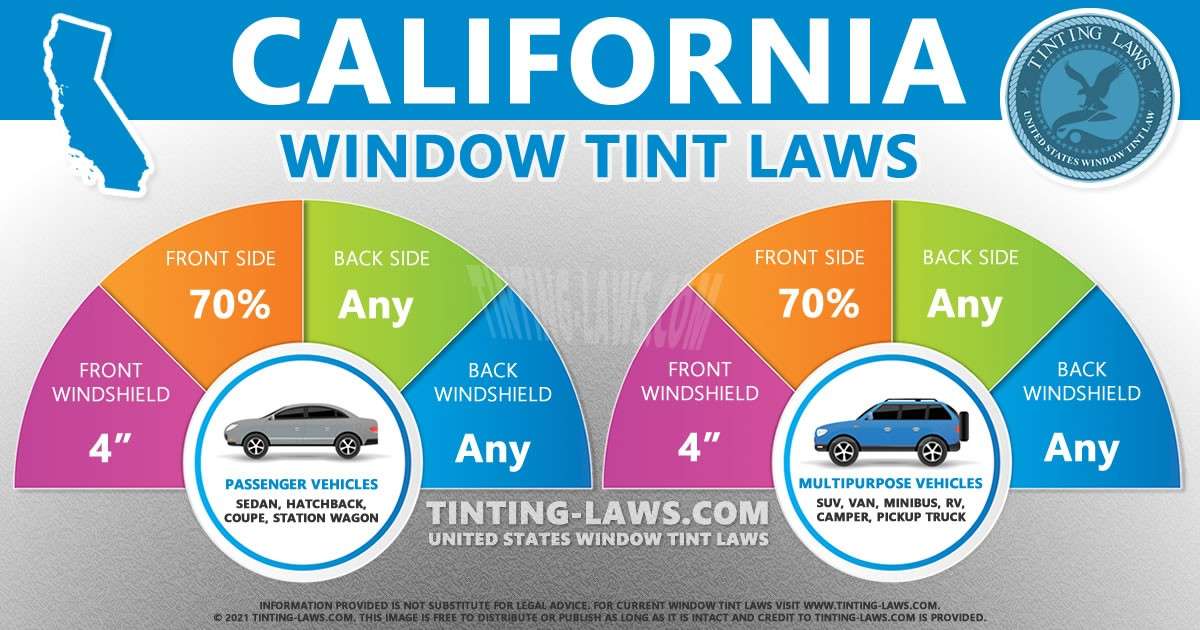
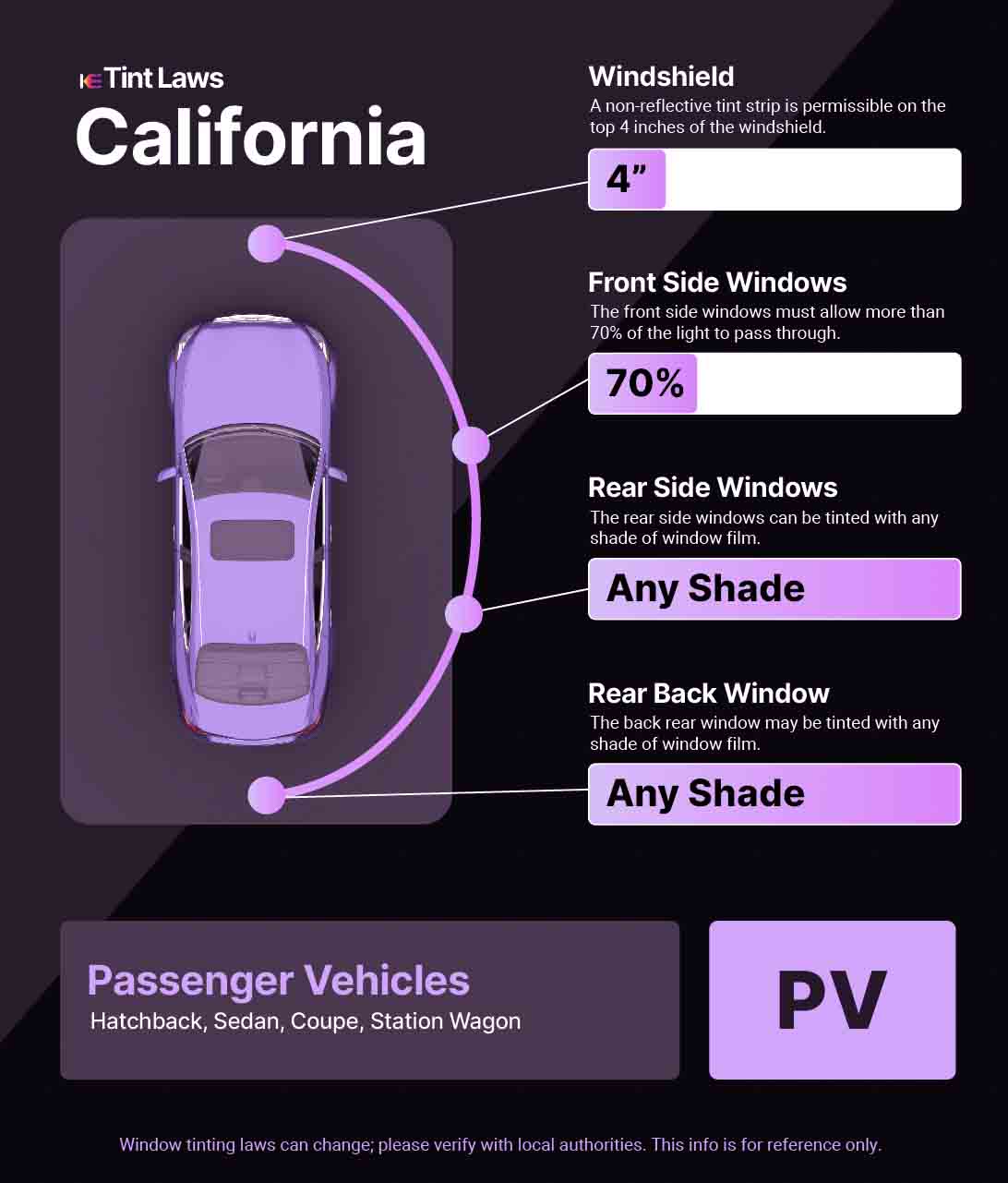
For the front side windows – those immediately to the left and right of the driver – California law is quite stringent. These windows must allow at least 70% of visible light to pass through. This means that any aftermarket tint applied to these windows must not reduce the VLT below 70%. In practical terms, a 70% VLT tint is very light, almost imperceptible to the casual observer, and is often referred to as clear or virtually clear. The purpose behind this strict regulation is to ensure that the driver has an unobstructed view of their surroundings, particularly at intersections and when changing lanes, and also to maintain visibility for law enforcement during traffic stops. Many vehicles come from the factory with a slight tint on their windows, sometimes as low as 75-80% VLT. If this is the case, even adding a 70% film might push the overall VLT below the legal limit when measured. Therefore, it’s crucial to measure the combined VLT of the factory glass and any added film.
Rear Side and Rear Windows: More Flexibility
When it comes to the rear side windows – those behind the front side windows – and the rear windshield, California offers significantly more flexibility. There are no specific VLT limits for these windows. This means you can apply a tint of any darkness, even “limo tint” (5% VLT), to these windows. This leniency acknowledges that these windows are less critical for immediate driver visibility while still allowing for increased privacy and sun protection for passengers and belongings. However, there’s a crucial caveat: if the rear window is tinted, the vehicle must be equipped with dual side mirrors that allow the driver to see at least 200 feet to the rear. This is a standard feature on most modern vehicles, but it’s an important consideration, especially for older models or custom builds. This flexibility on rear windows is particularly appealing for travelers seeking enhanced security for luggage stored in the back of their vehicle while parked near Landmarks or Accommodation facilities.
Windshield Tinting: A Strict Stance
The windshield is arguably the most critical window for driver visibility, and as such, California law is extremely strict. Generally, no aftermarket tint is allowed on the windshield below the AS-1 line. The AS-1 line is a manufacturer’s mark, usually located about 4 to 6 inches from the top of the windshield. This strip, often a darker factory tint, is permissible. Beyond this line, the windshield must remain clear to ensure maximum visibility for the driver. Even clear films designed for UV protection or shatter resistance must comply with the 70% VLT rule, and often, even these films applied to a windshield can technically push it beyond the legal limit when combined with the factory glass’s inherent tint. The only exception to this is a medical exemption, which we will discuss later. This strict regulation ensures that rain, glare, and night driving conditions are not further hampered by an aftermarket tint.
Reflective and Mirrored Tints: A Clear No
Beyond VLT percentages, California also regulates the type of tint. Reflective, metallic, or mirrored tints are expressly prohibited on any window. The reason for this prohibition is that such tints can create dangerous glare for other drivers, especially when reflecting sunlight or headlights. This rule is absolute and applies to all windows of the vehicle, regardless of their position. The law specifically states that the tint must not have a reflective finish. This ensures that all vehicles on California roads maintain a consistent and predictable appearance to minimize hazards.
Why Window Tinting Matters for the California Traveler
For those whose Lifestyle involves frequent Travel, especially throughout a sunny state like California, window tinting is far more than a cosmetic choice. It offers practical benefits that significantly enhance the travel experience, from comfort to security, directly impacting how one enjoys their journey and protects their belongings while away from their Hotels or rental Accommodation.
Enhancing Comfort on California Road Trips
California’s climate is renowned for its abundant sunshine, which, while beautiful, can lead to intense heat inside a vehicle. Properly tinted windows can significantly reduce the amount of solar heat entering the car, making long road trips across the desert regions or through congested city traffic much more comfortable. This reduction in heat not only helps keep passengers cooler but also lessens the strain on the vehicle’s air conditioning system, potentially improving fuel efficiency – a small but welcome benefit on extended drives. Moreover, tint reduces glare from the sun, which can cause eye strain and fatigue, making driving safer and more enjoyable, especially when navigating scenic routes or commuting through Los Angeles during peak hours.
Privacy and Security for Your Accommodation and Belongings
When you’re on the go, moving between various Tourism activities, Landmarks, and Hotels, your vehicle often serves as a temporary storage space for personal items. Darker tints on the rear and rear side windows can offer a crucial layer of privacy, making it harder for passersby to peer into your vehicle and spot valuables. This added discretion can deter opportunistic theft, providing peace of mind whether your car is parked outside a boutique Accommodation in Santa Barbara or a busy attraction in San Diego. It’s a subtle but effective way to bolster security for your luggage, cameras, and other travel essentials, allowing you to focus on enjoying your California adventure.
UV Protection While Exploring California’s Landmarks
The sun’s UV rays are not only damaging to skin but can also fade and degrade a vehicle’s interior over time. High-quality window tints block a significant percentage of harmful UVA and UVB rays, protecting both vehicle occupants and the interior upholstery, dashboard, and electronic components. For travelers, this means less exposure to skin-damaging UV rays during hours spent on the road, contributing to better health and comfort. Furthermore, it helps maintain the resale value and aesthetic appeal of your own vehicle, or for those renting, ensures a more comfortable and well-preserved interior during their Travel experience. This protection is invaluable when traversing vast, sun-exposed areas like Joshua Tree National Park or simply commuting around California’s sunny cities.
Navigating Rental Cars and Tint Laws in California
For many visitors to California, a rental car is the chosen mode of transportation for exploring the state’s diverse attractions and various Landmarks. Understanding how window tint laws apply to rental vehicles is a practical concern for a smooth and legal Travel experience.
What to Expect from Rental Fleets
Generally, rental car companies operate fleets of vehicles that are compliant with state laws in which they operate. Therefore, rental cars in California will typically adhere to the legal window tint regulations. Most rental vehicles will have either no aftermarket tint on the front side windows, or a very light, compliant 70% VLT tint. Rear windows might have a darker tint, offering some of the aforementioned benefits of privacy and heat reduction. Renters should not expect to find vehicles with illegal tints. If a renter attempts to add tint to a rental vehicle, it would almost certainly violate the rental agreement and could lead to significant penalties, not to mention legal issues with law enforcement. It’s always advisable to inspect your rental vehicle upon pickup and familiarize yourself with its features, including window tint, before setting off on your California adventures, whether heading to Universal Studios Hollywood or a secluded Accommodation in Napa Valley.
Consequences of Non-Compliance for Travelers
Operating a vehicle with illegal window tint in California can lead to various legal repercussions. The most common consequence is a fix-it ticket or a traffic citation. A fix-it ticket requires the driver to correct the violation (remove the illegal tint) and then provide proof of correction to the court or law enforcement agency, usually by having a police officer sign off on it. Failure to comply can result in fines and potentially more severe penalties. For travelers, this can be particularly inconvenient, disrupting carefully planned itineraries and potentially adding unexpected expenses and administrative hassles. Imagine having to find a tint shop and then a police station in an unfamiliar city like Palm Springs to get a sign-off, all while trying to enjoy your Tourism activities. It’s a scenario best avoided by ensuring compliance from the outset. Additionally, if you are involved in an accident and your illegal tint is deemed a contributing factor to reduced visibility, it could complicate insurance claims and legal liability.
Lifestyle and Aesthetic Considerations for California Residents and Visitors
Beyond the strictly legal and practical aspects, window tinting also intertwines with personal Lifestyle choices and vehicle aesthetics, especially in a state where car culture is a significant part of the identity.
Balancing Style with Legality
For many vehicle owners, window tint is a key element of their car’s overall look and feel. A well-chosen tint can enhance a vehicle’s lines, provide a sleek appearance, and contribute to a more premium or sporty aesthetic. In California, where vehicles are often an extension of one’s personal Lifestyle and identity, achieving a desired look while remaining compliant with the law requires careful consideration. It’s about striking a balance: enjoying the privacy and comfort darker tints offer on rear windows while adhering strictly to the 70% VLT rule for the front sides. Reputable tint shops in cities like Sacramento or Fresno can advise on options that meet both aesthetic preferences and legal requirements, ensuring a stylish ride that doesn’t invite unwanted attention from law enforcement.
Health Exemptions and Medical Needs
California law provides a specific exemption for individuals with certain medical conditions that make them unusually sensitive to sunlight. If a licensed physician certifies that a driver or a passenger requires additional protection from the sun’s harmful rays due to a medical condition (such as porphyria, lupus, or severe photosensitivity), a special permit can be issued. This permit allows for darker window tint on the front side windows, and in some rare cases, even a slight tint on the upper part of the windshield beyond the AS-1 line, provided it does not unduly impair vision. The driver must carry this medical exemption certificate in the vehicle at all times and present it to law enforcement upon request. This critical provision highlights the state’s commitment to balancing public safety with individual health needs, allowing everyone to navigate California’s sunny environment comfortably and safely.
Essential Tips for Legal Tinting in California
Ensuring your vehicle’s window tint is compliant with California law doesn’t have to be complicated. With a few key considerations, you can enjoy the benefits of tinting without any legal worries, whether you’re a long-term resident or just passing through.
Choosing a Reputable Installer
The quality of your window tint installation significantly impacts its legality and longevity. It is highly recommended to choose a reputable and experienced tint installer who is knowledgeable about California’s specific laws. Professional installers will use high-quality tint films that are designed to last, provide proper VLT ratings, and offer warranties on their work. They can also provide expert advice on the darkest legal tint for your front windows (often a very light, virtually clear film) and help you select darker options for the rear that meet your privacy and aesthetic needs. Avoid DIY tint kits or installers who offer “too good to be true” deals, as these often lead to non-compliant tints, poor installation, or films that quickly bubble and fade. A quick search for trusted local businesses in cities like San Jose or Long Beach will yield several certified installers.
Verifying VLT and Compliance
After installation, or if you purchase a vehicle with existing tint, it’s a good idea to verify the tint’s VLT percentage. Law enforcement officers use tint meters to accurately measure VLT during traffic stops. While you don’t need to own one yourself, a reputable installer should be able to provide you with a VLT reading for your windows. Some tint films also come with a sticker or marking indicating their VLT rating, which can be helpful. Remember, the 70% VLT rule for front side windows is crucial, and it applies to the total VLT, including any factory tint. Staying informed and proactive about your vehicle’s compliance will ensure that your travels through the Golden State remain enjoyable and free of unnecessary legal complications, allowing you to focus on the myriad of Tourism opportunities, luxurious Hotels, and breathtaking Landmarks that California has to offer.
In conclusion, while window tinting offers considerable benefits in terms of comfort, privacy, and protection in sunny California, adherence to state laws is non-negotiable. By understanding the specific VLT limits for different windows, avoiding prohibited reflective tints, and seeking professional installation, both residents and travelers can ensure their vehicle is not only stylish and comfortable but also fully compliant with the law. This attention to detail contributes to a smoother, safer, and more enjoyable Travel experience across one of the most beautiful states in the nation.
LifeOutOfTheBox is a participant in the Amazon Services LLC Associates Program, an affiliate advertising program designed to provide a means for sites to earn advertising fees by advertising and linking to Amazon.com. Amazon, the Amazon logo, AmazonSupply, and the AmazonSupply logo are trademarks of Amazon.com, Inc. or its affiliates. As an Amazon Associate we earn affiliate commissions from qualifying purchases.