
Embarking on an adventure through the diverse landscapes of California, from its bustling metropolises to its serene wilderness areas, often involves preparation for various activities. Whether you’re planning a rugged camping trip in Yosemite National Park, a fishing excursion along the coast near San Diego, or simply navigating urban environments like Los Angeles or San Francisco, understanding local laws is paramount for a smooth and enjoyable experience. Among the many considerations, knowing the regulations surrounding knife carry is crucial for both residents and visitors alike. The Golden State, with its unique blend of outdoor pursuits and sophisticated urban lifestyle, has specific statutes that govern the type, size, and manner in which knives can be carried.

Unlike some other states in the United States, California’s knife laws are not uniformly straightforward and can vary significantly based on whether a knife is openly carried or concealed, its specific design, and even the local ordinances of individual cities and counties. For a traveler exploring famous landmarks or staying in various hotels and accommodation types across the state, misinterpreting these laws can lead to unwelcome legal complications. This comprehensive guide aims to demystify California’s knife laws, providing clarity on what you can legally carry, where, and under what circumstances, ensuring your travel experience remains hassle-free and compliant.
Understanding California’s Statewide Knife Regulations
California’s approach to knife laws is multi-faceted, distinguishing between various types of knives and the methods of carrying them. The primary distinction revolves around open versus concealed carry and how specific knife designs are categorized. These regulations are designed to balance public safety with the legitimate use of knives for utility, recreation, and lawful self-defense.
The Fundamental Difference: Open Carry vs. Concealed Carry
One of the most significant aspects of California knife law is the distinction between open and concealed carry. Generally speaking, it is legal to openly carry most folding knives with a closed length of any size throughout California. This means if your knife is visible to the public, not hidden, it’s typically allowed, provided it’s not a prohibited knife type (which we’ll cover shortly). The logic here is that visible items are less likely to be used for malicious intent without warning.
However, the rules change drastically for concealed carry. Concealed carry of any “dirk” or “dagger” is strictly prohibited by California Penal Code Section 21310. A “dirk” or “dagger” is broadly defined as a knife or other instrument with or without a handguard that is capable of ready use as a stabbing weapon that may inflict great bodily injury or death. This definition is quite encompassing and can include many fixed-blade knives, and even some folding knives if they are designed primarily for stabbing and are locked in an open position. The key here is the intent and design as a stabbing weapon.
For folding knives that are not considered dirks or daggers, concealed carry is generally permissible, provided they are not switchblades or other prohibited types. The crucial element is that the folding knife should not be readily usable as a stabbing weapon in a concealed manner, which implies it should not be drawn and locked instantly into a stabbing configuration. This gray area often causes confusion, so it’s always safer to err on the side of caution and understand that many fixed-blade knives, regardless of length, when concealed, can be considered an illegal dirk or dagger.
Blade Length and the Definition of a “Dirk” or “Dagger”
Unlike some states that impose specific blade length restrictions for all knives, California primarily focuses on the nature of the knife and how it is carried when determining legality. There is no statewide legal blade length limit for carrying a knife openly in California, provided the knife is not otherwise prohibited (like a switchblade) and is not being carried with malicious intent. This means that a large fixed-blade knife, often used for hunting or survival in areas like Redwood National Park or Joshua Tree National Park, can be legally carried openly in a sheath.
The concept of a “dirk” or “dagger” becomes critical when discussing concealed carry. California Penal Code Section 16470 states: “As used in this part, ‘dirk’ or ‘dagger’ means a knife or other instrument with or without a handguard that is capable of ready use as a stabbing weapon that may inflict great bodily injury or death.” This definition is often interpreted by courts based on the knife’s physical characteristics (e.g., sharp point, double-edged blade), and the circumstances of its possession. A common misconception is that only double-edged knives qualify as dirks or daggers; however, single-edged knives with a sharp point can also be classified as such if intended for stabbing. It’s the potential for use as a stabbing weapon that is scrutinized. For instance, a small utility knife without a sharp point or designed primarily for cutting might not be considered a dirk or dagger, even if concealed.
Prohibited Knives: What You Absolutely Cannot Carry
Beyond the general rules for open and concealed carry, California has an outright ban on certain types of knives, regardless of how they are carried or their intended use (with very limited exceptions for law enforcement or military personnel). These include:
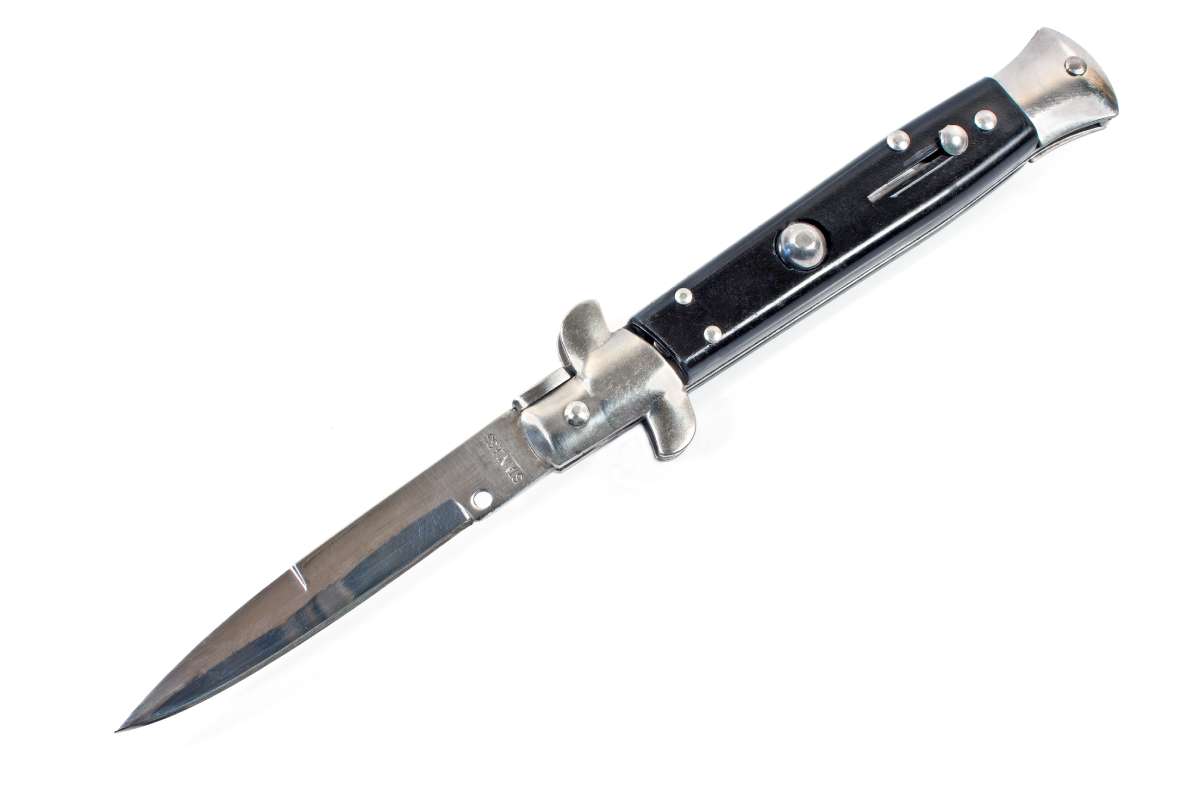
- Switchblades: Knives with a blade that opens automatically by gravity or centrifugal force, or by a button, spring, or other device in the handle. There’s an exception for switchblades with a blade less than two inches in length, which are generally legal to carry.
- Ballistic Knives: Knives that propel the blade from the handle. These are extremely rare but unequivocally illegal.
- Shuriken (Throwing Stars): These martial arts weapons are prohibited.
- Lipstick Case Knives, Cane Swords, and Belt Buckle Knives: These are disguised knives designed to look like everyday objects and are illegal to carry.
- Undetectable Knives: Knives made of materials that would not activate a metal detector.
It’s crucial for anyone traveling through or residing in California to be aware of these outright bans. Possessing any of these prohibited knives, even without intent to use them unlawfully, can lead to serious legal repercussions.
Local Ordinances: Navigating City and County Specifics
While California provides a foundational framework for knife laws, local jurisdictions have the authority to enact stricter ordinances. This means that what might be legal in one city could be restricted in another, adding another layer of complexity for those exploring the state’s diverse regions. Always remember that local laws can supersede or add restrictions to statewide regulations.
Key Examples: Los Angeles and San Francisco Knife Laws
Major urban centers like Los Angeles and San Francisco are prime examples where local ordinances can impose additional restrictions. In Los Angeles, for instance, there are specific prohibitions concerning the carry of certain knives. While the statewide law permits open carry of most folding knives, the city of Los Angeles has at times had ordinances that restrict the open carry of any knife, or specific knife types, in certain public places or events. For visitors exploring attractions like the Hollywood Walk of Fame or staying in downtown hotels, it’s advisable to check the most current city regulations.
Similarly, San Francisco, a vibrant hub of tourism with landmarks such as the Golden Gate Bridge, Alcatraz Island, and Pier 39, has also implemented its own specific knife ordinances. These have historically included restrictions on carrying knives with blades over a certain length (e.g., three inches) in plain view or within certain public spaces. The nuances can be challenging, requiring careful research, especially if you plan to carry a knife for utility purposes in these densely populated areas. The capital city of Sacramento and other counties might also have specific rules. It’s always prudent to consult the municipal code of the specific city or county you are visiting to ensure compliance.
Special Considerations for National Parks and State Beaches
California is home to an incredible array of natural wonders, including several iconic national parks like Yosemite National Park, Sequoia National Park, King Canyon National Park, Death Valley National Park, and Channel Islands National Park, along with numerous state parks and beaches such as Pfeiffer Big Sur State Park. While federal lands, like national parks, generally adhere to federal regulations, these often incorporate or defer to state laws regarding weapons.
Within national parks, knives used for camping, hiking, fishing, and other outdoor activities are generally permitted, provided they are not prohibited types (e.g., switchblades) and are carried in a lawful manner (often openly in a sheath). However, federal park regulations might have specific rules regarding weapons in certain buildings or areas, so it’s wise to check the park’s specific guidelines before entering. For state parks and beaches, state law applies, but individual park rangers or local jurisdictions might enforce rules with varying degrees of strictness, especially concerning knives on beaches or in developed recreational areas where large crowds gather. The safest approach is to ensure any knife carried in these natural settings is clearly for utility or recreation and is carried openly and responsibly.
Practical Advice for Travelers and Outdoor Enthusiasts
For those who rely on a knife for legitimate purposes – from opening packages to preparing food on a camping trip – navigating California’s laws requires thoughtfulness. Understanding the context of your knife carry and adhering to best practices can prevent unnecessary legal issues.
When a Knife is Permitted: Utility, Camping, and Fishing
The law acknowledges that knives serve essential, lawful functions. Knives are generally permitted for:
- Utility: Everyday folding knives used for tasks like opening boxes, cutting string, or minor repairs are usually permissible, especially when openly carried or, if folding, concealed and not easily construed as a dirk or dagger.
- Camping and Hiking: Fixed-blade or larger folding knives are common tools for outdoor enthusiasts. When used for purposes like cutting firewood, preparing campsite meals, or emergency situations, these knives are generally legal if carried openly in a sheath attached to a belt or backpack.
- Fishing and Hunting: Specialized knives for these activities are lawful when carried as part of the relevant equipment and used for their intended purpose.
The key across all these scenarios is intent. Carrying a knife solely for its utility in a relevant situation is fundamentally different in the eyes of the law than carrying one with malicious intent or in a manner that suggests it is primarily a weapon.
Areas Where Knives Are Strictly Forbidden
Regardless of blade length, type, or whether it’s open or concealed, there are specific locations in California where carrying any knife is strictly forbidden. These include:
- School Campuses: This includes K-12 schools, colleges, and universities. Even a small utility knife can be illegal on school grounds.
- Federal Buildings and Courthouses: These are often subject to strict federal regulations that prohibit all weapons, including knives.
- Airports and Federal Transportation Hubs: Knives are prohibited beyond security checkpoints at airports (e.g., Los Angeles International Airport) and often on public transit systems. Always check specific transit rules.
- Secure Areas of Theme Parks: Places like the Disneyland Resort have strict policies against weapons, including knives, for public safety.
- Public Gatherings/Events: Some city ordinances may restrict knife carry at large public gatherings, concerts, or protests.
Always be mindful of your surroundings and the specific rules of the venue or property you are entering. When in doubt, it is always best to leave your knife securely stored.
Ensuring Compliance and Avoiding Legal Pitfalls
To minimize risk and ensure compliance, travelers and residents alike should adopt a proactive approach:
- Research Local Laws: Before traveling to a new city or county within California, quickly check their specific knife ordinances.
- Understand Open vs. Concealed: If carrying a fixed-blade knife, ensure it is openly displayed in a sheath. For folding knives, if concealed, be confident it cannot be classified as a “dirk” or “dagger.”
- Avoid Prohibited Knives: Absolutely do not carry switchblades (unless under 2 inches), ballistic knives, or disguised knives.
- Consider Context and Intent: Always be able to articulate a lawful purpose for carrying your knife.
- Common Sense: If a situation feels risky or inappropriate for knife carry (e.g., crowded urban events, sensitive locations), err on the side of caution and leave it behind.
Penalties and Responsible Practices
Failing to adhere to California’s knife laws can result in significant legal consequences, ranging from misdemeanors to felonies, depending on the specific violation and the circumstances.
The Consequences of Non-Compliance
- Misdemeanor Charges: Many violations, such as carrying a dirk or dagger concealed without prior conviction, can be charged as a misdemeanor, leading to fines, probation, and potentially up to a year in county jail.
- Felony Charges: Repeated offenses, carrying prohibited knives (like ballistic knives), or carrying any knife with intent to assault can result in felony charges, carrying much harsher penalties, including state prison time.
- Loss of Knife: Any knife involved in a violation is typically confiscated and destroyed.
- Impact on Travel: A criminal record can severely impact future travel plans, employment, and overall lifestyle.

Best Practices for Carrying a Knife in California
For a worry-free experience in the beautiful state of California, consider these best practices:
- Prioritize Folding Knives: For everyday carry, a simple folding knife that locks open and closed, and is clearly a utility tool, is generally the safest choice. Ensure the blade length is under 2 inches if it’s a switchblade.
- Sheathed Fixed Blades for Outdoors: If engaging in outdoor activities, carry fixed-blade knives openly in a secure sheath.
- When in Doubt, Leave it Out: If you are unsure about the legality of carrying a particular knife in a specific location, it’s always best to leave it at home or secured in your vehicle.
- Stay Informed: Laws can change, so periodically review California’s Penal Code and local ordinances relevant to your plans.
Understanding and respecting California’s knife laws is an essential part of responsible citizenship and travel. By being informed and exercising good judgment, you can ensure your journeys through the Golden State remain safe, legal, and truly enjoyable, allowing you to focus on the wonders and experiences that this magnificent state has to offer.
LifeOutOfTheBox is a participant in the Amazon Services LLC Associates Program, an affiliate advertising program designed to provide a means for sites to earn advertising fees by advertising and linking to Amazon.com. Amazon, the Amazon logo, AmazonSupply, and the AmazonSupply logo are trademarks of Amazon.com, Inc. or its affiliates. As an Amazon Associate we earn affiliate commissions from qualifying purchases.