
For residents and new arrivals alike, navigating the intricacies of civic participation can sometimes raise questions, especially concerning the basic requirements for casting a ballot. Among the most common inquiries, particularly in a state as vast and diverse as California, is whether identification is needed to vote. The answer, while generally straightforward, comes with nuances that are important for every eligible citizen to understand. California has established a voting system designed to be accessible while maintaining integrity, and knowing the specifics can help ensure a smooth experience at the polls.
The “Golden State” operates on principles aimed at broad voter participation, which is reflected in its approach to voter identification. Unlike some other states that mandate photo ID for all voters, California’s laws are more flexible. This guide will delve into the specific requirements, explain when identification might be requested, detail what forms of ID are acceptable, and outline other crucial aspects of the voting process, from mail-in ballots to provisional voting and registration. Understanding these elements is key to confidently exercising your right to vote in California, whether you are a long-time resident or have recently made this vibrant state your home.
The General Rule: No ID Required for Most Voters
One of the most defining features of California’s election system is its general stance on voter identification. For the vast majority of voters, presenting a form of identification at the polling place on election day is simply not required. This policy is rooted in the state’s commitment to ensuring that all eligible citizens can cast their vote without unnecessary barriers. The process typically relies on an existing voter registration database, where poll workers verify a voter’s eligibility by cross-referencing their name and address.
When you arrive at a polling station, a poll worker will ask for your name and address. They will then locate your name on the voter roll. Upon confirmation, you will be asked to sign next to your name, and then you will be issued a ballot. This signature serves as the primary verification method, confirming your identity against the signature on file from your voter registration application. This streamlined process is designed to be efficient and user-friendly, minimizing potential delays and ensuring that voting remains a convenient civic duty. This general rule applies to federal, state, and local elections across all 58 counties in California.
California’s Approach to Voter Identification
The philosophy behind California’s voter ID laws leans towards ensuring broad accessibility rather than imposing strict identification requirements. This approach is often contrasted with states that have adopted more stringent photo ID laws, which proponents argue are necessary for election security, while critics contend they disenfranchise certain groups of voters, such as the elderly, students, low-income individuals, or those who do not have easy access to government-issued identification. California aims to strike a balance, focusing on verification through registration and signature matching, alongside specific provisions for situations where additional identification might be genuinely necessary.
The state’s election code, overseen by the Secretary of State, outlines these regulations in detail. It emphasizes that proper registration is the cornerstone of voter eligibility. Once an individual is registered and their information is confirmed in the statewide voter database, their presence at the polls and signature are usually sufficient to receive a ballot. This system has been refined over the years to adapt to changing demographics and technological advancements, always with an eye toward maintaining a fair, secure, and open democratic process. The commitment to these principles ensures that the act of voting remains a fundamental right, accessible to all eligible citizens regardless of their immediate access to identification documents.
Exceptions and When ID Might Be Requested
While the general rule in California is that no ID is required to vote, there are specific, limited circumstances under which a poll worker may ask you to present identification. These exceptions are in place to address particular situations where a voter’s identity or eligibility needs an additional layer of verification. Understanding these scenarios can help voters avoid any unexpected delays or confusion at the polling place.
The most common situation where ID might be requested is if you are voting for the first time in a federal election, and you registered to vote by mail, and did not provide identification information (such as your California Driver’s License number, California Identification Card number, or the last four digits of your Social Security number) with your registration application. In such cases, federal law, specifically the Help America Vote Act (HAVA), requires voters to show ID. This particular requirement is designed to ensure the integrity of the voter rolls for federal elections.
Another instance might arise if there is a discrepancy in the voter roll or if a poll worker has a reasonable basis to question a voter’s identity. While rare, such situations could lead to a request for identification. However, even in these cases, if a voter cannot provide an acceptable form of ID, they still have the right to cast a provisional ballot, ensuring their vote is counted after their eligibility is verified. It’s important to remember that poll workers are trained to handle these situations fairly and by the law, and they should be able to explain why ID is being requested if an exception applies.

Acceptable Forms of Identification (When Required)
For those specific instances when identification is indeed requested, California law is clear about what forms of ID are considered acceptable. The list is comprehensive, encompassing a variety of documents that can verify a voter’s identity and, in some cases, their residency. This flexibility ensures that individuals who may not possess a typical photo ID, such as a driver’s license, still have options to confirm their eligibility. The primary goal is to ensure that voters can easily provide the necessary proof without undue burden.
The acceptable forms of identification fall into two main categories: government-issued photo IDs and other reliable documents that can establish identity. It’s worth noting that if an ID is requested, it usually pertains to the voter’s identity, not necessarily their address, as residency is primarily established through the registration process itself. Voters should familiarise themselves with this list to be prepared for any eventuality, though again, for most, it will not be a concern.
Government-Issued Photo IDs
When a photo ID is needed, the most commonly accepted forms are those issued by federal, state, or local government agencies. These documents are generally considered highly reliable for identity verification due to their official nature and the security features they often incorporate. They typically include a photograph of the bearer, making visual confirmation straightforward for poll workers.
Examples of acceptable government-issued photo IDs include:
- A California Driver’s License or California Identification Card: These are perhaps the most common forms of ID presented.
- A United States Passport or passport card: Universally recognized and highly secure.
- A U.S. Military Identification Card: Essential for service members and their families.
- Identification cards issued by a federally recognized tribal government, such as a Tribal Identification Card.
- Any other ID card issued by a governmental agency, provided it includes the voter’s name and photograph. This can include IDs issued by city or county governments.
These documents are preferred because they offer clear, unambiguous proof of identity. They are readily available to a large segment of the voting population and are already widely used for various official purposes.
Other Acceptable Documents
Beyond government-issued photo IDs, California law also permits the use of various other documents to verify identity when required. This broadens the scope of acceptable proof, catering to individuals who may not possess a traditional driver’s license or passport. These documents often serve to confirm a voter’s name and connection to their registered address, or to provide another layer of identity confirmation.
Examples of other acceptable documents include:
- A student identification card: Many academic institutions issue ID cards to their students, which can serve this purpose. A Student Identification Card from any accredited public or private university, college, professional school, or technical college within California is generally accepted.
- A utility bill: Bills for gas, electricity, water, or other services, typically dated within 3 months of the election, showing the voter’s name and address.
- A bank statement: Similar to utility bills, a recent bank statement can confirm identity and residency.
- A paycheck or government check: Documents that verify your name and often an associated address.
- A property tax bill.
- Vehicle registration.
- Any document issued by a governmental agency containing the voter’s name and address.
The key with these alternative documents is that they must clearly display the voter’s name and, if applicable, their address, matching the information on the voter rolls. Poll workers are trained to review these documents to ensure they meet the legal requirements. The inclusion of these options underscores California’s commitment to ensuring that even in the rare instances where ID is needed, voters have multiple pathways to demonstrate their eligibility.
Practical Scenarios at the Polls
Understanding these rules is one thing, but knowing how they play out in practical scenarios at the polling place can offer additional peace of mind. Most voters will experience a smooth process, signing the roster and receiving their ballot without any request for identification. However, being prepared for the exceptions is always a good idea.
If you are a first-time federal election voter who registered by mail without providing ID information, it’s advisable to bring one of the acceptable forms of identification listed above. Having it ready can prevent any potential delays. If you forget your ID, or if for any reason you cannot produce an acceptable document when requested, you will still be allowed to cast a provisional ballot. This means your ballot will be kept separate and reviewed by the County Elections Official (or Registrar of Voters in many counties) after Federal Election Day to verify your eligibility. As long as your eligibility is confirmed, your vote will be counted. This provisional ballot system acts as a crucial safeguard, ensuring that no eligible voter is disenfranchised simply due to an oversight or a lack of immediate documentation.
Poll workers are trained to assist voters and should be able to explain the process clearly. If you have questions or concerns at the polling place, do not hesitate to ask for clarification. Voter rights are paramount, and mechanisms are in place to support every eligible citizen in casting their vote.
Beyond In-Person Voting: Mail-In Ballots and Provisional Voting
The landscape of voting in California extends beyond the traditional in-person polling place. Mail-in voting has become an increasingly popular and, in some cases, universal method for casting ballots, further simplifying the process for many residents. Additionally, the provisional ballot system provides a critical safety net, ensuring that every eligible voter has their voice heard, even if there are initial questions about their registration or eligibility at the polls. Understanding these alternative and safeguard mechanisms is just as important as knowing the ID requirements for in-person voting.
Voting by Mail in California
California has embraced vote-by-mail as a standard practice, with all active registered voters now receiving a mail-in ballot automatically for every election. This statewide initiative significantly enhances voter access and convenience, allowing individuals to cast their ballots from the comfort of their homes without the need to visit a polling place or request an absentee ballot. This means that for the vast majority of voters, the question of “Does California require ID to vote?” becomes irrelevant, as no ID is typically required when returning a mail-in ballot.
When you receive your mail-in ballot, it will include instructions, the ballot itself, and a return envelope. The critical piece of identification for a mail-in ballot is your signature on the return envelope. Election officials compare this signature to the one on your voter registration record to verify your identity. This signature verification process is a cornerstone of election security for mail-in voting in California. As long as your signature matches what’s on file, your ballot will be counted.
Voters have several options for returning their mail-in ballots: by mail, dropping it off at any official ballot drop box, or delivering it in person to any polling place or county elections office within California on or before Federal Election Day. The widespread availability of mail-in ballots has dramatically increased participation rates and offers flexibility for those who may travel, have demanding schedules, or prefer to research candidates and measures at their leisure before voting.
Understanding Provisional Ballots
The provisional ballot system is a vital safeguard in California’s election integrity framework, designed to ensure that no eligible voter is turned away from the polls. If there is any question regarding a voter’s eligibility, their registration status, or if they lack the required identification in specific circumstances, they have the right to cast a provisional ballot. This means their ballot is marked “provisional” and is separated from regular ballots, allowing election officials to verify their eligibility after Federal Election Day.
Common reasons a provisional ballot might be issued include:
- A voter’s name does not appear on the roster, but they believe they are registered.
- The voter’s registration information is outdated, perhaps due to a recent move within the county or state.
- The voter is at the wrong polling place.
- A voter is a first-time federal election voter who registered by mail and did not provide ID, and subsequently could not produce ID when requested.
- A voter has already received a mail-in ballot but wishes to vote in person and does not have their mail-in ballot to surrender.
After the election, the County Elections Official or Registrar of Voters will investigate the provisional ballot to confirm the voter’s eligibility. If the voter is determined to be eligible, their ballot is counted. Voters are typically provided with information on how to check the status of their provisional ballot, offering transparency and accountability. This system underscores California’s commitment to ensuring every valid vote is included in the final tally, safeguarding the democratic process.
Registering to Vote in California
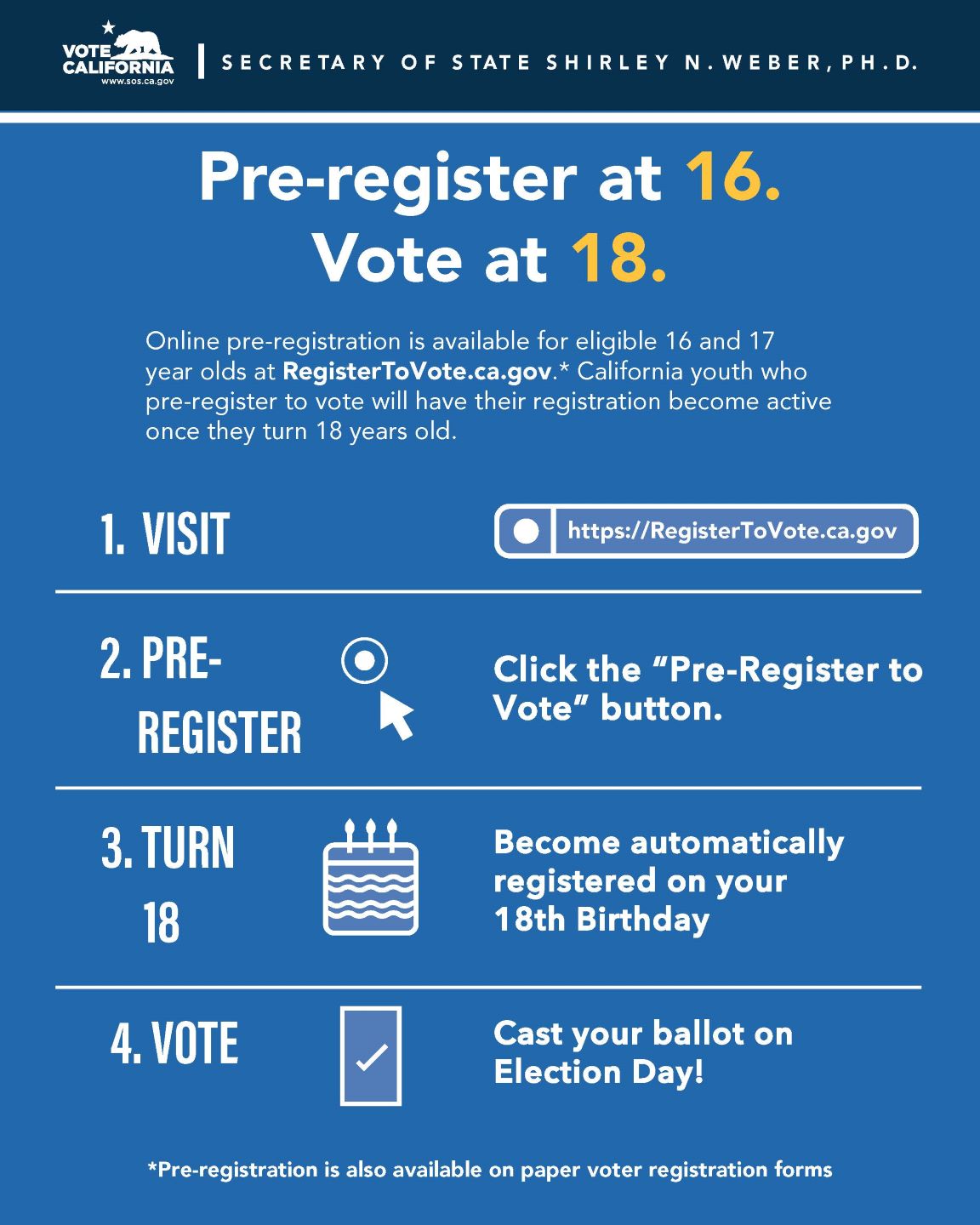
Before any discussion about identification or voting methods, the fundamental step is voter registration. To be eligible to vote in California, you must be registered. This process is relatively straightforward, but adherence to deadlines and an understanding of eligibility criteria are paramount. The state provides multiple avenues for registration, striving to make it as accessible as possible for all eligible citizens.
To register to vote in California, you must be a U.S. citizen, a resident of California, at least 18 years old by Federal Election Day, not currently serving a state or federal prison term for the conviction of a felony, and not currently found mentally incompetent to vote by a court. The process can be completed online through the California Secretary of State’s website, by mail, or in person at various government offices, including the Department of Motor Vehicles. When registering, you’ll provide personal information, including your California Driver’s License or California Identification Card number, or the last four digits of your Social Security number. Providing this information during registration is crucial as it helps fulfill the federal ID requirement for first-time voters mentioned earlier, potentially preventing an ID request at the polls.
Key Registration Deadlines
Deadlines are a critical component of the voter registration process in California. To be eligible to vote in a specific election, you must register by a set date, typically 15 days before Federal Election Day. This deadline allows county election officials sufficient time to process registrations, update voter rolls, and prepare polling places. It’s essential for all potential voters to be aware of these dates, which are widely publicized by the Secretary of State and local election offices through various channels, including the official Voter Information Guide sent to every registered household.
However, California also offers a “Same Day Voter Registration” (Conditional Voter Registration) option. This allows individuals to register and vote provisionally at their county elections office or any polling place from 14 days before an election through Federal Election Day. While their ballot will be provisional, this flexibility ensures that even those who miss the standard registration deadline can still participate. Once the County Elections Official verifies their eligibility, their ballot is counted. This innovative approach significantly reduces barriers to participation, recognizing that life events can sometimes cause individuals to miss traditional deadlines.
Eligibility and Residency
Understanding what constitutes residency for voting purposes in California is vital. To register, you must be a resident of California, which generally means you live in the state with the intent to make it your home. This is distinct from simply being present in the state for travel or temporary purposes. For individuals who are transient, move frequently, or maintain multiple residences, it’s important to establish one primary residence for voting purposes. Your residence for voting is typically where you regularly sleep and return to, even if you are temporarily away.
The voter registration form requires you to declare your residential address. If you move within California, you must update your voter registration with your new address to ensure you receive the correct ballot and are assigned to the appropriate polling place. This update can be done online, similar to the initial registration process. Maintaining accurate registration information is critical not only for receiving your mail-in ballot but also for preventing any issues should you choose to vote in person and an ID verification is requested. Eligibility also includes citizenship and age requirements, as detailed previously. The aim is to ensure that every individual who meets these core criteria has the opportunity to exercise their right to vote.
Maintaining Your Voter Registration
Once registered, it’s essential to keep your voter registration information current. Life changes such as moving to a new address, changing your name, or wishing to change your political party preference all necessitate an update to your registration. California offers convenient ways to manage your registration, primarily through the Secretary of State’s online portal, where you can check your voter status and make updates.
Regularly checking your registration status, especially before an upcoming election, is a good practice. This helps ensure that you are on the active voter roll and that your mail-in ballot is sent to the correct address. If you move to a new county within California, you will need to re-register in that new county. If you move within the same county, you can simply update your existing registration. The state’s system is designed to be dynamic, accommodating the evolving lives of its residents. By staying informed and keeping your voter information up-to-date, you contribute to the accuracy of the voter rolls and ensure your seamless participation in future elections.
Conclusion: Empowering Voters in California
Navigating the electoral landscape in California reveals a system built on principles of broad accessibility and security, aiming to empower every eligible citizen to participate. The prevailing answer to the question “Does California require ID to vote?” is generally no, especially with the widespread adoption of mail-in ballots where signature verification is the primary method of identity confirmation. For those who vote in person, identification is typically only requested in specific, limited scenarios, such as for first-time federal election voters who registered by mail without providing ID information. Even in these cases, a wide array of government-issued photo IDs and other reliable documents are accepted, and the robust provisional ballot system ensures that no eligible vote is unjustly discarded.
From the convenience of universal mail-in voting to the flexibility of same-day registration and the safety net of provisional ballots, California’s election laws are designed to minimize barriers and maximize participation. Understanding these nuances—from how to register and meet deadlines to knowing when and what kind of ID might be necessary—is crucial for a smooth and confident voting experience. Whether you are a long-standing resident or have just begun to experience the vibrant lifestyle of the Golden State, being informed about these processes ensures that your voice can be effectively heard in shaping the future of California and the nation. Staying proactive in managing your voter registration is a simple yet powerful step towards upholding your civic duties and democratic rights.
LifeOutOfTheBox is a participant in the Amazon Services LLC Associates Program, an affiliate advertising program designed to provide a means for sites to earn advertising fees by advertising and linking to Amazon.com. Amazon, the Amazon logo, AmazonSupply, and the AmazonSupply logo are trademarks of Amazon.com, Inc. or its affiliates. As an Amazon Associate we earn affiliate commissions from qualifying purchases.