
For anyone captivated by the allure of the Sunshine State – a land synonymous with pristine beaches, vibrant cities, and boundless opportunities for travel and tourism – the prospect of launching a new venture often comes with a crucial question: “How do I get an LLC in Florida?” Whether you’re dreaming of opening a charming boutique hotel in Key West, managing a portfolio of luxury vacation rentals in Orlando, leading bespoke tour experiences along the Florida Keys, or simply securing your financial future amidst the state’s booming tourism economy, understanding the process of forming a Limited Liability Company (LLC) is an indispensable first step.
The decision to form an LLC isn’t merely a legal formality; it’s a strategic move that provides a robust framework for your entrepreneurial journey, offering significant benefits in asset protection, tax flexibility, and professional credibility. For individuals deeply immersed in the travel, hospitality, and lifestyle sectors, an LLC acts as a shield, separating personal assets from business liabilities. Imagine investing your life savings into a stunning villa in Naples for short-term rentals; an LLC ensures that potential lawsuits against your rental business won’t jeopardize your personal home or savings. This guide will walk you through the essential steps to establish your Florida LLC, tailored specifically for those whose passions lie at the intersection of business and the vibrant travel lifestyle.
Why an LLC is Your Passport to Florida’s Tourism and Hospitality Scene
Florida’s economy thrives on tourism and real estate, making it an incredibly fertile ground for entrepreneurs in these sectors. From quaint bed-and-breakfasts to sprawling resorts, from adventurous eco-tours to sophisticated travel planning services, the opportunities are endless. Establishing an LLC in this dynamic environment isn’t just about compliance; it’s about strategic positioning and safeguarding your hard-earned ventures.
Protecting Your Travel and Accommodation Investments
One of the primary motivations for forming an LLC is the crucial element of personal asset protection. In the fast-paced world of travel and accommodation, risks are inherent. A guest might slip and fall at your Airbnb property, a tour participant could sustain an injury, or a client might allege negligence in your travel planning services. Without the protective barrier of an LLC, your personal assets – your home, savings, and other valuables – could be vulnerable in a lawsuit.
By establishing an LLC, you create a legal distinction between your personal finances and your business liabilities. This “limited liability” feature means that, in most cases, creditors and claimants can only pursue the assets held within the LLC itself, leaving your personal wealth untouched. This peace of mind is invaluable, allowing you to focus on delivering exceptional experiences, whether you’re managing a bustling hotel in Miami, curating luxury travel packages for discerning clients, or operating a fleet of rental boats in Fort Lauderdale. It’s an essential safeguard for anyone looking to invest significantly in Florida’s property or tourism markets.
Fueling Your Entrepreneurial Lifestyle in the Sunshine State
For many, the dream of living and working in Florida is synonymous with an entrepreneurial, flexible lifestyle. Digital nomads, travel bloggers, luxury travel advisors, and boutique accommodation owners often choose the Sunshine State for its favorable business climate and endless recreational opportunities. An LLC significantly empowers this lifestyle by providing a formal structure for your business endeavors.
It lends credibility to your operations, whether you’re partnering with local attractions like Disney World or Universal Studios for unique guest experiences, or collaborating with booking platforms like Booking.com or Vrbo. Furthermore, the tax flexibility offered by an LLC (you can choose to be taxed as a sole proprietorship, partnership, S-corporation, or C-corporation) allows you to optimize your financial strategy, potentially reducing your overall tax burden and freeing up more resources for reinvestment in your business or for personal travel. This flexibility is particularly appealing to those who manage diverse income streams from various travel-related ventures, from affiliate marketing for hotels to leading specialized tours.
Enhancing Your Brand in a Competitive Market
In Florida’s bustling tourism and hospitality industry, standing out from the crowd is paramount. An LLC confers an air of professionalism and legitimacy that can significantly enhance your brand image. When potential guests, clients, or partners see that you operate as a registered LLC, it instills confidence in your reliability and commitment. This is especially true for businesses offering premium services, such as luxury villa rentals, high-end culinary tours, or exclusive travel concierge services.
Operating as a legally recognized entity simplifies opening business bank accounts, securing loans, and establishing merchant accounts for processing payments – all vital components for scaling a successful travel or accommodation business. It also provides a clear legal identity for contracts with suppliers, vendors, and online travel agencies, streamlining operations and reducing potential disputes. For a new resort on Amelia Island or a specialized tour operator exploring Everglades National Park, this professional foundation is critical for building trust and attracting repeat business in a market defined by quality and reputation.
Navigating the Sunshine State: Essential Steps to Forming Your Florida LLC
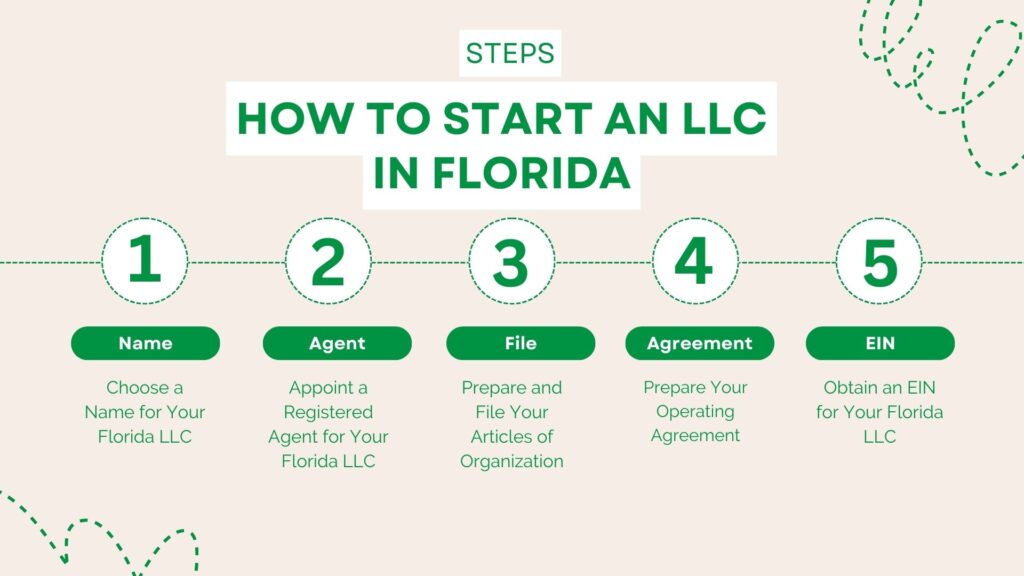
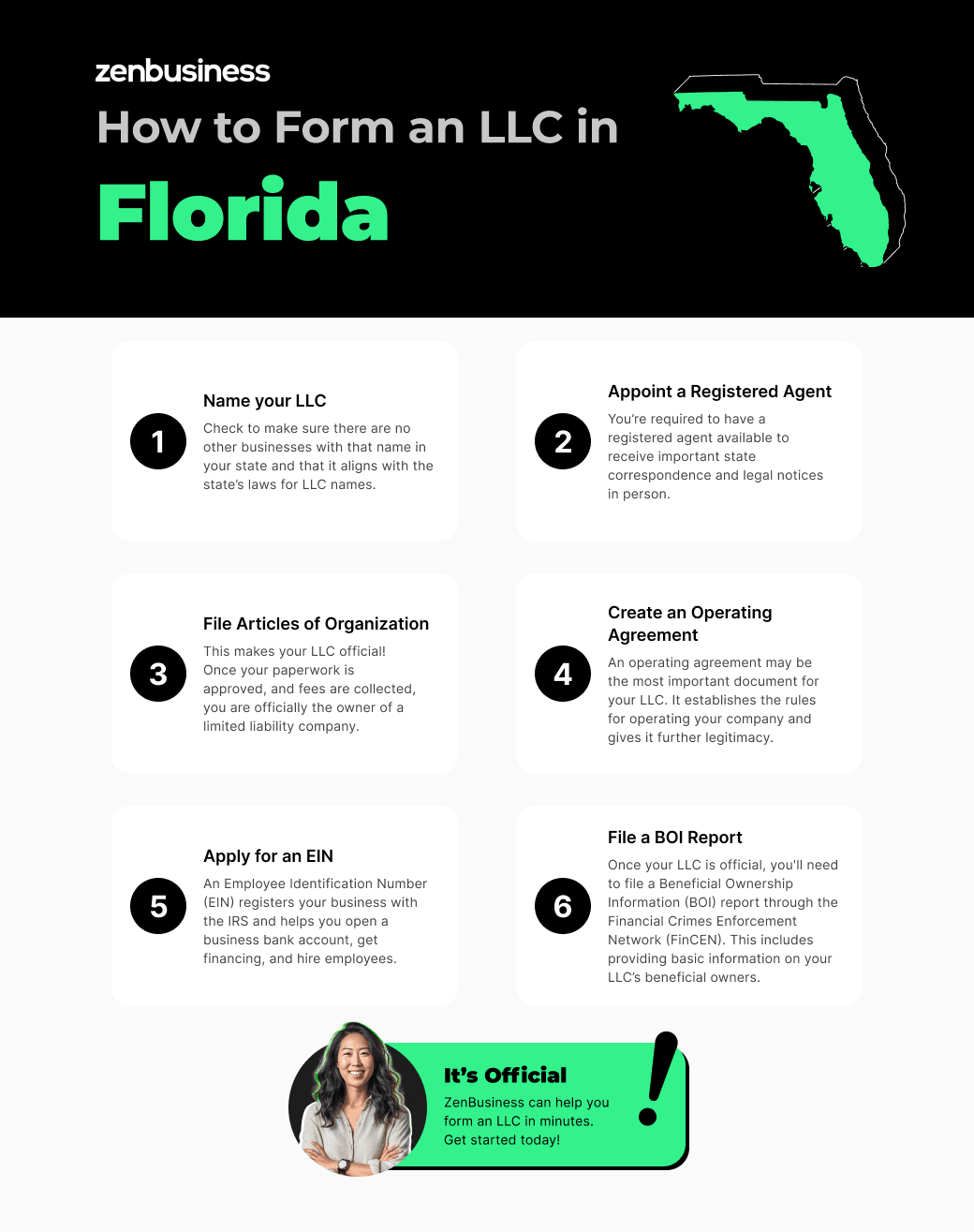
The process of forming an LLC in Florida is relatively straightforward, designed to encourage entrepreneurship. However, paying close attention to each step is crucial to ensure legal compliance and avoid future complications. While the general steps are similar across many states, understanding the nuances specific to Florida can save you time and effort.
Step 1: Choosing Your Unique Business Name (and a Registered Agent)
Your LLC’s name is its identity, especially important in a brand-conscious industry like travel and hospitality. It should be memorable, descriptive of your offerings (e.g., “Key West Coastal Escapes LLC” or “Orlando Luxury Stays LLC”), and readily available. Before you get too attached to a name, you must ensure it hasn’t already been taken by another entity in Florida. A quick search on the Florida Department of State’s SunBiz website will confirm availability. Remember, your LLC name must include “Limited Liability Company,” “LLC,” or “L.L.C.”
Beyond the name, you’ll need to designate a Registered Agent. This individual or entity is responsible for receiving official legal and tax documents on behalf of your LLC. The Registered Agent must have a physical street address in Florida (not a P.O. Box) and be available during regular business hours. For entrepreneurs who might be frequently traveling, or operating their business remotely, hiring a professional Registered Agent service is a common and practical choice. This ensures that important legal notices are always received and forwarded to you, preventing missed deadlines or legal issues that could disrupt your business operations, especially when you’re busy hosting guests in Sarasota or exploring new destinations for your travel blog.
Step 2: Filing Your Articles of Organization with the Florida Department of State
This is the cornerstone of your LLC formation. The “Articles of Organization” is a short, formal document filed with the Florida Department of State. It officially brings your LLC into existence. This document typically requires:
- The name of your LLC.
- The name and street address of your Registered Agent.
- The mailing address of the LLC.
- The effective date of the LLC’s formation (which can be immediate or a future date).
- Signatures of authorized representatives.
You can file your Articles of Organization online via the SunBiz website, which is generally the quickest and most efficient method. The filing fee is standard, and once processed, you will receive confirmation that your LLC is officially formed. This step legally establishes your entity, allowing you to proceed with setting up bank accounts, obtaining licenses, and truly beginning your journey in Florida’s travel and hospitality landscape, whether it’s for a luxury retreat in South Beach or a cultural tour company in St. Petersburg.
Step 3: Crafting Your Operating Agreement: Your Internal Travel Itinerary
While not legally required to file with the state, an Operating Agreement is arguably the most critical document for your LLC. Think of it as the internal blueprint or “travel itinerary” for your company, outlining how your LLC will be managed, how profits and losses will be distributed, the rights and responsibilities of each member (if you have partners), and procedures for significant decisions or unforeseen circumstances.
For travel and accommodation businesses, a well-drafted Operating Agreement is particularly vital. If you’re co-owning a vacation rental property with friends, launching a tour company with business partners, or even managing a solo venture that might expand in the future, this agreement prevents misunderstandings and disputes. It clarifies who does what, how decisions are made about investments (e.g., renovating a resort, expanding a tour fleet), and how to handle disagreements or the departure of a member. Without an Operating Agreement, your LLC will be governed by Florida’s default LLC statutes, which may not align with your specific vision or operational needs. Investing time in this document now can save significant headaches later, ensuring a smooth journey for your Florida venture.
Beyond Formation: Sustaining Your Florida LLC for Long-Term Success
Forming your LLC is just the beginning. To ensure its continued success and compliance within Florida’s regulatory environment, especially for businesses in the hospitality sector, ongoing management and adherence to specific requirements are essential. Overlooking these steps can lead to penalties, loss of limited liability protection, or even dissolution of your entity.
Understanding Your Tax Obligations in the Hospitality Sector
Taxes for an LLC in Florida can be complex, especially when operating within the travel and accommodation industries. While Florida does not have a state income tax, businesses are subject to other taxes. Key considerations for hospitality businesses include:
- Sales Tax and Tourist Development Tax (Resort Tax): If you are renting out accommodations (hotels, vacation rentals, short-term stays), you will likely be responsible for collecting and remitting Florida sales tax (currently 6%) to the Florida Department of Revenue. Additionally, many counties impose a “Tourist Development Tax” (often called a resort tax or bed tax), which can add several percentage points to the cost of a stay. This tax is crucial for businesses in popular tourist destinations like Orlando, Miami, or Fort Myers.
- Federal Income Tax: As an LLC, you have flexibility in how you are taxed by the IRS. A single-member LLC is typically taxed as a sole proprietorship, while a multi-member LLC is taxed as a partnership. However, you can elect for your LLC to be taxed as an S-corporation or C-corporation, which can offer significant tax advantages depending on your profit levels and operational structure. Consulting with a tax professional specializing in hospitality businesses is highly recommended to optimize your tax strategy.
- Employer Taxes: If your LLC hires employees (e.g., hotel staff, tour guides, cleaning crew), you will have responsibilities for federal and state payroll taxes, including unemployment insurance.
Accurate record-keeping and timely remittance of these taxes are paramount to avoiding fines and ensuring your business contributes positively to the local economy.
Annual Reporting and Compliance: Keeping Your Business on Track
To maintain your LLC’s “active” status in Florida, you must file an Annual Report with the Florida Department of State between January 1st and May 1st each year. This report updates the state with any changes to your LLC’s principal address, Registered Agent, or managing members/officers. There is an associated filing fee.
Missing the May 1st deadline will result in a significant late fee and, if the report remains unfiled, your LLC could be administratively dissolved. This means losing your limited liability protection and potentially facing legal complications. Staying on top of this annual requirement is a simple but critical aspect of ongoing compliance, ensuring your vacation rental business in Tampa or your luxury travel agency in Jacksonville remains in good standing.
Securing Necessary Licenses and Permits for Your Florida Venture
Beyond state registration, most businesses in Florida, especially those in the travel and hospitality industries, require various local, county, and state licenses and permits. The specific requirements will depend heavily on the nature and location of your business. Examples include:
- Lodging Establishments: Hotels, motels, vacation rentals, and even certain types of short-term rentals often require licenses from the Florida Department of Business and Professional Regulation (DBPR) and potentially local zoning permits.
- Food and Beverage Services: If your hotel or resort includes restaurants, bars, or even complimentary breakfast services, you’ll need food service licenses from the DBPR and health permits from the county.
- Tour Operators/Guides: Depending on the type of tour (e.g., water-based, adventure sports), specific certifications, insurance, or permits from local authorities or state agencies might be necessary.
- Occupational Licenses: Most cities and counties in Florida require businesses to obtain a local “occupational license” or “business tax receipt” to operate legally within their jurisdiction.
It’s advisable to check with the city and county clerk’s offices where your business is located, as well as relevant state agencies like the DBPR, to identify all necessary permits. A comprehensive approach to licensing ensures smooth operations and avoids potential legal pitfalls, allowing your travel experience company or accommodation property to thrive without interruption.
LLC Advantages for Florida’s Diverse Lifestyle and Business Opportunities
The choice to form an LLC in Florida is more than just a procedural step; it’s an embrace of the entrepreneurial spirit that defines the Sunshine State. For those who weave their business aspirations into a lifestyle rich with travel, exploration, and hospitality, the LLC structure offers distinct advantages that foster growth and resilience.
Flexibility for Diverse Business Models
Florida is a melting pot of business opportunities, particularly in the sectors of travel and tourism. From a solo luxury travel consultant curating bespoke itineraries to Walt Disney World Resort, to a group of friends pooling resources to develop a chain of boutique hotels along South Beach, the LLC model is incredibly adaptable. It can accommodate a wide array of business structures – from single-member operations to complex multi-member ventures – and allows for significant flexibility in management styles.
This adaptability is particularly beneficial in an industry where innovation and responsiveness are key. An LLC can easily pivot to new opportunities, whether it’s expanding from individual vacation rentals to managing a larger property management portfolio, or evolving a local guided tour into a multi-day themed experience covering historical landmarks from St. Petersburg to Tallahassee. The ease of modifying the internal structure through an Operating Agreement, coupled with minimal ongoing state-level filings compared to corporations, makes the LLC an ideal vehicle for dynamic entrepreneurs in Florida’s ever-changing market.
Attracting Investors for Ambitious Projects
For entrepreneurs with grand visions – perhaps developing a new eco-resort near Everglades National Park, or launching an innovative travel tech platform serving the entire Florida tourism market – attracting investors is often critical for growth. An LLC, by its very nature, projects a professional and legitimate image that can be highly appealing to potential investors. It demonstrates a commitment to formal business practices and provides a clear legal framework for investment.
Unlike a sole proprietorship, an LLC offers investors the security of a formal business entity and a defined structure for their contributions and potential returns. While an LLC may not offer the same ease of selling shares as a C-corporation, the flexibility within its Operating Agreement allows for creative solutions to structure investments, define investor rights, and outline profit distributions. This makes it an attractive option for securing seed funding or growth capital from angel investors, venture capitalists, or even family and friends who are keen to support your vision for transforming the travel and accommodation landscape in Florida.

Asset Protection: A Key Consideration for Florida Real Estate and Ventures
Reiterating the importance of asset protection is crucial, especially in a state like Florida, where real estate and high-value tourism ventures are commonplace. The limited liability protection offered by an LLC shields your personal assets from business debts and lawsuits, a safeguard that cannot be overstated. Consider the scale of investments often involved in Florida – a beachfront property, a fleet of tour vehicles operating near Kennedy Space Center Visitor Complex, or substantial bookings for a busy hotel chain like Hyatt, Marriott, or Hilton property in Universal Orlando Resort. The potential financial exposure in these scenarios is considerable.
Without an LLC, a single adverse event – a guest injury, a contractual dispute, or an unexpected business debt – could potentially wipe out your personal savings, home equity, and other investments. With an LLC, the financial risk is largely contained within the business itself. This allows entrepreneurs to take calculated risks, innovate, and pursue ambitious projects in Florida’s thriving tourism sector with greater confidence and peace of mind. It’s a foundational element that supports not just your business’s longevity, but also your personal financial well-being, enabling you to enjoy the lifestyle that drew you to the Sunshine State in the first place.
In conclusion, forming an LLC in Florida is a strategic and often essential step for anyone looking to build a successful and sustainable business in the state’s vibrant travel, tourism, and hospitality industries. From protecting your personal assets to enhancing your professional image and providing significant tax flexibility, the benefits are clear. By carefully following the outlined steps and understanding your ongoing obligations, you can lay a solid foundation for your Florida venture, paving the way for a prosperous journey in one of the world’s most exciting destinations.
LifeOutOfTheBox is a participant in the Amazon Services LLC Associates Program, an affiliate advertising program designed to provide a means for sites to earn advertising fees by advertising and linking to Amazon.com. Amazon, the Amazon logo, AmazonSupply, and the AmazonSupply logo are trademarks of Amazon.com, Inc. or its affiliates. As an Amazon Associate we earn affiliate commissions from qualifying purchases.