
Florida, the Sunshine State, beckons with its pristine beaches, vibrant cities, and unparalleled natural beauty. From the enchanting theme parks of Orlando to the historic charm of St. Augustine and the breathtaking natural preserves of the Everglades National Park, there’s an endless array of experiences waiting to be discovered. For many, especially those contemplating a move to this popular destination or planning an extended stay, the idea of hitting the open road is integral to truly immersing themselves in the Florida lifestyle. Public transportation in many parts of the state can be limited, making a personal vehicle not just a convenience, but often a necessity for daily life, exploring tourist attractions, and accessing the best hotels and accommodations.

Whether you’re a young resident eager for the freedom of independence, a family planning a move, or simply an individual keen on understanding the logistics of navigating Florida on your own terms, obtaining a driver’s license is a significant milestone. It unlocks a world of travel possibilities, enabling spontaneous road trips down the Florida Keys, easy access to world-class resorts, and the ability to truly explore beyond the typical tourist traps. So, the burning question remains: at what age can you get your license in Florida? The process is structured in a graduated system, designed to introduce new drivers to the responsibilities of the road gradually, ensuring safety for themselves and others. Understanding these age requirements and the steps involved is the first key to unlocking the full potential of your Florida adventure.
The Road to Driving Independence in Florida: Key Age Milestones
Florida’s graduated driver’s license (GDL) program is a carefully structured pathway designed to help new drivers gain experience safely. It outlines specific age milestones, each with its own set of requirements and restrictions, ensuring that young drivers build confidence and competence before earning full driving privileges. This phased approach is crucial in a state where driving is often the primary mode of transportation, connecting everything from sprawling natural landscapes to bustling metropolitan centers like Miami and Tampa.
Learner’s Permit: Your First Step (Age 15)
The journey to obtaining a Florida driver’s license begins at the age of 15 with a learner’s permit. This initial stage is all about supervised practice and familiarization with the rules of the road. To apply for a learner’s permit, applicants must meet several key requirements. First, they need to pass a vision test to ensure they meet the minimum sight standards for driving. Second, a written road rules and road signs test is mandatory, covering essential traffic laws, signals, and safe driving practices. This test is vital for understanding the foundational principles of driving, which are crucial whether you’re navigating the busy streets of Fort Lauderdale or the quieter roads leading to a secluded Florida beach.
Perhaps one of the most important prerequisites is the completion of a Traffic Law and Substance Abuse Education (TLSAE) course. This four-hour course, often referred to as the Drug and Alcohol course, educates prospective drivers on the dangers of impaired driving and the serious consequences of traffic violations. Once these requirements are met and the necessary identification documents are provided to the Florida Department of Highway Safety and Motor Vehicles (DHSMV), the permit can be issued.
However, a learner’s permit comes with strict restrictions designed to foster safe learning. A permit holder must always be accompanied by a licensed driver who is at least 21 years old and occupies the front passenger seat. For the first three months after issuance, driving is only permitted during daylight hours. After these initial three months, the driving hours extend until 10:00 PM. These restrictions are particularly relevant for families planning vacations or long-term stays in Florida, as they dictate when and how a permit-holding teen can contribute to driving responsibilities, perhaps helping navigate to a Walt Disney World Resort hotel or a picturesque nature trail. While restrictive, this phase is invaluable for building the fundamental skills needed to navigate Florida’s diverse driving environments, from bustling cityscapes to serene coastal routes.
Intermediate License: Growing Freedom (Age 16)
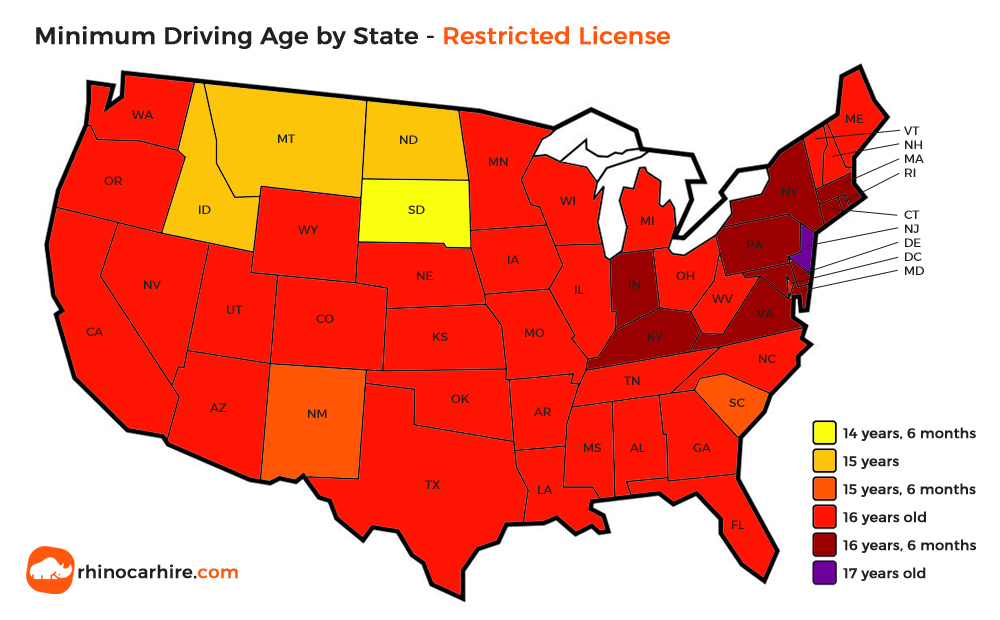
The next significant milestone on the path to full driving independence in Florida occurs at ages 16 and 17, when eligible drivers can apply for an intermediate license, also known as a Class E driver’s license with restrictions. This stage marks a considerable step up in freedom, allowing for more independent travel, but still with specific limitations aimed at promoting safe driving habits among young adults.
To qualify for an intermediate license, a permit holder must first demonstrate a solid foundation of driving experience. This includes holding a learner’s permit for at least one year without any traffic convictions. This duration is crucial, ensuring that the driver has had ample time to practice under various conditions and internalize safe driving practices. Beyond the time requirement, applicants must also log a minimum of 50 hours of supervised driving practice, with at least 10 of those hours completed at night. This supervised practice, meticulously recorded by a licensed driver 21 years or older, ensures exposure to different driving scenarios and conditions, which is especially important in Florida where sudden rainstorms can dramatically change road conditions, or navigating nighttime traffic in areas like South Beach requires heightened awareness.
The final hurdle for the intermediate license is passing a comprehensive driving skills test, typically administered at a DHSMV office or an approved third-party testing facility. This practical exam assesses the applicant’s ability to operate a vehicle safely, perform maneuvers like parallel parking, three-point turns, and demonstrate adherence to traffic laws. Upon successful completion, the intermediate license is issued, granting significantly more freedom but still maintaining certain restrictions based on age.
For 16-year-olds, driving is generally prohibited between 11:00 PM and 6:00 AM, unless driving to or from work, or accompanied by a licensed driver 21 or older. For 17-year-olds, the curfew is slightly relaxed, with driving restricted between 1:00 AM and 5:00 AM, again with similar exceptions. These restrictions are designed to limit driving during periods statistically associated with higher risks for young drivers, such as late-night hours when visibility is reduced and fatigue can be a factor. The intermediate license is a vital step for young residents seeking greater independence for school, work, and local excursions, making it easier to connect with friends, participate in community events, or even explore nearby attractions like Busch Gardens Tampa Bay under appropriate conditions. This increased mobility greatly enhances a teen’s lifestyle in a sprawling state like Florida.
Full Unrestricted License: The Open Road Awaits (Age 18)
The ultimate goal for any new driver in Florida is to obtain a full, unrestricted Class E driver’s license. This milestone represents complete driving independence, removing all the curfews and passenger restrictions that characterize the learner’s permit and intermediate license stages. The transition to a full unrestricted license is largely automatic once a driver reaches a certain age, provided they have maintained a good driving record.
Upon turning 18 years old, a driver who holds an intermediate license in Florida automatically transitions to a full, unrestricted Class E driver’s license. There’s no additional driving test or specific application required at this point, beyond perhaps updating the physical license card. This automatic progression acknowledges the driver’s accumulated experience and presumed maturity gained through the graduated licensing program. For individuals who obtain their first license at 18 or older, they may bypass the intermediate stage entirely, applying directly for a Class E license after completing the TLSAE course, passing the knowledge and vision tests, and successfully completing the driving skills test.
The full unrestricted license is a game-changer for individuals living in or frequently visiting Florida. It means the freedom to drive at any hour, transport any number of passengers (within the vehicle’s legal capacity), and embark on spontaneous road trips without needing a supervisor or adhering to time constraints. This newfound independence profoundly impacts lifestyle and travel. Imagine the ability to pack up for a weekend getaway to the historic sites of Key West, drive directly from your hotel in Sarasota to a hidden gem on Siesta Key Beach, or simply enjoy the convenience of commuting to work or school without limitations.
For tourists, especially those planning long-term stays or considering relocating, a full Florida license or an equivalent valid license from their home state or country opens up seamless car rental options and allows for comprehensive exploration of the state’s vast attractions. From the pristine shores of Clearwater Beach to the bustling districts of Jacksonville, and the serene natural beauty of the Gulf Coast, the full unrestricted license truly allows you to experience Florida on your own terms, embodying the ultimate freedom of the open road and making every journey an adventure.
Beyond the Basics: What You Need to Know for Your Florida Driver’s License
While understanding the age requirements is fundamental, navigating the process of obtaining a Florida driver’s license involves more than just hitting certain birthdays. There are specific documentation requirements and procedural steps that are crucial for a smooth application process. Being prepared can save time and frustration, whether you’re a first-time applicant or a new resident transferring an out-of-state license. This section delves into the practicalities of what you’ll need and how to interact with the relevant state agencies.
Essential Documents and Requirements
The Florida Department of Highway Safety and Motor Vehicles (DHSMV) requires several forms of identification and proof to issue a driver’s license. These requirements are stringent to ensure the identity and residency of all applicants. Generally, you will need:
- Proof of Identity: This typically means an original birth certificate, a valid U.S. passport, or a Certificate of Naturalization.
- Proof of Social Security Number (SSN): Your Social Security card or a document displaying your full SSN (e.g., W-2 form, pay stub) is required.
- Proof of Residential Address: Two different documents showing your current Florida address are needed. These can include a utility bill, a lease agreement (especially important for those in temporary accommodation like vacation rentals or extended-stay hotels), a bank statement, or a mail from a government agency. For individuals new to the state or those staying in temporary accommodation, gathering these can sometimes be a challenge, so planning ahead is key. For example, some hotels or resorts might be able to provide documentation if you have a long-term stay agreement, but usually personal utility bills are preferred.
- Proof of TLSAE Completion: The certificate from your Traffic Law and Substance Abuse Education course.
- Parental Consent Form: If the applicant is under 18, a parental consent form (Form HSMV 71142) signed by a parent or guardian, along with their identification, is mandatory.
- Certification of Driving Experience: For intermediate license applicants, documentation of the 50 hours of supervised driving, including 10 nighttime hours, signed by the supervising driver.
Having these documents meticulously organized and in their original format is critical. Photocopies are generally not accepted. This meticulous preparation ensures that your visit to the DHSMV is efficient, allowing you to quickly move towards the next steps of testing.

Navigating the Florida Department of Highway Safety and Motor Vehicles (DHSMV)
The DHSMV is the primary agency responsible for issuing driver’s licenses in Florida. Visiting a local DHSMV office or one of its authorized service centers is an inevitable part of the process.
Scheduling Appointments: While walk-ins are sometimes accepted, especially in smaller towns, it is highly recommended to schedule an appointment online through the DHSMV website. This can significantly reduce wait times, particularly in busy urban areas like Orlando, Miami, or Tampa. Planning your visit around your travel itinerary or accommodation booking is advisable.
What to Expect During Your Visit:
Upon arrival, you will typically check in and have your documents reviewed. You’ll then proceed to take the vision test, potentially the written knowledge test if not completed online, and for the intermediate or full license, the driving skills test. For the driving test, you must provide a vehicle that is properly registered, insured, and in safe operating condition. The vehicle must pass a quick inspection (e.g., working turn signals, brake lights).
Tips for Passing Tests:
- Knowledge Test: Study the official Florida Driver Handbook thoroughly. Many practice tests are available online to help you prepare for the specific questions related to road rules and signs.
- Driving Skills Test: Practice, practice, practice! Familiarize yourself with common maneuvers like parallel parking, three-point turns, lane changes, and proper signaling. Drive safely and confidently, adhering to all traffic laws. Examiners are looking for safe driving habits, not perfection.
For new residents or visitors relocating to Florida who already possess an out-of-state or international driver’s license, the process for transferring can be slightly different. Typically, you will still need to provide proof of identity, SSN, and residency. Depending on your previous license’s origin and validity, you might be required to pass the written knowledge test and vision test, but often the driving skills test can be waived. International visitors staying for extended periods or planning to become residents should also investigate the specific requirements, as some international licenses are valid for a limited time or may require an International Driving Permit (IDP) alongside their home country license for short visits.
Unlocking Florida: How Your License Transforms Your Travel & Lifestyle
Obtaining a Florida driver’s license is more than just a legal requirement; it’s a transformative step that fundamentally enhances your ability to experience the state. In a region where independent mobility is key, a license unlocks unparalleled freedom, deeply influencing travel opportunities, daily lifestyle, and the overall enjoyment of everything Florida has to offer.
The Freedom of the Open Road
With your driver’s license in hand, you are no longer constrained by the schedules of others, the limited routes of public transportation, or the often-high costs of ride-sharing services for longer distances. This newfound independence allows for spontaneity – the ability to chase a sunset on St. Pete Beach on a whim, or to explore a charming small town off the beaten path without a rigid itinerary. For residents, it simplifies daily life, making commutes to work, school, or running errands far more efficient. For families, it means greater flexibility in planning trips, reducing reliance on expensive tours or juggling multiple family members’ schedules. The true essence of a Florida road trip, stopping at roadside attractions, sampling local cuisine, and discovering hidden gems, only truly becomes accessible with the ability to drive yourself.
Exploring Florida’s Diverse Attractions
Florida’s allure lies in its incredible diversity, and a driver’s license is your passport to exploring it all.
- Beaches: The state boasts some of the world’s most beautiful coastlines. Drive along the scenic A1A highway to discover the vibrant sands of Miami Beach, the family-friendly shores of Clearwater Beach with its famous pier, or the award-winning white quartz sands of Siesta Key Beach. Having a car means you can hop from one pristine stretch of sand to another, finding your perfect spot.
- Theme Parks: While many theme parks offer shuttle services, driving your own vehicle to destinations like Walt Disney World Resort or Universal Orlando Resort provides unmatched flexibility. You can arrive at your leisure, leave when you’re ready (especially helpful with tired children), and even visit multiple parks or attractions in a single day, maximizing your tourism experience.
- Natural Wonders: Florida’s natural landscapes are breathtaking. A license allows you to venture deep into the Everglades National Park for airboat tours and wildlife spotting, drive the iconic Overseas Highway through the Florida Keys all the way to Key West, or explore the springs of Central Florida where you can swim with manatees. These natural landmarks are often best accessed by personal vehicle, allowing for a truly immersive and intimate experience with Florida’s unique ecosystems.
- Cities & Culture: From the historic cobblestone streets of St. Augustine, America’s oldest continuously inhabited European-established settlement, to the bustling arts districts of Wynwood in Miami, and the vibrant culinary scene of Tampa, each city offers a distinct cultural flavor. Driving allows you to explore these urban centers at your own pace, easily moving between neighborhoods, museums, and restaurants, enhancing your understanding of local culture and food.
Seamless Accommodation & Travel
A driver’s license significantly expands your options for accommodation. You’re no longer limited to hotels or resorts within walking distance of public transport or tourist hubs. This means you can choose from a wider range of properties, from secluded beachfront villas to charming boutique hotels tucked away in quieter towns, often at more competitive prices. Renting a car becomes effortless, allowing you to pick up your vehicle directly from major airports like Orlando International Airport or Miami International Airport and proceed directly to your destination, whether it’s a luxury resort, an apartment rental, or a family-friendly suite. This flexibility is particularly valuable for long-term stays or those seeking alternative accommodations beyond traditional hotels, such as Airbnb or VRBO properties, many of which are situated in residential areas requiring personal transport.
The Florida Lifestyle
For residents, especially young adults, gaining a driver’s license is synonymous with embracing the quintessential Florida lifestyle. It enables participation in after-school activities, part-time jobs, and a vibrant social life that often requires personal transportation. It fosters independence, allowing individuals to manage their own schedules and responsibilities. For families relocating, having a licensed teen can alleviate some of the driving burden, making school drop-offs, sports practices, and weekend outings much smoother. It’s about integration into a community where driving is often a daily ritual, connecting homes to workplaces, schools, shopping centers, and recreational activities. Ultimately, a driver’s license in Florida is more than just a permit; it’s a key to unlocking a richer, more independent, and thoroughly explored life in the Sunshine State.
Considerations for New Residents and International Visitors
For those new to Florida, whether from another U.S. state or an international country, understanding the specific rules for driving and obtaining a license is crucial. These considerations ensure a smooth transition and compliance with state laws, affecting everything from daily commutes to accessing tourist attractions and securing accommodation.
Transferring Out-of-State Licenses
If you are moving to Florida from another U.S. state, you generally have 30 days to obtain a Florida driver’s license after establishing residency. The process for transferring an out-of-state license is typically simpler than for a first-time applicant. You will still need to provide proof of identity, Social Security number, and two proofs of Florida residential address. You will also be required to pass a vision test and may need to pass a written knowledge test, although the driving skills test is usually waived if your out-of-state license is valid and current. This streamlined process is designed to integrate new residents quickly into Florida’s driving population, allowing them immediate access to the freedom of the state’s roadways for work, leisure, and exploring their new surroundings.
International Driving Permits vs. Florida License
For international visitors, the rules vary depending on the length of stay and your country of origin. If you are visiting Florida for a short period as a tourist, your valid driver’s license from your home country is generally accepted. However, it is highly recommended to also carry an International Driving Permit (IDP). An IDP is a translation of your foreign driver’s license into ten languages and serves as a universally recognized document. While not always legally required, it can be incredibly helpful for communicating with law enforcement, especially if your home country’s license is not in English. It also facilitates easier car rentals, as many car rental agencies prefer or require an IDP in addition to your original license, particularly from countries with non-Latin alphabets.
If you plan to reside in Florida for an extended period, or if you become a permanent resident, you will eventually be required to obtain a Florida driver’s license. The process for international applicants becoming residents involves similar steps to first-time applicants, including passing the knowledge, vision, and driving skills tests, and providing documentation for identity, Social Security (if applicable), and Florida residency. This transition is important for long-term integration into the Florida lifestyle and ensuring full compliance with state driving regulations.
Car Rental Requirements
Most car rental companies in Florida require renters to be at least 21 years old, with some charging an additional “young renter” fee for those under 25. For all renters, a valid driver’s license (either a Florida license, an out-of-state U.S. license, or a valid international license accompanied by an IDP) is mandatory. A major credit card in the renter’s name is also typically required. Understanding these rental requirements is essential for tourists planning their Florida adventures, allowing them to book the best cars to explore destinations like Anna Maria Island or the Kennedy Space Center Visitor Complex and choose hotels that might be further afield, knowing they have reliable transportation. These considerations for new residents and international visitors underscore the importance of proper planning to fully enjoy the travel, tourism, and lifestyle opportunities that the Sunshine State so abundantly offers.
In conclusion, obtaining a driver’s license in Florida is a structured, age-gated process, beginning with a learner’s permit at 15, progressing to an intermediate license at 16, and culminating in a full unrestricted license at 18. Each stage is designed to safely introduce new drivers to the responsibilities of the road, gradually granting them more freedom as they gain experience. Beyond the legalities, a Florida driver’s license is a vital tool for unlocking the full potential of the Sunshine State. It grants unparalleled freedom for travel, from exploring world-famous landmarks and pristine beaches to seamlessly accessing a diverse range of accommodations. For residents, it’s integral to the daily lifestyle, fostering independence and connectivity. For new residents and international visitors, understanding the specific transfer and rental requirements ensures a smooth transition and an unhindered ability to immerse oneself in all that Florida has to offer. So, prepare diligently, practice safely, and get ready to hit the open road – Florida’s endless adventures await.
LifeOutOfTheBox is a participant in the Amazon Services LLC Associates Program, an affiliate advertising program designed to provide a means for sites to earn advertising fees by advertising and linking to Amazon.com. Amazon, the Amazon logo, AmazonSupply, and the AmazonSupply logo are trademarks of Amazon.com, Inc. or its affiliates. As an Amazon Associate we earn affiliate commissions from qualifying purchases.