
The Hawaiian Islands stand as a testament to the Earth’s dynamic forces, a tropical paradise sculpted by fire and water, born from the very depths of the ocean. For travelers seeking breathtaking natural beauty, a vibrant local culture, and unparalleled adventures, understanding the geological origins of this archipelago adds an profound layer of appreciation to any visit. These islands are not merely landmasses in the Pacific Ocean; they are the visible peaks of colossal volcanoes, each with a dramatic tale of fiery birth, growth, and eventual transformation.
From the active lava flows of the Big Island to the ancient, deeply eroded valleys of Kauai, the landscape of Hawaii is a living textbook of geological processes. This unique formation story has not only carved out iconic natural landmarks but has also profoundly influenced the islands’ ecosystems, the lifestyles of its inhabitants, and the diverse range of tourism experiences available today. Dive with us into the captivating science behind one of the world’s most isolated yet iconic island chains, and discover how geology created a dream destination.

The Unseen Architect: Plate Tectonics and the Hawaiian Hotspot
To truly grasp how the Hawaiian Islands formed, we must first journey deep beneath the Earth’s surface and consider two fundamental geological phenomena: plate tectonics and volcanic hotspots. Unlike most volcanic activity that occurs at the boundaries of tectonic plates, Hawaii’s creation is a story of intraplate volcanism, a geological anomaly that makes its existence all the more fascinating.
Understanding Plate Tectonics
The Earth’s outermost layer, known as the lithosphere, is broken into several colossal pieces called tectonic plates. These plates are constantly, albeit slowly, moving across the planet’s mantle—a semi-fluid layer of molten rock. The movement of these plates is responsible for earthquakes, the formation of mountain ranges, and the majority of the world’s volcanic activity, particularly along plate boundaries like the famous “Ring of Fire” that encircles the Pacific Ocean.
The Hawaiian Islands lie firmly in the middle of the immense Pacific Plate, far from any plate boundary. This crucial detail sets the stage for the unique mechanism that brought them into being. Imagine the Pacific Plate as a gigantic conveyor belt, carrying parts of continents and ocean floor across the globe, at a pace roughly equivalent to the growth rate of your fingernails. This slow, relentless motion is key to understanding the linear chain of islands we see today.
The Enigma of the Hawaiian Hotspot
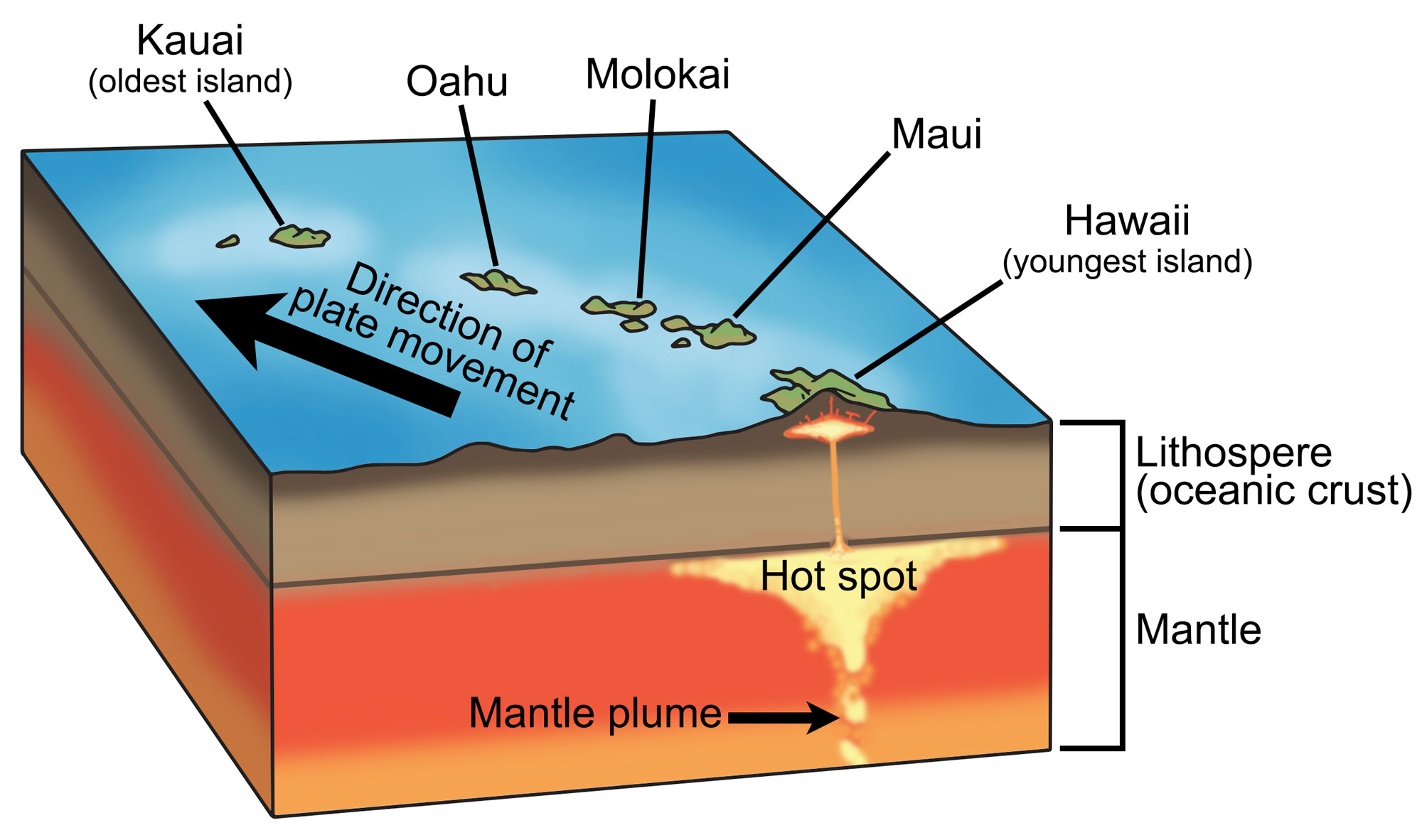
Within the Earth’s mantle, there are plumes of superheated rock that rise from deep within the planet, much like a wax lamp. When one of these plumes reaches the base of a tectonic plate, it creates an intensely hot region known as a “hotspot.” This hotspot acts like a stationary torch, burning a hole through the overriding plate, allowing magma—molten rock—to erupt onto the seafloor, forming volcanoes.
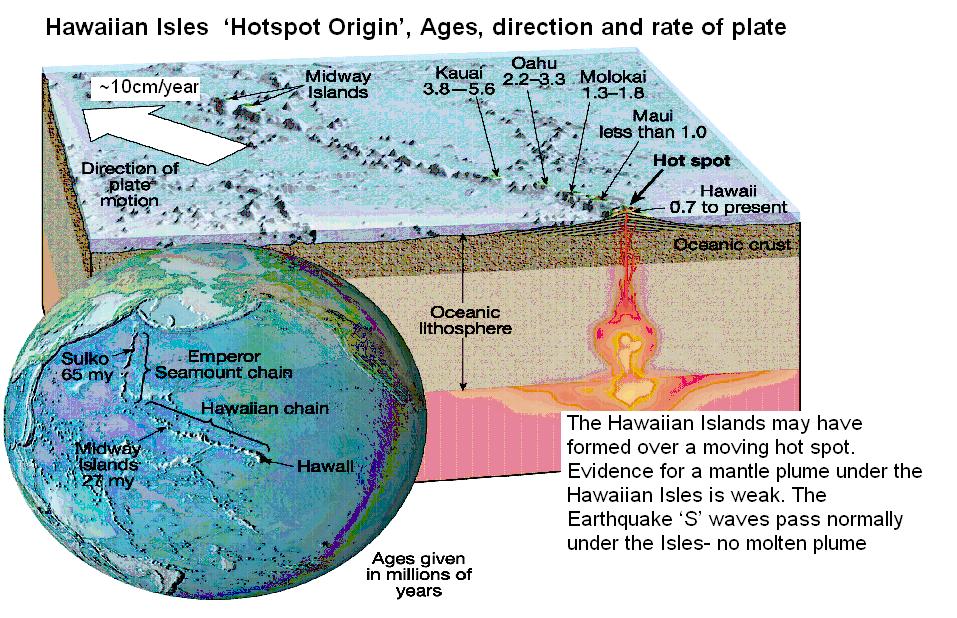
The crucial aspect of the Hawaiian Hotspot is that, unlike the moving Pacific Plate, the hotspot itself is relatively fixed in its position deep within the Earth’s mantle. As the Pacific Plate slowly drifts northwestward over this stationary hotspot, a continuous series of volcanoes is created. Each time a new section of the plate passes over the hotspot, a new volcano begins to form, gradually growing from the ocean floor. The older volcanoes, carried away from the heat source by the moving plate, eventually become extinct and begin their slow process of erosion and subsidence.
This elegant interplay between a stationary heat source and a moving tectonic plate is the fundamental principle behind the entire Hawaiian archipelago’s existence. It’s a geological dance that has been unfolding for tens of millions of years, building islands that rise thousands of meters from the seafloor, only a fraction of which are visible above the waves.
A Chain of Creation: From Seamount to Island Paradise
The formation of each Hawaiian island is a multi-stage process, an epic journey that begins far beneath the surface of the sea and culminates in the vibrant, life-filled landscapes we explore today. Understanding these stages helps us appreciate the diverse environments encountered across the archipelago, from the stark, new lava fields to the ancient, verdant valleys.
The Birth of a Volcano: Deep-Sea Eruptions
The process begins approximately 5,000 to 6,000 meters (about 3 to 4 miles) beneath the ocean’s surface. As magma from the Hawaiian Hotspot pierces through the Pacific Plate, it erupts silently on the seafloor. These deep-sea eruptions form pillow lavas—rounded, bulbous masses of basalt that cool rapidly upon contact with the cold ocean water. Over hundreds of thousands of years, layer upon layer of these volcanic rocks accumulate, slowly building an underwater mountain, known as a seamount.
This submarine phase is the longest and most voluminous stage of a Hawaiian volcano’s life. The magma flows are typically effusive, meaning they are relatively gentle and fluid, rather than explosive. This type of eruption produces broad, gently sloping shield volcanoes, named for their resemblance to a warrior’s shield lying on the ground. The future Big Island and its magnificent volcanoes like Mauna Loa and Mauna Kea are still in this massive growth phase, though they have long since breached the surface.
Growth and Emergence: Breaching the Surface
Eventually, after countless eruptions and millions of tons of lava, the seamount grows tall enough to break through the ocean’s surface. This momentous event marks the birth of a new island. Once above sea level, the volcano enters its most active and spectacular phase, continuing to erupt effusively. The lava flows spread out across the land, expanding the island’s footprint and adding to its height. This is the stage currently exemplified by the Big Island of Hawaii, home to Kīlauea, one of the world’s most active volcanoes.
During this shield-building stage, the island grows rapidly, often dominated by one or two major eruptive centers. The immense weight of the accumulating lava and rock can cause the ocean floor around the island to subside, creating a moated effect. The continuous flow of lava creates dramatic landscapes, from black sand beaches formed by lava cooling rapidly in the sea, to vast fields of barren, newly solidified rock. These areas, particularly within Hawaii Volcanoes National Park, offer visitors a unique opportunity to witness the raw power of creation firsthand, a truly unforgettable experience that connects directly to the Earth’s fundamental processes.
The Life Cycle of an Island: Dormancy, Erosion, and Rejuvenation
As the Pacific Plate continues its northwestward journey, each island is gradually carried away from the Hawaiian Hotspot’s direct influence. The eruptions become less frequent, then cease altogether, marking the volcano’s entry into a dormant phase. This is the current state of most of the main Hawaiian Islands further to the northwest, such as Maui, Oahu, and Kauai.
Once volcanism wanes, the forces of erosion take over. Wind, rain, and ocean waves begin to sculpt the volcanic landmass. Lush vegetation takes root in the fertile volcanic soil, transforming barren lava fields into vibrant rainforests. Deep valleys and dramatic cliffs are carved out, revealing the underlying geological structures. This erosional stage is responsible for iconic landmarks like the majestic Na Pali Coast of Kauai and the stunning Waimea Canyon, often referred to as the “Grand Canyon of the Pacific.” On Maui, the massive dormant shield volcano of Haleakalā showcases a vast, eroded crater, offering otherworldly landscapes and breathtaking sunrises that draw thousands of visitors annually.
In some cases, after a prolonged period of dormancy and erosion, a volcano might experience a “rejuvenation” stage, with small, renewed eruptions of more viscous lava. This phase creates distinctive features like Diamond Head on Oahu, a popular hiking destination offering panoramic views of Waikiki and Honolulu. Eventually, as the island moves further away from the hotspot, it gradually subsides back into the ocean, leaving behind coral atolls and submerged seamounts—a cycle of birth, life, and eventual return to the deep.
The Legacy of Volcanic Activity: Shaping Hawaii’s Unique Landscape and Tourism
The geological processes that formed the Hawaiian Islands have left an indelible mark on every aspect of this incredible destination, creating a paradise unlike any other. This deep connection between geology and the visitor experience is what makes Hawaii such a captivating place for travel, tourism, and lifestyle adventures.
Distinctive Natural Landmarks and Attractions
The volcanic origins are the direct cause of Hawaii’s most famous natural landmarks. From the ongoing creation of new land by Kīlauea’s lava flows on the Big Island to the towering, snow-capped peaks of Mauna Kea and Mauna Loa, which are taller than Mount Everest when measured from their base on the ocean floor, the islands are a geological wonderland.
The stark contrast between the black lava fields and the vibrant green rainforests, the dramatic sea cliffs of Molokai, and the serene, crescent-shaped beaches (some with black, green, or even red sand) are all direct results of volcanic activity and subsequent erosion. These landscapes provide the backdrop for world-class hotels and resorts, such as the Four Seasons Resort Maui at Wailea or the Hilton Hawaiian Village Waikiki Beach Resort, which often leverage the stunning natural views in their design and offerings. Tour operators provide excursions to these natural wonders, making the geological story accessible to everyone. Even human-made landmarks like Pearl Harbor benefit from the natural harbor formed by ancient volcanic activity on Oahu.
Impact on Culture, Food, and Lifestyle
The formation of the islands also deeply influences the local culture and lifestyle. The rich volcanic soil, particularly on the windward sides of the islands, supports lush agriculture, from famous Kona coffee to sugarcane and pineapples. This fertile ground contributes significantly to Hawaii’s renowned farm-to-table culinary scene, offering unique flavors and ingredients that tantalize the taste buds of travelers. The reverence for the land, or Aina, is central to the Hawaiian way of life, stemming from the very physical creation of their home. Traditional chants and legends often speak of Pele, the goddess of volcanoes, illustrating the profound cultural connection to these geological forces.
The isolation of the islands, a direct consequence of their mid-ocean formation, led to the evolution of unique flora and fauna, many of which are endemic. This delicate ecosystem fosters a strong emphasis on sustainable tourism, encouraging visitors to respect and preserve the natural beauty that took millions of years to create. The concept of Aloha – a spirit of love, peace, and compassion – extends to the land itself, guiding efforts in conservation and respectful interaction with the environment.
Adventure and Relaxation: Tailored Experiences
For adventure seekers, the geological features provide an unparalleled playground. Hiking trails wind through ancient lava tubes, ascend volcanic slopes, and lead to panoramic vistas carved by erosion. Snorkeling and diving reveal vibrant coral reefs that have grown on the submerged flanks of ancient volcanoes. Surfing, a sport deeply ingrained in Hawaiian culture, thrives on the powerful ocean swells generated by vast ocean distances surrounding the islands.
For those seeking relaxation, the volcanic beaches, whether black sands on the Big Island or golden stretches on Maui and Oahu, offer idyllic settings for sunbathing and swimming. Resorts like Grand Wailea, A Waldorf Astoria Resort on Maui or Disney’s Aulani Resort on Oahu are often designed to integrate seamlessly with the natural landscape, offering luxurious accommodation with direct access to these geologically formed wonders.
The Future of the Hawaiian Islands: A Continuing Legacy
The story of the Hawaiian Islands is far from over; it is a continuously unfolding saga. The Pacific Plate continues its slow drift, and the Hawaiian Hotspot remains fixed, ensuring that new land will continue to emerge.
Beneath the waves, southeast of the Big Island of Hawaii, a new seamount is steadily growing. This submarine volcano, named Lōʻihi Seamount, is currently about 1,000 meters (3,300 feet) below the ocean’s surface and has been actively erupting for decades. Scientists estimate that in another 10,000 to 100,000 years, Lōʻihi will eventually break the surface, becoming the newest island in the Hawaiian chain. This ongoing process reminds us that the geological forces at play are not ancient history, but a vibrant, living reality that continues to shape our world.
The older islands to the northwest— Niihau, Kauai, Oahu, Molokai, Lanai, Maui, Kahoolawe —are all at different stages of erosion and subsidence, gradually shrinking and transforming. What began as a continuous landmass from eruptions over the hotspot now appears as distinct, unique islands, each with its own character shaped by age and exposure to the elements.
The journey through the Hawaiian Islands is, in essence, a journey through geological time. From the youthful, active landscape of the Big Island to the deeply eroded, ancient grandeur of Kauai, visitors can witness the entire life cycle of a volcanic island. This geological tapestry is the foundation upon which Hawaii’s tourism industry flourishes, inviting travelers to explore its diverse landscapes, immerse themselves in its rich culture, and stay in accommodations that offer a front-row seat to one of Earth’s most spectacular ongoing creations.
Conclusion
The formation of the Hawaiian Islands is a magnificent geological saga, a powerful testament to the Earth’s relentless energy and beauty. From the unwavering Hawaiian Hotspot to the inexorable march of the Pacific Plate, this remote archipelago has been forged by fire and refined by water over millions of years.
This dramatic origin story is not just a scientific curiosity; it is the very essence of what makes Hawaii a world-class travel destination. The islands’ unique landscapes—their towering volcanoes, verdant valleys, dramatic coastlines, and diverse beaches—are all direct legacies of this extraordinary geological process. They provide the backdrop for unforgettable experiences, from hiking among active lava flows and exploring ancient craters to relaxing on sun-drenched shores and discovering vibrant marine life.
As you plan your next escape to this Pacific paradise, remember the colossal forces that crafted these lands. Whether you’re staying in a luxurious resort, experiencing local culture through food and activities, or exploring iconic landmarks, you are walking on land born from a deep-seated fiery heart, making every moment in Hawaii not just a vacation, but an awe-inspiring journey through geological time.
LifeOutOfTheBox is a participant in the Amazon Services LLC Associates Program, an affiliate advertising program designed to provide a means for sites to earn advertising fees by advertising and linking to Amazon.com. Amazon, the Amazon logo, AmazonSupply, and the AmazonSupply logo are trademarks of Amazon.com, Inc. or its affiliates. As an Amazon Associate we earn affiliate commissions from qualifying purchases.