
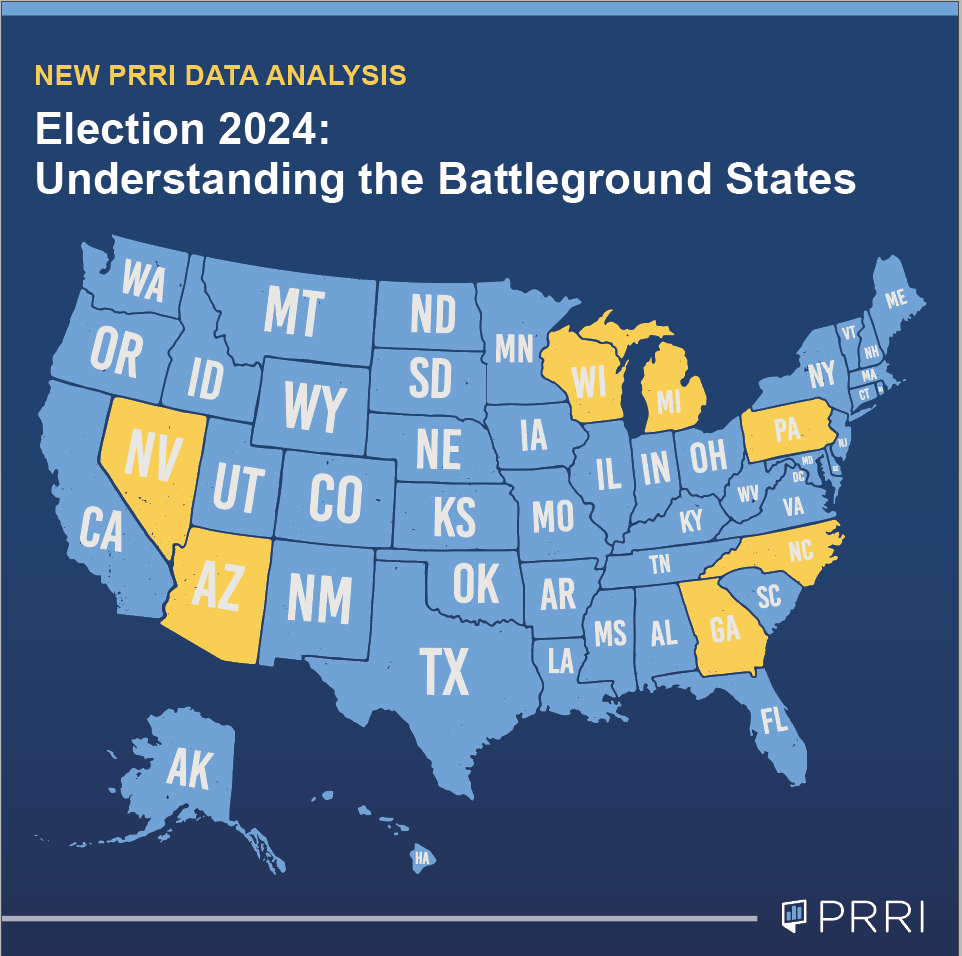
Nevada, often called the Silver State, has carved out a pivotal role in American presidential elections, consistently drawing national attention as a crucial battleground. Its unique blend of diverse demographics, a dynamic economy heavily reliant on tourism, and a shifting political landscape ensures that the question, “Is Nevada a swing state in 2024?” remains a resounding yes. For political strategists and voters alike, understanding the intricate tapestry of Nevada’s communities, from the glittering lights of [Las Vegas] to the rugged beauty of its high desert, is key to deciphering its electoral pulse.
The state’s electoral history underscores its swing status. Since 2008, [Nevada] has voted for the Democratic presidential candidate in every election, but often by razor-thin margins. In 2020, President Biden won the state by just over 2.4 percentage points, a testament to its competitive nature. This consistent closeness, combined with its six valuable electoral votes, elevates [Nevada] to a must-win state for any presidential hopeful. It serves as a microcosm of the national political divide, where urban centers often lean left, and rural areas tend to lean right, with critical independent voters often holding the balance of power. The outcome in [Nevada] is rarely a foregone conclusion, making it a captivating watch for election observers.
The Shifting Sands of Nevada’s Political Landscape
[Nevada]’s political identity is intrinsically linked to its rapid growth and the evolving demographics that have shaped its major urban centers. Once a sparsely populated state known primarily for mining and its relaxed gambling laws, [Nevada] has transformed into a vibrant hub for tourism, technology, and diverse communities. This evolution has directly influenced its political leanings, creating a fascinating and unpredictable electoral environment.The state’s population boom, particularly in [Clark County] where [Las Vegas] is located, has brought with it a wide array of residents from different backgrounds and political persuasions. Newcomers seeking opportunities in the hospitality industry or tech sector often bring their voting habits from other states, contributing to a diverse electorate that is less entrenched in long-standing political traditions. This constant influx of new voters makes it challenging for either party to establish a dominant stronghold, forcing both Democrats and Republicans to engage in extensive voter outreach and adapt their platforms to resonate with a dynamic and often transient population.
Furthermore, [Nevada]’s political character is shaped by a deep-seated independent spirit. Many residents value individual liberty and are wary of excessive government intervention, a sentiment that can cut across traditional party lines. This contributes to a significant bloc of non-partisan voters who are open to persuasion and willing to split their tickets, making candidate appeal and specific policy issues more influential than party loyalty. The campaigns in [Nevada] are therefore highly personalized, focusing on local concerns and the direct impact of policies on the daily lives of Nevadans, whether they are working on [The Strip] or running a small business in [Reno].
Demographics and Economic Engines: Fueling the Swing
The heart of [Nevada]’s swing state status lies in its demographic composition and its unique economic engines. The state is a study in contrasts, from the dazzling entertainment capital to the serene high desert landscapes, each contributing distinct voices to the political discourse.
The Power of the Silver State’s Tourism Industry
[Clark County], home to [Las Vegas], is the undisputed economic and demographic powerhouse of [Nevada]. It accounts for over 70% of the state’s population and is the engine of its world-renowned tourism and hospitality industry. This region is a global destination, attracting millions annually to iconic landmarks and resorts like the [Bellagio], [Caesars Palace], the [MGM Grand], and [Wynn Las Vegas]. The sheer scale of the hospitality sector means a vast workforce, from hotel staff and casino workers to entertainers and restaurant employees, forms a critical voting bloc. These individuals are highly sensitive to economic conditions, employment rates, and policies affecting their wages, benefits, and job security.The service industry, which underpins the entire [Las Vegas] experience, often sees high unionization rates, particularly among hotel and culinary workers. Unions like the [Culinary Workers Union Local 226] wield significant influence, not just through their membership numbers but also through their robust Get Out the Vote efforts. Endorsements from such organizations can sway thousands of votes, making them indispensable allies for candidates. Policies impacting minimum wage, healthcare access, and housing affordability directly resonate with these voters, turning economic issues into primary drivers of their electoral choices. The opulent lifestyle associated with luxury travel in [Las Vegas] exists alongside the everyday struggles of a working population, creating a complex socio-economic environment that mirrors many of the nation’s broader challenges.
Beyond the Neon: Northern Nevada’s Influence
While [Las Vegas] often grabs the headlines, [Northern Nevada], particularly [Washoe County] (home to [Reno] and [Sparks]), plays an equally crucial role in the state’s swing dynamic. [Reno], once known as “The Biggest Little City in the World” primarily for gambling, has diversified its economy significantly. It has emerged as a burgeoning hub for technology and logistics, attracting companies like [Tesla]’s Gigafactory and other tech giants. This shift has brought a different demographic to the region – professionals, engineers, and entrepreneurs – who often have distinct political priorities compared to their counterparts in [Southern Nevada].
The lifestyle in [Northern Nevada] also differs, with a strong emphasis on outdoor recreation. Residents enjoy proximity to natural landmarks like [Lake Tahoe] and the [Truckee River], offering activities such as skiing, hiking, and boating. This connection to nature often means environmental policies and conservation efforts are higher on the agenda for many voters. The blend of a growing tech workforce, outdoor enthusiasts, and a more traditional, smaller-city feel creates a voting bloc that can lean more Republican than [Clark County] but is still highly competitive, reflecting a unique set of concerns and values. The contrast between [Reno]’s tech-driven growth and [Las Vegas]’s entertainment economy creates a statewide political tug-of-war that keeps [Nevada] balanced on the electoral tightrope.
Rural Voices and Diverse Communities

Beyond the urban centers, [Nevada]’s vast rural counties, though less populous, contribute significantly to the state’s overall political picture. Areas like [Elko County], [Nye County], and [White Pine County] are typically more conservative and lean Republican. Their economies are often based on mining, ranching, and other agricultural pursuits, and residents often prioritize issues such as gun rights, land use policies, and reduced government regulation. [Carson City], the state capital, also contributes its own unique voice, representing state employees and a mix of urban and rural sensibilities.
Furthermore, [Nevada] boasts a remarkably diverse population. It has a significant Hispanic population, particularly in [Clark County], which is a vital voting bloc courted by both parties. There are also growing Asian American and Pacific Islander communities, as well as Native American tribes, each with their own unique concerns and political leanings. This mosaic of cultures and backgrounds means candidates cannot rely on a single message or strategy; they must craft nuanced campaigns that address the varied needs and aspirations of all Nevadans. From budget travel options for families to luxury accommodations catering to business travelers, the state’s hospitality sector serves every segment of this diverse population, highlighting its economic inclusivity.
Key Issues Shaping the 2024 Election in Nevada
The 2024 election in [Nevada] will undoubtedly be influenced by a set of critical issues that resonate deeply with its diverse electorate. These issues often tie directly into the daily lives, economic well-being, and lifestyle choices of Nevadans, making them potent political motivators.
Economic Stability and Cost of Living
Perhaps no issue is more central to [Nevada] voters than economic stability and the rising cost of living. For a state so heavily dependent on tourism and the service industry, job security and wages in hotels, resorts, and related businesses are paramount. Inflation and the affordability of goods and services impact every household, from the hospitality worker earning an hourly wage to the small business owner managing rising operational costs. The price of gas, groceries, and housing — particularly accommodation options in rapidly growing areas — are frequent topics of conversation and concern.
Candidates will need to present clear and credible plans for addressing inflation, promoting job growth, and ensuring economic opportunities for all Nevadans. Policies related to minimum wage, support for small businesses, and infrastructure projects that create jobs will be closely scrutinized. The perception of which party or candidate can best steward the economy and provide financial relief will significantly influence how Nevadans cast their ballots.
Water Resources and Environmental Concerns
In a desert state like [Nevada], water is life. The ongoing drought in the Western United States and the declining water levels in vital reservoirs like [Lake Mead] (fed by the [Colorado River]) are pressing environmental and economic concerns. Water conservation, resource management, and the long-term sustainability of water supplies are critical issues for farmers, urban residents, and the tourism industry alike. The operation of the [Hoover Dam], which provides power and water to millions, is a constant reminder of this precious resource.
Environmental policy extends beyond water to issues like renewable energy, land use, and the protection of natural landscapes that are vital for outdoor tourism and recreation, especially around [Lake Tahoe] and other natural attractions. Candidates who offer comprehensive and practical solutions for managing natural resources and addressing climate change are likely to gain traction with a significant segment of the electorate, particularly those who value [Nevada]’s unique natural beauty and the outdoor lifestyle it offers.
Healthcare and Social Services
Access to affordable healthcare remains a top-tier concern for many Nevadans, particularly those working in jobs with fluctuating hours or those without comprehensive employer-provided benefits. The expansion of healthcare access, the cost of prescription drugs, and mental health services are issues that resonate across all demographic groups. Similarly, social services, including education funding, support for seniors, and programs for vulnerable populations, are critical considerations. Given the diverse age groups and socio-economic backgrounds of [Nevada]’s population, from young families to retirees, policies affecting health and welfare are always front and center in political discussions.
Nevada’s Indispensable Role in National Elections
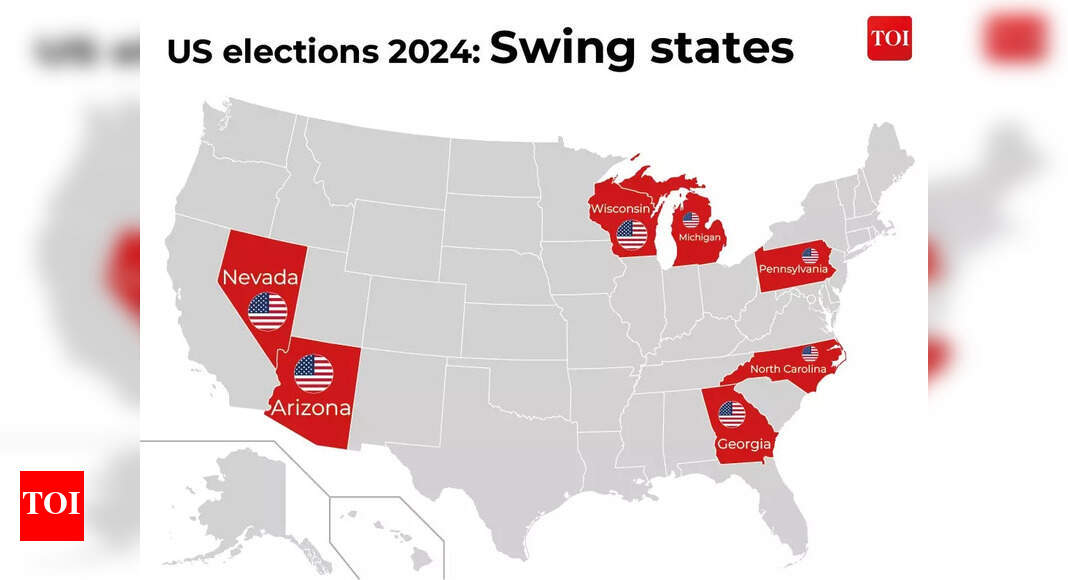
In conclusion, [Nevada]’s status as a swing state in 2024 is not merely a political projection; it is a reflection of its vibrant and complex identity. The state’s unique blend of a tourism-driven economy centered in [Las Vegas], a growing tech sector in [Reno], and the steadfast voices of its rural communities creates an electoral crucible. Its highly diverse population, with significant Hispanic and Asian American communities, coupled with a robust union presence, ensures that no single political narrative can dominate.
For candidates, success in [Nevada] demands a nuanced understanding of these dynamics. It requires boots-on-the-ground campaigning in both [Clark County] and [Washoe County], addressing specific local issues from housing affordability to water rights, and connecting with voters on a personal level. The state’s electoral votes are not just numbers; they represent the collective will of a populace that values independence, economic opportunity, and the unique lifestyle that [Nevada] offers, from its luxury resorts to its vast open spaces.
As 2024 approaches, [Nevada] will once again be a focal point on the national political map, a true bellwether whose choices will provide critical insight into the broader mood of the American electorate. Its capacity to swing from one party to another, often by the smallest of margins, solidifies its indispensable role in determining the outcome of the presidential election, making it one of the most exciting and unpredictable states to watch.
LifeOutOfTheBox is a participant in the Amazon Services LLC Associates Program, an affiliate advertising program designed to provide a means for sites to earn advertising fees by advertising and linking to Amazon.com. Amazon, the Amazon logo, AmazonSupply, and the AmazonSupply logo are trademarks of Amazon.com, Inc. or its affiliates. As an Amazon Associate we earn affiliate commissions from qualifying purchases.