
Nevada, often conjuring images of dazzling neon lights and vast desert landscapes, occupies a distinctive and geographically significant position in the western United States. Understanding its location is not merely a matter of pinpointing it on a map; it’s key to appreciating its diverse ecosystems, vibrant tourism industry, unique lifestyle offerings, and the strategic importance it holds for travel across the American West. For anyone planning a trip, considering accommodation, or simply curious about this intriguing state, its geographical context provides the fundamental backdrop for all its allure.
Situated squarely within the Great Basin, Nevada is a land of extremes, characterized by arid deserts, towering mountain ranges, and expansive, sparsely populated areas. It is the seventh-largest state by area in the U.S., encompassing approximately 110,572 square miles (286,380 square kilometers). Its coordinates place it roughly between 35° and 42° North latitude and 114° and 120° West longitude. This unique placement directly influences its climate, natural attractions, and the very fabric of its travel and tourism industry. From world-renowned entertainment hubs to serene natural escapes, Nevada’s location is the silent architect behind its reputation as a premier destination.
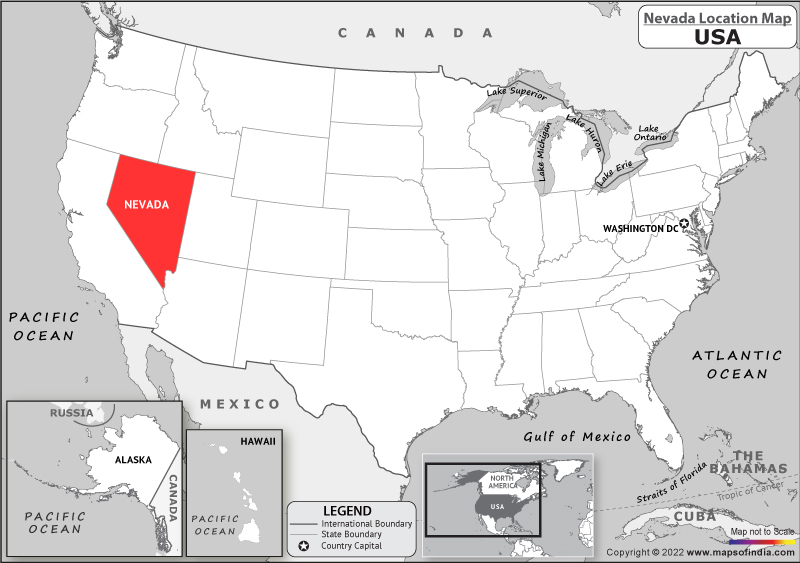
The Geographical Tapestry of Nevada: Borders, Basins, and Mountains
The precise location of Nevada on the map is critical to understanding its appeal and accessibility. Its borders tell a story of interconnectedness with neighboring states, influencing regional travel patterns, shared natural resources, and even cultural exchanges. The state’s internal geography, marked by distinct basins and mountain ranges, further dictates the types of experiences visitors can expect, from high-desert adventures to alpine retreats.
Borders and Neighboring States
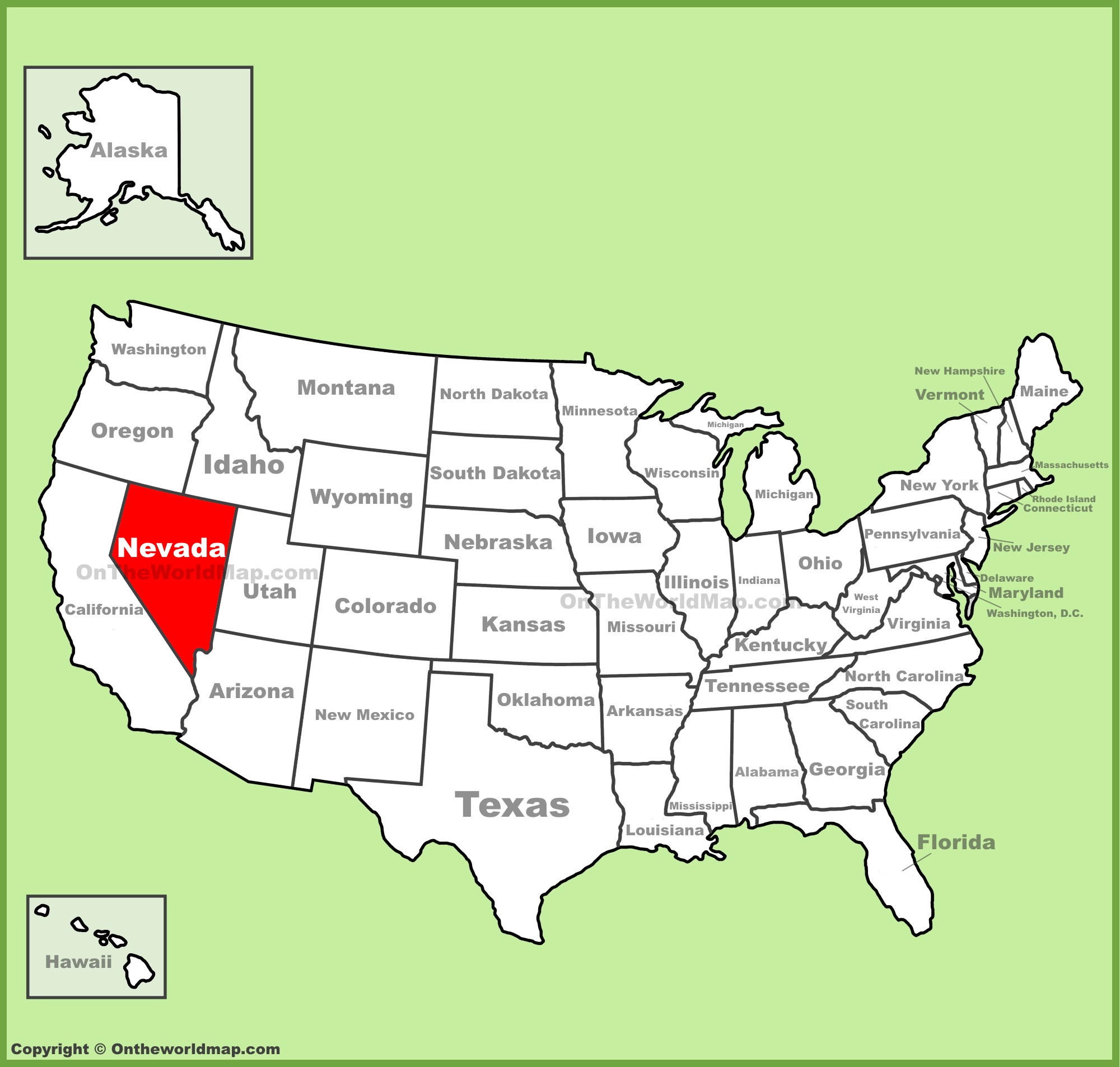
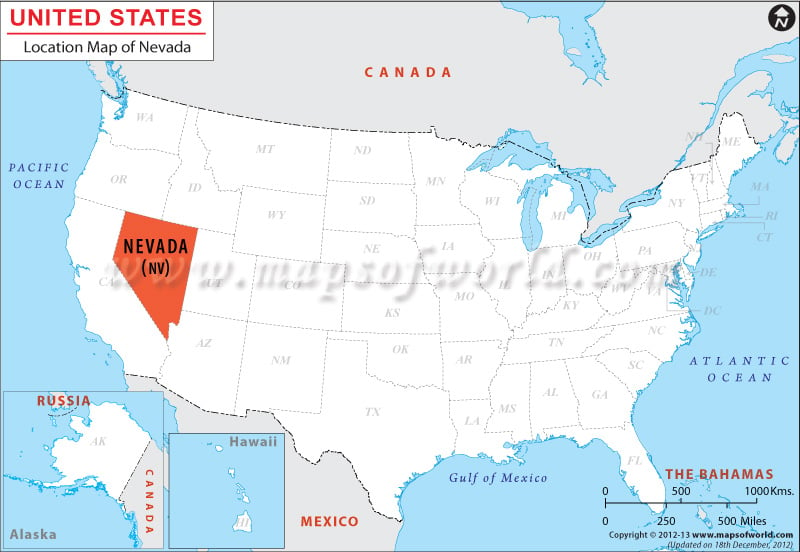
Nevada shares its extensive borders with five other states, each contributing to its unique position as a crossroads in the West. To its west, it is bordered by California, a relationship that is arguably the most impactful due to the sheer volume of traffic and tourism flowing between the two. The proximity to major California cities like Los Angeles and the San Francisco Bay Area makes Las Vegas and Lake Tahoe highly accessible weekend getaways for millions of Californians. This border is particularly notable along the Sierra Nevada mountain range, home to the pristine waters of Lake Tahoe, a shared natural wonder.
To the north, Nevada borders Oregon and Idaho. While these borders are less frequented by mass tourism, they serve as vital links for trade and provide access to vast, unspoiled wilderness areas, attracting a different kind of traveler – those seeking solitude and raw nature. The eastern boundary of Nevada is shared with Utah and Arizona. The connection with Utah links Nevada to the national park circuit of the Southwest, while its southern border with Arizona places it tantalizingly close to the majestic Grand Canyon National Park and the vibrant city of Phoenix. The iconic Hoover Dam straddles the border between Nevada and Arizona, a testament to the region’s shared history and resources.
This intricate network of borders makes Nevada a crucial waypoint for cross-country road trips and a convenient base for exploring a broader slice of the Western United States. Travelers often combine a stay in Las Vegas with excursions to Zion National Park in Utah, or a visit to Reno with skiing adventures in the Sierra Nevada that extends into California.
Diverse Landscapes and Climates
Beyond its external borders, Nevada’s internal geography is a mosaic of varied landscapes, predominantly defined by the basin and range topography. The state lies almost entirely within the Great Basin Desert, a vast arid region characterized by a series of parallel north-south trending mountain ranges separated by valleys (basins). This unique geology means that while much of the state is desert, it is not uniformly flat. Instead, it is punctuated by numerous “sky islands” – isolated mountain ranges that rise dramatically from the desert floor, creating diverse microclimates and ecosystems.
The southern tip of Nevada, where Las Vegas is located, falls within the Mojave Desert, known for its hotter temperatures and iconic Joshua trees. This desert environment is home to striking natural landmarks such as Red Rock Canyon National Conservation Area, a vibrant landscape of towering red sandstone cliffs and indigenous petroglyphs, just a short drive from the Las Vegas Strip. Further east, the Valley of Fire State Park showcases ancient petrified trees and 3,000-year-old Indian petroglyphs carved into magnificent Aztec sandstone outcrops.
In contrast, northern Nevada and the Sierra Nevada region experience more temperate climates, with cold winters and snowfall, making it a popular destination for winter sports around Lake Tahoe. This diversity in landscape translates directly into a wealth of outdoor activities. Visitors can hike across arid plains, rock climb ancient formations, ski down snow-capped peaks, or enjoy water sports on pristine lakes, often within a few hours’ drive of each other. The varied terrain also provides habitats for a wide range of wildlife, appealing to eco-tourists and nature photographers.
Nevada’s Strategic Location: A Hub for Travel and Tourism
The placement of Nevada is not just a geographical fact; it’s a strategic advantage that has profoundly shaped its identity as a global tourism magnet. Its central position in the Western United States makes it an accessible and appealing destination for a multitude of travelers, from those seeking high-octane entertainment to adventurers longing for unspoiled natural beauty.
Gateway to Iconic Destinations
Nevada’s location effectively positions it as a gateway or a central hub for exploring some of North America’s most iconic natural and cultural landmarks. Its proximity to several National Parks is a significant draw. Death Valley National Park, one of the hottest places on Earth, is directly accessible from southern Nevada, offering a stark and breathtaking contrast to the urban glitter of Las Vegas. The aforementioned Grand Canyon National Park is a mere few hours’ drive away, making it a popular day trip or an essential stop on a multi-state itinerary.
Furthermore, the state’s western edge abuts the majestic Sierra Nevada range, bringing Yosemite National Park within reasonable driving distance for those starting their journeys in Nevada. This strategic placement facilitates grand road trips that combine urban entertainment with unparalleled natural wonders, allowing travelers to experience the full spectrum of the American West without extensive travel between major hubs. For visitors, this means less time in transit and more time enjoying diverse experiences, from gambling and world-class shows to hiking and stargazing.
Accessibility and Infrastructure
The success of Nevada as a travel destination is heavily reliant on its robust transportation infrastructure, which has been developed to capitalize on its advantageous location. The state boasts two major international airports: Harry Reid International Airport (formerly McCarran) in Las Vegas and Reno-Tahoe International Airport in Reno. Harry Reid International Airport alone handles tens of millions of passengers annually, offering direct flights from numerous cities across the United States and internationally, making Las Vegas easily reachable for global tourists. Reno-Tahoe International Airport serves as a vital gateway to northern Nevada and the Lake Tahoe region.
In terms of ground transportation, Nevada is crisscrossed by several crucial interstate highways. Interstate 15 (I-15) slices through southern Nevada, connecting Las Vegas directly to Southern California and Salt Lake City in Utah. Interstate 80 (I-80) traverses northern Nevada, linking Reno with the San Francisco Bay Area to the west and continuing eastward towards the Midwest. These well-maintained highways ensure that visitors arriving by car can navigate the state and its surroundings with relative ease, making self-drive holidays an exceptionally popular way to experience the Silver State. The robust infrastructure ensures that whether one is flying in for a weekend getaway or embarking on an extended road trip, Nevada’s location is readily accessible.
Accommodation and Lifestyle Influenced by Location
The unique geography and strategic placement of Nevada fundamentally shape its accommodation landscape and the lifestyle experiences it offers. From opulent desert resorts to rustic mountain lodges, the lodging options are as diverse as the state’s natural beauty, catering to every type of traveler and desire for a specific lifestyle.
From Desert Oases to Mountain Retreats
Nevada’s location dictates a fascinating dichotomy in its accommodation offerings. In southern Nevada, particularly along the Las Vegas Strip, hotels are architectural marvels that serve as destinations in themselves. These desert oases, like the iconic Bellagio with its famous fountains, the Roman-themed Caesars Palace, or the opulent The Venetian Resort Las Vegas with its canals and gondolas, offer luxury beyond compare. They are integrated resorts providing not just rooms, but a full spectrum of entertainment, dining, shopping, and spa amenities, reflecting a lifestyle of indulgence and excitement. The sheer scale and variety of hotels – from ultra-luxury suites to more budget-friendly options – mean that nearly every traveler can find suitable accommodation, often with stunning views of either the city lights or the surrounding Mojave Desert.
Moving north to the Lake Tahoe area, the accommodation transforms dramatically to reflect the alpine environment. Here, travelers can find charming lakeside cabins, ski-in/ski-out resorts, and cozy lodges that blend seamlessly with the natural surroundings. Properties like Hyatt Regency Lake Tahoe Resort, Spa and Casino offer a different kind of luxury, focused on outdoor access and serene natural beauty. This contrast highlights how Nevada’s diverse geography allows it to cater to entirely different vacation styles, from the high-energy urbanite to the peace-seeking nature lover. Even historic towns like Virginia City and Carson City offer unique boutique hotels and bed-and-breakfasts that provide a glimpse into the state’s rich past. The availability of diverse accommodation options, from sprawling resorts to quaint villas and long-term stay apartments, is a direct consequence of Nevada’s varied geographical settings.
Lifestyle and Unique Experiences
Nevada’s location is the bedrock of the unique lifestyles and experiences it offers. The Mojave Desert environment around Las Vegas fosters a culture of indoor entertainment and air-conditioned luxury, where visitors can enjoy world-class shows, Michelin-starred dining, and elaborate casino gaming, largely independent of the harsh desert heat outside. The city’s location also allows for thrilling outdoor activities like off-roading, dune buggy tours, and rock climbing in nearby Red Rock Canyon National Conservation Area or Valley of Fire State Park, offering a complementary adventure to the urban glamor.
In contrast, the mountainous regions surrounding Lake Tahoe promote an active, outdoor-centric lifestyle. Here, visitors engage in skiing, snowboarding, and snowshoeing in winter, and hiking, mountain biking, and water sports like kayaking and paddleboarding in summer. The “Biggest Little City in the World,” Reno, blends a vibrant arts scene and innovative culinary experiences with easy access to these natural playgrounds. Throughout the state, the wide-open spaces and clear desert skies enable unique activities such as stargazing in designated dark-sky parks, exploring ghost towns that dot the landscape, or attending large-scale events like the Burning Man festival in the Black Rock Desert, which leverages the remote, expansive terrain. This blend of environments allows for a dynamic lifestyle encompassing luxury travel, budget-friendly adventures, family trips, and business stays, all underpinned by Nevada’s diverse geographical attributes.
Major Cities and Landmarks: Anchors of Nevada’s Identity
The principal cities and iconic landmarks of Nevada are not randomly placed but have grown and thrived precisely because of the state’s unique location and resources. They serve as cultural, economic, and tourist anchors, each contributing a distinct flavor to the overall Nevadan experience.
Las Vegas: The Entertainment Capital
Undoubtedly, Las Vegas is the most globally recognized city in Nevada, largely owing its existence and success to its location. Situated in the relatively flat, arid expanse of the Mojave Desert, its development was a monumental feat of engineering and vision, transforming a desolate landscape into a dazzling metropolis. Its strategic placement on a major trade route (now I-15) between Southern California and Salt Lake City facilitated its early growth. Today, Las Vegas is synonymous with gambling, world-class entertainment, and luxury. The Las Vegas Strip, a roughly 4.2-mile stretch of Las Vegas Boulevard, is home to a concentration of the world’s largest hotels, casinos, and resorts. Notable landmarks here include the erupting volcano at The Mirage, the Eiffel Tower replica at Paris Las Vegas, and the iconic fountains of the Bellagio.
Beyond the Strip, downtown Las Vegas boasts the Fremont Street Experience, a pedestrian mall known for its massive LED canopy light shows. The very existence of these grand structures and the millions of visitors they attract are a testament to how effectively Las Vegas has capitalized on its accessible desert location, turning a perceived disadvantage into an opportunity for extravagant development and escapism. Its proximity to the Hoover Dam and Lake Mead National Recreation Area also provides essential water resources and additional tourist attractions.
Reno and Northern Nevada’s Charms
In the northern part of the state, Reno holds its own as “The Biggest Little City in the World.” Its location in the Truckee Meadows, at the foot of the Sierra Nevada and just a short drive from Lake Tahoe, defines its character. Reno offers a blend of casino entertainment, a burgeoning arts and culture scene, and direct access to unparalleled outdoor recreation. The Truckee River runs through the heart of the city, providing opportunities for kayaking and whitewater rafting right downtown.
Nearby, the historic mining town of Virginia City, once home to the legendary Comstock Lode silver strike, offers a fascinating journey back to the Old West. Its preservation as a National Historic Landmark District is a direct result of its historical significance, driven by the discovery of vast mineral wealth in the surrounding mountains. The location of Reno and its surrounding areas caters to a lifestyle that appreciates both urban amenities and immediate access to mountain and lake environments, drawing visitors for skiing, hiking, fishing, and boating.
Other Notable Locations
Beyond these two major hubs, other cities and landmarks contribute to Nevada’s diverse appeal, each influenced by its specific location. Carson City, the state capital, is nestled in the Eagle Valley at the base of the Sierra Nevada and close to Lake Tahoe. Its historical importance as a territorial capital and later the state capital stems from its position in relation to the Comstock Lode and the primary routes of westward expansion.
Henderson, just southeast of Las Vegas, has grown into Nevada’s second-largest city, benefiting from the spillover growth of Las Vegas and offering a more residential, community-focused lifestyle while retaining easy access to the entertainment capital. Further south along the Colorado River, Laughlin offers a more relaxed casino experience, capitalizing on its riverfront location for boating and water sports, appealing to a different demographic of tourists seeking a quieter escape. These diverse cities and landmarks underscore how Nevada’s varied topography and strategic regional position have fostered distinct developments, each offering unique attractions and catering to specific travel preferences.
In conclusion, “Where is Nevada located?” is a question that unlocks a deep understanding of its identity. Its position in the arid Western United States, bordered by diverse states and characterized by a fascinating mix of deserts and mountains, is fundamental to everything it offers. From its world-famous travel destinations like Las Vegas and Lake Tahoe to its unique accommodation options and distinct lifestyle experiences, Nevada’s location is the constant, underlying force that shapes its enduring appeal as a premier destination for global travelers. Whether seeking the thrill of a resort or the serenity of nature, Nevada’s geographical setting provides an unparalleled stage for exploration and enjoyment.
LifeOutOfTheBox is a participant in the Amazon Services LLC Associates Program, an affiliate advertising program designed to provide a means for sites to earn advertising fees by advertising and linking to Amazon.com. Amazon, the Amazon logo, AmazonSupply, and the AmazonSupply logo are trademarks of Amazon.com, Inc. or its affiliates. As an Amazon Associate we earn affiliate commissions from qualifying purchases.