
The captivating island of Puerto Rico, a vibrant jewel nestled in the Caribbean Sea where the Atlantic Ocean whispers tales of explorers and empires, holds a unique and often complex relationship with the United States. More than just a tropical escape, its very identity is shaped by a pivotal moment in history: the late 19th century shift in global power that brought it under American sovereignty. For travelers seeking to understand the soul of this enchanting destination, delving into the historical circumstances that led to its current status is essential. It’s a narrative rich with geopolitical intrigue, military campaigns, and the enduring spirit of a people caught between worlds, ultimately forging a distinct culture that beckons visitors from across the globe to explore its historical landmarks, savor its culinary delights, and experience its vibrant lifestyle.

The Dawn of a New Era: The Spanish-American War
The story of how the United States acquired Puerto Rico is inextricably linked to the twilight of one empire and the ascendance of another: the conclusion of Spanish colonial rule and the emergence of American global influence. By the late 19th century, the once-mighty Spanish Empire, which had laid claim to vast territories across the Americas for centuries, was a shadow of its former self, clinging to its last remaining overseas possessions. Meanwhile, the United States, having largely completed its westward expansion, was beginning to look beyond its continental borders, driven by economic interests, strategic aspirations, and a burgeoning sense of national destiny. This confluence of factors set the stage for a dramatic confrontation that would forever alter the geopolitical map of the Caribbean Sea and beyond.
A Shifting Global Landscape
At the heart of this dramatic geopolitical shift was the growing instability in Cuba, another Spanish colony, where a brutal war for independence had been raging for years. American sympathy for the Cuban rebels, coupled with significant American business interests on the island, fueled a mounting clamor for intervention. The mysterious sinking of the USS Maine battleship in Havana Harbor in February 1898 served as the ultimate catalyst, igniting public outrage and pushing the United States towards war with Spain. Although the immediate focus of the conflict, known as the Spanish-American War, was on Cuba and the Philippines, Puerto Rico quickly emerged as a strategically important target. For military strategists in Washington D.C., acquiring Puerto Rico represented an opportunity to secure a crucial naval base in the Caribbean Sea and to project American power into a region long dominated by European colonial powers. The island’s fertile lands also offered agricultural potential, particularly for sugar cane, which appealed to American business interests. From a travel perspective, the strategic importance of Puerto Rico at this historical juncture underscores its enduring appeal as a destination where history is palpable, particularly in its well-preserved forts and old colonial towns that once guarded these vital sea lanes.
The Invasion of Puerto Rico
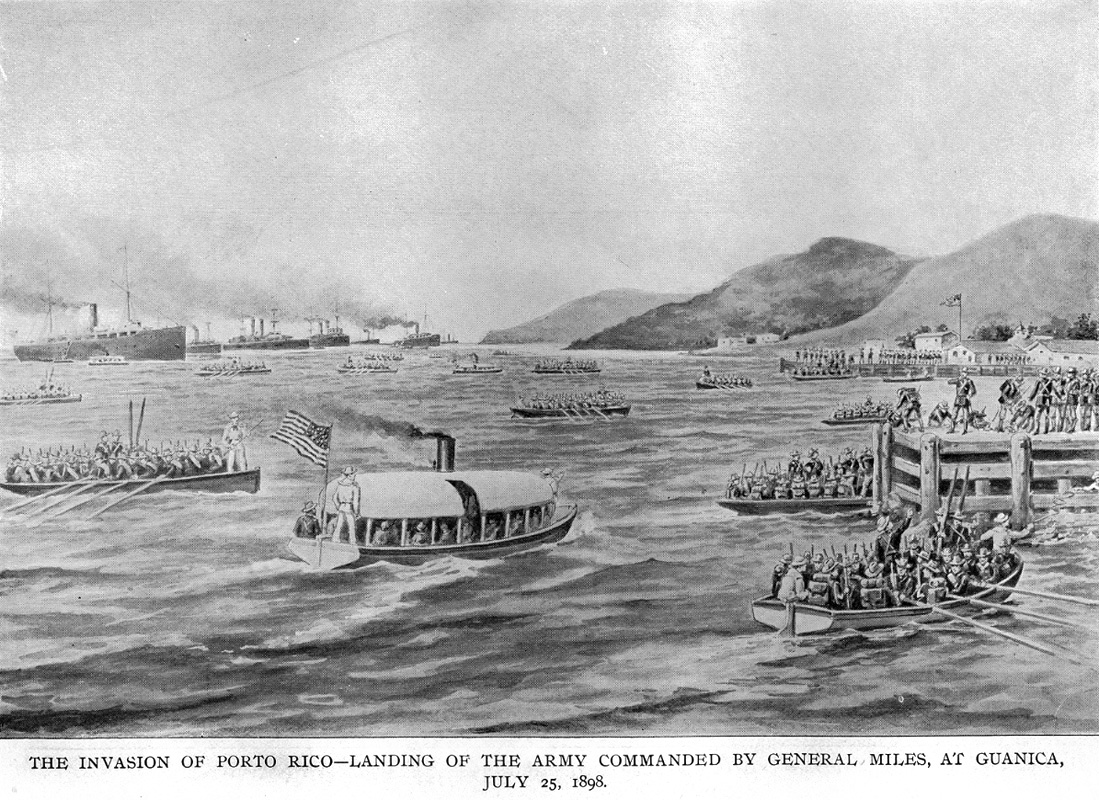
With the primary engagements of the Spanish-American War nearing their conclusion in Cuba, American military attention turned to Puerto Rico. On July 25, 1898, a contingent of American forces, led by Major General Nelson A. Miles, landed at Guánica, on the island’s southern coast. The invasion was relatively swift, facing less resistance than the campaigns in Cuba. The Spanish forces on the island were outnumbered and outmaneuvered, and the local population, many of whom had harbored desires for greater autonomy or independence from Spain, offered varying degrees of support or passive resistance. General Miles famously declared that the Americans had come “bearing the banner of freedom” and to bring the “blessings of civilization.” Over the next few weeks, American troops advanced across the island, engaging in a series of skirmishes, until a general armistice was signed on August 12, 1898, effectively ending hostilities. This military campaign, though brief, etched a new chapter in Puerto Rico’s history, transforming it from a Spanish colony into a territory under the control of the United States. Today, exploring the historical sites of Puerto Rico, particularly the fortifications in San Juan, offers visitors a tangible connection to this period of intense military and political transformation, allowing them to visualize the forces that shaped the island’s destiny.
From Cession to Commonwealth: Shaping Puerto Rico’s Destiny
The conclusion of hostilities in the Spanish-American War did not immediately resolve Puerto Rico’s long-term status but rather initiated a new phase of its intricate relationship with the United States. The path from a ceded territory to its current unique status as a commonwealth has been a journey marked by legislative acts, constitutional debates, and ongoing discussions about self-determination. This complex evolution is not just a dry historical account; it profoundly influences the modern identity of Puerto Rico, shaping its governance, its economy, and even its vibrant cultural landscape that draws so many travelers today. Understanding this political journey provides invaluable context for appreciating the distinct character of the island, a place where American influence blends seamlessly with a rich Hispanic heritage.
The Treaty of Paris and Its Implications
The formal transfer of Puerto Rico to the United States occurred with the signing of the Treaty of Paris on December 10, 1898. This landmark treaty, which officially ended the Spanish-American War, saw Spain cede Cuba, Puerto Rico, and Guam to the United States, and sell the Philippines for $20 million. For Puerto Rico, this meant an abrupt end to over four centuries of Spanish rule and the beginning of an entirely new political and cultural trajectory. The treaty, however, did not define the precise status of these new territories or their inhabitants, leaving their future ambiguous. This ambiguity would become a defining characteristic of Puerto Rico’s relationship with the United States for decades to come. The question of whether Puerto Ricans were citizens, and what rights they held, became a central debate in American constitutional law and political discourse. This period of transition laid the groundwork for the unique blend of cultures that modern travelers experience in Puerto Rico, where Spanish colonial architecture stands alongside American-influenced infrastructure, and the local traditions are infused with elements from both worlds, creating an experience unlike any other.
Navigating Political Status: From Territory to Commonwealth
Following the Treaty of Paris, Puerto Rico was administered as an unincorporated territory, meaning it belonged to the United States but was not part of it, and the U.S. Constitution did not fully apply. The first major legislative act to define this relationship was the Foraker Act of 1900, which established a civilian government, including a governor appointed by the U.S. President and a bicameral legislature, though with limited local control. Crucially, it did not grant U.S. citizenship to Puerto Ricans. This would change with the Jones-Shafroth Act of 1917, which granted statutory U.S. citizenship to Puerto Ricans, allowing them to serve in the U.S. military but still denying them full voting representation in the U.S. Congress. Over the subsequent decades, calls for greater autonomy intensified. In 1950, the U.S. Congress passed Public Law 600, allowing Puerto Rico to draft its own constitution. This led to the adoption of the Constitution of Puerto Rico in 1952, establishing the island as a self-governing commonwealth in “free association” with the United States. While this granted significantly more internal self-governance, it did not fundamentally alter the island’s territorial status under U.S. sovereignty. This distinctive political arrangement has allowed Puerto Rico to develop a unique blend of governance and culture, making it an intriguing case study for those interested in political history, and a destination where the consequences of these historical decisions are still actively debated and discussed, offering a profound depth to any travel experience.
A Tapestry of Cultures: Puerto Rico Today
Today, Puerto Rico stands as a vibrant testament to its layered history, a destination where centuries of indigenous Taíno heritage, Spanish colonial influence, and American modernity converge to create a truly distinct identity. Far from being a mere footnote in a historical treaty, the island’s past acquisition by the United States has contributed to its unique allure as a travel destination. It’s a place where you can explore ancient fortresses that defended Spanish galleons, trek through lush rainforests protected by U.S. federal agencies, and then relax in world-class resorts, all while experiencing the warmth of a culture that blends the best of both worlds. This rich tapestry makes Puerto Rico a compelling choice for travelers seeking everything from historical immersion and cultural exploration to pristine natural beauty and luxurious relaxation.
Unveiling Historical Landmarks and Attractions
The historical acquisition of Puerto Rico by the United States has preserved an incredible wealth of historical landmarks, many of which are now major tourist attractions. The capital city of San Juan is a living museum, particularly its designated UNESCO World Heritage Site, Old San Juan. Here, visitors can wander cobbled streets lined with colorful colonial buildings, explore ancient plazas, and marvel at the formidable defenses that once protected the island from invaders. The most iconic of these are El Morro (Castillo San Felipe del Morro) and Castillo de San Cristóbal, massive stone fortresses that stand as silent sentinels overlooking the Atlantic Ocean. These landmarks offer not only breathtaking views but also a profound sense of the strategic importance of Puerto Rico throughout history, from the Spanish colonial era to the Spanish-American War and beyond. Beyond San Juan, cities like Ponce in the south boast stunning neoclassical architecture and art museums, while Mayagüez on the west coast offers a glimpse into the island’s agricultural past. Each landmark tells a story, contributing to the island’s rich narrative and offering invaluable insights into the historical forces that shaped its present. For history buffs and casual sightseers alike, these landmarks are essential stops on any Puerto Rico itinerary.
The Vibrant Culture and Culinary Delights
The historical journey of Puerto Rico has also forged a uniquely vibrant culture that is a significant draw for tourists. The fusion of Spanish, African, Taíno, and American influences is evident in every aspect of daily life, from its passionate music and dance—salsa, bomba, and plena—to its rich artistic traditions and lively festivals. The warmth and hospitality of the boricua people are legendary, ensuring a welcoming experience for every visitor. Culinary exploration is another highlight of any trip to Puerto Rico. The island’s cuisine is a delicious blend of flavors, distinct from both Spanish and American fare, yet influenced by both. Staples like mofongo (fried plantains mashed with garlic and pork cracklings), lechon asado (roast pig), and arroz con gandules (rice with pigeon peas) are flavorful testaments to the island’s diverse heritage. Fresh seafood abounds, reflecting its island location, and exotic fruits add a tropical twist to desserts and refreshing drinks. The coffee grown in the central mountains has a centuries-old tradition and is renowned worldwide. Experiencing [Puerto Rico](https://lifeoutofthebox.com/puerto-rico]’s culture and food is not merely about consumption; it’s about engaging with the living legacy of a people who have woven their history into the very fabric of their daily existence, offering a truly authentic travel experience.

Modern Travel and Accommodation in the Caribbean Gem
The political stability and accessibility resulting from Puerto Rico’s relationship with the United States have facilitated the development of a robust tourism infrastructure, making it an increasingly popular destination. For U.S. citizens, traveling to Puerto Rico is as simple as domestic travel, requiring no passport, which significantly boosts its appeal. The island offers a diverse range of accommodations to suit every preference and budget, from luxurious resorts to charming boutique hotels and cozy vacation rentals. In areas like Dorado Beach and Condado in San Juan, travelers can indulge in high-end experiences at properties such as the Ritz-Carlton Reserve Dorado Beach, the Condado Vanderbilt Hotel, or the La Concha Renaissance San Juan Resort, which offer pristine beaches, world-class dining, and opulent amenities. Beyond the luxury, Puerto Rico also caters to eco-tourists and adventure seekers, with unique natural attractions like El Yunque National Forest, the only tropical rainforest in the U.S. National Forest System. Pristine beaches like Luquillo Beach on the main island and the world-famous Flamenco Beach on the smaller island of Culebra, as well as the bioluminescent bays of Vieques and Fajardo, offer unparalleled natural wonders. Whether you’re seeking a luxurious escape, an immersive cultural journey, or an adventurous exploration of nature, Puerto Rico’s dynamic landscape, shaped by its profound history, promises an unforgettable experience, making it a premier destination in the Caribbean Sea.
LifeOutOfTheBox is a participant in the Amazon Services LLC Associates Program, an affiliate advertising program designed to provide a means for sites to earn advertising fees by advertising and linking to Amazon.com. Amazon, the Amazon logo, AmazonSupply, and the AmazonSupply logo are trademarks of Amazon.com, Inc. or its affiliates. As an Amazon Associate we earn affiliate commissions from qualifying purchases.