
Texas Hold’em stands as the undisputed champion of poker variants, captivating millions worldwide with its blend of skill, strategy, and thrilling uncertainty. From the glittering casinos of Las Vegas and Monte Carlo to bustling online platforms and casual home games, its universal appeal lies in its straightforward rules that belie a profound depth of strategic possibilities. Whether you’re planning a sophisticated luxury travel escape to a high-stakes poker room or simply looking to entertain friends during a family trip, understanding the fundamentals of Texas Hold’em is your first step into a fascinating world. This guide will meticulously break down the rules, ensuring you’re ready to dive into the action with confidence, whether you’re at a grand resort or enjoying a cozy evening at an apartment rental.
Understanding the Basics: Setup and Core Concepts
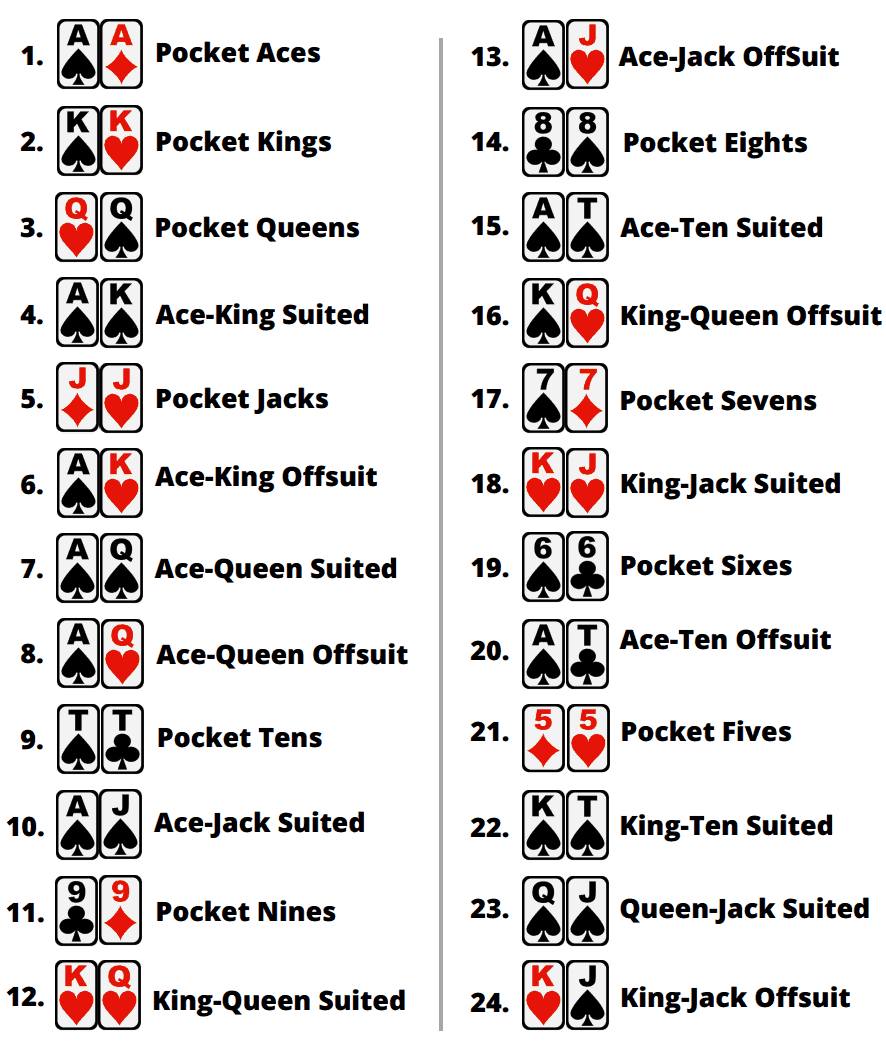
Before the cards are even dealt, familiarizing yourself with the game’s structure and terminology is crucial. Texas Hold’em is typically played with two to ten players using a standard 52-card deck. The objective is simple: to make the best five-card poker hand using any combination of your two private “hole” cards and five shared “community” cards, or to convince your opponents to fold their hands before the showdown.
The Deck, Player Positions, and Initial Bets
The game revolves around a rotating dealer position, indicated by a “dealer button.” This button moves clockwise after each hand, ensuring fair play by distributing the advantages and disadvantages of each position evenly among players.
- The Dealer Button: The player with the dealer button is notionally the dealer, though in a casino or professional setting, a house dealer handles the physical card distribution. This position is strategically important as the dealer acts last in all post-flop betting rounds, giving them the most information.
- The Blinds: To initiate action and create a “pot” for players to contest, two mandatory bets are placed before any cards are dealt. These are called the “small blind” and the “big blind.”
- Small Blind: The player immediately to the left of the dealer button posts the small blind. This is typically half the amount of the big blind.
- Big Blind: The player to the left of the small blind posts the big blind. This bet sets the minimum amount for any initial bet (or “call”) in the first betting round.
- Under the Gun (UTG): The player immediately to the left of the big blind is in the “under the gun” position, as they are the first to act in the pre-flop betting round. This is often considered a less favorable position due to the lack of information.
Key Terms to Know
A successful Texas Hold’em player understands the game’s specific vocabulary. Here are essential terms you’ll encounter:
- Hole Cards: The two private cards dealt face-down to each player at the beginning of a hand. Only you can see your hole cards.
- Community Cards: The five cards dealt face-up in the middle of the table, shared by all players. These are dealt in three stages: the Flop, the Turn, and the River.
- The Flop: The first three community cards dealt simultaneously.
- The Turn: The fourth community card dealt after the Flop.
- The River: The fifth and final community card dealt after the Turn.
- The Pot: The sum of all bets made by players in a given hand. The goal is to win the pot.
- Check: To pass the action to the next player without placing a bet. This is only an option if no one has bet before you in the current betting round.
- Bet: To place the first wager in a betting round.
- Call: To match the amount of the preceding bet.
- Raise: To increase the amount of the preceding bet, requiring subsequent players to call the new, higher amount or raise again.
- Fold: To forfeit your hand and your claim to the pot. When you fold, you push your cards face-down towards the dealer and take no further part in the hand.
- All-in: To bet all of your remaining chips. A player who is all-in can still win the pot, but they can only win the portion of the pot that their chips covered.
- Showdown: The stage at the end of the hand, if more than one player remains, where players reveal their cards to determine the winner based on hand rankings.
The Flow of a Texas Hold’em Hand
A single hand of Texas Hold’em progresses through several distinct stages, each involving a betting round. Understanding this sequence is fundamental to playing the game.
The Pre-Flop Round
After the small and big blinds are posted, each player is dealt two hole cards, starting with the player to the left of the big blind and continuing clockwise. Once all players have their hole cards, the first betting round begins with the player “under the gun” (to the left of the big blind).
Players have several options:
- Fold: Give up your hand and your chance to win the pot.
- Call: Match the amount of the big blind.
- Raise: Increase the bet beyond the big blind amount. The minimum raise is usually twice the big blind.
Betting continues clockwise around the table until all active players have either folded or matched the highest bet.
The Flop
Once the pre-flop betting round is complete, three community cards are dealt face-up in the center of the table. These are the first three “flop” cards. These cards are available for all players to use in combination with their hole cards to form the best possible five-card hand.
A second betting round begins with the first active player to the left of the dealer button. In this and subsequent rounds, players have the option to “check” if no one has bet before them, meaning they pass the action without betting. If a player checks, the next player can also check or place a bet. If a bet is placed, subsequent players must call, raise, or fold.
The Turn
After the flop betting round concludes, a single fourth community card, known as “the Turn,” is dealt face-up next to the flop cards. This card offers additional possibilities for players to improve their hands.
Following the dealing of the Turn, a third betting round commences, again starting with the first active player to the left of the dealer button. The betting structure is identical to the flop round.
The River
Once the turn betting round is finished, the fifth and final community card, “the River,” is dealt face-up. This is the last community card and completes the set of five shared cards.
The final betting round then takes place, following the same structure as the previous rounds. This is the last opportunity for players to bet, call, raise, or fold before the showdown.
The Showdown
If, after the final betting round on the River, more than one player remains in the hand, a “showdown” occurs. The remaining players reveal their hole cards to determine who has the best five-card poker hand. The player who made the last aggressive action (the last bet or raise) is usually the first to show their cards. If there was no bet on the river, the player to the left of the dealer button shows first.
Players use any combination of their two hole cards and the five community cards (7 cards total) to form the best possible five-card hand. For example, a player might use both hole cards and three community cards, one hole card and four community cards, or even just the five community cards (playing “the board”) if that constitutes their best hand. The player with the highest-ranking hand wins the entire pot. In the event of a tie, the pot is split evenly among the winning players.
Hand Rankings: What Beats What?
Understanding poker hand rankings is absolutely critical. Without this knowledge, you cannot determine who wins at the showdown. Hands are ranked from highest to lowest.
From High Card to Royal Flush
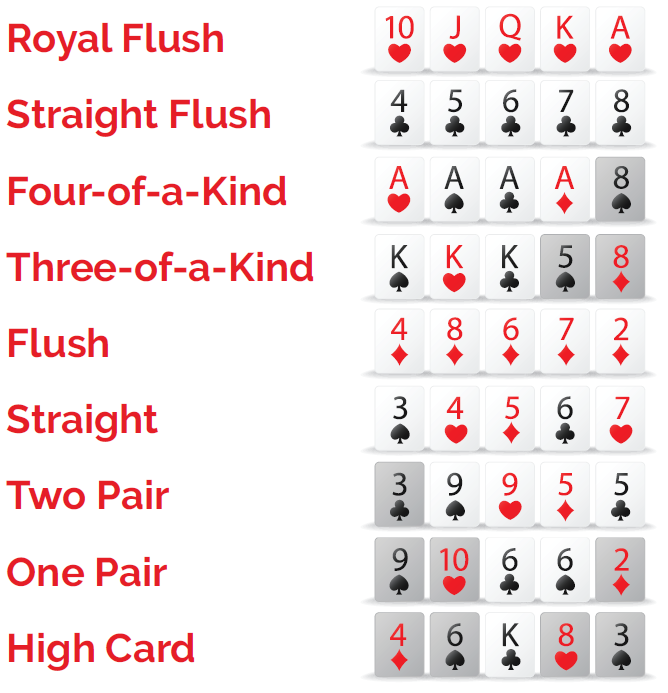
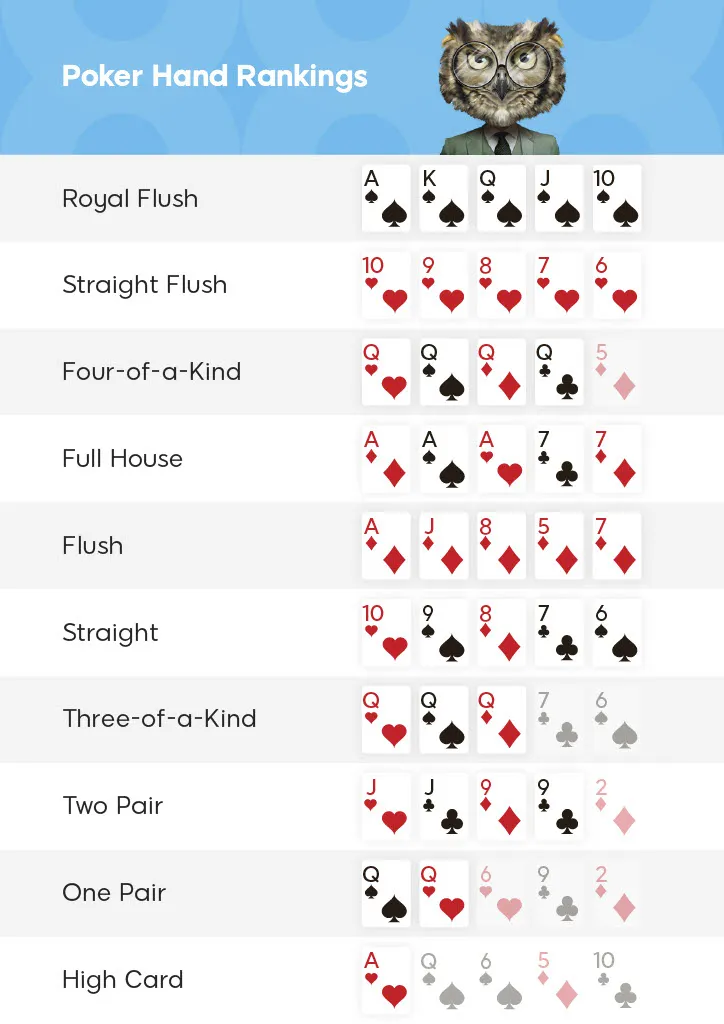
Here’s the standard hierarchy of poker hands, from strongest to weakest:
- Royal Flush: The absolute best hand in poker. A, K, Q, J, 10, all of the same suit (e.g., A♠ K♠ Q♠ J♠ 10♠).
- Straight Flush: Five cards in sequential rank, all of the same suit (e.g., 9♣ 8♣ 7♣ 6♣ 5♣).
- Four of a Kind: Four cards of the same rank, plus any fifth card (e.g., A♣ A♦ A♥ A♠ 7♠).
- Full House: Three cards of one rank and two cards of another rank (e.g., K♣ K♦ K♥ 5♠ 5♦). When comparing full houses, the rank of the three cards determines the stronger hand. If those are tied, the rank of the pair determines the winner.
- Flush: Five cards of the same suit, not in sequence (e.g., Q♥ 10♥ 7♥ 6♥ 2♥). If multiple players have a flush, the one with the highest-ranking card in their flush wins.
- Straight: Five cards in sequential rank, but not all of the same suit (e.g., 8♦ 7♠ 6♣ 5♥ 4♦). An Ace can be high (A-K-Q-J-10) or low (5-4-3-2-A).
- Three of a Kind: Three cards of the same rank, plus two other unrelated cards (e.g., 9♦ 9♥ 9♠ A♣ 4♦).
- Two Pair: Two cards of one rank, two cards of another rank, and one unrelated fifth card (e.g., K♠ K♣ 7♥ 7♦ 2♠). When comparing two pair hands, the hand with the highest-ranking pair wins. If the highest pairs are tied, the hand with the second-highest pair wins. If both pairs are tied, the highest fifth card (the “kicker”) wins.
- One Pair: Two cards of the same rank, plus three other unrelated cards (e.g., Q♣ Q♠ J♥ 8♦ 3♠). When comparing one pair hands, the hand with the highest-ranking pair wins. If the pairs are tied, the highest kicker determines the winner, then the second kicker, then the third.
- High Card: When no player has formed any of the above hands, the hand with the single highest-ranking card wins. If the highest cards are tied, the next highest card determines the winner, and so on.
Remember, suits themselves have no ranking in Texas Hold’em; they are only relevant for flushes and straight flushes.
Strategic Considerations and Etiquette
While mastering the rules is essential, true proficiency in Texas Hold’em comes from understanding strategic nuances and adhering to proper etiquette. These elements enhance your gameplay and ensure a pleasant experience for everyone at the table, whether you’re at a poker tournament during the World Series of Poker (WSOP) or a friendly game in a villa overlooking the Mediterranean.
Mastering the Art of Betting
Betting is the heartbeat of poker. It’s how you build the pot, extract value from strong hands, and bluff opponents with weaker ones.
- Position Play: Your position relative to the dealer button is a critical strategic factor. Acting later in a betting round (being “in position”) gives you the advantage of seeing what your opponents do before you have to make a decision. This information allows for more informed betting, checking, or folding. Players in early positions (“out of position”) must act with less information, making it harder to play marginal hands.
- Reading Opponents: Observing your opponents’ betting patterns, body language, and tendencies (known as “tells”) can provide valuable clues about the strength of their hands. Do they bet aggressively when they have a strong hand? Do they hesitate when bluffing?
- Bluffing: Bluffing is the art of representing a strong hand to induce opponents with potentially better hands to fold. It’s a high-risk, high-reward maneuver that requires careful timing and understanding of your opponents. A successful bluff depends on convincing your opponents that your story makes sense given the board and your actions.
- Pot Odds and Implied Odds: Understanding the relationship between the size of the pot and the cost of a call (pot odds) helps you determine if a call is mathematically profitable, especially when drawing to a strong hand like a flush or straight. Implied odds consider the money you expect to win on future betting rounds if you hit your hand.
- Bankroll Management: This is less about playing the hand and more about sustainable play. Effective bankroll management ensures you only play with money you can afford to lose and at stakes appropriate for your budget, a valuable lesson whether you’re managing expenses for budget travel or planning a stay at a premium hotel.
Essential Poker Etiquette
Good poker etiquette is vital for maintaining a fair, enjoyable, and efficient game environment.
- Act in Turn: Always wait for your turn to act. Acting out of turn can give away information or cause confusion, and is generally frowned upon.
- Keep Cards Visible and Protected: Always keep your hole cards clearly visible to you but hidden from others, and use a card protector (like a chip) to prevent them from being accidentally mucked (discarded).
- Don’t “Angle Shoot”: Avoid any deceptive or misleading actions that technically don’t break the rules but violate the spirit of the game, such as feigning a fold or misrepresenting your chip count.
- Be Mindful of Slow Play: While considering your options is fine, excessive delays slow down the game for everyone. Be prepared to act when it’s your turn.
- Don’t Comment on Live Hands: Never discuss the hand in progress, offer advice to other players, or comment on what cards might come out or what players might have. This is crucial for maintaining game integrity.
- Show Your Cards Clearly at Showdown: When it’s time for the showdown, present your cards clearly so the dealer and other players can easily see them.
- Respect the Dealer and Other Players: Maintain a respectful attitude, win or lose. Professionalism contributes to a positive atmosphere, whether you’re at a casual home game or a major resort casino like Caesars Palace or The Venetian Resort.
- Tip the Dealer: In casino settings or organised home games with a paid dealer, it’s customary to tip the dealer, especially after winning a significant pot. This is part of the common tourism culture in places like Macau or the United States.
By adhering to these points of etiquette, you contribute to a smoother, more enjoyable game for everyone, reflecting the courteous behavior expected in any social setting, from a hotel suite to a grand landmark.
Learning Texas Hold’em is an immensely rewarding endeavor. It’s a game that combines the thrill of chance with deep strategic thought, offering endless hours of entertainment and mental challenge. From the initial pre-flop decisions to the tension of the river and the excitement of the showdown, each hand is a miniature drama. Many iconic destinations, from the MGM Grand in Las Vegas to glamorous cruise ships sailing the Caribbean, feature poker rooms as central attractions, providing a vibrant social environment that goes hand-in-hand with travel and accommodation experiences. With these rules and tips in hand, you’re well-equipped to take your seat at the table and experience the enduring appeal of the world’s most popular poker game. Good luck, and may the best hand prevail!
LifeOutOfTheBox is a participant in the Amazon Services LLC Associates Program, an affiliate advertising program designed to provide a means for sites to earn advertising fees by advertising and linking to Amazon.com. Amazon, the Amazon logo, AmazonSupply, and the AmazonSupply logo are trademarks of Amazon.com, Inc. or its affiliates. As an Amazon Associate we earn affiliate commissions from qualifying purchases.