
California, a state renowned for its stunning landscapes, vibrant culture, and innovative spirit, is also known for having some of the most stringent gun control laws in the United States. For residents and newcomers alike, understanding the intricate legal framework surrounding firearm ownership can be a complex endeavor. This comprehensive guide aims to demystify the process, offering a clear, step-by-step overview for those looking to legally acquire a gun within the Golden State. While the path to firearm ownership here requires diligence and adherence to strict regulations, it is certainly navigable for law-abiding citizens.
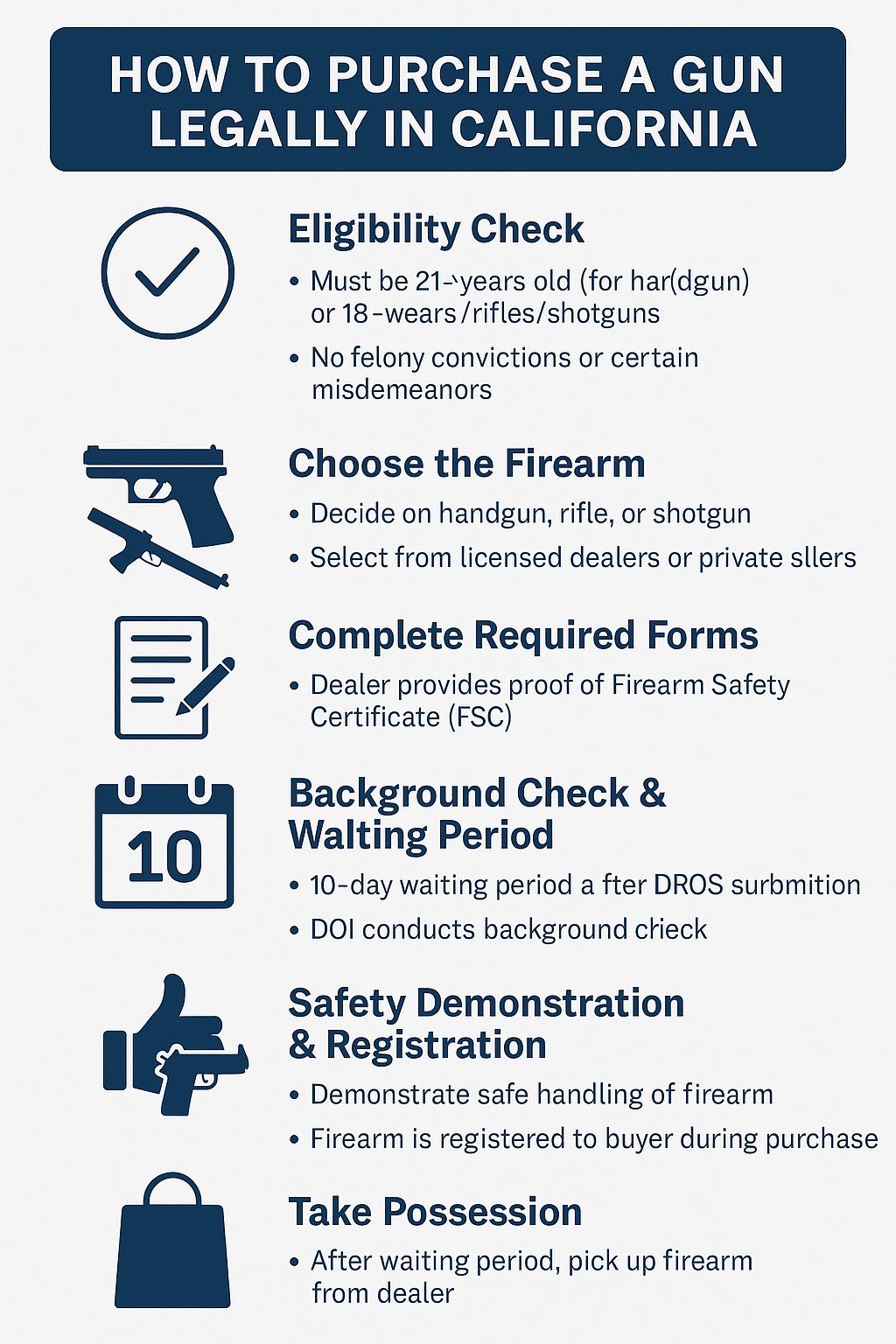
Unlike many other states where firearm acquisition might be a relatively straightforward transaction, California mandates several layers of checks, waiting periods, and safety certifications designed to enhance public safety. These regulations reflect a broader societal commitment to minimizing gun violence, making it crucial for prospective owners to be thoroughly informed before taking any steps. From initial eligibility requirements to understanding the types of firearms permissible for sale and the specifics of the purchase process, every detail matters. This article will walk you through each critical stage, ensuring you have the knowledge to navigate the journey responsibly and legally.
Understanding Eligibility and Foundational Requirements
Before considering specific firearms or visiting a licensed dealer, the foundational step for anyone interested in gun ownership in California is to ascertain their eligibility. The state’s laws are very clear about who can and cannot possess a firearm, and these criteria serve as the absolute baseline.
Who Can Own a Gun in California?
Generally, to legally purchase or possess a firearm in California, an individual must meet several key criteria:
- Age Requirement: For handguns, you must be at least 21 years old. For long guns (rifles and shotguns), the minimum age is generally 18, though recent changes have increased the age to 21 for semi-automatic centerfire rifles in most cases, with exceptions for active duty military personnel.
- Residency: You must be a legal resident of California. Proof of residency is a critical component of the purchasing process.
- Clean Criminal Record: Individuals with felony convictions, certain misdemeanor convictions (including those related to domestic violence), or those subject to specific restraining orders are prohibited from owning firearms. This is a critical area where background checks come into play.
- Mental Health Status: Individuals determined to be a danger to themselves or others due to mental illness, or those subject to specific mental health commitments, are prohibited.
The Firearm Safety Certificate (FSC)
A non-negotiable requirement for nearly all firearm purchases in California is obtaining a Firearm Safety Certificate (FSC). This certificate demonstrates that the individual has passed a written test covering basic firearm safety laws and practices.
- How to Obtain an FSC: The test is administered by certified instructors, often found at licensed firearm dealers, shooting ranges, or dedicated training facilities across the state. The test consists of 30 multiple-choice questions, requiring at least 23 correct answers to pass.
- Validity: Once issued, an FSC is valid for five years. It must be presented each time you purchase a firearm.
- Exemptions: While most people need an FSC, certain individuals are exempt, such as active duty military personnel, honorably discharged veterans, and those with a Concealed Carry Weapons (CCW) permit.
Navigating Firearm Types and Restrictions
California’s gun laws are not uniform across all types of firearms; specific regulations apply to handguns, rifles, shotguns, and accessories. Understanding these distinctions is crucial, as some firearms legal in other states are entirely prohibited in California.
Handguns: The Roster and Specific Requirements
Purchasing a handgun in California is particularly regulated. The state maintains an “Approved Handgun Roster,” often referred to as the California Roster of Certified Handguns.
- The Roster: With very few exceptions (like private party transfers or sales to law enforcement), all new handguns sold by licensed dealers must be models that have been tested and certified by the California Department of Justice (DOJ) for safety features. These features often include loaded chamber indicators, magazine disconnect mechanisms, and increasingly, microstamping technology. The roster is frequently updated, so checking the DOJ’s website before making a decision is highly recommended.
- Magazines: Handgun magazines are restricted to a maximum capacity of 10 rounds. Magazines holding more than 10 rounds are generally prohibited, even if the handgun itself is on the roster.
Rifles and Shotguns: Long Gun Regulations
While long guns (rifles and shotguns) are generally less restricted than handguns, they are still subject to significant state-specific laws.
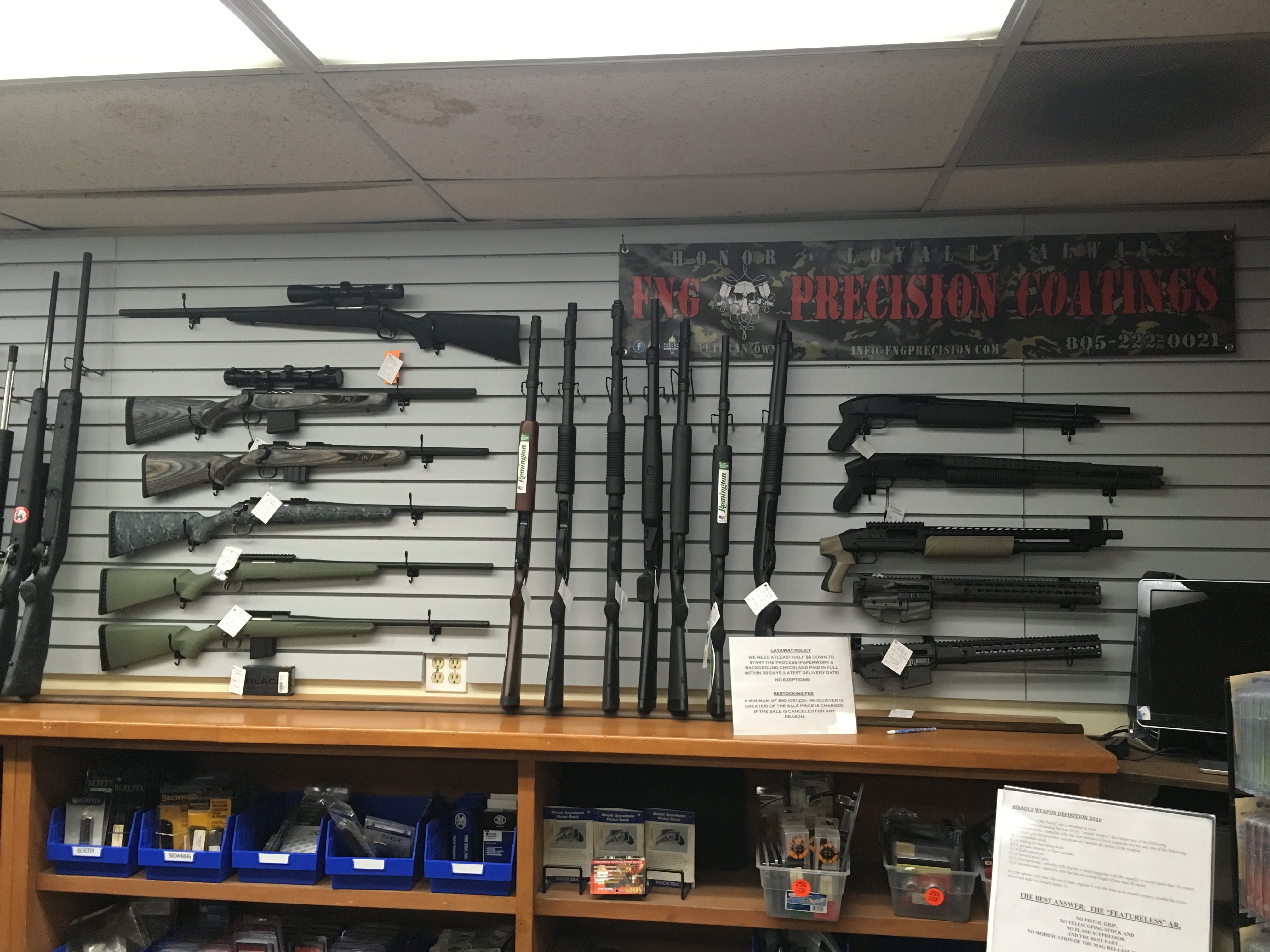
- “Assault Weapons” Ban: California has a comprehensive ban on what it defines as “assault weapons.” This definition is complex and goes beyond military-style firearms, encompassing many semi-automatic rifles and shotguns based on specific cosmetic and functional features (e.g., pistol grips, adjustable stocks, flash suppressors, forward vertical grips). It’s crucial to ensure any long gun you intend to purchase does not fall under this prohibition, or that it has been legally configured (e.g., “featureless” or with a fixed magazine) to comply with state law.
- Minimum Lengths: Rifles must have a barrel length of at least 16 inches and an overall length of 26 inches. Shotguns must have a barrel length of at least 18 inches and an overall length of 26 inches. “Short-barreled rifles” and “short-barreled shotguns” are generally illegal.
- Magazines: Similar to handguns, magazines for rifles and shotguns are restricted to a maximum capacity of 10 rounds.
The Firearm Purchase Process: A Step-by-Step Guide
Once you’ve confirmed your eligibility and understand the types of firearms you can legally acquire, the actual purchase process involves several distinct stages, primarily conducted through a licensed firearm dealer.
1. Selecting a Licensed Firearm Dealer (FFL)
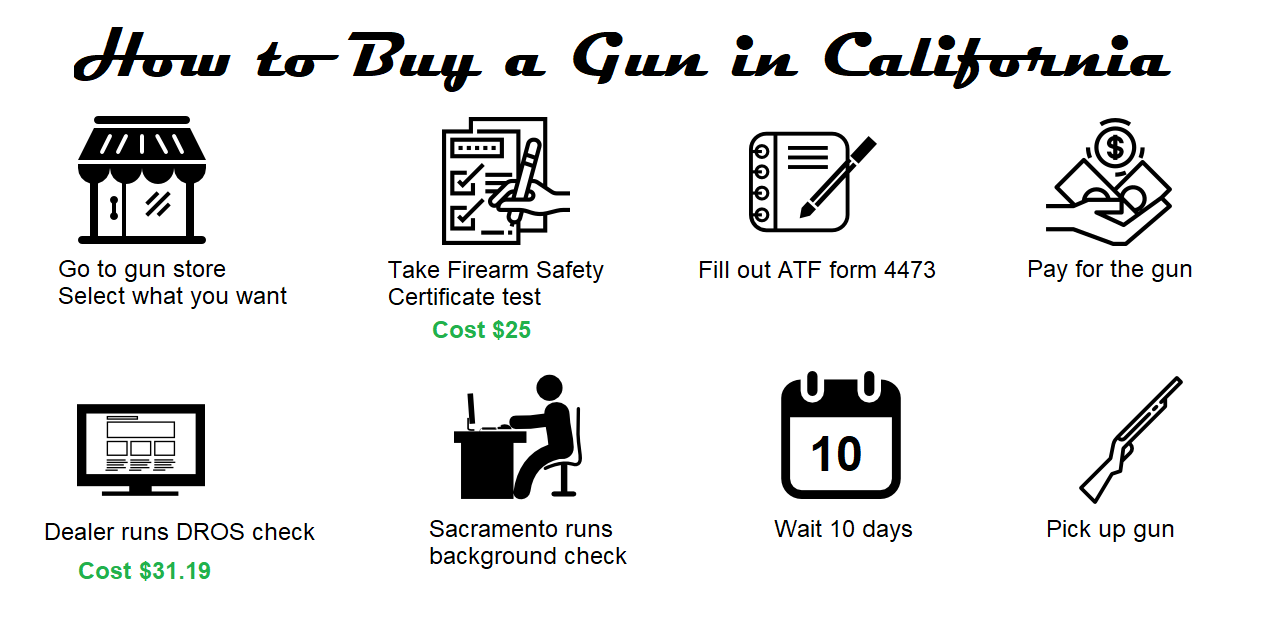
All legal firearm purchases (with very limited exceptions for bona fide private party transfers which must still go through an FFL) in California must occur through a Federally Licensed Firearm Dealer (FFL). These dealers are found in cities across the state, from bustling Los Angeles to the scenic towns of Northern California.
- Finding an FFL: You can find FFLs through online searches, local gun shop directories, or by asking at shooting ranges. Many FFLs also offer gun safety classes and act as resources for understanding state laws.
- Initial Consultation: A reputable FFL will be knowledgeable about California’s laws and can guide you through the permissible firearm options and the purchasing process.
2. The Dealer Record of Sale (DROS) and Background Check
Once you’ve selected a firearm, the FFL will initiate the official purchase process, which begins with the Dealer Record of Sale (DROS) application.
- Filling out DROS Paperwork: This involves providing personal identification information, including your California Driver’s License or ID card, proof of residency (e.g., vehicle registration, utility bill), and your FSC. For handguns, a secondary proof of residency is often required.
- Background Check: The FFL submits your information to the California Department of Justice for a comprehensive background check. This check screens for any disqualifying factors, such as felony convictions, certain misdemeanor convictions, or mental health prohibitions.
- Cost: There is a DROS fee, which includes the state’s background check fee and a safety fee. This is paid at the time of the DROS application.
3. The 10-Day Waiting Period
California mandates a non-negotiable 10-day waiting period from the date and time of the DROS submission before a firearm can be picked up.
- Purpose: This waiting period is designed as a “cooling-off” period, intended to prevent impulsive acts of violence.
- Strict Adherence: There are virtually no exceptions to this 10-day rule for standard purchases. The FFL cannot release the firearm to you until the 10 full 24-hour periods have passed and the DOJ has cleared the transfer.
4. Safe Handling Demonstration and Pickup
On or after the 10th day, assuming your background check has cleared, you can return to the FFL to pick up your firearm.
- Safe Handling Demonstration: Before taking possession, the FFL is required to ensure you can safely handle the firearm. This typically involves demonstrating how to load, unload, and safely operate the firearm.
- Safe Storage: California law mandates that all firearms be stored safely and securely, either in a locked container or with a gun lock, to prevent unauthorized access. You will typically be required to purchase a gun lock or verify ownership of an approved safe or locking device at the time of pickup.
Concealed Carry and Ongoing Responsibilities
Owning a firearm in California also involves understanding the regulations around carrying firearms and ongoing responsibilities.
Concealed Carry Weapons (CCW) Permits
California operates under a “may issue” policy for Concealed Carry Weapons (CCW) permits, meaning the issuing authority (typically the county sheriff or local police chief) has discretion in granting permits, even if an applicant meets all the basic requirements.
- “Good Cause” Requirement: Historically, applicants had to demonstrate “good cause” beyond general self-defense (e.g., specific threats to one’s life or profession requiring armed protection). However, recent court decisions have significantly altered this landscape. Following the Bruen decision, the “good cause” requirement has largely been struck down, making it easier for law-abiding citizens to obtain CCW permits.
- Application Process: The process involves submitting an application to your local issuing authority (e.g., the San Bernardino County Sheriff’s Department for San Bernardino County residents, or the Los Angeles Police Department for Los Angeles city residents), undergoing an extensive background check, psychological evaluation, and completing a state-mandated firearms training course.
- Open Carry: Openly carrying loaded or unloaded firearms in public is generally prohibited in most parts of California, with very limited exceptions.
Ongoing Responsibilities for Firearm Owners
Owning a firearm is a significant responsibility that extends beyond the purchase.
- Safe Storage: As mentioned, secure storage is not just a one-time check but an ongoing legal requirement.
- Transportation: When transporting firearms in a vehicle, they must generally be unloaded and locked in a container, separate from ammunition. Handguns must be transported in a locked container.
- Understanding Evolving Laws: California’s gun laws are dynamic and can change frequently. It is the owner’s responsibility to stay informed of any new legislation or regulations that may affect their firearm ownership. Resources such as the California Department of Justice website and reputable Second Amendment advocacy groups can provide up-to-date information.
Conclusion: Responsibility and Informed Ownership
Acquiring a gun in California is a process that demands patience, attention to detail, and a steadfast commitment to responsible firearm ownership. From understanding the strict eligibility requirements and navigating the Approved Handgun Roster, to meticulously completing the DROS paperwork and enduring the 10-day waiting period, each step is designed to ensure that firearms are placed in the hands of law-abiding and well-informed individuals.
The Golden State’s unique approach to gun control reflects a balance between constitutional rights and public safety concerns. While the regulations may seem daunting at first glance, they are clear and navigable for those willing to do their due diligence. By arming yourself with knowledge, selecting a reputable Federally Licensed Firearm Dealer, and adhering to all state and federal laws, you can successfully and legally acquire a firearm in California. Remember that ownership is an ongoing responsibility, requiring continuous adherence to safe storage practices, proper transportation protocols, and staying informed about evolving legislation. For anyone considering this path, thorough preparation and a commitment to safety are paramount.
LifeOutOfTheBox is a participant in the Amazon Services LLC Associates Program, an affiliate advertising program designed to provide a means for sites to earn advertising fees by advertising and linking to Amazon.com. Amazon, the Amazon logo, AmazonSupply, and the AmazonSupply logo are trademarks of Amazon.com, Inc. or its affiliates. As an Amazon Associate we earn affiliate commissions from qualifying purchases.