
Embarking on a journey of self-discovery or a new chapter in life often comes with the desire for a fresh start. For many, this includes changing their legal name. Whether motivated by marriage, divorce, personal preference, gender affirmation, or a desire to align one’s identity with a new lifestyle, the process of legally changing your name in California is a structured one. While the legal steps might seem daunting, understanding the process is the first step towards embracing a new identity that perfectly complements your travel aspirations and daily life.
This guide delves into the specifics of navigating California’s legal system to update your name, offering insights for residents whether they reside in the bustling metropolis of Los Angeles, the vibrant cultural hub of San Francisco, or the serene landscapes of Napa Valley. We’ll also explore how this significant life change impacts your ability to travel, book accommodations, and experience the world without a hitch, ensuring your new identity is recognized from a Hyatt Regency in Santa Monica to an exotic resort in Maui.

Understanding the Journey: Why a Name Change in California?
A legal name change is more than just an administrative task; it’s a profound personal decision that can signify a major life transition. For those living in the Golden State, the reasons are as diverse as California’s iconic landmarks and sprawling landscapes.
Personal Evolution and Travel Aspirations
Imagine planning a dream trip to Europe or a relaxing retreat to Palm Springs under a name that truly resonates with who you are. A name change can be a powerful symbol of personal evolution. For individuals undergoing gender affirmation, adopting a new name is a fundamental step in aligning their external identity with their true self, enabling them to travel and live authentically. Similarly, some may wish to shed a family name that carries difficult memories, adopting a new one that represents freedom and a fresh start, perhaps even inspiring them to visit places like Yosemite National Park or cross the Golden Gate Bridge with a renewed sense of self.
This new identity can influence your lifestyle choices, from the type of destinations you explore to the hotels you frequent. It can symbolize breaking free from old constraints and embracing new adventures, whether that’s backpacking through Southeast Asia or indulging in luxury travel at a five-star resort like The Ritz-Carlton, Laguna Niguel. The freedom of travel, from booking flights on United Airlines to reserving a suite via Booking.com, becomes intrinsically linked to the seamless recognition of your new legal name.
Common Reasons for a Name Change
Beyond personal evolution, many practical and traditional reasons lead individuals to change their names in California:
- Marriage: Traditionally, one spouse may adopt the other’s surname, or both may choose to hyphenate their names.
- Divorce: A person may wish to revert to their maiden name or a prior name after the dissolution of a marriage.
- Personal Preference: Simply disliking one’s current name, wanting a name that is easier to pronounce or spell, or choosing a name with significant personal meaning.
- Family Reasons: Unifying family names, adopting a stepparent’s name, or honoring an ancestral heritage.
- Protection: In cases of domestic violence or harassment, a name change can offer a layer of protection and a fresh start.
- Professional Branding: For some, a new name can enhance their professional identity or align with their creative pursuits, opening doors to new opportunities perhaps even in the bustling entertainment industry of Hollywood.
Understanding your specific motivation is important, as it might subtly influence the ease and speed of your name change process, especially if there are any objections or complexities.
The Judicial Path: Steps to Legally Changing Your Name
In California, changing your name (other than through marriage or divorce where it’s part of those proceedings) generally requires a court order. This process ensures that your new name is legally recognized across all governmental and private institutions, from the Department of Motor Vehicles to airline check-ins at LAX.
Initiating the Process: Forms and Filing
The journey begins at your local Superior Court. You’ll need to complete several forms, which can typically be found on the California Courts website. These include:
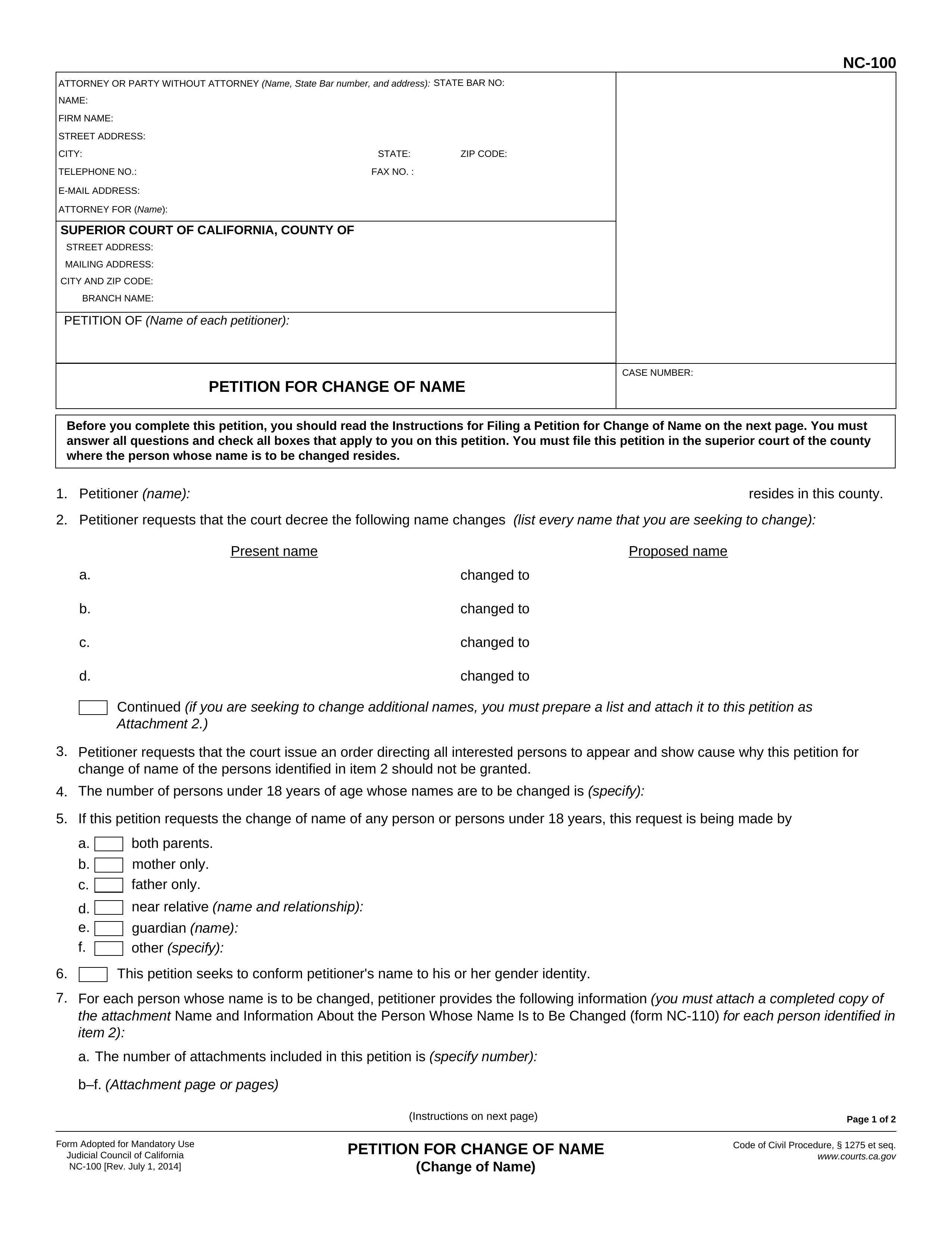
- Petition for Change of Name (Form NC-100): This is the primary document where you state your current legal name, the new name you desire, and the reason for the change. Be clear and concise about your reasons. For instance, if you’re seeking a name change for gender affirmation, clearly state that the change is to align your name with your gender identity.
- Order to Show Cause for Change of Name (Form NC-120): This form sets the date for your court hearing. The judge will sign this, ordering public notice of your petition.
- Civil Case Cover Sheet (Form CM-010): This provides statistical information about your case.
- Ex Parte Application for Order to File Documents Under Seal (if applicable): In rare cases, such as those involving domestic violence or protection, you may request to keep your petition confidential. This is an exception, and generally, name changes are public.
Once completed, these forms must be filed with the Superior Court in your county of residence. There is a filing fee, which can vary by county but is generally a few hundred dollars. If you cannot afford the fee, you can apply for a fee waiver (Form FW-001). This step is crucial for anyone on a budget travel plan, ensuring that financial constraints don’t hinder their personal transformation.
Navigating Publication and Court Hearings
After filing, one of the unique aspects of a name change in California is the publication requirement. Unless waived by the court in specific circumstances (e.g., for victim protection or judicial bypass for minors), you are generally required to publish the Order to Show Cause in a newspaper of general circulation in your county once a week for four consecutive weeks. This step is designed to give anyone who might object to your name change an opportunity to do so, though objections are rare.
Your court clerk will typically provide you with a list of approved newspapers. Once published, the newspaper will provide you with an Affidavit of Publication (or similar proof), which you must then file with the court before your hearing date. Missing this critical step could delay your name change and potentially reschedule your hearing, impacting your plans, perhaps even a pre-booked stay at a charming bed and breakfast in San Diego.
Finally, you will attend a court hearing on the date specified in your Order to Show Cause. In most cases, if all paperwork is in order and no objections have been raised, the judge will grant your petition. You will then receive an Order Changing Name (Form NC-130). This official document is your legal proof of name change and is indispensable for updating all your identification and records. Make sure to obtain several certified copies, as various agencies will require them.
Post-Order Essentials: Updating Your Identity for a World of Travel
Receiving your Order Changing Name is a triumphant moment, but it’s just the beginning of fully integrating your new identity into your life, especially when it comes to travel. Ensuring all your documents reflect your new name is paramount to avoid potential issues at airports like SFO or borders when traveling to Mexico or Canada.
Critical Document Updates for Seamless Travel
The most crucial step post-name change is to update your official identification documents. Without consistency across these, your ability to travel internationally and domestically will be severely hampered.
- Social Security Card: Start with the Social Security Administration. You’ll need to complete Form SS-5, Application for a Social Security Card, and present your Order Changing Name along with proof of identity and citizenship. This is often the first document to update as other agencies may require it.
- Driver’s License/State ID: Visit the California Department of Motor Vehicles (DMV). Bring your Order Changing Name, current driver’s license, and proof of your updated Social Security information. You’ll typically need to retake your photo and pay a small fee. Having a valid, updated driver’s license is essential for everything from renting a car in Miami to checking into a hotel in New York.
- Passport: This is perhaps the most critical document for international travel. Apply for a new passport with the U.S. Department of State. The application form (DS-82 for renewals or DS-11 for new passports), your Order Changing Name, existing passport (if applicable), and new photos will be required. Allow ample time for processing, especially if you have an upcoming international trip. A passport name not matching your airline ticket can lead to denied boarding, even for a cruise from Port Canaveral in Florida.
- TSA PreCheck/Global Entry/Clear: If you have these expedited travel programs, you must update your name with them. TSA PreCheck and Global Entry require you to update your information through their respective portals and potentially visit an enrollment center. This ensures your smooth passage through airport security, whether you’re departing from Sacramento or returning to Orange County.
- Bank Accounts, Credit Cards, and Other Financials: Notify your banks, credit card companies, and investment firms of your name change. This prevents discrepancies that could cause issues with transactions, especially when traveling abroad.
- Airline Loyalty Programs and Travel Memberships: Update your name with any airline frequent flyer programs, hotel loyalty programs (like Marriott Bonvoy or Hilton Honors), and other travel-related memberships. This ensures you continue to accrue points and benefits seamlessly.
Ensuring Your New Name Reflects Across All Bookings and Memberships
Imagine arriving at a luxury villa in Hawaii or a boutique apartment booked via Airbnb, only to find your reservation is under your old name. This can lead to significant headaches and even denied check-in. It’s crucial to be meticulous.
- Future Travel Bookings: When planning trips, always use your new legal name for all bookings – flights, hotels, rental cars, tour packages. If you’ve already booked travel under your old name, contact the airline, hotel, or travel agency to get it updated. Some might charge a fee, but it’s a necessary step.
- Medical and Insurance Records: Update your health insurance, medical records, and car insurance. This is not strictly travel-related but impacts your ability to receive care, especially if you have a medical emergency while exploring Alaska or any other destination.
- Utilities and Bills: Ensure your name is updated on utility bills, leases, and other essential accounts. While not directly tied to travel, these form the bedrock of your legal identity at home.
- Email and Social Media: While not legally required, updating your online presence can help align your digital identity with your legal one, reducing confusion when interacting with travel forums or sharing your adventures at Universal Studios Hollywood.
Embracing Your New Identity: Lifestyle and Travel Considerations
A legal name change in California marks the beginning of a new chapter. It’s an opportunity to embrace a refreshed lifestyle and confidently explore the world.
Planning Future Adventures with Your New Name
With your new name fully integrated across all your identification, the world truly opens up. You can confidently book that dream cruise to the Caribbean, plan a road trip along Highway 1 to Big Sur, or explore the historical sites of Rome and the futuristic cityscapes of Tokyo. Your name now matches your passport, your TSA PreCheck status, and your reservation for that charming boutique hotel in Beverly Hills.
Consider planning a celebratory trip after your name change is complete. This could be a visit to a California State Park like Death Valley National Park, a family outing to Disneyland, or an adventurous trek through Joshua Tree National Park. These experiences can serve as personal milestones, anchoring your new name to new memories and adventures. For those who enjoy theme parks, knowing your name is updated on your season passes for Legoland California or Six Flags Magic Mountain can simplify future visits.
Resources and Support for Your Transition
While the process is straightforward, it can be time-consuming. Don’t hesitate to seek support:
- Court Self-Help Centers: Most California Superior Courts have self-help centers or facilitators who can guide you through the forms and process, often free of charge.
- Legal Aid Societies: If you meet income requirements, legal aid organizations can provide assistance.
- Private Attorneys: For complex situations, or if you simply prefer professional assistance, a private attorney specializing in family law can handle the entire process for you.
- Online Resources: Websites like the California Courts provide detailed instructions and downloadable forms.
Embracing your new name opens doors to a life lived authentically and without the friction of mismatched identities. It’s a powerful step that, while requiring diligence, ultimately allows you to present your true self to the world, making every journey – from a local visit to the Getty Center to an international expedition – a seamless and fulfilling experience. Your new name is not just a label; it’s a passport to new possibilities and a testament to your evolving story.
LifeOutOfTheBox is a participant in the Amazon Services LLC Associates Program, an affiliate advertising program designed to provide a means for sites to earn advertising fees by advertising and linking to Amazon.com. Amazon, the Amazon logo, AmazonSupply, and the AmazonSupply logo are trademarks of Amazon.com, Inc. or its affiliates. As an Amazon Associate we earn affiliate commissions from qualifying purchases.