
California, a land of unparalleled beauty and endless opportunity, draws millions of visitors each year to its iconic landmarks, pristine beaches, majestic national parks, and vibrant cities. From the sun-drenched shores of San Diego to the bustling metropolis of San Francisco, and the star-studded streets of Los Angeles, the Golden State offers a diverse tapestry of experiences for every traveler. This thriving tourism industry, coupled with a robust local economy, creates a dynamic environment for entrepreneurs and small businesses alike. Whether you’re dreaming of opening a charming souvenir shop near the Golden Gate Bridge, launching a food truck serving gourmet delights at a beachside festival, curating a boutique collection of local artisan crafts for your hotel guests, or even operating a unique vacation rental that offers locally sourced amenities, understanding the foundational requirements for doing business here is paramount.
One of the most crucial steps for any individual or entity selling tangible personal property in California is obtaining a Seller’s Permit. Often confused with a general business license, a Seller’s Permit is specifically about collecting and remitting sales tax to the state. It’s not just a bureaucratic hurdle; it’s a fundamental part of operating legally, contributing to the state’s infrastructure, and establishing your business’s legitimacy. For those entrenched in or looking to enter California’s expansive travel, tourism, accommodation, or lifestyle sectors, securing this permit is an indispensable first step that ensures compliance and paves the way for sustainable growth. This comprehensive guide will walk you through everything you need to know about acquiring a California Seller’s Permit, tailored to resonate with the vibrant entrepreneurial spirit found across the state’s many tourist destinations and local communities.
Understanding the Seller’s Permit in California
Before diving into the application process, it’s essential to grasp precisely what a California Seller’s Permit entails and why it’s a non-negotiable requirement for many businesses, especially those catering to the influx of tourists and residents alike.
What is a California Seller’s Permit?
At its core, a California Seller’s Permit, also known as a sales tax permit, resale permit, or sales and use tax permit, is a license that authorizes you to sell tangible personal property (items you can touch, see, and move) to consumers within the state. Its primary purpose is to allow you to collect sales tax from your customers on behalf of the state and then remit that tax to the proper authorities. This permit is issued by the California Department of Tax and Fee Administration (CDTFA). Unlike many other business licenses that might incur a fee, obtaining a Seller’s Permit from the CDTFA is generally free, though a security deposit may be required in some cases. It’s a foundational step that legitimizes your commercial activities in the eyes of the state and enables you to play a part in California’s economic ecosystem.
Who Needs One in the Travel & Tourism Landscape?
The scope of businesses requiring a Seller’s Permit is broad, particularly within California’s diverse travel and tourism industries. If your business involves selling goods, even occasionally, you likely need this permit. Consider these common scenarios:
- Souvenir Shops & Retailers: From the bustling markets of San Francisco’s Fisherman’s Wharf to the trendy boutiques in Palm Springs, any establishment selling T-shirts, postcards, local crafts, or other merchandise directly to tourists or residents must collect sales tax.
- Hotel & Accommodation Providers: While room rentals are generally exempt from sales tax (though subject to Transient Occupancy Taxes), if your hotel, resort, or unique accommodation (Yosemite National Park cabins, Big Sur glamping sites) also sells items like branded merchandise, local wines, gourmet snacks, toiletries, or gift shop products, you’ll need a Seller’s Permit.
- Food & Beverage Vendors: Whether you operate a permanent restaurant, a pop-up stall at a farmers market in Napa Valley, a food truck at a festival in Orange County, or a concession stand at an amusement park in Anaheim, most sales of prepared food and non-exempt beverages are subject to sales tax, necessitating a permit.
- Tour Operators & Experience Providers: If your business, offering experiences like wine tours in Sonoma or surf lessons in Malibu, also sells branded apparel, photography packages, or related merchandise, a permit is required.
- Artisans & Craftspeople: Those selling handmade jewelry at a craft fair in Santa Monica, original artworks in Laguna Beach, or artisanal food products at a local market will need a permit.
- Online Sellers with a California Presence: Even if your primary sales channel is online, if your business is based in California and you’re selling taxable items to California customers, you must have a Seller’s Permit.
Essentially, if you are regularly engaged in the business of selling tangible goods in California, whether as a sole proprietor, partnership, corporation, or LLC, and whether your sales are seasonal, part-time, or full-time, you need a Seller’s Permit.
Distinguishing Between a Seller’s Permit and a Business License
It’s crucial not to confuse a Seller’s Permit with a general business license, as they serve different purposes and are often required concurrently.
- Seller’s Permit: Issued by the CDTFA, this permit is solely for the collection and remittance of sales tax on tangible personal property.
- Business License: Typically issued by your local city or county government (Los Angeles County, City of Sacramento), a general business license authorizes you to operate a business within that specific jurisdiction. These licenses often have fees and vary greatly depending on your business type and location. For example, a food truck in Oakland will need an Oakland business license in addition to a state Seller’s Permit.
Many businesses will require both a Seller’s Permit from the state and one or more business licenses from their local jurisdiction(s). Always check with your city and county offices to ensure full compliance.
The Step-by-Step Application Process for Your California Seller’s Permit
Fortunately, obtaining a California Seller’s Permit is a straightforward process, largely facilitated online. Here’s a detailed guide to get you started.
Gathering Your Information
Before you begin the application, ensure you have the following essential details and documents readily available. Accuracy is key to a smooth application.
- Business Legal Name and DBA (Doing Business As) Name: If applicable.
- Business Address and Mailing Address: Your physical location in California.
- Contact Information: Phone number, email address.
- Type of Business Entity: Sole proprietorship, partnership, LLC, corporation, etc.
- Social Security Number (SSN) or Federal Employer Identification Number (FEIN): Required for identification purposes. Most businesses will use an FEIN.
- Names and Contact Information of All Owners/Partners/Corporate Officers.
- North American Industry Classification System (NAICS) Code: A six-digit code classifying your business industry. You can typically find this with a quick online search or by selecting the closest option during the application. For instance, a souvenir shop might fall under retail trade.
- Estimated Monthly/Quarterly Taxable Sales: The CDTFA uses this to determine your filing frequency.
- Date Business Operations Began or Will Begin.
- Bank Account Information: For security deposit purposes, if required.
Applying Online with the California Department of Tax and Fee Administration (CDTFA)
The most convenient and recommended method for obtaining your Seller’s Permit is through the CDTFA’s online services portal.
- Visit the CDTFA Website: Navigate to the official website of the California Department of Tax and Fee Administration.
- Create an Online Account: If you don’t already have one, you’ll need to create a new user account. This involves setting up a username and password and providing some basic personal information.
- Start a New Registration: Once logged in, look for an option to “Register a New Business Activity” or “Apply for a Seller’s Permit.”
- Follow the Prompts: The online application is user-friendly and guides you through a series of questions. You’ll enter all the information you gathered in the previous step, including your business details, ownership structure, estimated sales, and start date.
- Review and Submit: Carefully review all the information you’ve entered for accuracy. Any discrepancies could cause delays. Once satisfied, submit your application.
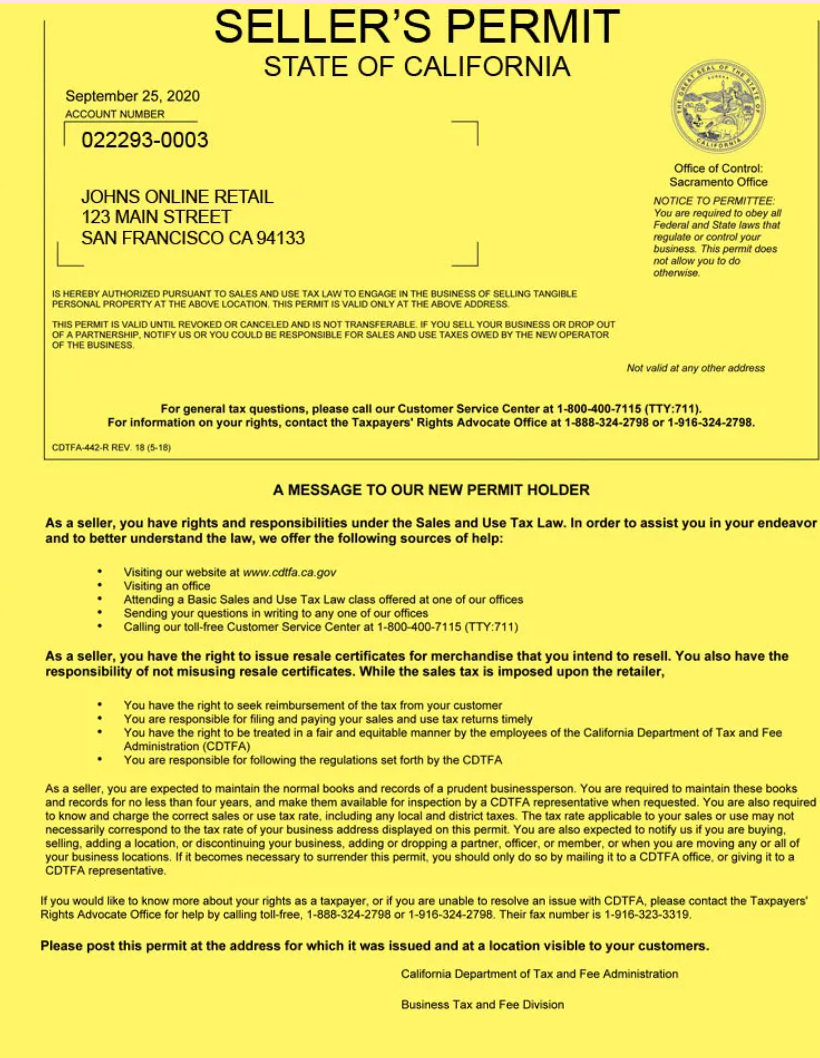
- Receive Your Permit: In most cases, if your application is complete and approved, you’ll receive your Seller’s Permit number almost immediately upon submission. A physical copy of your permit will typically be mailed to you within a few weeks. This permit must be prominently displayed at your place of business.
The online application process is designed to be quick and efficient, often taking less than 30 minutes to complete if all your information is ready.
In-Person or Mail Application Alternatives
While online application is preferred, the CDTFA also offers alternatives:
- In-Person: You can visit one of the many CDTFA field offices located throughout California to apply in person. This can be beneficial if you have specific questions or require assistance. Offices are located in major cities like Sacramento, Oakland, Riverside, San Jose, and Fresno, among others.
- By Mail: You can download the “Application for Seller’s Permit” (Form CDTFA-400-SP) from the CDTFA website, fill it out, and mail it to the appropriate address. However, this method typically has a longer processing time.
Understanding the Permit Details

Once you receive your permit, it’s important to understand a few key aspects:
- Resale Certificate: Your Seller’s Permit effectively acts as a resale certificate. This means that if you purchase items from suppliers with the intent to resell them, you do not pay sales tax on those purchases. You provide your Seller’s Permit number to your supplier, who then exempts you from sales tax. You then collect sales tax from your end customer when you sell the item.
- Filing Frequency: Based on your estimated sales volume, the CDTFA will assign you a filing frequency: monthly, quarterly, or annually. Most new small businesses start with quarterly or annual filing. It’s crucial to adhere to this schedule for remitting the collected sales tax.
Navigating Post-Permit Responsibilities for Tourism Businesses
Obtaining your Seller’s Permit is just the first step. The ongoing responsibilities of collecting, reporting, and remitting sales tax are critical for maintaining compliance and ensuring the long-term success of your venture in California’s competitive market.
Collecting and Remitting Sales Tax
Your primary ongoing responsibility is the accurate collection and timely remittance of sales tax.
- Sales Tax Rates: California has a statewide base sales tax rate, but local jurisdictions (cities and counties) can add district taxes. This means the total sales tax rate varies depending on your specific business location. For example, the rate in Los Angeles County will differ from that in Riverside or San Jose. It is imperative to charge the correct rate for your location. The CDTFA website provides a helpful tool to look up rates by address.
- Collection: You must collect sales tax from your customers at the point of sale. This needs to be clearly itemized on receipts.
- Filing Returns: On your assigned filing frequency (monthly, quarterly, or annually), you will file a sales and use tax return with the CDTFA and remit the collected tax. This can be done conveniently online through your CDTFA account. Failure to file or pay on time can result in penalties and interest.
Record-Keeping Essentials
Meticulous record-keeping is non-negotiable for any business, especially when it comes to sales tax.
- Detailed Sales Records: Keep accurate records of all sales, both taxable and non-taxable (e.g., sales for resale, sales to out-of-state customers for delivery out of state).
- Purchase Records: Maintain records of all purchases, distinguishing between items bought for resale (where you shouldn’t have paid sales tax) and items bought for business use (where you might have).
- Exemptions: Document any sales where tax was not collected due to an exemption (e.g., valid resale certificates from other businesses).
- Digital vs. Physical: While digital records are acceptable and often preferred, ensure they are securely stored and easily retrievable for at least four years, as this is the standard statute of limitations for audits.
Good record-keeping simplifies the filing process and is invaluable in case of a CDTFA audit, which can happen to any business, regardless of size, especially those with high transaction volumes typical of tourism-focused enterprises.
Staying Compliant and Avoiding Penalties
Compliance is key to avoiding unnecessary fines, interest, and legal complications that can severely impact a small business.
- Timely Filing and Payment: Always file your sales tax returns and make payments by the due dates. Setting reminders or using accounting software can help manage this.
- Stay Informed: Tax laws can change. Regularly check the CDTFA website for updates, new regulations, or changes in sales tax rates that might affect your business.
- Address Changes: Inform the CDTFA promptly if your business address changes, as this can affect your sales tax rate.
- Professional Advice: Consider consulting with a tax professional or accountant who specializes in California sales tax. Their expertise can be invaluable for ensuring ongoing compliance, particularly for complex business models.
For tourism-related businesses, reputation and trust are paramount. Strict adherence to sales tax regulations not only keeps you in good standing with the state but also signals professionalism and ethical operations to your customers, whether they are local patrons or visitors from around the globe.
The Benefits and Broader Impact on California’s Economy and Travel Sector
Beyond mere compliance, obtaining and properly managing a Seller’s Permit brings significant advantages to your business and contributes positively to the broader California economy and its celebrated travel sector.
Legitimacy and Business Growth
A Seller’s Permit is more than just a piece of paper; it’s a mark of legitimacy.
- Professionalism: It signals to customers, suppliers, and potential partners that you are a legitimate, registered business operating in compliance with state laws. This fosters trust, especially important for tourist-facing businesses where visitors may be less familiar with local regulations.
- Wholesale Opportunities: Having a Seller’s Permit (which serves as a resale certificate) allows you to purchase goods from wholesalers and manufacturers without paying sales tax on those purchases, as long as you intend to resell them. This can significantly improve your profit margins and access to a wider range of products, crucial for a souvenir shop or a hotel boutique.
- Participation in Events: Many major events, festivals, and markets across California – from the Pasadena Rose Parade vendor booths to the Monterey Jazz Festival food stalls – require vendors to have a valid Seller’s Permit. Securing one opens doors to these lucrative opportunities, allowing your business to reach a broader audience, including millions of tourists.
Contributing to California’s Infrastructure and Services
The sales tax you collect and remit plays a vital role in funding essential public services and infrastructure that directly benefit both residents and the tourism industry.
- Public Services: Sales tax revenue contributes to local schools, public safety (police and fire departments), healthcare services, and other community programs. These services enhance the quality of life for residents and create a safer, more appealing environment for tourists.
- Infrastructure Development: Funds are allocated to maintaining and improving roads, public transportation systems, parks, and other public facilities. A well-maintained infrastructure is crucial for facilitating travel across California, making destinations more accessible and enjoyable for visitors.
- Environmental Initiatives: In some cases, sales tax revenue can support environmental protection efforts, preserving the natural beauty of [California](https://lifeoutofthebox.com/california]’s national parks, coastlines, and forests – attractions that draw countless tourists.
By diligently collecting and remitting sales tax, your business directly contributes to the upkeep and enhancement of the very state that provides the backdrop for your entrepreneurial endeavors and the experiences you offer to travelers.
Supporting Local Communities and Artisan Trades
For businesses focused on selling locally sourced products, artisan crafts, or regional specialties, the Seller’s Permit underscores a commitment to the local economy.
- Fair Contribution: When a business selling local goods collects and remits sales tax, it ensures that these sales contribute fairly to the tax base of the community where the goods are produced and sold. This, in turn, helps support the artisans, farmers, and small producers whose unique offerings often form the backbone of California’s local culture and appeal.
- Economic Cycle: The sales tax mechanism ensures that the economic benefits generated by tourism and commerce are cycled back into the communities, fostering sustainable growth and supporting the very elements that make California such a captivating destination.
In conclusion, obtaining a Seller’s Permit in California is a foundational step for any business engaged in selling tangible personal property, particularly within the state’s expansive travel, tourism, and lifestyle sectors. It’s a simple, free process that grants you legal authorization to collect sales tax, opens doors to business opportunities, and ensures your contribution to the vibrant economy and public services that make California an exceptional place to live, work, and visit. By understanding the requirements, following the application steps, and adhering to ongoing responsibilities, you can ensure your business thrives and remains a legitimate, valued part of the Golden State’s dynamic commercial landscape.
LifeOutOfTheBox is a participant in the Amazon Services LLC Associates Program, an affiliate advertising program designed to provide a means for sites to earn advertising fees by advertising and linking to Amazon.com. Amazon, the Amazon logo, AmazonSupply, and the AmazonSupply logo are trademarks of Amazon.com, Inc. or its affiliates. As an Amazon Associate we earn affiliate commissions from qualifying purchases.