
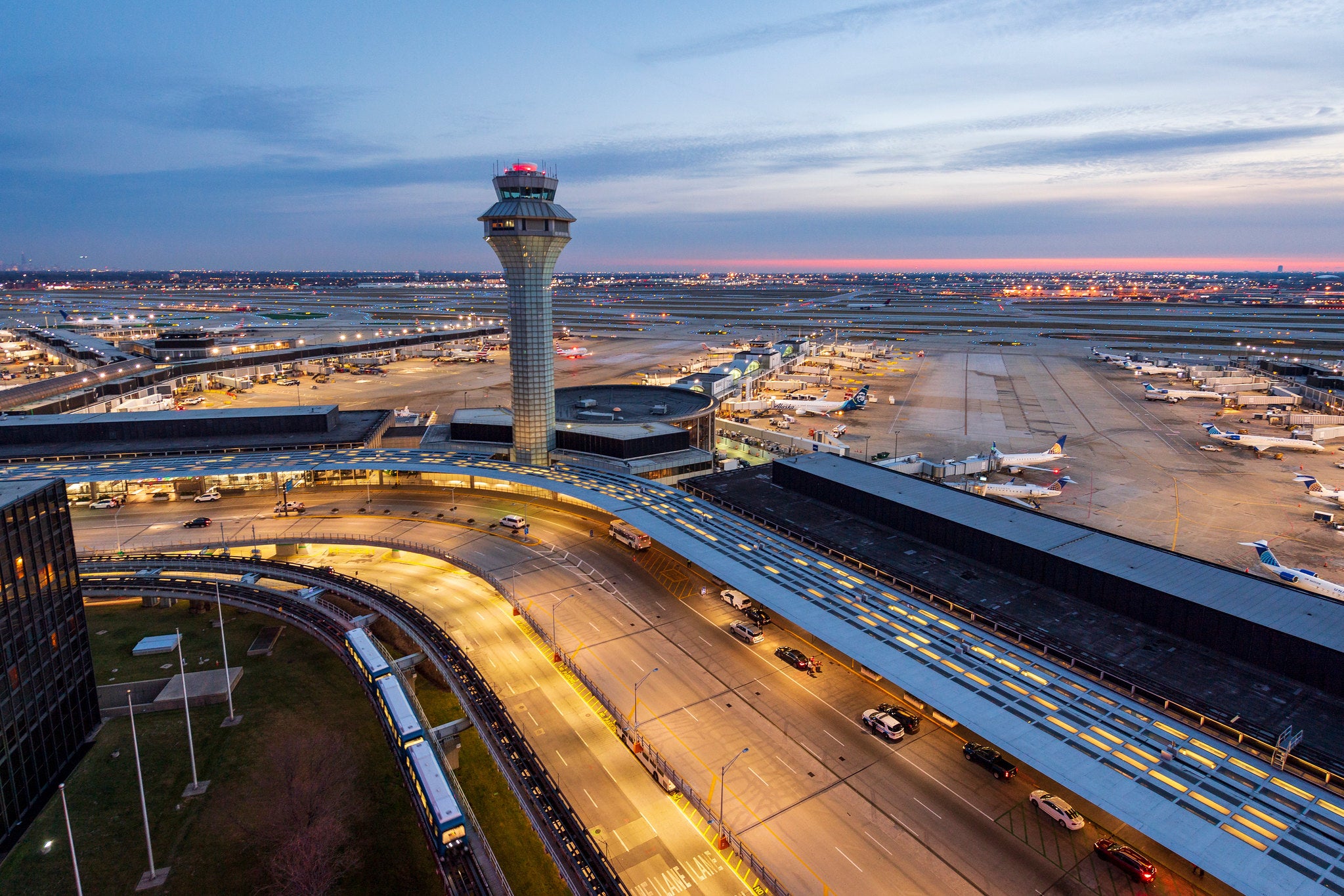
Nestled approximately 17 miles (27 kilometers) northwest of Chicago’s bustling downtown Loop, Chicago O’Hare International Airport (ORD) stands as a colossal gateway to the Midwest and beyond. More than just a location on a map, ORD is a vibrant nexus of global travel, a critical economic engine for Illinois, and an integral part of the travel experience for millions of passengers each year. For anyone planning a trip to the “Windy City,” contemplating a connecting flight, or simply curious about one of the world’s busiest aviation hubs, understanding the exact placement, significance, and connectivity of O’Hare is paramount. This comprehensive guide will not only pinpoint O’Hare’s geographical coordinates but also explore its profound impact on travel, tourism, accommodation, and the overall lifestyle of visitors and residents alike, offering insights into navigating this colossal airport and the dynamic metropolis it serves.

Unveiling O’Hare’s Strategic Location
Chicago O’Hare International Airport’s location is a masterstroke of urban planning and a testament to its pivotal role in the global aviation network. While it proudly bears the name of Chicago, the airport itself is technically situated within a patchwork of suburban municipalities, including parts of Rosemont, Des Plaines, and Park Ridge, all within Cook County, Illinois, United States. This positioning was meticulously chosen for its accessibility, vast land availability, and strategic distance from Chicago’s dense urban core, allowing for extensive expansion and reduced noise impact on the immediate city center while maintaining seamless connectivity.
Geographical Coordinates and Proximity to Chicago
At roughly 41°58′30″N 87°54′07″W, O’Hare occupies a significant footprint in the northwestern quadrant of the Chicagoland Area. The journey from the heart of downtown Chicago to O’Hare typically spans about 30 to 45 minutes by car under normal traffic conditions, though this can fluctuate considerably during peak hours. The relative proximity ensures that travelers can transition quickly from the airport’s terminals to the city’s vibrant attractions, business districts, and diverse neighborhoods. This balance of space and accessibility is a defining characteristic of ORD, enabling it to handle an immense volume of air traffic and passenger flow without overwhelming the urban infrastructure. Its location allows it to serve not just Chicago proper, but the entire Chicagoland metropolitan area, which is home to nearly 10 million people, and indeed, a significant portion of the Midwest.
Connecting O’Hare to the Greater Chicagoland Area
O’Hare’s location is intricately woven into the broader transportation network of the Chicagoland Area. Major expressways such as I-90 (Kennedy Expressway) and I-190 directly link the airport to downtown Chicago and other suburban communities. This extensive road network facilitates convenient access for private vehicles, taxis, ride-sharing services, and shuttle buses. Beyond road infrastructure, the airport is a crucial node in the public transportation system. The Chicago Transit Authority (CTA) Blue Line train provides 24/7 service directly to and from O’Hare, offering an affordable and often faster alternative to road transport, particularly during heavy traffic. This seamless integration into the metropolitan transit landscape underscores O’Hare’s role as more than just an isolated airport but rather a dynamic extension of the city itself, designed for maximum convenience and connectivity for travelers across all segments of the Chicagoland Area and beyond.
A Gateway to the World: O’Hare’s Significance in Travel and Tourism
Chicago O’Hare International Airport isn’t merely a point of arrival or departure; it’s a global travel titan, consistently ranking among the busiest airports worldwide in terms of both passenger traffic and aircraft movements. Its strategic position in the center of the United States makes it an ideal hub for connecting flights, while its extensive network of domestic and international routes solidifies its status as a vital artery in the global travel ecosystem. This immense capacity and connectivity render O’Hare a cornerstone of travel and tourism for Chicago and the surrounding region.
O’Hare as a Major Hub for Domestic and International Travel
Since its inception, O’Hare has been designed for volume and efficiency. It serves as a primary hub for two of the world’s largest airlines, United Airlines and American Airlines, facilitating an astonishing number of daily flights to nearly every corner of the globe. From its multiple terminals, travelers can embark on direct flights to major cities across North America, South America, Europe, Asia, and beyond. This extensive reach makes ORD an indispensable asset for international business travelers seeking efficient connections and leisure travelers venturing to far-flung destinations. For those traveling domestically, O’Hare offers unparalleled options, with frequent flights to virtually every major and many secondary cities across the United States. This robust connectivity minimizes layover times and maximizes travel convenience, making it a preferred choice for millions.
Exploring Chicago’s Attractions from the Airport
For those arriving at O’Hare with Chicago as their final destination, the city unfurls a tapestry of world-class attractions within easy reach. The efficient transportation links mean that passengers can quickly transition from the tarmac to experiencing Chicago’s renowned cultural institutions, architectural marvels, and vibrant entertainment districts. A short Blue Line ride can deposit visitors directly into the Loop, where iconic landmarks like Millennium Park with its famous Cloud Gate sculpture (affectionately known as “The Bean”) await. Nearby, the Art Institute of Chicago houses an incredible collection of masterpieces, while the Shedd Aquarium, Field Museum, and Museum of Science and Industry offer captivating experiences for all ages.
The vibrant Magnificent Mile, a paradise for shoppers and foodies, is easily accessible, as is Navy Pier with its Ferris wheel and waterfront activities on Lake Michigan. For breathtaking panoramic views, the Willis Tower Skydeck provides an unforgettable perspective of the city skyline. Sports enthusiasts will find it convenient to reach iconic venues like Wrigleyville for a Chicago Cubs game or the United Center for Bulls or Blackhawks action. O’Hare’s location ensures that the cultural richness, culinary delights (including legendary deep-dish pizza), and diverse entertainment options of Chicago are just a short journey away, making it an exceptional starting point for any Illinois adventure.
The Economic Impact on Local Tourism and Business
The sheer volume of travelers passing through O’Hare translates directly into a significant economic boon for Chicago and the wider region. Beyond the direct revenue generated by airport operations, ORD supports a vast ecosystem of tourism, hospitality, and related industries. Hotels, from luxury resorts to budget-friendly apartments, thrive on the constant influx of visitors. Restaurants, entertainment venues, and retail businesses all benefit from traveler spending. The airport also facilitates business travel, making Chicago an attractive destination for conferences, trade shows at venues like McCormick Place, and corporate meetings, further bolstering the local economy.
Furthermore, O’Hare itself is a massive employer, providing thousands of jobs directly and indirectly. Its presence encourages investment in infrastructure, urban development, and the expansion of services catering to both residents and visitors. The reputation of Chicago as a global city is inextricably linked to the efficiency and connectivity offered by O’Hare, making it not just an airport, but a cornerstone of the region’s prosperity and international standing.
Navigating O’Hare and Beyond: Transportation and Accommodation
Understanding the intricate web of transportation options and the diverse array of accommodation choices is crucial for any traveler making their way through Chicago O’Hare International Airport. Whether you’re a business traveler on a tight schedule, a family on vacation, or a solo adventurer, the seamless transition from air to ground travel and a comfortable place to rest are paramount to a positive experience.
Getting To and From ORD: Public Transit, Taxis, and Ride-Shares
O’Hare offers a comprehensive suite of transportation options designed to cater to every need and budget.
- Public Transit (CTA Blue Line): For budget-conscious travelers or those looking to avoid traffic, the Chicago Transit Authority (CTA) Blue Line is an excellent choice. Operating 24/7, the Blue Line directly connects O’Hare’s Terminal 2 (with pedestrian access from all terminals) to downtown Chicago’s Loop in approximately 45 minutes to an hour. It’s affordable, reliable, and offers a straightforward route, making it a favorite for many.
- Taxis and Ride-Shares: Taxis are readily available outside each terminal, offering a convenient door-to-door service, especially beneficial for groups or those with heavy luggage. Similarly, popular ride-sharing services like Uber and Lyft operate at ORD, with designated pick-up zones that are clearly marked. While generally faster than public transit, these options can be affected by traffic congestion and surge pricing during peak times.
- Shuttle Services: Various airport shuttle services provide shared-ride or private transfers to hotels in Rosemont, nearby suburbs, or downtown Chicago. These can be a cost-effective alternative for individuals or small groups.
- Rental Cars: Numerous rental car agencies have counters at O’Hare, offering flexibility for travelers who plan to explore beyond the city center or prefer the convenience of their own vehicle. A complimentary shuttle service transports passengers from the terminals to the consolidated rental car facility.
- Metra: For travelers heading to other suburban locations, the Metra commuter rail provides service from the O’Hare station (accessible via the Airport Transit System or shuttle) to various points in the Chicagoland Area.

Hotels and Accommodation Options Near O’Hare
The area immediately surrounding O’Hare is a veritable hub of hotels, catering primarily to business travelers, those with early morning flights or late arrivals, and passengers with extended layovers. These accommodations range from luxurious suites to comfortable, budget-friendly options, many offering complimentary shuttle services to and from the airport.
- On-Airport Hotels: The Hilton Chicago O’Hare Airport is uniquely situated within the airport complex itself, connected to Terminals 1, 2, and 3 via underground walkways. This offers unparalleled convenience for very short layovers or last-minute stays.
- Near-Airport Hotels (Rosemont/Des Plaines): Just a stone’s throw away in Rosemont and Des Plaines, you’ll find a high concentration of reputable hotel brands. Options like the Loews Chicago O’Hare Hotel, Hyatt Regency O’Hare Chicago, and Westin O’Hare offer a range of amenities, including business centers, fitness facilities, and diverse dining options. These hotels are ideal for those attending events at the nearby Donald E. Stephens Convention Center or seeking convenience without venturing into the city center.
- Beyond O’Hare: For travelers planning a more immersive Chicago experience, staying downtown or in popular neighborhoods like River North, West Loop, or Magnificent Mile is recommended. Here, you’ll find an abundance of world-class hotels such as the InterContinental Chicago Magnificent Mile, The Langham, Chicago, or Thompson Chicago, along with boutique hotels, serviced apartments, and vacation rentals catering to every taste and budget.
Planning Your Stay: From Layover Comfort to Extended Chicago Exploration
When planning your accommodation, consider the purpose of your trip. For short layovers, an on-airport or near-airport hotel minimizes travel stress. Many of these offer day rates for quick refreshes. For longer stays or a full Chicago immersion, choosing a hotel in a vibrant downtown district puts you closer to attractions, local culture, and diverse culinary experiences. Websites offering booking, reviews, and comparison tools are invaluable for finding the perfect fit. Pay attention to amenities like Wi-Fi, fitness centers, and breakfast options, which can significantly enhance your stay. Whether you prioritize luxury travel, budget-friendly options, family-friendly resorts, or tailored business stays, O’Hare’s surroundings and Chicago itself provide a spectrum of choices to ensure a comfortable and convenient experience.
The O’Hare Experience: Facilities, Amenities, and Future Outlook
Beyond its logistical importance, Chicago O’Hare International Airport strives to offer a comprehensive and pleasant experience for its millions of passengers. As a global hub, it continuously evolves its facilities and amenities to meet the demands of modern travel, catering to diverse needs from brief layovers to extended waits. Understanding what ORD offers within its terminals can significantly enhance a traveler’s journey.
Passenger Services and Lifestyle Amenities at ORD
O’Hare’s four terminals are equipped with a vast array of services and amenities designed to make travel as comfortable and convenient as possible.
- Dining: From fast-casual eateries to upscale restaurants, ORD boasts a diverse culinary landscape. Travelers can find everything from classic Chicago deep-dish pizza and hot dogs to international cuisine, healthy options, and grab-and-go snacks. This caters to all tastes and dietary requirements, ensuring that no traveler goes hungry.
- Shopping: Retail therapy is readily available with numerous shops offering duty-free goods, fashion, electronics, books, and souvenirs. Whether you need a last-minute gift or forgot an essential item, O’Hare’s retail options are extensive.
- Lounges: For those seeking an elevated travel experience, O’Hare features numerous airline lounges (e.g., United Club, American Admirals Club) and independent lounges (e.g., Centurion Lounge) offering complimentary food, drinks, Wi-Fi, and a quiet space to work or relax. These are particularly valuable for business travelers or those with long layovers.
- Connectivity and Technology: Free Wi-Fi is available throughout the airport, allowing passengers to stay connected, work, or stream entertainment. Charging stations are also strategically placed in terminals to keep devices powered up.
- Wellness and Arts: Recognizing the stresses of travel, O’Hare incorporates elements of wellness and culture. The Yoga Room provides a tranquil space for stretching and meditation. Public art installations, including vibrant murals and sculptures, are displayed throughout the terminals, adding a touch of local culture and aesthetic appeal to the airport environment.
- Family-Friendly Amenities: For families traveling with children, ORD offers nursing rooms, family restrooms, and even a children’s play area, making the journey more manageable for parents and enjoyable for kids.
- Accessibility: The airport is committed to accessibility, providing services and facilities for passengers with disabilities, including accessible restrooms, elevators, and assistive services upon request.
Exploring the Future of Travel at Chicago O’Hare
O’Hare is not content to rest on its laurels; it’s constantly undergoing modernization and expansion projects to maintain its status as a leading global airport. The ongoing O’Hare 21 initiative, a multi-billion dollar capital program, aims to completely transform the passenger experience. This ambitious plan includes:
- Terminal Modernization: Significant upgrades to existing terminals and the construction of new, state-of-the-art global terminals. This will involve wider concourses, more gates, and enhanced check-in and security areas.
- Increased Capacity: Designed to increase gate capacity by 25% and accommodate larger aircraft, thereby boosting the airport’s ability to handle future passenger growth and more international flights.
- Improved Passenger Flow: Streamlined security checkpoints, advanced baggage systems, and improved wayfinding are all part of the plan to reduce congestion and improve efficiency.
- Enhanced Retail and Dining: Expansion of concessions will bring even more diverse and upscale dining and shopping options, reflecting Chicago’s vibrant culinary and retail scene.
- Sustainable Infrastructure: Focus on environmentally friendly practices, including energy-efficient designs and sustainable material usage.
These ongoing developments underscore O’Hare’s commitment to remaining at the forefront of aviation, ensuring that it continues to offer a world-class travel experience. For travelers, this means anticipating even smoother connections, more comfortable waiting areas, and an ever-improving array of services and amenities in the years to come, solidifying its place as a pivotal landmark in the landscape of global travel.
Beyond the Airport: Chicagoland Landmarks and Lifestyles
While Chicago O’Hare International Airport serves as a critical entry point, the true essence of a trip often begins beyond its terminals. The Chicagoland Area itself is a treasure trove of iconic landmarks and diverse experiences, catering to every conceivable travel lifestyle, from luxury getaways to budget-friendly explorations, and from family adventures to focused business stays.
Iconic Landmarks Accessible from O’Hare
Once you’ve landed at ORD and ventured into the city, a world of architectural wonders, cultural institutions, and natural beauty awaits. The city’s efficient public transport and extensive road networks make these accessible.
- Architectural Marvels: Chicago is globally renowned for its groundbreaking architecture. Visitors can take an architectural boat tour along the Chicago Riverwalk to admire skyscrapers like the Willis Tower (formerly Sears Tower), John Hancock Center (now 875 North Michigan Avenue), and historic buildings that tell the story of modern skyscraper development. The Loop district itself is an open-air museum of architectural innovation.
- World-Class Museums: The Museum Campus on the shores of Lake Michigan is home to the Field Museum (natural history), Shedd Aquarium (aquatic life), and Adler Planetarium (astronomy). Further afield, the Museum of Science and Industry in Hyde Park offers interactive exhibits for all ages.
- Parks and Green Spaces: Millennium Park, famous for Cloud Gate and the Crown Fountain, and the sprawling Grant Park (home to Buckingham Fountain) offer stunning urban oases. Lincoln Park Zoo provides free admission to a charming zoo and beautiful parkland.
- Entertainment and Culture: Catch a Broadway show in the Theatre District, enjoy live blues and jazz music in intimate clubs, or explore the vibrant art galleries of River North. Sports fans can immerse themselves in the fervor of Chicago Cubs baseball at Wrigleyville.
- Culinary Scene: Chicago’s food scene is legendary, offering everything from Michelin-starred dining in the West Loop to casual deep-dish pizza joints and bustling food markets. The city is a gastronomic adventure waiting to be explored.
Diverse Travel Lifestyles: Luxury, Budget, Family, and Business
O’Hare serves as the entry point for travelers with vastly different objectives and preferences, and Chicago rises to meet them all.
- Luxury Travel: For the discerning traveler, Chicago offers an array of five-star hotels like The Peninsula Chicago, Four Seasons Hotel Chicago, and Waldorf Astoria Chicago, exquisite dining experiences, high-end shopping on the Magnificent Mile, and personalized concierge services. Private tours, exclusive events, and luxury suites are readily available, ensuring an opulent stay.
- Budget Travel: Despite its world-class status, Chicago can be explored on a budget. Public transportation is affordable and efficient. Free attractions like Millennium Park, Lincoln Park Zoo, and the Chicago Riverwalk offer incredible value. Budget hotels, hostels, and vacation rentals provide economical accommodation options, and countless casual eateries serve delicious, affordable meals.
- Family Trips: Chicago is a fantastic destination for families. The interactive exhibits at the Museum of Science and Industry, the wonder of the Shedd Aquarium, the rides at Navy Pier, and the open spaces of its many parks provide endless entertainment. Many hotels offer family suites and kid-friendly amenities, while family passes to attractions can help manage costs.
- Business Stays: For business travelers, O’Hare’s strategic location is a major asset. Proximity to downtown financial districts and convention centers like McCormick Place, combined with excellent connectivity, makes it an ideal base. Business-focused hotels near the airport and in the Loop or River North offer conference facilities, high-speed internet, and executive lounges, ensuring productivity and convenience.
In essence, Chicago O’Hare International Airport is more than just a geographic point; it’s the beginning of countless journeys into one of the most dynamic and welcoming cities in the United States. Its location, combined with the city’s vast offerings, guarantees that every traveler, regardless of their interests or budget, can find their ideal experience in the heart of Chicagoland.
LifeOutOfTheBox is a participant in the Amazon Services LLC Associates Program, an affiliate advertising program designed to provide a means for sites to earn advertising fees by advertising and linking to Amazon.com. Amazon, the Amazon logo, AmazonSupply, and the AmazonSupply logo are trademarks of Amazon.com, Inc. or its affiliates. As an Amazon Associate we earn affiliate commissions from qualifying purchases.