
The question “When did Hawaii become a state?” often sparks curiosity, not just about a date, but about the unique and often complex journey that transformed a sovereign kingdom in the middle of the Pacific Ocean into the 50th star on the United States flag. [Hawaii]’s path to statehood is a captivating narrative woven with threads of ancient Polynesian heritage, European exploration, monarchical rule, political intrigue, and eventually, a burgeoning tourism industry that would redefine its global image. For travelers, understanding this history enriches every visit, turning picturesque landscapes into living museums and cultural experiences into deeper insights.
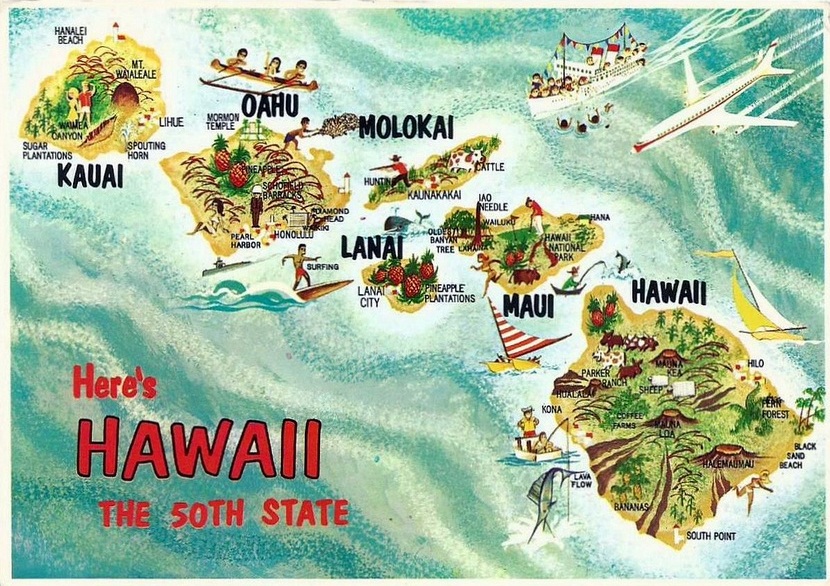
On August 21, 1959, [Hawaii] officially joined the [United States] as the 50th state. This date marked the culmination of over a century of profound change, a period that saw the islands transition from independent sovereignty to an [American] territory, and finally, to full statehood. This pivotal moment not only reshaped the geopolitical landscape of the [Pacific] but also set the stage for [Hawaii] to become one of the world’s most beloved travel destinations, a place where history, culture, and natural beauty converge to offer unparalleled experiences for every visitor.
A Journey Through Time: Hawaii’s Path to Statehood
The story of [Hawaii]’s statehood begins not in the halls of [Washington D.C.], but thousands of years ago, with intrepid [Polynesian] voyagers who navigated vast stretches of the [Pacific Ocean] using sophisticated knowledge of stars and currents. These early settlers brought with them a rich culture, a deep reverence for the land and sea, and established a thriving society that would endure for centuries.
Ancient Roots: The Polynesian Legacy
Long before its incorporation into the [United States], [Hawaii] was a vibrant collection of independent chiefdoms, unified under the rule of [King Kamehameha I] in the late 18th century, forming the [Kingdom of Hawaii]. The archipelago, composed of islands like [Oahu], [Maui], [Kauai], and the [Island of Hawaii] (often called the [Big Island]), boasts a heritage unlike any other [American] state. The [Polynesian] people, originating from islands like [Tahiti] and the [Marquesas], began settling [Hawaii] around 300 to 800 CE. They brought with them plants, animals, and traditions that formed the bedrock of [Hawaiian] culture, including the hula, chanting, and sophisticated farming and fishing techniques.
For today’s travelers, this ancient legacy is palpable. Destinations like the [Polynesian Cultural Center] on [Oahu] offer immersive experiences into the diverse cultures of [Polynesia], including the ancient ways of [Hawaii]. Visitors can learn about navigation techniques, traditional crafts, and participate in interactive cultural workshops. The respect for aina (land) and kai (sea) instilled by these early settlers continues to influence the islands’ commitment to conservation and sustainable tourism, principles that are increasingly important for conscious travelers seeking authentic experiences. Exploring sacred sites and ancient heiau (temples) scattered across the islands provides a powerful connection to this foundational era, allowing a glimpse into the spiritual and communal life of early [Hawaiians].
The Monarchy Era: A Kingdom’s Rise and Fall
The arrival of [Captain James Cook] in 1778 marked the beginning of profound changes for [Hawaii]. While initially bringing new trade and ideas, European and [American] influence steadily grew, leading to both modernization and eventual political vulnerability. The [Kingdom of Hawaii], established by [King Kamehameha I], flourished for a time, developing a unique constitutional monarchy that blended traditional [Hawaiian] governance with Western political structures. The monarchy brought with it a distinct era of grand architecture and international diplomacy.
The capital, [Honolulu] on [Oahu], became a bustling hub. The magnificent [Iolani Palace], completed in 1882, stands as a poignant reminder of this era. It was the official residence of [Hawaii]’s last two monarchs, [King Kalakaua] and his sister and successor, [Queen Liliuokalani], and is the only official residence of royalty in the [United States]. Today, [Iolani Palace] is a premier landmark and a must-visit attraction for anyone interested in [Hawaiian] history. Guided tours offer a glimpse into the lavish lives of [Hawaiian] royalty and the dramatic events that unfolded within its walls, including the overthrow of the monarchy. Surrounding areas in downtown [Honolulu] also feature historical sites such as the [King Kamehameha I] statue and the [Aliiolani Hale], which further illuminate the island’s royal past.
However, the growing economic interests of [American] and European businessmen, particularly those involved in the sugar and pineapple industries, created increasing pressure. In 1893, a group of primarily [American] businessmen, aided by the [U.S.] Minister to [Hawaii] and U.S. Marines, orchestrated the overthrow of [Queen Liliuokalani]. This controversial act ended the [Hawaiian] monarchy, leading to the establishment of a provisional government and, subsequently, the [Republic of Hawaii] under President [Sanford B. Dole]. This tumultuous period is often a focal point for tourists seeking to understand the cultural complexities and political struggles that shaped modern [Hawaii]. Various museums and cultural centers throughout the islands offer exhibitions detailing these events, ensuring that the stories of the monarchy and its people are never forgotten.
A Territory in Transition: From Annexation to War
Following the overthrow, the push for [Hawaii]’s annexation by the [United States] gained momentum. Despite initial resistance from President [Grover Cleveland], who believed the overthrow was an illegal act, the strategic importance of [Hawaii] grew, especially in the context of global power dynamics and the Spanish-American War. In 1898, [Hawaii] was formally annexed by the [United States] and became the [Territory of Hawaii].
As a territory, [Hawaii] played a crucial role, especially during [World War II]. The devastating attack on [Pearl Harbor] on [Oahu] on December 7, 1941, by the Imperial Japanese Navy, propelled the [United States] into [World War II]. This event is a defining moment in both [American] and [Hawaiian] history. Today, the [Pearl Harbor National Memorial] is one of [Hawaii]’s most visited landmarks, drawing millions of visitors annually. It includes the [USS Arizona Memorial], the [Battleship Missouri Memorial] (where Japan officially surrendered), the [USS Bowfin Submarine Museum and Park], and the [Pearl Harbor Aviation Museum]. These sites offer powerful and sobering experiences, reminding visitors of the immense sacrifices made and the profound impact of the war on the islands. For many travelers, a visit to [Pearl Harbor] is a deeply moving and essential part of their [Hawaiian] itinerary, connecting them directly to a pivotal moment in global history. The territory years also saw the growth of multiculturalism, as immigrants from [Asia] and [Europe] arrived to work on plantations, further diversifying the vibrant tapestry of [Hawaiian] society. This fusion of cultures has become a hallmark of [Hawaii], evident in its cuisine, festivals, and the welcoming Aloha spirit.
The Road to the 50th Star: August 21, 1959

The journey to statehood was a long and arduous one for the people of [Hawaii]. For decades, residents campaigned for full integration into the [United States], seeking the rights and representation afforded to citizens of existing states. The movement gained significant traction after [World War II], when [Hawaii]’s loyalty and strategic importance were undeniable. Figures like [Prince Jonah Kūhiō Kalanianaʻole] and later, Senator [Daniel K. Inouye], were instrumental in advocating for statehood in [Washington D.C.].
The statehood bill faced various obstacles, including concerns about [Hawaii]’s diverse population and its geographical distance from the mainland. However, a strong push from [Hawaiian] residents, combined with a recognition of its strategic value during the Cold War era, eventually led to congressional approval. Finally, on March 12, 1959, the [United States] Congress passed the [Hawaii] Admission Act. The act was then signed into law by President [Dwight D. Eisenhower] on March 18, 1959. A plebiscite was held in [Hawaii] on June 27, 1959, where the people of the territory voted overwhelmingly (94.3%) in favor of statehood. With this clear mandate, President [Eisenhower] issued Proclamation 3309 on August 21, 1959, officially admitting [Hawaii] to the Union as the 50th state.
This momentous occasion was met with widespread celebration across the islands. Statehood brought with it a new era of self-governance, increased federal funding, and enhanced economic opportunities. It solidified [Hawaii]’s place within the [American] political framework while allowing its unique cultural identity to continue to thrive. For the tourism industry, statehood removed many of the previous restrictions on travel and investment, paving the way for the exponential growth that would transform [Hawaii] into a global icon of paradise. This integration allowed [Hawaii] to fully leverage its natural assets and cultural allure to attract a burgeoning wave of travelers from the mainland and beyond.
Hawaii Today: A Paradise For Travelers
Since becoming a state, [Hawaii] has flourished as a premier destination, offering an incredible array of experiences that cater to every type of traveler. The fusion of [Polynesian] heritage, [Asian] influences, and [American] modernity creates a distinct and unforgettable atmosphere. Today, the islands are renowned for their stunning natural beauty, vibrant culture, and unparalleled hospitality, making them a bucket-list destination for millions worldwide.
Island Hopping: Exploring Diverse Landscapes and Cultures
Each of [Hawaii]’s main islands offers a distinct personality and a wealth of attractions, making island hopping a popular choice for visitors.
-
[Oahu]: The Gathering Place
[Oahu] is the most populous island and home to the capital, [Honolulu]. It perfectly blends cosmopolitan sophistication with breathtaking natural beauty. Famous for [Waikiki Beach], with its iconic surfing breaks and bustling resorts like the [Hilton Hawaiian Village Waikiki Beach Resort] and [Moana Surfrider, A Westin Resort & Spa], [Oahu] offers endless entertainment. Beyond the beach, visitors can hike to the summit of [Diamond Head] for panoramic views, explore the somber history of [Pearl Harbor National Memorial], or immerse themselves inHawaiianculture at the [Polynesian Cultural Center]. The island also boasts world-class dining, shopping, and vibrant nightlife, catering to a diverse range of lifestyles, from luxury travelers seeking opulent suites to budget travelers finding charming apartments. -
[Maui]: The Valley Isle
Known for its romantic allure and stunning natural landscapes, [Maui] is a favorite for honeymooners and adventure seekers alike. TheRoad to Hanais an unforgettable scenic drive, winding through lush rainforests, past cascading waterfalls, and picturesque coastlines. Watching the sunrise from the dormant volcano of [Haleakala National Park] is a truly spiritual experience. [Maui] also offers luxurious resorts in areas like [Kapalua] and [Wailea], providing exquisite accommodation options, from private villas to all-inclusive resorts. The island is famous for its snorkeling, surfing, and whale-watching opportunities during the winter months, making it a haven for nature enthusiasts and those seeking outdoor activities. -
[Kauai]: The Garden Isle
[Kauai] lives up to its name with verdant rainforests, dramatic cliffs, and pristine beaches. TheNa Pali Coastis a spectacular stretch of coastline, best viewed by boat tour, helicopter, or a challenging hike. The majesticWaimea Canyon, often called the “Grand Canyon of the Pacific,” offers breathtaking vistas and numerous hiking trails. [Kauai] is ideal for travelers seeking tranquility, natural beauty, and adventure in a less crowded setting. Boutique hotels and charming vacation rentals in areas like [Princeville] and [Poipu] provide unique accommodation experiences, allowing guests to fully immerse themselves in the island’s serene atmosphere. -
[Island of Hawaii]: The Big Island
The largest and youngest of the islands, the [Island of Hawaii] is home to [Hawaii Volcanoes National Park], where visitors can witness active volcanoes and explore lava tubes and dramatic volcanic landscapes. The island offers incredible diversity, from the black sand beaches ofPunalu'uto the snow-capped peak ofMauna Kea, where stargazing is a profound experience. The [Big Island] is perfect for adventurous travelers interested in geology, astronomy, and diverse ecosystems. Luxury resorts in [Kona] offer exquisite amenities, while more budget-friendly options can be found inHilo. This island truly highlights the natural history and geological evolution of [Hawaii].

Embracing the Aloha Spirit: Accommodations and Experiences
The [Aloha] spirit, a philosophy of kindness, hospitality, and respect, permeates every aspect of the [Hawaiian] experience. This ethos is reflected in the diverse range of accommodations and activities available to visitors, catering to every lifestyle and budget.
Accommodation: From lavish, five-star resorts offering private beach access, world-class spas, and gourmet dining experiences to charming boutique hotels, family-friendly vacation rentals, and budget-conscious hostels, [Hawaii] has it all. Luxury travelers can indulge in suites with ocean views and personalized concierge services, while those seeking a more local experience might opt for a cozy bed and breakfast or a long-term stay in an apartment. Major hotel chains such as [Marriott], [Hilton], and [Hyatt] have a strong presence, offering reliable comfort and amenities, while independent resorts focus on unique local flair and personalized service. Booking platforms make it easy to compare options, read reviews, and find the perfect stay, whether it’s a romantic retreat, a fun-filled family trip, or a productive business stay.
Experiences: [Hawaii]’s tourism is built around its natural wonders and rich culture. Beyond sightseeing, visitors can engage in a plethora of activities:
- Water Sports: Surfing lessons on [Waikiki], snorkeling in
Hanauma Bay, paddleboarding, kayaking, and scuba diving amongst vibrant coral reefs. - Outdoor Adventures: Hiking through lush rainforests to stunning waterfalls, exploring
lava fields, horseback riding, and ziplining through canopies. - Cultural Immersion: Attending a traditional
luauwith authentic food and entertainment, visiting historical sites, learninghula, or participating inleimaking workshops. - Culinary Delights: Savoring fresh
poke,shave ice,loco moco, andfarm-to-tablecuisine that blends [Hawaiian], [Asian], andWesterninfluences. Food tours and local markets offer a taste of authentic island flavors.
For many, [Hawaii] represents the ultimate lifestyle destination, a place where the pace of life slows, and the focus shifts to natural beauty, well-being, and connection. Whether one seeks a luxury travel experience with exclusive amenities or a budget travel adventure exploring hidden gems, [Hawaii] offers an abundance of choices. Understanding that this paradise became a state on August 21, 1959, adds a profound layer of appreciation for its resilient spirit and the vibrant, multicultural identity that continues to welcome travelers from around the globe. It’s a testament to a captivating history that has shaped not just a state, but a truly unique and cherished corner of the world.
LifeOutOfTheBox is a participant in the Amazon Services LLC Associates Program, an affiliate advertising program designed to provide a means for sites to earn advertising fees by advertising and linking to Amazon.com. Amazon, the Amazon logo, AmazonSupply, and the AmazonSupply logo are trademarks of Amazon.com, Inc. or its affiliates. As an Amazon Associate we earn affiliate commissions from qualifying purchases.