
For visitors exploring the rich tapestry of American history and culture, few destinations offer as profound an insight into the nation’s origins as Boston, Massachusetts. This vibrant city, a beacon of historical significance, is not merely a collection of picturesque streets and modern attractions; it is a living museum, where pivotal moments that shaped the United States unfolded. Among these, the Boston Massacre stands as a somber, yet crucial, turning point, forever etched into the narrative of the American Revolution. Understanding “what happened at the Boston Massacre” is essential for anyone wishing to truly grasp the spirit of independence that permeates the cobbled lanes and historic landmarks of this New England jewel.
The event of March 5, 1770, was not an isolated incident but the culmination of years of simmering tension, economic grievances, and a growing philosophical divide between the American colonists and the British Empire. When you walk through modern Boston, particularly along the Freedom Trail, you’re treading on ground that witnessed the daily friction between ordinary citizens and occupying soldiers. This historical context transforms a simple stroll into an immersive experience, connecting you directly to the past.

A City on Edge: The Precursors to Conflict
To fully comprehend the tragic events of the Boston Massacre, one must first understand the volatile atmosphere that enveloped Boston in the late 1760s. The city was a hotbed of revolutionary sentiment, fueled by what many colonists perceived as oppressive policies from Great Britain. For modern travelers, this era offers a fascinating look into the social and political dynamics that ultimately led to war, revealing a side of Boston that was far from peaceful.
The British Presence in Boston
Following the costly French and Indian War (1754-1763), Great Britain sought to consolidate its control over its North American colonies and recover its war debts. A key strategy was the increased enforcement of customs duties and trade regulations. Boston, as a bustling port city, became a focal point for these efforts. In 1768, two regiments of British soldiers, the 14th and 29th Regiments of Foot, were dispatched to Boston to enforce the Townshend Acts and quell rising dissent.
The presence of these soldiers created immediate friction. Housing them often meant quartering them in private homes or public buildings, a direct affront to colonial liberties under the Quartering Act. Jobs, particularly those on the docks, were scarce, and British soldiers often competed for these positions during their off-duty hours, further antagonizing the local working class. The red-coated soldiers, symbols of British authority, were a constant reminder of foreign rule in what colonists considered their own land. For any history enthusiast exploring Boston today, walking past sites like the Old State House where these events unfolded provides a tangible connection to the palpable tension of those times.
Seeds of Discontent: Taxation and Resistance
The British government’s attempts to raise revenue through various acts of Parliament were met with increasingly fervent resistance from the colonists. The mantra “no taxation without representation” became a rallying cry. Acts such as the Stamp Act of 1765, which imposed a direct tax on all printed materials, and the later Townshend Acts of 1767, which levied duties on imports like glass, lead, paper, paint, and tea, infuriated the colonists. They viewed these taxes as illegitimate because they had no elected representatives in the British Parliament to voice their concerns.
Organizations like the Sons of Liberty, led by figures such as Samuel Adams, emerged as powerful forces of opposition. They organized boycotts of British goods, orchestrated protests, and spread propaganda to galvanize public opinion. Boston was the epicenter of this activism, with taverns and meeting halls serving as clandestine gathering spots for revolutionaries. This period highlights the vibrant local culture of political discourse and grassroots organization that characterized colonial Boston, a historical backdrop that deeply enriches any modern visitor’s experience of the city.
The Fateful Evening of March 5, 1770
The day that forever altered the course of American history began as many did in Boston – with underlying tension. But by nightfall, a tragic confrontation would leave five colonists dead and ignite a firestorm of anti-British sentiment that pushed the colonies closer to rebellion. The exact spot where this pivotal event occurred, marked by a cobblestone circle, is a major landmark on the Freedom Trail, inviting quiet reflection for all who visit.
A Street Confrontation Escalates
On the evening of Monday, March 5, 1770, a lone British soldier, Private Hugh White, was standing guard outside the Customs House on King Street (now State Street). A young apprentice, Edward Garrick, allegedly insulted a British officer over an unpaid barber’s bill. When Private White intervened, a scuffle ensued. Soon, a crowd began to gather, drawn by the commotion and the ringing of alarm bells, which often signaled a fire. However, on this night, they heralded something far more ominous.
The crowd quickly grew, becoming increasingly agitated and hostile. They began taunting Private White, pelting him with snowballs, ice, and other debris, while shouting insults and threats. The atmosphere was thick with resentment and fear, a product of years of animosity. Hearing the commotion, Captain Thomas Preston of the 29th Regiment arrived with a small detachment of seven other soldiers to reinforce Private White and disperse the unruly mob. They formed a semi-circle around Private White and the Customs House, muskets loaded but, by most accounts, not yet aimed. The situation was tense, a standoff between a small military force and a swelling, angry populace.
Shots Fired: The Tragic Outcome
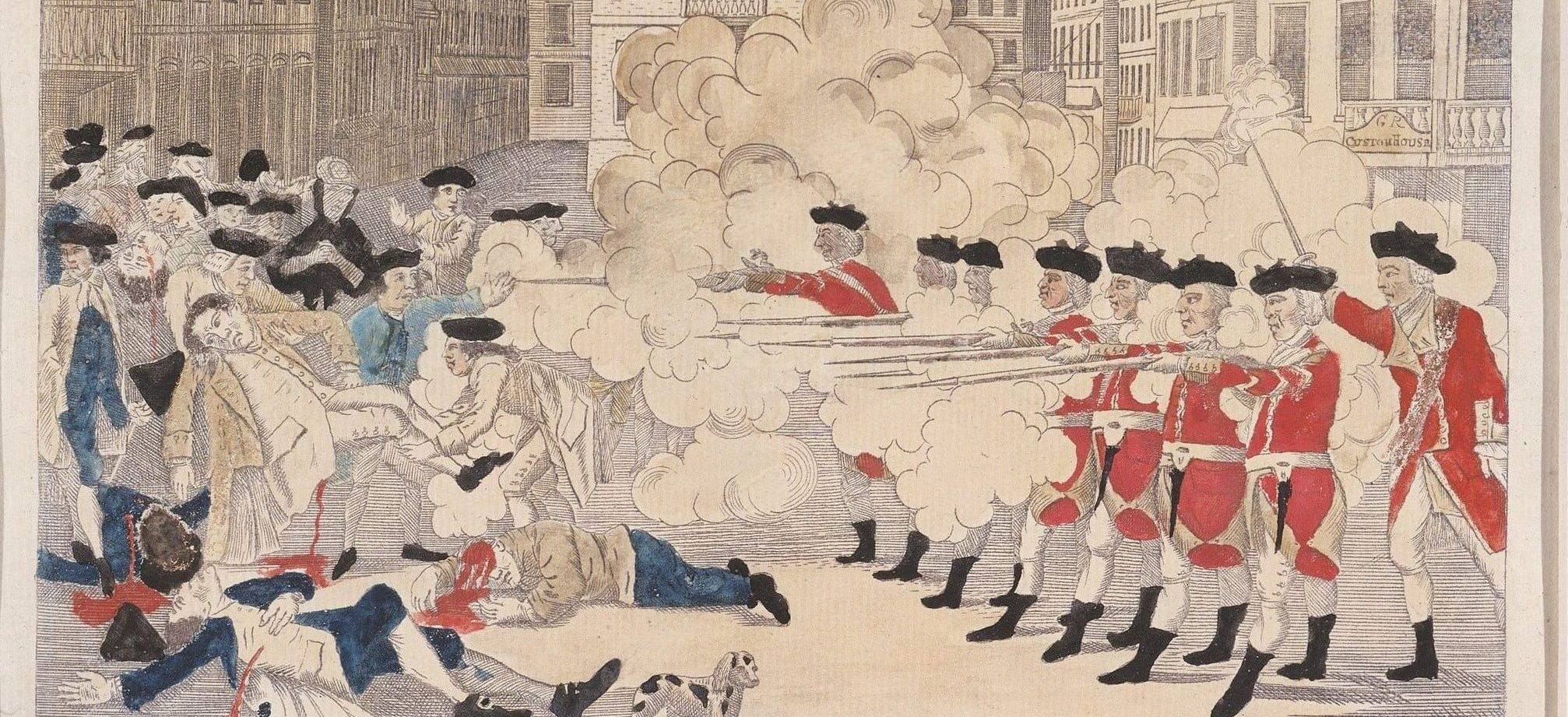
Despite Captain Preston’s efforts to calm the situation, the crowd pressed forward, continuing their barrage of projectiles and verbal abuse. Accounts vary on the exact sequence of events, but at some point, a soldier, possibly Private Hugh Montgomery, was struck by a projectile and fell. Whether he heard an order or acted in panic, he then fired his musket into the crowd. This shot was quickly followed by others from his fellow soldiers, unleashing a volley that ripped through the unarmed colonists.
When the smoke cleared, five men lay dead or dying, and several others were wounded. The first to fall was Crispus Attucks, a seaman of African and Native American descent, often considered the first casualty of the American Revolution. Others killed were James Caldwell, Samuel Gray, and Patrick Carr. Christopher Monk died days later from his wounds. The streets of King Street were stained with the blood of colonists, marking a point of no return in the relationship between Great Britain and its American colonies. For travelers visiting Boston, the gravity of this moment can be felt most acutely at the Boston Massacre Site, a poignant reminder of lives lost and the birth of a nation’s struggle.
The Aftermath and Its Enduring Legacy
The immediate aftermath of the Boston Massacre sent shockwaves through the colonies, transforming a local incident into a national symbol of British tyranny. The ensuing trials, propaganda, and public outrage solidified colonial unity and accelerated the march toward independence. Exploring these historical repercussions adds another layer of depth for tourists interested in the broader historical context of their travel destinations.
The Trials of Captain Preston and His Soldiers
In an extraordinary turn of events, John Adams, a prominent Boston lawyer and future President of the United States, agreed to defend Captain Preston and his soldiers. Despite his strong patriotic sentiments, Adams believed in the importance of a fair trial and the rule of law. Assisted by Josiah Quincy II, Adams argued that the soldiers had acted in self-defense against a menacing mob.
The trials took place in the fall of 1770. Captain Preston was acquitted, as it could not be proven that he had given the order to fire. Six of the eight soldiers were also acquitted, while two, Privates Hugh Montgomery and Matthew Kilroy, were found guilty of manslaughter. Their punishment was branding on the thumb. Adams’s courageous defense, while unpopular with some patriots, demonstrated a commitment to justice that remains a cornerstone of American legal principles. For those interested in legal history and political leadership, the story of John Adams’s involvement offers a compelling narrative during a visit to Boston, often highlighted in historical tours near the Old State House.
Propaganda and Public Outcry
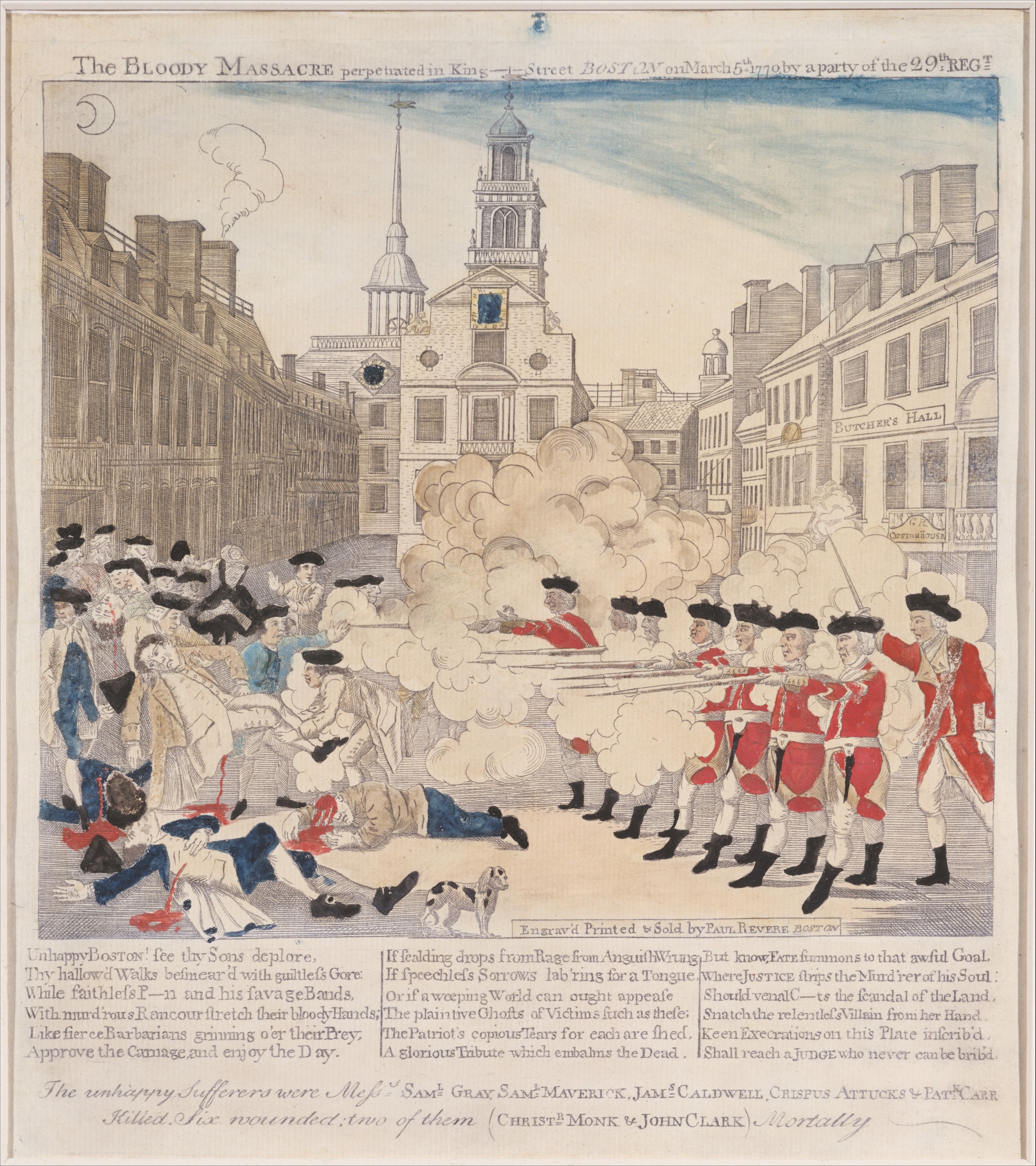
While the legal outcome was complex, the public perception of the Boston Massacre was largely shaped by powerful propaganda. Paul Revere’s iconic engraving, “The Bloody Massacre in King-Street Boston on March 5th 1770 by a party of the 29th Regt.”, became one of the most effective pieces of revolutionary propaganda. It depicted a line of British soldiers firing in a deliberate volley into a peaceful, unarmed crowd, under the command of a stern officer. While historically inaccurate in several details, the image inflamed colonial passions and fostered widespread condemnation of British actions.
Samuel Adams and other patriot leaders skillfully used the event to galvanize support for the independence movement. They labeled the incident a “massacre,” portraying it as a brutal act of tyranny against innocent colonists. The shared outrage helped unify the colonies, creating a sense of common purpose against British oppression. Visitors today can see reproductions of Revere’s engraving in museums like the Old State House, appreciating its historical impact and the role of visual culture in shaping revolutionary sentiment.
A Catalyst for Revolution: The Road to Independence
The Boston Massacre was a crucial turning point, acting as a potent symbol of British oppression and deepening the divide between the colonies and the mother country. It fueled calls for greater autonomy and independence, transforming abstract grievances into tangible injustices. The event directly contributed to the formation of the Committees of Correspondence, which helped to unite the colonies by disseminating information and coordinating resistance efforts.
Although there was a temporary lull in hostilities after the massacre and the repeal of most of the Townshend Acts (except the tax on tea), the memory of the fallen colonists lingered. The Boston Massacre paved the way for subsequent acts of defiance, such as the Boston Tea Party in 1773, and ultimately, the outbreak of the Revolutionary War in 1775. It solidified the notion that British authority was not only unjust but also dangerous. When travelers explore Boston’s historic sites, from Faneuil Hall to the Old North Church, they are walking through the very crucible of American independence, where events like the Boston Massacre forged a new nation.
Experiencing the Boston Massacre Today: A Journey Through History
For those planning a trip to Boston, the opportunity to delve into the history of the Boston Massacre is an absolute must. The city is perfectly designed for historical tourism, blending ancient cobblestones with modern amenities. Whether you’re interested in guided tours, exploring landmarks, or simply soaking in the atmosphere, Boston offers an unparalleled experience of American history and heritage.
Visiting the Boston Massacre Site and Freedom Trail
The most direct way to connect with the Boston Massacre is to visit its precise location, marked by a cobblestone circle in front of the Old State House on State Street. This iconic landmark is a key stop on the Freedom Trail, a 2.5-mile red-lined walking path that guides visitors to 16 historically significant sites. A guided tour of the Freedom Trail is highly recommended, as expert guides bring the stories of the past to life, offering vivid descriptions of the events and the people involved. These tours not only cover the Boston Massacre but also provide context by showcasing other revolutionary sites like Faneuil Hall, the Paul Revere House, and the Old Granary Burying Ground, where victims of the massacre are interred alongside John Hancock and Samuel Adams.
Many Boston hotels are conveniently located near the Freedom Trail, offering easy access to these historical attractions. From luxury hotels with stunning views to budget-friendly apartments, there’s accommodation for every lifestyle and travel preference. Choosing a central location enhances the experience, allowing you to explore the city’s rich history on foot, just as the colonists once did.
Immersing Yourself in Colonial Boston
Beyond the immediate site of the massacre, Boston offers numerous opportunities to immerse yourself in the colonial era. The Old State House itself, where the British government was once headquartered and where the trials of the soldiers took place, now functions as a museum. Here, you can find artifacts, exhibits, and educational programs that delve deeper into the events of 1770 and the broader context of the Revolutionary War. Similarly, the Paul Revere House provides a glimpse into the daily life of an influential patriot, offering insights into the era’s domestic and social customs.
For a more complete cultural immersion, consider exploring Boston’s vibrant neighborhoods. The North End, Boston’s oldest residential community, with its narrow streets and historic architecture, feels like stepping back in time. Enjoying local cuisine, from classic clam chowder to cannoli in the North End, becomes part of a broader cultural experience that combines history with modern lifestyle and culinary delights. Whether you’re a history buff, a casual tourist, or a family seeking an educational trip, understanding “what happened at the Boston Massacre” is not just about learning facts; it’s about experiencing the profound human drama that shaped a nation, a journey best undertaken in the very city where it all began.
LifeOutOfTheBox is a participant in the Amazon Services LLC Associates Program, an affiliate advertising program designed to provide a means for sites to earn advertising fees by advertising and linking to Amazon.com. Amazon, the Amazon logo, AmazonSupply, and the AmazonSupply logo are trademarks of Amazon.com, Inc. or its affiliates. As an Amazon Associate we earn affiliate commissions from qualifying purchases.