
The question of when California became a state carries profound significance, not just for its residents but for anyone interested in the rich tapestry of United States history, travel, and lifestyle. The answer is unequivocal: California officially joined the Union on September 9, 1850. This date marks a pivotal moment, transforming a rugged frontier into the 31st state and setting the stage for its meteoric rise as a global powerhouse in culture, innovation, and, perhaps most notably, tourism.
The journey to statehood was anything but straightforward, a dramatic saga fueled by gold, westward expansion, and complex political maneuvers. Understanding this history offers travelers a deeper appreciation for the diverse landscapes, iconic landmarks, and unique cultural experiences that define California today. From the bustling metropolises of Los Angeles and San Francisco to the serene beauty of Yosemite National Park and the historic charm of Old Sacramento State Historic Park, every corner of the Golden State subtly echoes the events that led to that fateful day in 1850. For those planning a trip, delving into this historical context can transform a mere visit into an immersive journey through time, revealing the layers of resilience, ambition, and discovery that forged this remarkable destination.
The Road to Statehood: A Gold Rush Legacy
The path to [California]’s statehood was an intricate mosaic of indigenous history, colonial ambitions, international conflict, and an unprecedented economic boom. Before becoming a part of the United States, the region had been shaped by centuries of diverse influences, each contributing to the unique character that travelers experience today.
From Spanish Missions to Mexican Rule
For centuries before European arrival, various Native American tribes thrived across [California]’s vast and varied landscapes. Their rich cultures and sustainable practices were the original fabric of the land. However, starting in the late 18th century, the Spanish Empire began to colonize the territory, establishing a chain of missions, presidios (forts), and pueblos (towns) along El Camino Real. Iconic landmarks like Mission San Juan Capistrano stand as testaments to this era, offering visitors a glimpse into the colonial past, often alongside beautiful gardens and architectural wonders.
After Mexico gained independence from Spain in 1821, [California] transitioned to Mexican rule. This period saw the secularization of the missions and the establishment of vast ranchos, laying the groundwork for many of [California]’s modern cities and agricultural traditions. Travelers can still explore remnants of this Mexican era in places like San Diego’s Old Town, where vibrant cultural traditions and historical sites tell stories of the early settlers.
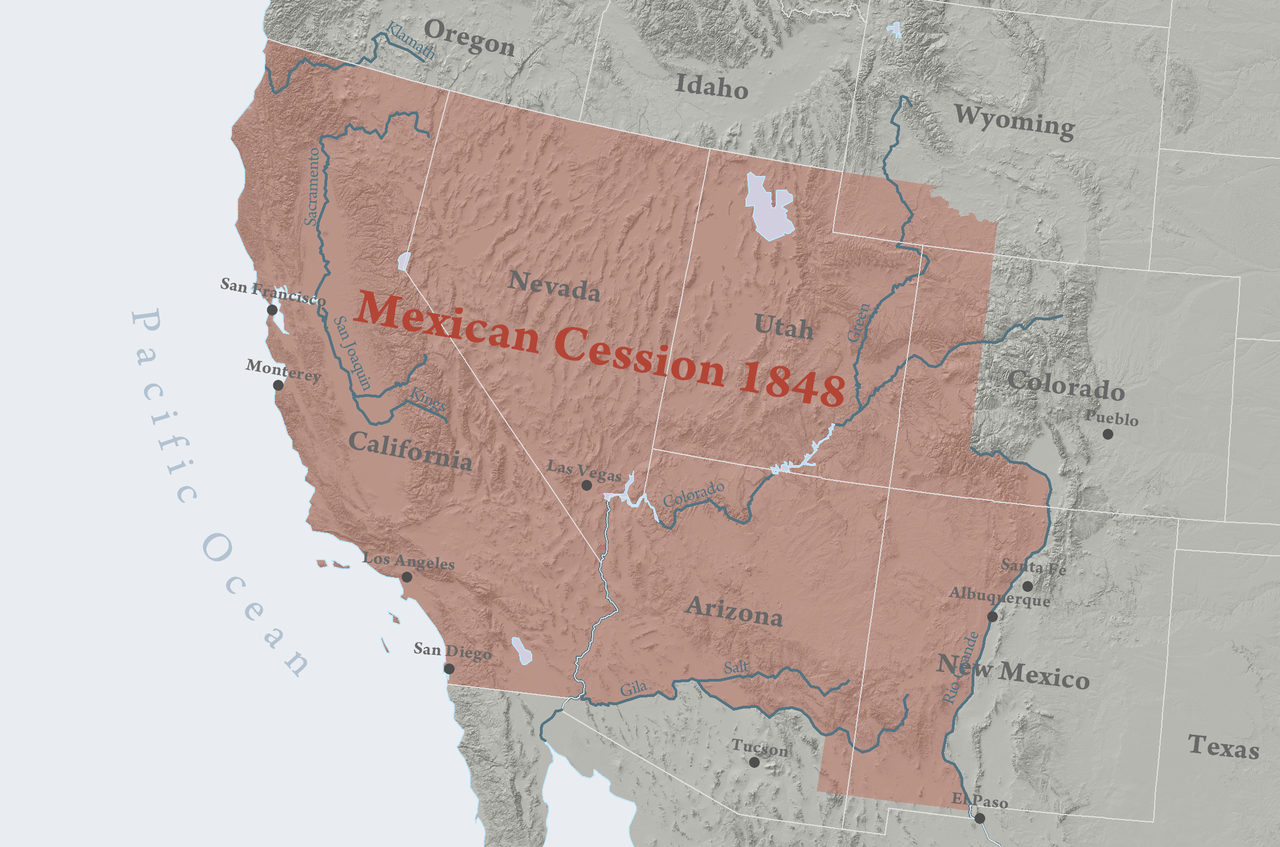
The allure of [California]’s vast resources and strategic Pacific Ocean coastline eventually caught the attention of the United States, leading to increasing tensions. The Mexican-American War, fought between 1846 and 1848, ultimately reshaped the map of North America. Following the war, the Treaty of Guadalupe Hidalgo ceded [California] and vast other territories to the United States, setting the stage for its rapid integration into the American narrative.

The Spark of the Gold Rush and the Bear Flag Revolt
Even before the official end of the Mexican-American War, a series of events dramatically accelerated [California]’s path to statehood. The “Bear Flag Revolt” in June 1846 saw American settlers in Sonoma declare independence from Mexico and raise the now-famous Bear Flag. Although short-lived and quickly superseded by the broader Mexican-American War, this revolt symbolized the growing American presence and desire for self-governance in the region. Key figures like John C. Frémont played a significant, albeit controversial, role during this tumultuous period.
However, it was a discovery in January 1848 that truly transformed [California]’s destiny: the California Gold Rush. James W. Marshall’s discovery of gold at Sutter’s Mill near Coloma unleashed an unprecedented wave of migration. Tens of thousands of fortune-seekers from across the globe flocked to the Golden State, turning sleepy settlements into boomtowns overnight. This rapid population explosion created an urgent need for formal governance, law and order, and infrastructure.
The California Gold Rush wasn’t just about wealth; it was about the birth of a new society. Mining towns like those preserved at Columbia State Historic Park offer immersive experiences, where visitors can walk through authentic 19th-century streets, pan for gold, and learn about the pioneers who shaped early [California]. This era also kickstarted the hospitality industry, with rudimentary hotels and inns springing up to accommodate the influx of prospectors, laying the very first foundations for [California]’s future as a prime destination for travel and accommodation.
The Unanimous Decision: California’s Entry into the Union
With a burgeoning population, a booming economy, and a chaotic legal landscape, [California]’s residents were eager for formal statehood. The process, however, was entangled in the larger national debate over slavery, threatening to derail the aspirations of the Golden State.
The Compromise of 1850 and its Impact
By 1849, [California] had already drafted its own constitution, which notably prohibited slavery within its borders. This stance created a major political hurdle in Washington D.C., where the balance of power between free and slave states in the United States Congress was a contentious issue. President Zachary Taylor initially advocated for [California] to be admitted directly as a free state, which sparked fierce opposition from Southern states.
The deadlock was eventually broken through a series of legislative measures known as the Compromise of 1850. This complex package of five bills aimed to resolve disputes between free and slave states, with [California]’s admission as a free state being one of its central provisions. Other components included establishing the boundaries of Texas, organizing the territories of New Mexico and Utah without restrictions on slavery, abolishing the slave trade (but not slavery itself) in Washington D.C., and enacting a stricter Fugitive Slave Law. After intense debate and the unexpected death of President Zachary Taylor, who was succeeded by Millard Fillmore, the Compromise of 1850 was passed.
On September 9, 1850, President Millard Fillmore signed the bill, officially admitting [California] as the 31st state. The news reached [California] weeks later, sparking jubilant celebrations in cities like San Francisco and Monterey, which had served as early administrative centers. This date is still commemorated annually as California Admission Day, a testament to the state’s unique path to joining the United States.
Celebrating Statehood: A Legacy for Travelers
The admission of [California] into the Union marked the beginning of a new era. With statehood came stability, a recognized government, and the ability to build infrastructure that would further fuel its growth. The capital eventually settled in Sacramento, which evolved from a Gold Rush tent city to a thriving economic and political hub. Today, visitors can explore the magnificent California State Capitol building and the historic district of Old Sacramento State Historic Park, which vividly recounts the state’s foundational years, complete with horse-drawn carriage rides, riverboat cruises, and charming boutiques.
The legacy of statehood is deeply interwoven into [California]’s tourism appeal. The drive for development that followed statehood laid the foundation for the diverse travel experiences available today. Early roads connecting mining towns eventually became scenic byways like Highway 1, offering breathtaking views along the Big Sur coastline. The promise of the Golden State attracted not just gold miners but entrepreneurs, farmers, and dreamers, whose collective efforts transformed the landscape into a mosaic of agriculture, industry, and unparalleled natural beauty. This expansion also led to the development of early hotels and resorts, initially catering to prospectors and businessmen, then evolving to welcome tourists drawn to [California]’s emerging attractions.
California Today: A Land of Diverse Travel & Timeless Landmarks
From its historic origins as a Spanish and Mexican territory, through the tumultuous Gold Rush and a complex entry into the Union, [California] has grown into one of the world’s most dynamic and sought-after travel destinations. The spirit of ambition and discovery that defined its path to statehood continues to infuse its modern identity, making it a dream destination for every type of traveler.
Exploring Historical Sites and Modern Attractions
Today, [California] seamlessly blends its storied past with cutting-edge modernity, offering an incredible array of attractions. For history enthusiasts, the state is a living museum. You can trace the steps of early settlers at the numerous missions dotting El Camino Real or wander through the meticulously preserved streets of Old Town San Diego. In San Francisco, the infamous Alcatraz Island stands as a monument to a darker chapter, while the iconic Golden Gate Bridge, though built much later, symbolizes the state’s enduring spirit of innovation and engineering prowess.
Beyond history, [California] is a playground for contemporary tourism. Los Angeles dazzles with the glamour of Hollywood and the magic of Disneyland, offering endless entertainment for families and solo adventurers alike. San Diego boasts pristine beaches and world-class zoos. The state’s natural landmarks are equally compelling: the towering sequoias of Redwood National Park, the majestic peaks of the Sierra Nevada housing Yosemite National Park, the serene beauty of Lake Tahoe, and the stark, otherworldly landscapes of Death Valley National Park. These diverse landscapes are a direct result of the geographic expanse that became part of the United States with statehood, now protected and celebrated as national treasures.
Accommodation options across [California] reflect this diversity, catering to every lifestyle and budget. From luxurious five-star resorts in Beverly Hills or Napa Valley offering bespoke experiences and gourmet dining, to charming boutique hotels in historic districts, family-friendly suites near major attractions like Disneyland, and rustic cabins within Yosemite National Park, the choices are boundless. Travelers can compare options, read reviews, and find the perfect long-term stay or a quick overnight stop, all while experiencing the renowned [California] hospitality.
The Golden State Lifestyle: From Luxury to Adventure
The “Golden State Lifestyle” is as varied and vibrant as its history. It’s a blend of outdoor adventure, culinary excellence, cultural richness, and laid-back sophistication. Thanks to its early agricultural roots and continuous innovation, [California] is a global leader in farm-to-table cuisine, celebrated in Michelin-starred restaurants and bustling farmers’ markets. The renowned wine regions of Napa Valley and Sonoma Valley, once modest agricultural ventures, are now world-class destinations for luxury travel, offering vineyard tours, tastings, and exquisite resort experiences.
Whether you’re seeking a high-end luxury trip with stays at exclusive resorts, a budget-friendly family adventure exploring national parks, or a business trip requiring sophisticated amenities, [California] delivers. The state’s tourism infrastructure, from seamless booking platforms to comprehensive travel guides, ensures that every visitor can tailor their experience. Outdoor enthusiasts can surf along the Santa Monica Pier, ski in the Sierra Nevada, or hike through ancient redwood forests. Culture aficionados can explore world-class museums, vibrant arts scenes, and diverse culinary landscapes that reflect [California]’s multicultural heritage.
The journey to statehood in 1850 was more than just a political formality; it was the genesis of the modern [California] we know and love. It laid the foundation for the pioneering spirit, the diverse population, and the economic dynamism that continue to attract millions of visitors and residents alike. From the historical landmarks that recall its Gold Rush beginnings to the cutting-edge attractions and luxurious accommodations of today, [California] offers an unparalleled travel experience, deeply rooted in its captivating past and ever-evolving future. When you visit [California], you’re not just seeing a state; you’re experiencing a living testament to a pivotal moment in American history.
LifeOutOfTheBox is a participant in the Amazon Services LLC Associates Program, an affiliate advertising program designed to provide a means for sites to earn advertising fees by advertising and linking to Amazon.com. Amazon, the Amazon logo, AmazonSupply, and the AmazonSupply logo are trademarks of Amazon.com, Inc. or its affiliates. As an Amazon Associate we earn affiliate commissions from qualifying purchases.