
Arizona, the Grand Canyon State, is renowned globally for its breathtaking natural landscapes, vibrant cities, and a lifestyle that attracts visitors and new residents alike. From the awe-inspiring depths of the Grand Canyon National Park to the mystical red rocks of Sedona and the bustling metropolises of Phoenix and Tucson, Arizona offers an unparalleled blend of adventure, relaxation, and unique cultural experiences. Many come for short vacations, others for extended stays, and a significant number choose to make it their permanent home, drawn by the warm climate, diverse communities, and abundant opportunities for an active lifestyle.
However, life can present unexpected challenges. For individuals who find themselves living in or planning a long-term stay in Arizona and facing a medical condition that prevents them from working, understanding the process of applying for disability benefits becomes a crucial aspect of their overall life and travel planning. This guide aims to provide a comprehensive overview, weaving in insights relevant to visitors, long-term residents, and those considering relocation, ensuring that the journey through the disability application process is as smooth as possible within the context of enjoying all that Arizona has to offer. Whether you are a “snowbird” seeking a warmer climate for health reasons, a traveler experiencing an unexpected medical crisis, or a resident navigating life with a disabling condition, securing disability benefits can be a cornerstone of maintaining your quality of life and ensuring financial stability in this beautiful state.
Navigating Disability Benefits: A Traveler’s and Resident’s Primer
For those unfamiliar with the system, disability benefits in the United States are primarily administered through the Social Security Administration (SSA), a federal agency. This means the core criteria and application process are largely uniform across all states, including Arizona. However, state-level agencies, known as Disability Determination Services (DDS), handle the medical review process, adding a localized dimension to the federal program. Understanding these nuances is vital, especially if you are new to Arizona or considering it for a long-term stay.
There are two main types of Social Security disability benefits:
- Social Security Disability Insurance (SSDI): This is for individuals who have worked and paid Social Security taxes for a sufficient period. It’s essentially an insurance policy you’ve paid into through your employment.
- Supplemental Security Income (SSI): This is a needs-based program for individuals with limited income and resources, regardless of their work history. It often serves those who haven’t worked enough to qualify for SSDI or whose benefits are very low.
For both programs, the SSA defines disability as the inability to engage in any substantial gainful activity (SGA) due to a medically determinable physical or mental impairment that is expected to last for a continuous period of at least 12 months or result in death. This high bar means that minor conditions or short-term disabilities typically do not qualify.
For individuals exploring Arizona as a potential long-term residence due to health considerations, understanding the healthcare infrastructure is paramount. Cities like Phoenix, Tucson, and Scottsdale boast world-class medical facilities, including specialized centers within institutions such as the Mayo Clinic and the extensive network of Banner Health. Access to consistent and thorough medical care is not only crucial for personal well-being but also indispensable for a successful disability application, as comprehensive medical records are the bedrock of your claim. Planning an extended stay in Arizona for health reasons means ensuring you have established care with local doctors who can document your condition and its impact on your ability to work.
The Application Journey: Steps and Essential Documentation
Applying for disability benefits can be a lengthy and complex process, requiring meticulous attention to detail. Whether you’re a long-time resident of Flagstaff, a newcomer to Mesa, or a visitor extending your stay in Chandler, the steps are generally the same.
Initiating Your Claim
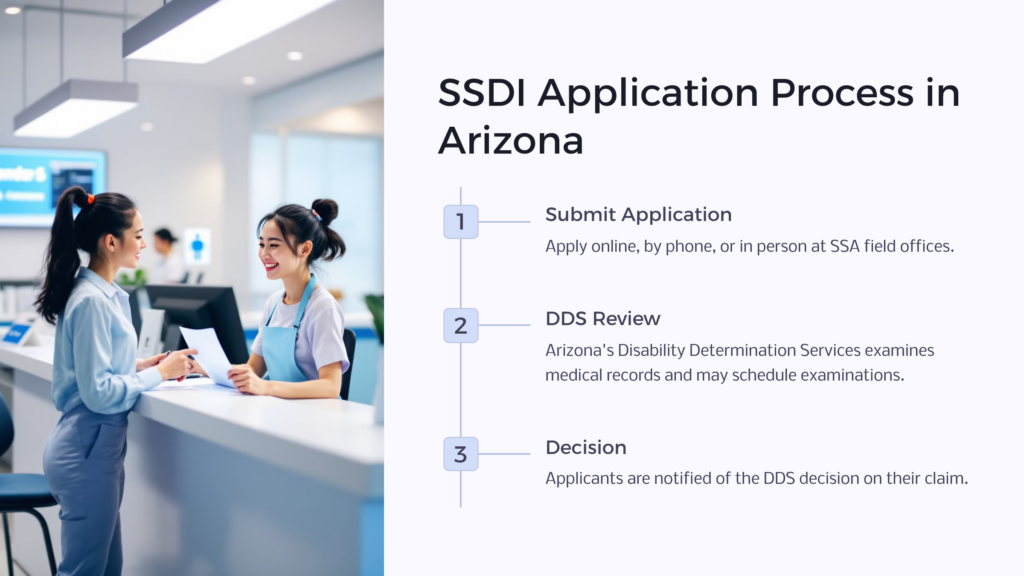
You can apply for Social Security disability benefits in several ways:
- Online: The SSA website (ssa.gov) allows you to file an initial application for SSDI. This is often the most convenient method for many.
- By Phone: You can call the SSA’s toll-free number to start the application process or schedule an appointment.
- In Person: Visit your local Social Security office. For instance, if you are in the Phoenix metropolitan area, there are offices in Phoenix, Tempe, Mesa, and Chandler. If you’re further south, Tucson and Yuma also have offices. Going in person can be helpful for those who prefer direct assistance or have complex questions.
It’s crucial to understand that even if you start your application online, you will likely need to follow up with additional paperwork and potentially interviews.

Gathering Critical Information and Documentation
The success of your application heavily relies on the completeness and accuracy of the information you provide. Start compiling these documents and details long before you apply:
- Medical Records: This is arguably the most critical component. Gather all relevant medical evidence from doctors, hospitals, clinics, and therapists, detailing your diagnosis, treatment, prognosis, and functional limitations. This includes test results, imaging scans, surgical reports, and physician’s notes. If you have recently moved to Arizona, ensure you transfer your medical records from previous locations and establish care with local providers promptly. For travelers, an unexpected medical emergency in Arizona could necessitate a claim, so all care received at facilities like those in Scottsdale or Tucson must be thoroughly documented.
- Work History: A detailed account of your employment over the past 15 years, including job titles, duties, dates of employment, and earnings. This helps the SSA determine if you can perform your past work or any other substantial work.
- Personal Information: Birth certificate, Social Security card, proof of U.S. citizenship or legal alien status, marriage certificates (if applicable), and dependent children’s information.
- Financial Information: For SSI applications, you’ll need to provide details about your income, resources, bank accounts, and assets.
- Medication List: A comprehensive list of all prescription and over-the-counter medications you are taking, including dosages and prescribing doctors.
The Review Process
Once you submit your application, it moves to the Disability Determination Services (DDS) in Arizona. A claims examiner, in conjunction with a medical consultant, will review your medical records to determine if your condition meets the SSA’s definition of disability. They may contact your doctors, or even request that you undergo a consultative examination (CE) with an independent doctor at the SSA’s expense. This stage underscores the importance of ongoing medical treatment and strong documentation from doctors familiar with your condition and its severity. For those enjoying a long-term stay, perhaps in a resort community like Gainey Ranch in Scottsdale, ensuring your medical care is consistent and well-documented by local Arizona healthcare providers is key.
Accessible Arizona: Enjoying the Grand Canyon State with a Disability
While the disability application process is a practical necessity, it’s vital not to lose sight of the incredible lifestyle and travel experiences Arizona offers, even for those with disabilities. Securing benefits can be a pathway to maintaining or enhancing your quality of life, allowing you to engage with the state’s diverse attractions. Arizona has made significant strides in accessibility, making its natural wonders and cultural sites more inclusive.
Accessible Destinations and Activities
Many of Arizona’s most famous landmarks and attractions offer accessible options:
- National Parks: Grand Canyon National Park features numerous accessible viewpoints along the South Rim, including Mather Point, Yavapai Point, and Grandview Point. Shuttle buses are wheelchair accessible. Similarly, Saguaro National Park offers accessible paved trails, and Petrified Forest National Park provides accessible trails and viewpoints. Canyon de Chelly National Monument also offers accessible overlooks.
- Cities and Culture: Major cities like Phoenix and Tucson are generally accessible. The Desert Botanical Garden in Phoenix has paved, accessible paths, as does the Heard Museum, celebrating Native American cultures. Taliesin West, Frank Lloyd Wright’s desert masterpiece in Scottsdale, offers accessible tours. Even historic areas like Old Town Scottsdale are increasingly navigable with wider sidewalks and ramps.
- Resorts and Accommodation: Arizona is famous for its luxury resorts, many of which are designed with comprehensive accessibility in mind. Properties like The Phoenician, a Luxury Collection Resort, Scottsdale, Arizona Biltmore, A Waldorf Astoria Resort in Phoenix, Enchantment Resort Sedona, JW Marriott Desert Ridge Resort & Spa, and Hyatt Regency Scottsdale Resort & Spa at Gainey Ranch offer accessible rooms, pools, and public areas, ensuring a comfortable and luxurious stay for all guests. When booking accommodation, especially for long-term stays, it is vital to specify your accessibility needs to ensure the property can adequately meet them.
- Outdoor Recreation: Beyond the national parks, many state parks, like Kartchner Caverns State Park, offer accessible tours. Adaptive sports programs are available in Phoenix and Tucson, allowing individuals with disabilities to participate in activities like kayaking, cycling, and hiking.
Planning is key for accessible travel. Always call ahead to attractions, parks, and hotels to confirm their current accessibility features and make any necessary arrangements. Resources from local tourism boards and disability advocacy groups can also provide valuable information.

Beyond the Application: Long-Term Living and Lifestyle in Arizona
For those who successfully secure disability benefits and choose to make Arizona their home or extended retreat, the state offers a high quality of life. The warm, dry climate is often beneficial for conditions like arthritis and respiratory issues, drawing many “health snowbirds” from colder regions. Communities across the state, from the bustling energy of Phoenix and Tucson to the quieter charm of Prescott or Sedona, provide varying lifestyles.
- Accommodation and Community: Beyond resorts, Arizona offers diverse housing options, including accessible apartments and retirement communities that cater to individuals with specific needs. Many cities are proactive in creating inclusive environments. For instance, Tempe and Mesa are continually improving their public infrastructure for accessibility.
- Transportation: Major cities have public transportation systems, often with accessible buses. Ride-sharing services also typically offer accessible vehicle options. For more rural explorations, like visits to Monument Valley or Antelope Canyon, private accessible transport services can be arranged. Scenic drives along portions of historic Route 66 or through the Sonoran Desert near Organ Pipe Cactus National Monument can be enjoyed from accessible vehicles, revealing the state’s rugged beauty.
- Support Services: Arizona has a network of non-profit organizations and state agencies dedicated to supporting individuals with disabilities, offering resources for independent living, employment support, and community integration. This robust support system can be a significant advantage for those navigating life with a disability.
- Leisure and Recreation: With the financial stability provided by disability benefits, individuals can more easily partake in the Arizona lifestyle. Enjoying the arts scene in Phoenix, exploring the historic streets of Tombstone or Bisbee, or relaxing by Lake Havasu City’s famous London Bridge all become more feasible. Even accessible tours of the Hoover Dam on the Colorado River are available. The state’s natural beauty, from the McDowell Mountains to Glen Canyon National Recreation Area and Lake Powell, offers endless opportunities for accessible engagement with nature.
Applying for disability in Arizona is a serious undertaking that requires diligence and perseverance. However, it is also a path to securing the necessary support to live a fulfilling life in one of the most beautiful and welcoming states in the U.S. By understanding the process, preparing thoroughly, and leveraging the state’s growing accessibility, individuals with disabilities can continue to thrive and enjoy the remarkable experiences that define the Arizona lifestyle. Whether your journey takes you to the serene landscapes of Wickenburg, the wine country of Sonoita, or the ancient ruins of Montezuma Castle National Monument, proper planning ensures that challenges can be overcome, and the wonders of Arizona remain within reach.
LifeOutOfTheBox is a participant in the Amazon Services LLC Associates Program, an affiliate advertising program designed to provide a means for sites to earn advertising fees by advertising and linking to Amazon.com. Amazon, the Amazon logo, AmazonSupply, and the AmazonSupply logo are trademarks of Amazon.com, Inc. or its affiliates. As an Amazon Associate we earn affiliate commissions from qualifying purchases.