
The question of how many colonists died in the Boston Massacre is a crucial one, central to understanding one of the pivotal events leading to the American Revolution. On that fateful evening of March 5, 1770, five colonists tragically lost their lives, instantly transforming a tense street confrontation into a powerful symbol of British tyranny and colonial resistance. This incident, far from being a mere skirmish, was a spark that ignited fervent patriotic sentiment across the Thirteen Colonies, forever altering the trajectory of America’s struggle for independence.
Today, exploring the sites associated with the Boston Massacre offers a profound journey back in time, allowing visitors to connect with the very ground where history was made. For those planning a trip to Boston, understanding this event is not just about historical facts; it’s about immersing oneself in the vibrant spirit of a city that played a monumental role in shaping a nation. Boston’s rich tapestry of historical landmarks, from the cobblestone streets that once echoed with colonial protests to the majestic buildings that hosted impassioned debates, provides an unparalleled backdrop for historical tourism. Whether you’re a history enthusiast or a traveler seeking unique cultural experiences, Boston offers a captivating blend of educational insights and engaging exploration, often best experienced by walking the famous Freedom Trail, which winds through these very revolutionary sites.
Setting the Stage: Colonial Boston on the Brink
To fully grasp the significance of the Boston Massacre and the lives lost, it’s essential to understand the volatile atmosphere that permeated Boston in the late 1760s. The city, a bustling port and intellectual hub, had become a hotbed of revolutionary fervor. Following the costly French and Indian War, Great Britain sought to replenish its coffers by imposing a series of taxes and acts on its American colonies, asserting Parliament’s absolute authority. The infamous Stamp Act of 1765 and the subsequent Townshend Acts of 1767 levied duties on goods like tea, glass, and paper, sparking widespread outrage and resistance among colonists who argued vehemently against “taxation without representation.”
Boston, in particular, felt the brunt of these policies. Its merchants faced economic hardship, and its citizens, known for their independent spirit, became increasingly defiant. Protests, boycotts, and civil unrest became commonplace. In an attempt to assert control and quell the burgeoning rebellion, British troops were deployed to Boston in 1768. The presence of these soldiers, numbering around 4,000 in a city of 16,000, was a constant source of tension and friction. They were seen not as protectors, but as an occupying force, symbols of an oppressive foreign government.
The soldiers themselves faced difficult conditions. Often poorly paid and housed, they frequently sought part-time work, directly competing with local laborers for jobs. This exacerbated economic rivalries and led to frequent brawls and altercations between soldiers and townspeople. Daily life in Boston was a powder keg, with resentment simmering beneath the surface, threatening to explode at any moment. The very streets and squares, which today are popular tourist attractions, were once charged with political unrest. Visitors exploring the Old State House, a landmark that once served as the seat of colonial government and the focal point of the massacre, can almost feel the echoes of this tumultuous period. This historical context is paramount, transforming a simple architectural visit into an immersive encounter with the origins of a nation.
The Fateful Night: March 5, 1770
The evening of March 5, 1770, was cold and snow-covered, a seemingly ordinary night that would descend into chaos and leave an indelible mark on colonial history. The stage was set for tragedy at the customs house on King Street (now State Street), directly in front of the Old State House.
The Escalation of Tensions
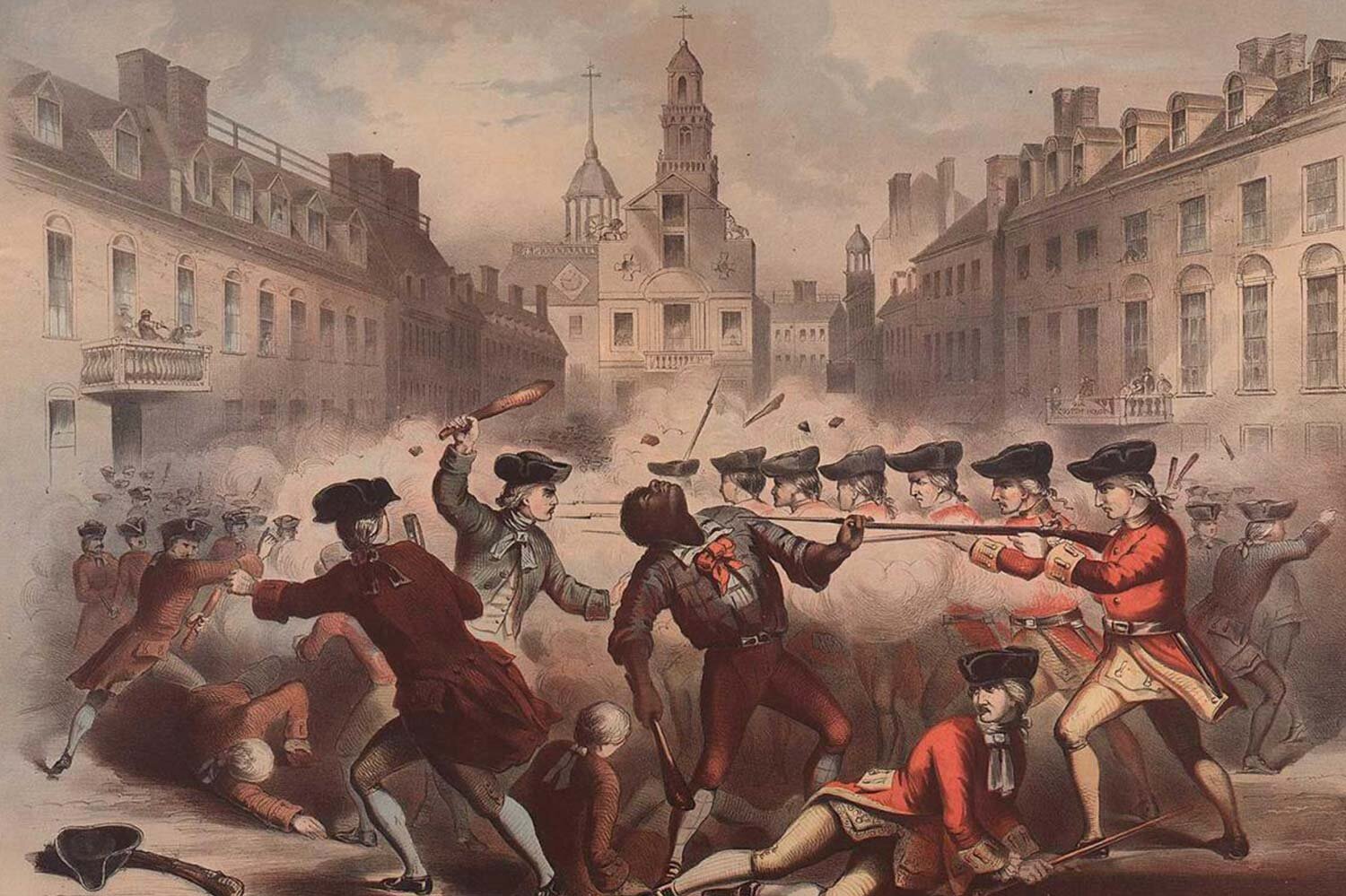
The incident began with a minor altercation. A young apprentice, Edward Garrick, allegedly insulted a British officer, accusing him of failing to pay his barber’s bill. This led to a heated exchange with a British sentry, Private Hugh White, guarding the Custom House. Soon, a crowd began to gather, drawn by the commotion and the ever-present animosity towards the soldiers. The crowd, initially small, quickly swelled, fueled by rum and resentment. They began to verbally abuse Private White, pelting him with snowballs, ice, and other debris. The situation rapidly deteriorated, with shouts of “Kill him!” and “Fire!” filling the air.
Realizing the severity of the situation, Private White called for assistance. Six more soldiers, led by Captain Thomas Preston, soon arrived to reinforce him, forming a semicircle in front of the Custom House steps. These soldiers, members of the 29th Regiment, were armed with loaded muskets and bayonets, creating a stark and intimidating presence against the increasingly agitated crowd. The ringing of church bells, usually a signal for fire, further drew people into the street, unknowingly toward the unfolding drama. The tension was palpable, a suffocating blend of fear, anger, and defiance. This volatile environment, steeped in colonial frustrations, made the incident almost inevitable.
Shots Fired and Lives Lost
Amidst the cacophony of shouts, jeers, and flying projectiles, a moment of tragic misunderstanding occurred. Accounts vary wildly, but what is clear is that a shot rang out. Whether it was a deliberate order, a panicked reaction, or an accident remains debated. Some witnesses claimed to hear Captain Preston give the order to fire, though he vehemently denied it. Others suggested that a soldier fired after being struck, or mistook a shout from the crowd as a command. Regardless of the precise trigger, the sound of that first shot initiated a volley. Several other soldiers, perhaps in confusion or fear, also discharged their weapons into the crowd.
When the smoke cleared, five men lay dead or dying on the cobblestones. These were the first casualties of the escalating conflict with Britain, cementing their place as martyrs in the cause of American liberty.
The five colonists who tragically died were:
- Crispus Attucks: A man of mixed African and Native American descent, and a runaway slave, Attucks was a sailor who had likely spent his life in the maritime trades. He was struck by two musket balls in the chest and was the first to die, falling heroically at the forefront of the crowd. He is widely considered the first casualty of the American Revolution and remains a powerful symbol of defiance and the diverse makeup of the revolutionary cause.
- James Caldwell: Also a sailor, Caldwell was shot twice in the chest. Like Attucks, his profession placed him firmly among the working-class citizens whose grievances fueled much of the colonial unrest.
- Samuel Gray: A rope maker, Gray was shot in the head. His presence underscored the involvement of local artisans and tradesmen in the protests against British policies, particularly those impacting Boston’s vital maritime economy.
- Patrick Carr: An Irish immigrant and a leather breeches maker, Carr was shot in the abdomen and died several days later from his wounds. His death highlighted the multinational and working-class nature of the colonial population participating in the resistance.
- Samuel Maverick: A 17-year-old apprentice ivory turner, Maverick was struck by a bullet that ricocheted off a wall, killing him the next morning. His youth added a particularly tragic dimension to the event, emphasizing the vulnerability of the civilian population.

These five individuals, representing a cross-section of colonial Boston’s working class, became immortalized as the martyrs of the Boston Massacre. Their deaths, though few in number compared to later conflicts, resonated deeply and sent shockwaves throughout the colonies, fanning the flames of revolution.
The Immediate Aftermath and Public Outcry
The immediate aftermath of the Boston Massacre was a whirlwind of grief, outrage, and political maneuvering. The sight of dead and wounded colonists on King Street electrified the city. The surviving crowd, initially stunned, quickly rallied, their anger now tempered with a powerful desire for justice. Lieutenant Governor Thomas Hutchinson was forced to promise an immediate inquiry and the arrest of Captain Preston and his soldiers to prevent further bloodshed and a full-scale riot. The British troops were subsequently removed from the city center to Castle Island, a strategic retreat that offered a temporary lull in direct confrontations.
The Legacy of the Martyrs
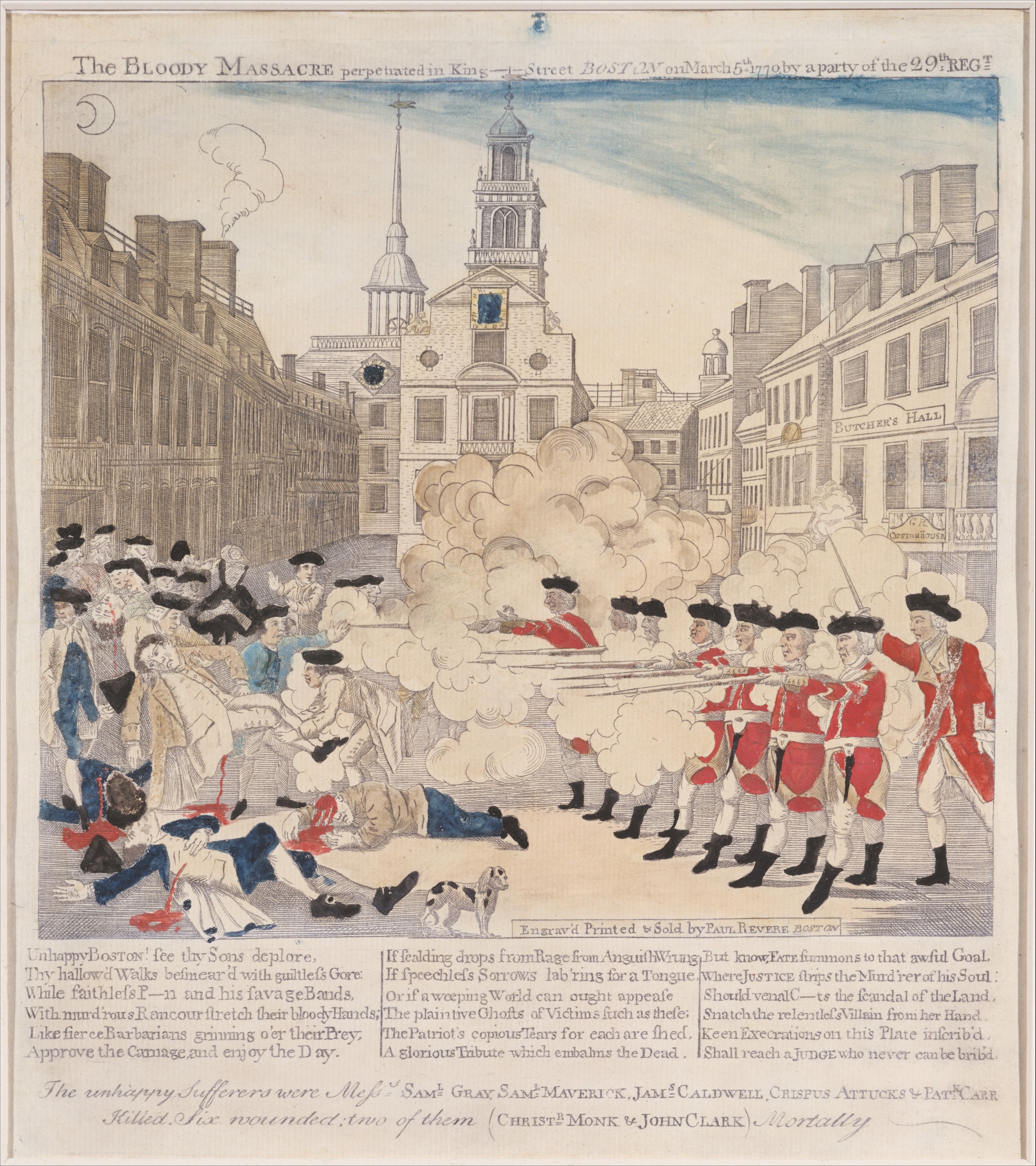
The colonial propagandists, most notably Samuel Adams and Paul Revere, swiftly seized upon the event, transforming the tragedy into a potent symbol of British brutality. Paul Revere’s iconic engraving, “The Bloody Massacre,” though heavily biased and inaccurate in its portrayal, depicted orderly rows of British soldiers firing on an innocent, unarmed crowd. This powerful image was widely circulated throughout the colonies, galvanizing public opinion and fostering a shared sense of grievance against the crown. The bodies of the fallen were given a public funeral attended by thousands, evolving into a solemn procession that further united the colonists in their grief and resolve. The victims were buried in the Granary Burying Ground, a historic cemetery that is a must-visit landmark on the Freedom Trail today. This hallowed ground serves as a poignant reminder of the ultimate price paid for liberty.
The Trials and Their Impact
Despite the intense public outcry, a remarkable display of justice, or at least its appearance, unfolded. Captain Preston and eight of his soldiers were arrested and charged with murder. What followed was one of the most significant trials in colonial history. Surprisingly, two prominent Boston patriots, John Adams and Josiah Quincy II, agreed to defend the British soldiers. Their decision, driven by a belief in due process and the right to a fair trial for all, even in the face of immense public pressure, stands as a testament to the emerging ideals of justice that would define the new nation.
The trials, held in late 1770, were meticulously documented. John Adams argued convincingly that the soldiers had acted in self-defense, facing a hostile and threatening mob. His eloquent defense highlighted the chaos of the moment and the difficulty of discerning orders amidst the pandemonium. Ultimately, Captain Preston and six of the soldiers were acquitted. Two soldiers, Hugh Montgomery and Matthew Kilroy, were found guilty of manslaughter, branded on their thumbs, and then released under the benefit of clergy.
While the outcome of the trials angered many colonists, the fact that a fair trial, however imperfect, was conducted by colonists for British soldiers served a complex purpose. It underscored the colonial claim to legal rights under British law while simultaneously demonstrating the colonists’ ability to administer justice. However, the underlying resentment against British authority continued to fester. The Boston Massacre, regardless of the legal outcome, cemented itself in the collective colonial consciousness as an act of state-sponsored violence against its own people, pushing America further down the road to independence.
Remembering the Boston Massacre Today: A Journey Through History
The legacy of the Boston Massacre endures as a powerful narrative in American history. It was a moment when the abstract concepts of taxation and representation became horrifyingly concrete, etched in blood on the streets of Boston. While only five colonists died that night, their sacrifice became a rallying cry, illustrating the stark contrast between colonial aspirations for liberty and British assertions of absolute power. This event, alongside the Boston Tea Party and the skirmishes at Lexington and Concord, forms the foundational narrative of America’s struggle for self-determination.
For modern travelers, visiting Boston offers an unparalleled opportunity to walk in the footsteps of history. The city has expertly preserved its revolutionary past, making it an accessible and engaging destination for those interested in understanding the roots of American democracy.
Experiencing Boston’s Revolutionary Past
A journey through Boston’s historical sites is a captivating experience that intertwines education with leisure. Many visitors opt to explore the Freedom Trail, a 2.5-mile red-lined path that leads to 16 historically significant sites. Among these, the Old State House stands as the most direct link to the Boston Massacre. A plaque embedded in the cobblestones marks the exact spot where the first shots were fired, allowing visitors a moment of solemn reflection. Inside, the museum recounts the story of the massacre, providing context and artifacts that bring the past to life.
Beyond the massacre site, the Freedom Trail continues to immerse you in the revolutionary spirit:
- Faneuil Hall: Known as the “Cradle of Liberty,” this historic marketplace and meeting hall hosted countless impassioned speeches by figures like Samuel Adams and James Otis Jr., debates that shaped the colonial resistance. Today, it remains a bustling hub for food and shopping, surrounded by historic buildings and vibrant street performers.
- Old North Church: Famous for Paul Revere’s “one if by land, two if by sea” signal, this church offers breathtaking architecture and a tangible connection to the night the revolution truly began.
- Granary Burying Ground: The final resting place of the Boston Massacre victims, as well as Samuel Adams, John Hancock, and Paul Revere. It’s a powerful spot for contemplation.
- Bunker Hill Monument: Commemorating one of the early battles of the Revolutionary War, offering panoramic views of Boston for those willing to climb its 294 steps.
Accommodation in Boston ranges from luxurious hotels in historic districts to charming boutique stays and budget-friendly options, many conveniently located near the Freedom Trail. Whether you prefer the elegance of a classic Boston hotel or the unique character of a Bed & Breakfast in a historic neighborhood like the North End, you’ll find diverse choices to enhance your historical exploration. Many hotels offer packages that include guided tours of revolutionary sites, allowing for a deeper dive into the city’s past.
Understanding how many colonists died in the Boston Massacre is more than just remembering a number; it’s about honoring the individuals whose lives were tragically cut short and recognizing their profound impact on the birth of a nation. A visit to Boston today is an enriching journey that allows you to connect with this powerful history, experience its landmarks firsthand, and appreciate the enduring legacy of those who sacrificed for liberty. It’s a testament to Boston’s role as a living museum, continually inspiring visitors with its tales of courage, resistance, and the relentless pursuit of freedom.
LifeOutOfTheBox is a participant in the Amazon Services LLC Associates Program, an affiliate advertising program designed to provide a means for sites to earn advertising fees by advertising and linking to Amazon.com. Amazon, the Amazon logo, AmazonSupply, and the AmazonSupply logo are trademarks of Amazon.com, Inc. or its affiliates. As an Amazon Associate we earn affiliate commissions from qualifying purchases.