
Embarking on the journey of divorce is undeniably one of life’s most challenging transitions. Much like planning a complex itinerary to an unfamiliar destination, navigating the legal landscape of dissolving a marriage in California requires meticulous preparation, a clear understanding of the route ahead, and often, the guidance of experienced navigators. While our usual explorations at Life Out Of The Box center around enriching travel experiences, luxurious hotels, vibrant tourism, and finding the perfect accommodation for a memorable lifestyle, we recognize that significant life changes, such as divorce, profoundly impact one’s future lifestyle, financial capacity for travel, and even where one calls home. This guide aims to demystify the process of filing for divorce in California, offering clarity on the essential steps and considerations, akin to a comprehensive guide preparing you for a significant life “trip” through the legal system. Understanding this journey is the first step towards charting a new course, opening the door to future adventures and revised lifestyle choices, whether that involves exploring new destinations or simply redefining your personal space.
Understanding the California Divorce Journey: Initial Steps and Residency
Before you can begin the formal process of dissolving your marriage, it’s crucial to understand the foundational requirements set forth by California law. Think of these as the passport and visa requirements for your legal journey – without them, you cannot proceed. This initial phase sets the stage for everything that follows, influencing where and how your case will be heard.
Establishing Your California Residency: The First Milestone
Just as a traveler needs to meet certain entry requirements to visit a country, initiating a divorce in California demands specific residency criteria be met. To file for dissolution of marriage in a California court, at least one spouse must have resided in the state for a minimum of six months immediately prior to filing. Additionally, they must have resided in the specific county where the petition is filed for at least three months. For instance, if you’ve recently moved to Los Angeles and wish to file there, you’d need to establish that three-month county residency. This ensures that the state and county have proper jurisdiction over your case. This residency requirement isn’t just a bureaucratic hurdle; it’s designed to prevent forum shopping and ensure that the courts handling the divorce have a legitimate connection to the parties involved. For many, meeting these residency requirements might coincide with a new chapter in their lives, perhaps involving a temporary stay in a new city or considering new long-term accommodation options as they plan for independence.
Grounds for Dissolution: Navigating the “No-Fault” Landscape
Unlike some other states that require proof of fault (such as adultery or abandonment) to grant a divorce, California operates under a “no-fault” divorce system. This means you do not need to prove that your spouse did anything wrong to justify the dissolution of your marriage. The primary grounds for divorce in California are:
- Irreconcilable Differences: This is the most common and straightforward ground. It simply means that the marriage has broken down to the point where there is no reasonable hope of repair. This provides a less contentious pathway, allowing individuals to focus on moving forward rather than dwelling on past grievances, much like opting for a direct flight rather than a circuitous route with multiple layovers.
- Incurable Insanity: While less common, this ground is available if one spouse has been legally determined to be incurably insane.
This no-fault approach aligns with a modern view of personal autonomy and allows individuals to pursue a change in their lifestyle without needing to assign blame. It streamlines the legal process, enabling a focus on practical matters like asset division and child custody, rather than protracted arguments over marital misconduct. This focus on practical resolution can significantly impact one’s ability to plan for future travel or secure new accommodation sooner, by avoiding drawn-out legal battles that drain resources and emotional energy.
Charting the Legal Course: From Petition to Resolution
Once residency requirements are met and the grounds for divorce are understood, the actual legal journey begins. This phase involves a series of procedural steps, each crucial to ensuring a fair and legally sound outcome. Think of it as mapping out your route, securing reservations, and confirming your itinerary before embarking on a major expedition.
The Initial Filing: Petition, Summons, and Service
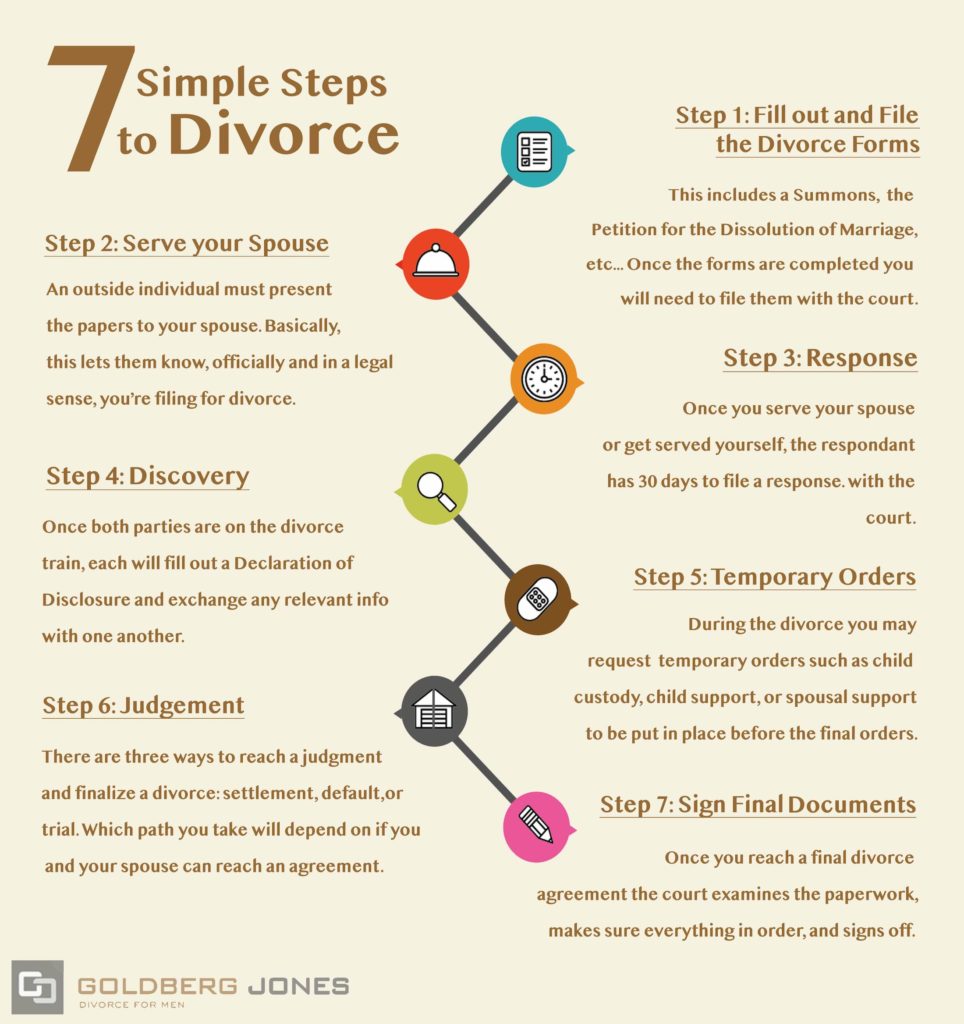
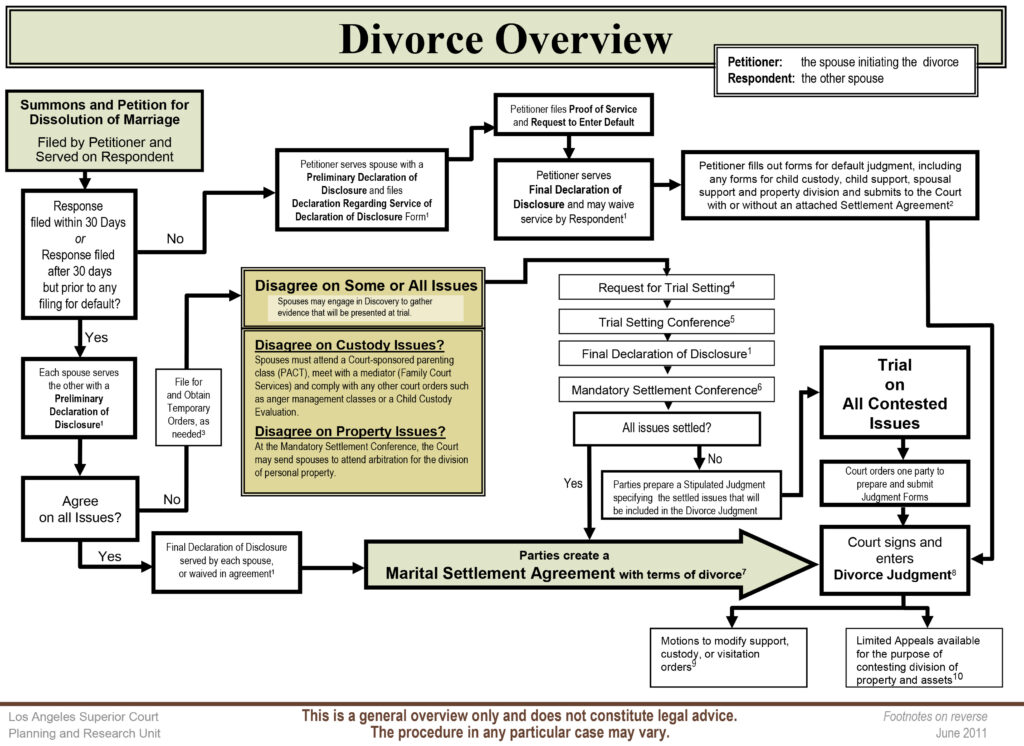
The formal process begins with one spouse, known as the “Petitioner,” filing a “Petition for Dissolution of Marriage” (Form FL-100) with the appropriate county court. This document outlines basic information about the marriage, the couple’s children (if any), and the requests regarding property division, child custody, and support. For example, if you reside in San Francisco, you would file your petition at the San Francisco Superior Court.
Once filed, a “Summons” (Form FL-110) is issued, officially notifying the other spouse, the “Respondent,” that a divorce action has been initiated. This summons also includes automatic temporary restraining orders (ATROs) that prevent either party from making major financial changes, like selling assets or taking children out of state, without the other’s consent or court order.
The next critical step is “service,” where the Petitioner formally delivers the Petition and Summons to the Respondent. This must be done according to specific legal rules, typically by a third party (a process server, sheriff, or friend/family member over 18 not involved in the case). Proper service ensures the Respondent is legally aware of the proceedings and has an opportunity to respond. This step is akin to receiving a formal invitation or notification for a trip; it confirms the journey has officially begun. The Respondent then has 30 days to file a “Response” (Form FL-120) with the court.
Navigating Property Division: Shared Journeys and Separate Paths
California is a community property state, meaning that generally, all assets and debts acquired by either spouse during the marriage are considered “community property” and are subject to equal division (50/50) upon divorce. Property owned before the marriage or received as a gift or inheritance is considered “separate property” and is typically not subject to division. This can be one of the most complex aspects of a divorce, especially for couples with significant assets, international properties, or complex financial portfolios. Dividing assets might involve evaluating shared investments, vacation homes (perhaps a luxury villa in Malibu or a co-owned timeshare at a resort), or funds set aside for future travel and retirement. The financial disclosures that both parties must exchange are extensive, akin to a thorough accounting of all “travel funds” and “properties” acquired during the marital journey. This detailed financial mapping is crucial for ensuring a fair division and preparing each individual for their separate financial futures and distinct lifestyle choices.
Prioritizing the Next Generation: Child Custody and Support
For couples with minor children, determining child custody and support arrangements is often the most emotionally charged and significant part of the divorce. California courts prioritize the “best interests of the child.”
- Custody encompasses both legal custody (who makes decisions about the child’s health, education, and welfare) and physical custody (where the child lives). Options range from sole custody to various forms of joint custody, aiming to ensure children maintain relationships with both parents. Mediators and child custody evaluators often assist families in crafting parenting plans, much like expert guides help travelers navigate unfamiliar terrain.
- Child Support is calculated based on a statewide guideline formula, taking into account each parent’s income, the amount of time children spend with each parent, and other factors like health insurance costs and childcare expenses. The goal is to ensure children continue to receive adequate financial support from both parents, irrespective of their parents’ marital status, maintaining stability in their upbringing and future opportunities, including educational travel or extracurricular activities that contribute to their overall lifestyle.
Supporting Future Chapters: Spousal Support Considerations
Spousal support, often referred to as alimony, is financial assistance paid by one spouse to the other after a divorce. The purpose is to ensure that both parties can maintain a relatively similar standard of living to what they enjoyed during the marriage, at least for a transitional period. In California, there are two main types of spousal support:
- Temporary Spousal Support: Provided during the divorce proceedings to help the lower-earning spouse meet their immediate needs.
- Permanent Spousal Support (or Long-Term Spousal Support): Awarded after the divorce is finalized. The court considers numerous factors when determining the amount and duration, including the length of the marriage, the marketable skills of the supported spouse, the earning capacity of each spouse, the age and health of the parties, and the standard of living established during the marriage. For long-term marriages (generally those lasting 10 years or more), there is no presumptive termination date for spousal support, although it can be modified.
Spousal support can play a crucial role in enabling a spouse to re-establish their career, find new accommodation, and build a new, independent lifestyle, allowing them to embark on their next life chapter with greater financial stability.
Types of Divorce: Choosing Your Path Forward
Just as there are various ways to experience a destination – from a whirlwind tour to a long-term, immersive stay – there are different pathways to divorce in California. The best route depends heavily on the level of cooperation and agreement between the spouses.
The Streamlined Route: Summary Dissolution
For couples who meet very specific, limited criteria, California offers a simplified path known as summary dissolution. This option is akin to an express check-out at a hotel or an expedited security line at an airport. To qualify, both spouses must:
- Have been married for less than five years.
- Have no children from the marriage (born or adopted before or during the marriage).
- Own very little community property (e.g., total less than $50,000, excluding vehicles).
- Have minimal community debt (e.g., total less than $5,000, excluding car loans).
- Not own any real property (land, homes, vacation properties).
- Agree on the division of all assets and debts.
- Not be seeking spousal support from each other.
- Sign a joint petition.
Summary dissolution is less expensive and often quicker than a standard divorce, as it bypasses many court appearances and complex financial disclosures. It’s an ideal choice for couples who have relatively simple financial situations and are in full agreement, allowing them to move forward with their individual lifestyle changes efficiently.
Collaborative Exploration: Uncontested Divorce
An uncontested divorce occurs when both spouses agree on all terms of the divorce, including property division, child custody and support, and spousal support. This path is often facilitated through mediation or collaborative law, where both parties work together, often with legal professionals, to reach mutually agreeable solutions outside of court. While not as rapid as a summary dissolution, an uncontested divorce significantly reduces legal fees, stress, and the time spent in court. It requires a willingness to compromise and cooperate, much like two travelers planning a shared itinerary. The agreement is then presented to the court for approval, and once approved, becomes a legally binding judgment. Opting for an uncontested divorce allows individuals to retain more control over their outcomes and transition into their new life chapters, perhaps with new accommodation arrangements or renewed focus on travel, with greater emotional and financial resources intact.
The Contested Terrain: When Agreement is Elusive
When spouses cannot agree on one or more key aspects of the divorce – such as child custody, property division, or spousal support – the case becomes “contested.” This path often involves litigation, with attorneys representing each spouse, and may require court hearings, discovery (the exchange of information and evidence), and potentially a trial. A contested divorce is typically the most time-consuming, expensive, and emotionally taxing route, demanding significant engagement with the legal system. Navigating this terrain requires robust legal representation, a clear understanding of your rights, and resilience. For those in a contested divorce, seeking temporary accommodation or temporary spousal support can be crucial during the prolonged legal battle, impacting their immediate lifestyle and future planning. While challenging, the legal system is designed to provide a fair resolution when agreement cannot be reached, ensuring that each party’s interests are heard and addressed by a judicial body.
Preparing for Your New Horizon: Financials, Support, and Future Planning
Regardless of the path chosen, preparing for life post-divorce involves practical steps that will shape your new horizon. This is about securing your boarding pass and mapping out your next destination, ensuring you have the resources and support to thrive.
Financial Disclosure: Mapping Your Assets and Debts
A mandatory and critical component of any divorce in California is the exchange of comprehensive financial disclosures. Both spouses must fully disclose all assets, debts, income, and expenses. This transparency is vital for ensuring a fair and equitable division of community property and for determining appropriate support orders. These disclosures are extensive, including bank statements, investment accounts, property deeds, tax returns, and statements for credit cards and loans. Just as a detailed travel budget helps avoid unforeseen expenses, thorough financial disclosure ensures no hidden financial landmarks or fiscal “attractions” derail the settlement. This process helps both parties gain a clear understanding of their financial standing, which is essential for planning future housing, budgeting for travel, and building a sustainable independent lifestyle.
Legal Guidance: Your Navigator Through Complex Waters
While it is possible to represent yourself in a California divorce (known as a “pro per” litigant), the complexities of family law, especially concerning property division, child custody, and support, often make professional legal guidance indispensable. An experienced family law attorney can serve as your navigator, interpreting complex legal codes, advising on strategy, preparing documents, and representing your interests in negotiations or court. They can help ensure that your rights are protected, and that you achieve the most favorable outcome possible. For example, if your divorce involves a business, complex investments, or international assets, the expertise of a specialized attorney, perhaps one with experience in high-net-worth cases, becomes invaluable. This expert guidance can save time, reduce stress, and prevent costly mistakes, much like a seasoned tour guide enhances a journey and helps avoid pitfalls.

Embracing New Beginnings: Life Post-Divorce and Future Lifestyle
The finalization of a divorce decree marks the end of one chapter and the beginning of another. It’s a time for self-reflection, healing, and reimagining your personal lifestyle and future aspirations. Many individuals find this period to be an opportunity for profound personal growth. This might involve setting new career goals, investing in personal well-being, exploring new hobbies, or finally embarking on those long-dreamed-of travel adventures. Whether it’s a solo trip through the vineyards of Napa Valley, a spiritual retreat near Yosemite National Park, or simply finding a new, comfortable accommodation that perfectly suits your independent lifestyle in a city like San Diego, the post-divorce period is a canvas for new beginnings. Some might find solace in the predictability of a long-term apartment rental, while others might explore different types of temporary housing or even plan extended stays in various destinations, embracing a truly nomadic lifestyle. The legal journey, while arduous, ultimately clears the path for you to design a future that is authentically your own, filled with new possibilities for personal fulfillment and adventure.
Navigating a divorce in California is undoubtedly a significant life undertaking, demanding careful planning, legal understanding, and emotional resilience. While it represents the conclusion of one partnership, it simultaneously heralds the beginning of a new, independent journey. By understanding the residency requirements, the no-fault system, the procedural steps of filing, and the various options available, you can approach this transition with greater clarity and confidence. The process may feel like a challenging expedition, but with the right preparation and support, you can chart a course toward a fulfilling new chapter, ready to explore new horizons and embrace the future with a renewed sense of purpose and a redefined lifestyle. Remember, even the most challenging journeys lead to new destinations, offering opportunities for growth, self-discovery, and exciting new adventures, whether those are literal travels or the profound journey of rebuilding one’s life.
LifeOutOfTheBox is a participant in the Amazon Services LLC Associates Program, an affiliate advertising program designed to provide a means for sites to earn advertising fees by advertising and linking to Amazon.com. Amazon, the Amazon logo, AmazonSupply, and the AmazonSupply logo are trademarks of Amazon.com, Inc. or its affiliates. As an Amazon Associate we earn affiliate commissions from qualifying purchases.