
Embarking on a journey through life often brings unexpected turns, and sometimes, these turns involve significant personal transitions. While our focus at Life Out of the Box often centers on exploring new destinations, discovering luxurious accommodations, or immersing ourselves in local cultures, we also recognize that navigating major life changes is an essential part of the broader “lifestyle” journey. One such significant transition, particularly for residents of the Golden State, can be filing for legal separation.
For many, the idea of separation or divorce can feel daunting, like planning a complex trip without a map. However, understanding the process in California can help demystify the journey, providing clarity and a structured path forward. Legal separation offers a distinct alternative to divorce, allowing couples to formalize separate living arrangements and financial divisions without dissolving the marriage entirely. This guide will walk you through the essential steps, considerations, and nuances of filing for legal separation in California, helping you navigate this chapter with greater confidence and understanding.
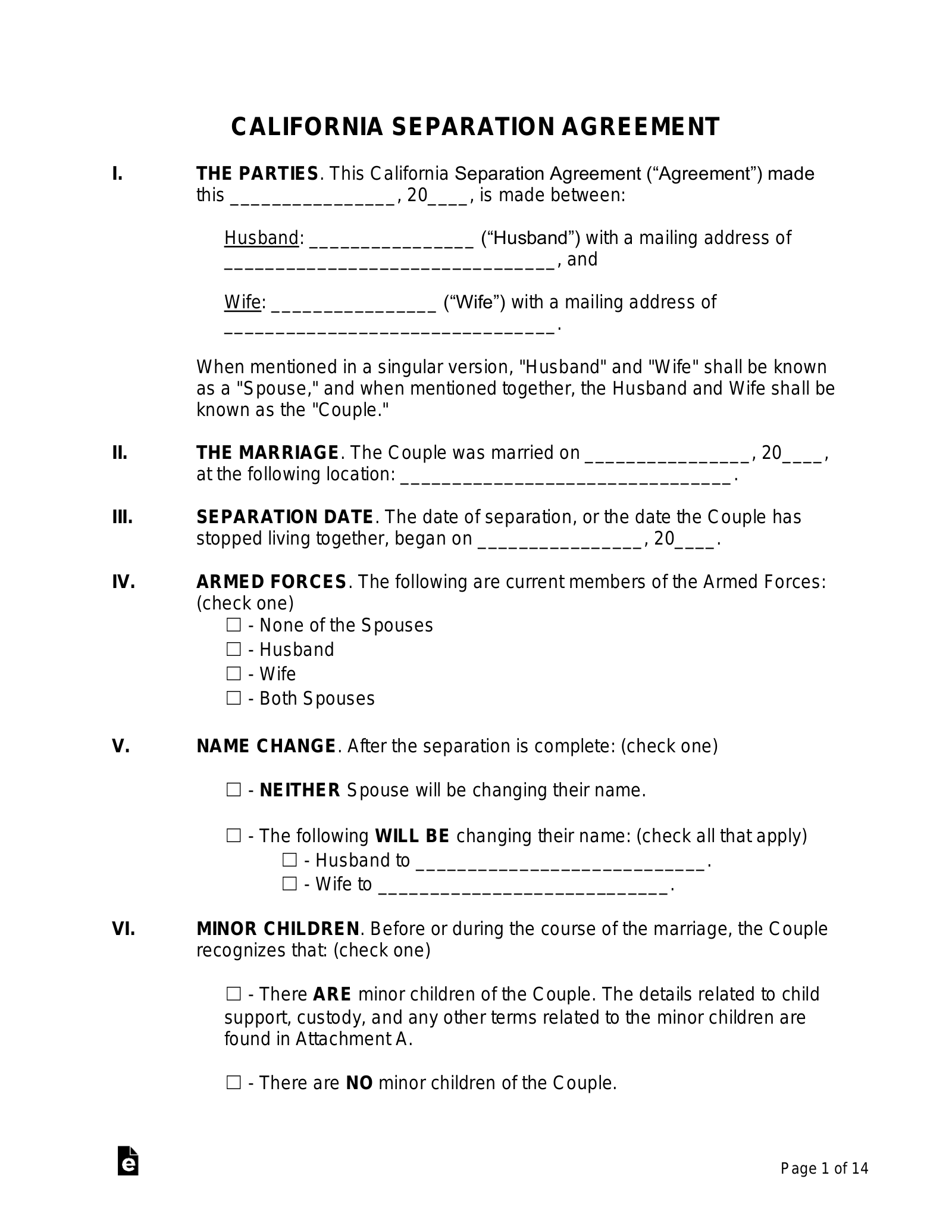
Understanding Legal Separation in the Golden State
Before delving into the procedural aspects, it’s crucial to grasp what legal separation entails in California and how it differs from a full divorce. This initial understanding is akin to choosing your destination and style of travel – is it a short stay, a long-term adventure, or something in between?
Legal Separation vs. Divorce: A Crucial Distinction
At its core, a legal separation in California provides a formal court order that addresses many of the same issues as a divorce, such as child custody and visitation, child support, spousal support, and the division of community property and debts. However, the key distinction lies in the marital status: a legal separation does not end the marriage. This means that even after a judgment of legal separation, both parties remain legally married to each other and cannot remarry.
This unique characteristic makes legal separation an attractive option for couples who:
- Hold religious or moral objections to divorce: For some, maintaining the marital bond, even while living separately, aligns with deeply held beliefs.
- Wish to retain spousal benefits: This often includes health insurance coverage, social security benefits (if married for 10+ years), or other financial advantages that would be lost upon divorce.
- Need a trial period: A legal separation can serve as a formalized pause, allowing couples to live apart, manage their finances separately, and establish new routines without immediately committing to a permanent dissolution of the marriage. It’s like a long-term stay in separate accommodations, allowing space for reflection.
- Have tax implications: In certain scenarios, remaining married for tax purposes might be beneficial.
- Cannot meet residency requirements for divorce: Unlike divorce, California does not have specific state or county residency requirements to file for legal separation, making it accessible sooner for those who have recently moved to the state.
While the process for obtaining a legal separation judgment is largely similar to that of a divorce, the outcome concerning marital status is fundamentally different. It’s a structured approach to living separate lives while legally remaining a married couple, offering a unique pathway for personal and financial restructuring.
Residency Requirements in California
One of the most significant practical differences between filing for divorce and legal separation in California lies in the residency rules.
To file for divorce in California, at least one spouse must have resided in the state for a minimum of six months and in the specific county where they file for at least three months. This requirement can often delay the process for individuals who have recently relocated.
However, for legal separation, these residency stipulations do not apply. You can file for legal separation in California regardless of how long you or your spouse have lived in the state or county. This flexibility can be a crucial factor for individuals who need to formalize their separation promptly but do not yet meet the criteria for divorce, perhaps having just moved to Los Angeles or San Francisco. This allows individuals to address immediate concerns such as support, custody, and property division without the waiting period.
This distinction highlights California’s recognition of diverse family needs and provides an essential option for couples seeking a formal resolution outside of immediate marital dissolution. It underscores the idea that life’s journeys can take many forms, and the legal system adapts to provide pathways for each.
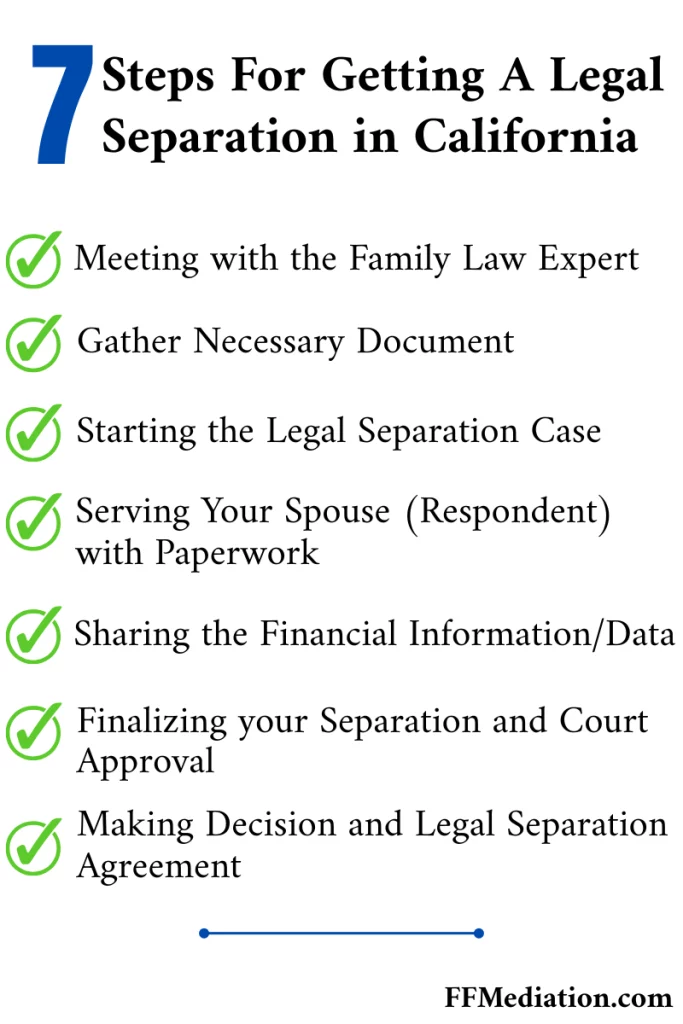
The Step-by-Step Process of Filing for Separation
Just as planning a detailed itinerary is essential for a seamless travel experience, following a structured process is key to navigating legal separation. The steps involved closely mirror those of a divorce, ensuring that all necessary aspects of property, support, and child welfare are addressed comprehensively.
Initiating the Process: The Petition
The first formal step in seeking a legal separation is to file a Petition – Marriage/Domestic Partnership (Form FL-100) with the superior court in the county where either you or your spouse resides. This document formally initiates the legal proceedings and sets the stage for all subsequent actions.
When preparing Form FL-100, you will need to provide crucial information, including:
- The full names and addresses of both spouses.
- The date and place of marriage.
- The names and birthdates of any minor children of the marriage.
- A request for legal separation.
- Information regarding community and separate property and debts.
- Requests for court orders concerning child custody, visitation, child support, spousal support, and property division.
It is important to clearly indicate on the petition that you are requesting a legal separation and not a dissolution of marriage (divorce). This distinction is made by checking the appropriate box on the form.
Once the petition is completed, it must be filed with the clerk of the Superior Court. For instance, if you reside in the southern part of the state, you might file with the Los Angeles County Superior Court. At the time of filing, there will be a filing fee, which can vary. If you are unable to afford the fee, you may apply for a fee waiver by filing Request to Waive Court Fees (Form FW-001) and Order on Court Fee Waiver (Form FW-003). This ensures that financial constraints do not become an insurmountable barrier to seeking legal resolution.
Serving the Papers: Notifying Your Spouse
After filing your petition with the court, the next critical step is to formally notify your spouse that you have initiated legal separation proceedings. This process is known as service of process and is a fundamental requirement for due process in the legal system. Proper service ensures that your spouse is fully aware of the legal action against them and has an opportunity to respond.
The petition and other accompanying documents (such as Summons (Form FL-110) and blank Response – Marriage/Domestic Partnership (Form FL-120)) must be served on your spouse by someone other than yourself who is at least 18 years old. This person cannot be a party to the case. Common methods of service include:
- Personal Service: The server hands the documents directly to your spouse. This is often the most reliable method.
- Service by Mail with Notice and Acknowledgment of Receipt: The server mails the documents, along with a Notice and Acknowledgment of Receipt (Form FL-117), to your spouse. Your spouse must then sign and return Form FL-117, acknowledging receipt.
Once your spouse has been properly served, the person who served the documents must complete a Proof of Service of Summons (Form FL-330) and file it with the court. This document legally certifies that your spouse has been notified, allowing the case to proceed. Without proper proof of service, the court cannot move forward with your legal separation. This step is crucial, much like confirming your reservation at a Grand Hyatt Hotel or a Four Seasons Resort – without confirmation, your plans might not be recognized.
The Response and Temporary Orders
After receiving the petition, your spouse has a limited timeframe (typically 30 days) to file their Response – Marriage/Domestic Partnership (Form FL-120) with the court. In their response, they can agree with your requests, dispute them, or make their own requests regarding issues like child custody, support, and property division. If your spouse does not respond within the allotted time, you may be able to proceed with a “default” judgment, meaning the court may grant your requests without their input.
Often, during the early stages of a legal separation case, there is an immediate need for temporary orders to establish guidelines for child custody, visitation, child support, spousal support, and the use of marital property while the case is pending. For example, who lives in the family home, who pays which bills, and how often each parent sees the children?
To request temporary orders, you would file a Request for Order (Form FL-300) with the court. This form allows you to ask the judge to make decisions on these pressing issues until a final judgment can be reached. The court will schedule a hearing where both parties can present their arguments and evidence. Temporary orders are a vital tool for maintaining stability and ensuring the well-being of all parties, especially children, during what can be a turbulent period of transition. It’s like setting up temporary living arrangements at a comfortable serviced apartment while you plan your long-term accommodation.
Financial Disclosures: Transparency is Key
A cornerstone of any family law proceeding in California, including legal separation, is the full and accurate disclosure of all financial information by both spouses. This transparency is critical to ensuring a fair division of community property and debts, and for determining appropriate levels of child and spousal support. This is a meticulous process, similar to auditing your expenses before a major budget trip, ensuring every detail is accounted for.
Each spouse is required to complete and exchange a series of financial disclosure forms:
- Declaration of Disclosure (Form FL-140): A cover sheet indicating that the required forms are being provided.
- Schedule of Assets and Debts (Form FL-142): A comprehensive list of all community and separate property assets (real estate, bank accounts, investments, vehicles, retirement accounts, etc.) and debts (mortgages, credit card balances, loans).
- Income and Expense Declaration (Form FL-150): Detailed information about your current income from all sources and your monthly living expenses.
These forms, along with supporting documentation such as pay stubs, bank statements, tax returns, and property appraisals, must be exchanged between the parties. While these disclosures are generally not filed with the court (except in specific circumstances), a Declaration Regarding Service of Declaration of Disclosure (Form FL-141) is filed with the court to confirm that the disclosures have been exchanged.
Accurate and complete financial disclosures are non-negotiable. Hiding assets or debts can lead to serious penalties from the court, including monetary sanctions or a disproportionate division of property. This stage requires meticulous attention to detail and honest communication, or at least honest presentation of facts to the court.
Reaching an Agreement: Settlement or Trial
The goal of the financial disclosure phase and subsequent negotiations is to reach a comprehensive agreement on all issues, including child custody and visitation, child support, spousal support, and the division of assets and debts.
Many couples achieve this through:
- Negotiation: Direct discussions between spouses, often facilitated by their respective attorneys.
- Mediation: A neutral third party (a mediator) helps the couple communicate and find common ground to reach mutually acceptable solutions. This can be a less adversarial and more cost-effective approach.
- Collaborative Law: A process where both parties and their attorneys commit to resolving issues outside of court, working together to achieve a settlement.
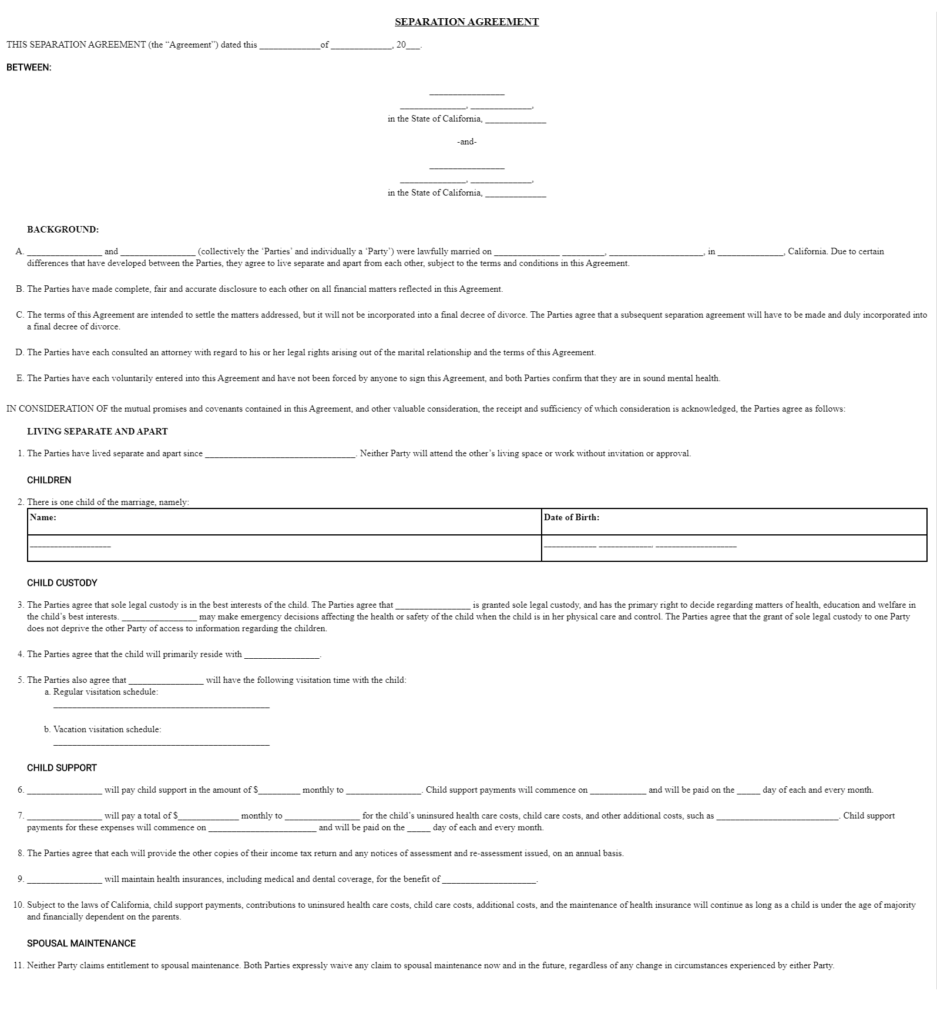
If an agreement is reached, it is formalized into a Stipulated Judgment for Legal Separation. This legally binding document outlines all the agreed-upon terms and is submitted to the court for approval. The court will review the agreement to ensure it is fair and, most importantly, that any provisions regarding children are in their best interest.
However, if the parties cannot reach an agreement on some or all issues, the case may proceed to trial. At trial, a judge will hear evidence and arguments from both sides and make the final decisions on all unresolved matters. Going to trial is generally more expensive, time-consuming, and emotionally taxing than reaching a settlement, emphasizing the benefits of collaborative approaches.
Navigating the Aftermath: Life Post-Separation
A judgment of legal separation marks the formal conclusion of the court process, but it also signifies the beginning of a new phase of life. Understanding what this judgment means and the potential pathways that follow is crucial for setting expectations and planning your future.
The Legal Judgment of Separation
Once an agreement is reached and approved by the court, or after a judge makes a ruling following a trial, a Judgment of Legal Separation is entered. This is the final order that formalizes the separation and dictates the terms under which the spouses will live separately.
The judgment will typically cover all the key areas:
- Child Custody and Visitation: Specifies legal and physical custody arrangements, parenting schedules, and decision-making authority for children.
- Child Support: Outlines the amount and duration of financial support for minor children.
- Spousal Support (Alimony): Details if, how much, and for how long one spouse will pay support to the other.
- Division of Community Property and Debts: Legally assigns ownership of assets (e.g., real estate, bank accounts, retirement funds, businesses) and responsibility for debts incurred during the marriage.
- Other Orders: May include provisions for attorney’s fees, restraining orders, or other specific directives.
Crucially, as previously noted, even with a formal judgment of legal separation, you remain legally married. This means you cannot remarry. The judgment provides a legal framework for separate living, financial independence, and co-parenting, but it does not sever the marital bond. This can have implications for future financial planning, inheritance, and benefits, similar to how booking different rooms in a large hotel complex like the Waldorf Astoria Beverly Hills still means you’re guests of the same establishment.
Considering Future Pathways: Divorce or Reconciliation?
The judgment of legal separation is not necessarily a permanent endpoint; rather, it often serves as a significant crossroads. From this point, several pathways may emerge for the separated couple:
- Reconciliation: Some couples find that after a period of separation and formalizing their boundaries, they are able to work through their differences and reconcile. If this occurs, they can simply choose to resume living together as a married couple, and the legal separation judgment effectively becomes inactive, though it remains a court record. There is no specific legal action required to “undo” a legal separation if both parties agree to reconcile.
- Conversion to Divorce: For many, legal separation is a stepping stone to divorce. If, after a period of separation, one or both spouses decide they want to dissolve the marriage permanently, they would then need to file a new petition for dissolution of marriage (divorce). Importantly, at this stage, the residency requirements for divorce would apply. This means at least one spouse must have resided in California for six months and in the specific county for three months. The terms established in the legal separation judgment (regarding property, custody, and support) can often be incorporated into the final divorce judgment, simplifying that subsequent process.
The choice between reconciliation and divorce reflects the deeply personal nature of this journey. Legal separation offers the flexibility to explore these options without immediate finality, providing space and structure during a period of introspection and adjustment. It’s a pause in the itinerary, allowing you to re-evaluate your travel plans before committing to a new destination.
Navigating a legal separation in California is undoubtedly a complex process, but it is also a well-defined pathway for individuals and families seeking to formalize separate lives without severing the marital bond. From understanding the key differences between separation and divorce, to meticulously completing forms and engaging in financial disclosures, each step requires careful attention. While this guide provides a comprehensive overview, the nuances of individual situations can vary significantly. Therefore, much like consulting a seasoned travel guide for an exotic adventure, seeking advice from a qualified family law attorney in California is highly recommended. They can offer personalized guidance, ensure all legal requirements are met, and advocate for your best interests, helping you navigate this significant life transition towards a stable and well-planned future.
LifeOutOfTheBox is a participant in the Amazon Services LLC Associates Program, an affiliate advertising program designed to provide a means for sites to earn advertising fees by advertising and linking to Amazon.com. Amazon, the Amazon logo, AmazonSupply, and the AmazonSupply logo are trademarks of Amazon.com, Inc. or its affiliates. As an Amazon Associate we earn affiliate commissions from qualifying purchases.