
The allure of the Golden State has long captivated imaginations, drawing individuals from across the globe with its vibrant culture, diverse landscapes, and unparalleled opportunities. For many, the dream of living and working in California extends beyond simply enjoying its renowned lifestyle; it involves playing an active role in shaping the very fabric of its communities. Becoming a licensed real estate agent, or “realtor,” in this dynamic state offers a unique pathway to connect with people, facilitate their dreams of homeownership, and thrive in an ever-evolving market. This guide will walk you through the comprehensive process, from understanding the initial requirements to launching a successful career, subtly weaving in the elements that make California a prime destination for both living and investment.
Navigating the Golden State’s Real Estate Landscape
Before embarking on the journey to become a licensed professional, it’s essential to appreciate the unique characteristics of the California real estate market. This understanding not only motivates aspiring realtors but also highlights the incredible potential and variety available.
Why California is a Prime Market for Real Estate Professionals
California’s economy is one of the largest in the world, fueled by innovation, tourism, agriculture, and entertainment. This robust economic foundation translates directly into a bustling real estate market. From the tech hubs of Silicon Valley to the agricultural heartlands, the coastal cities of Los Angeles and San Francisco, and the vibrant metropolitan area of San Diego, demand for residential and commercial properties remains consistently high.
The state’s diverse geography, stretching from the sandy beaches along the Pacific Ocean to the majestic peaks of the Sierra Nevada mountains and the expansive deserts, offers an extraordinary range of properties. Realtors here aren’t just selling houses; they’re selling unique lifestyles. Whether it’s a luxury condominium overlooking the ocean in Malibu, a rustic cabin near Lake Tahoe, a family home in a bustling suburban community, or an investment property in a burgeoning city, the opportunities are vast. This diversity requires realtors to be knowledgeable not just about property values, but also about the local culture, attractions, and unique features that draw residents and investors to specific areas.
Furthermore, California is a global magnet for tourism and business. Many buyers are international investors or individuals relocating for high-profile jobs. Understanding the nuances of different client needs, from those seeking long-term accommodation for business stays to families looking for the perfect vacation home, is crucial. Realtors become guides not only to properties but also to the destinations themselves, offering insights into local amenities, school districts, and nearby attractions like Disneyland, Universal Studios Hollywood, or the vineyards of Napa Valley.
The Allure of California Living for Homebuyers and Investors
The very concept of the “California Dream” is often intertwined with homeownership. It’s a dream fueled by year-round sunshine, access to world-class entertainment, stunning natural beauty, and a generally high quality of life. From the iconic landmarks like the Golden Gate Bridge and Hollywood sign to the serene landscapes of Yosemite National Park and Big Sur, California offers an unparalleled backdrop for life.
For investors, California’s real estate market has historically shown strong appreciation, making it an attractive prospect for long-term growth. The demand for various types of accommodation, from luxury suites and resorts in tourist hotspots like Palm Springs to apartments and villas in urban centers, creates a robust rental market. Realtors often assist clients not just in purchasing primary residences but also in finding investment properties that can serve as vacation rentals or long-term lease opportunities, tapping into the state’s vibrant tourism industry. This also requires an understanding of different hotel categories, amenities, and their appeal to various segments of the market. Providing insights into local culture, food scenes, and activities also helps realtors paint a complete picture of what living or investing in a particular California locale entails.
Essential Steps to Earning Your California Real Estate License
Becoming a real estate agent in California is a structured process regulated by the state to ensure professionalism and competency. It requires dedication, but the rewards are significant.
Meeting the Eligibility Requirements
Before diving into coursework, aspiring realtors must meet a few fundamental criteria set by the California Department of Real Estate (DRE).
First and foremost, you must be at least 18 years old. While there are no specific educational prerequisites like a college degree, you must be legally present in the United States. Furthermore, you will need to demonstrate honesty and integrity throughout the application process. Any past criminal convictions, particularly those related to fraud or moral turpitude, will be scrutinized by the DRE and could potentially disqualify an applicant. It is always advisable to disclose any such history upfront to avoid issues later in the application process. Background checks, including fingerprinting, are a standard part of the procedure to ensure the public’s trust in real estate professionals.
Mastering the Pre-Licensing Education
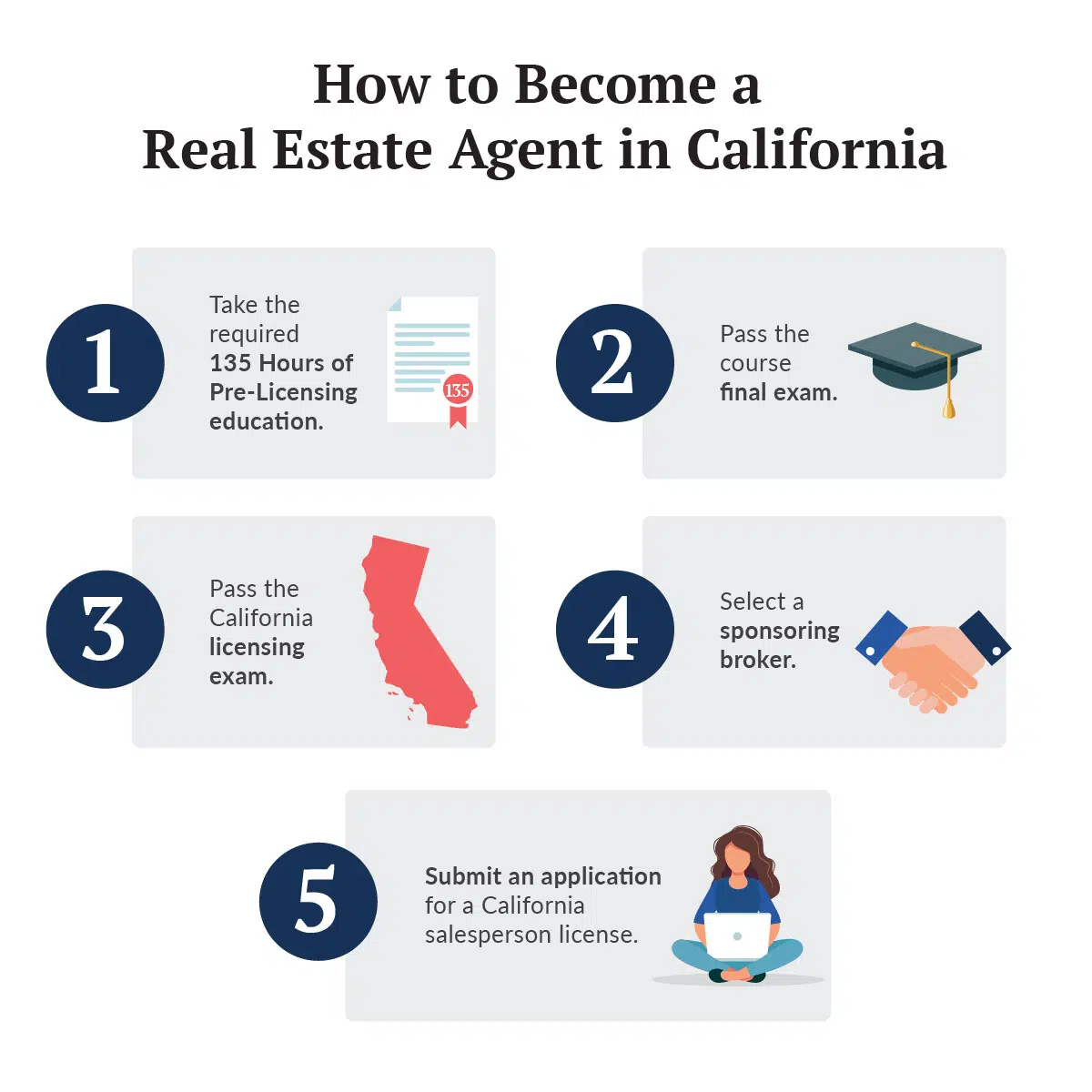
This is arguably the most critical and time-consuming step. The DRE mandates that all prospective agents complete 135 hours of approved pre-licensing courses. This typically breaks down into three 45-hour courses:
- Real Estate Principles: This foundational course covers the basics of real estate, including property ownership, financing, contracts, and ethics. It provides a comprehensive overview of the industry and the legal framework within which realtors operate.
- Real Estate Practice: This course focuses on the practical aspects of working as an agent, such as agency relationships, disclosures, property valuation, marketing, and client representation. It prepares you for the day-to-day responsibilities of the profession.
- One Elective Course: You can choose from a range of specialized topics, such as Real Estate Finance, Real Estate Economics, Real Estate Appraisal, or Property Management. The elective allows you to explore an area of particular interest and deepen your knowledge in a specific niche.
These courses can be completed through various approved providers, including community colleges, universities, and private real estate schools. Many providers offer online courses, providing flexibility for individuals balancing other commitments. It’s important to choose a reputable school that prepares you thoroughly for the state exam, not just for the course completion certificates. While studying, remember that understanding different types of properties—from residential homes to potential short-term rental apartments or long-term stay villas—will be crucial for your future clients, many of whom are drawn to California for its diverse accommodation options.
Conquering the State Exam
After successfully completing your 135 hours of coursework, the next hurdle is the California Real Estate Salesperson Exam. This is a challenging, multiple-choice exam administered by the DRE. You’ll need to submit your application, including your course completion certificates and background check information, to the DRE to be scheduled for the exam.

The exam itself consists of 150 questions and applicants are given 3 hours and 15 minutes to complete it. A passing score is 70% or higher. The test covers a broad spectrum of topics from your pre-licensing education, including real property, contracts, finance, appraisal, agency, and ethical considerations. Thorough preparation is key. Many candidates utilize exam prep courses, practice tests, and study guides to reinforce their knowledge and become familiar with the exam format. Failing the exam is not uncommon, but the DRE allows retakes, so persistence is vital. Once you pass, you’ll receive your license, officially enabling you to work as a real estate salesperson under the supervision of a licensed broker.
Launching and Growing Your Real Estate Career
Obtaining your license is a significant achievement, but it’s just the beginning. Building a successful career in California’s competitive market requires strategic planning and continuous effort.
Choosing the Right Brokerage: Support and Specialization
As a newly licensed salesperson, you must affiliate with a licensed real estate broker to legally practice. This choice is critical to your early career development. Brokers provide oversight, mentorship, office space, and often access to valuable resources like Multiple Listing Service (MLS) subscriptions, marketing tools, and training programs.
When selecting a brokerage, consider several factors:
- Training and Mentorship: Does the brokerage offer robust training programs for new agents? Is there a culture of mentorship?
- Commission Structure: Understand how commissions are split between you and the brokerage.
- Company Culture: Find a brokerage whose values align with yours. Some are highly competitive, while others foster a more collaborative environment.
- Specialization: Does the brokerage specialize in certain areas (e.g., luxury properties in Beverly Hills, commercial real estate, vacation homes near Lake Tahoe, or long-term rental properties)? Aligning with a niche that interests you can be advantageous.
- Technology and Resources: What technology, marketing support, and administrative assistance do they provide?
The right brokerage can be a launchpad for your career, offering the support needed to navigate your first transactions and build confidence. Many realtors find success by specializing, whether it’s in a specific neighborhood in Santa Monica, a type of property like historic homes, or serving a particular demographic, such as international investors seeking high-end hotels or boutique resorts for conversion.
Building Your Network and Client Base
Real estate is a relationship-driven business. Building a strong network is paramount. Start by leveraging your existing personal and professional contacts. Inform everyone you know that you are a licensed real estate agent in California and ready to assist them or their referrals.
Beyond your immediate circle, actively participate in local community events, join business associations, and network with other professionals, such as lenders, inspectors, and contractors. Online presence is also vital; create a professional website, utilize social media platforms, and engage in online real estate forums. Content marketing, where you provide valuable information about local markets, property trends, and tips for buyers and sellers, can establish you as an expert. This could even include guides to California destinations or insights into the best types of accommodation for various lifestyles, connecting directly with the interests of our website’s audience. Offering information on local culture, food, and activities can also set you apart and attract clients interested in the broader lifestyle of a community.
Continuous Learning and Professional Development
The real estate market is constantly evolving, influenced by economic trends, technological advancements, and legislative changes. To remain competitive and provide the best service to your clients, continuous learning is essential.
The DRE requires real estate licensees to complete 45 hours of approved continuing education every four years to renew their licenses. This typically includes specific courses on ethics, agency, fair housing, and other mandatory topics, along with elective hours. Beyond the mandatory requirements, actively seek opportunities for professional development. Attend industry conferences, workshops, and seminars. Obtain certifications or designations in specialized areas, such as luxury home sales, green building, or investment properties. Staying informed about new market developments, innovative marketing strategies, and changes in real estate law will ensure you remain a valuable resource to your clients. This ongoing commitment to learning not only enhances your expertise but also contributes to your credibility and long-term success in the dynamic California real estate scene.
The Realtor Lifestyle: Blending Business with California’s Best
Becoming a realtor in California is more than just a job; it’s an embracing of a unique lifestyle that often integrates seamlessly with the state’s unparalleled offerings. This profession provides a level of flexibility and engagement that few others can match, allowing agents to experience and share the very best of what California has to offer.
Exploring Diverse California Destinations as a Realtor
A successful California realtor is inherently a local expert and often, an avid explorer of the state’s diverse regions. To effectively sell properties, you need to understand the distinct character of various destinations. This means visiting and learning about the laid-back coastal charm of Santa Monica, the vibrant cultural scene of San Francisco, the desert oasis appeal of Palm Springs, or the family-friendly communities of Sacramento.
As you guide clients through potential neighborhoods, you’re also showcasing local landmarks like Alcatraz Island from Fisherman’s Wharf, the architectural marvel of Hearst Castle, or the scenic vistas from Griffith Observatory. Understanding the unique attractions, whether it’s Balboa Park in San Diego, the natural wonders of Joshua Tree National Park or Death Valley National Park, or the towering trees of Redwood National Park, allows you to paint a holistic picture of life in that area. This deep local knowledge helps you match clients not just with a house, but with a community and a lifestyle that truly fits their aspirations. For many, the joy of being a realtor in California is the constant discovery and appreciation of these varied locales, blurring the lines between work and a passion for travel.
Understanding Accommodation Trends and Client Needs
The breadth of accommodation options in California is immense, ranging from luxury suites in metropolitan hotels to charming historic villas, modern urban apartments, and sprawling resorts. A successful realtor must be keenly aware of these trends, not only for sales but also for understanding potential client investments or evolving residential preferences. For instance, the rise of remote work has led to increased demand for long-term stay properties in quieter, scenic areas, while the booming tourism industry means robust interest in properties suitable for short-term rentals.
Realtors often find themselves advising on the best use of a property, whether it’s for personal residence, a vacation home, or an investment opportunity. This involves understanding the appeal of various amenities, from infinity pools and private beaches to smart home technology and sustainable design. Knowing the ins and outs of local tourism, including popular attractions like Knott’s Berry Farm or SeaWorld San Diego, enables realtors to position properties effectively to different buyer segments. For clients looking for a taste of the quintessential California experience, a realtor might highlight nearby cultural festivals, exquisite dining options, or access to outdoor activities, thereby selling not just a house but an entire local experience.

Luxury and Lifestyle: Serving Discerning Buyers
California is synonymous with luxury and aspirational lifestyles. From the exclusive enclaves of Beverly Hills to the sprawling estates of Napa Valley, there’s a significant market for high-end properties. Realtors catering to this segment must possess an acute understanding of luxury amenities, architectural styles, and the specific desires of affluent buyers. This often involves a deep dive into elements like private chefs’ kitchens, expansive outdoor entertainment spaces, proximity to elite schools or private airports, and access to exclusive clubs or concierge services.
For many buyers, especially those new to California, a realtor acts as a lifestyle curator, introducing them to the finest aspects of their chosen community. This could mean recommending the best local vineyards, detailing the yachting opportunities along the coast, or highlighting bespoke shopping experiences. The realtor profession in California allows for a rich engagement with the state’s vibrant culture, incredible destinations, and diverse accommodations, transforming the process of buying or selling property into an immersive journey through one of the world’s most desirable locales. It’s a career that offers the chance to not only facilitate transactions but also to live and breathe the California Dream every day, sharing its wonders with clients who are eager to make it their own.
LifeOutOfTheBox is a participant in the Amazon Services LLC Associates Program, an affiliate advertising program designed to provide a means for sites to earn advertising fees by advertising and linking to Amazon.com. Amazon, the Amazon logo, AmazonSupply, and the AmazonSupply logo are trademarks of Amazon.com, Inc. or its affiliates. As an Amazon Associate we earn affiliate commissions from qualifying purchases.