
Embarking on a new business venture in the vibrant automotive industry of California can be an incredibly rewarding experience, especially when considering the state’s expansive tourism landscape and diverse lifestyle choices. For those with an entrepreneurial spirit, obtaining a car dealer license in the Golden State isn’t just about selling vehicles; it’s about unlocking a gateway to numerous opportunities that often intersect with travel, luxury, and the quintessential California way of life. Imagine providing bespoke luxury vehicles for visitors exploring Beverly Hills, rugged SUVs for adventurers heading to Yosemite National Park, or reliable family cars for those planning extensive United States road trips. The automotive market in California is as dynamic and diverse as its population and visitor base, making a car dealer license a powerful tool for those looking to tap into both local and tourist-driven demand.
This comprehensive guide will walk you through the essential steps and considerations for securing your car dealer license in California. Beyond the legalities, we’ll explore how this license can be strategically leveraged to cater to the ever-evolving travel and lifestyle segments, from supporting niche tourism markets in Napa Valley to facilitating bespoke accommodation experiences in Palm Springs. Whether your vision is to establish a bustling dealership in Los Angeles or a specialized vehicle rental service near the Golden Gate Bridge in San Francisco, understanding the licensing process is your first critical step.
Why Consider a Car Dealer License in California?
The appeal of becoming a licensed car dealer in California extends far beyond the traditional car sales model. The state’s unique position as a global hub for tourism, innovation, and diverse lifestyles creates a fertile ground for automotive entrepreneurs. From the bustling streets of Hollywood to the serene landscapes of Lake Tahoe, demand for vehicles, both new and used, remains consistently high, driven by residents and millions of tourists alike.
Entrepreneurial Freedom and Market Potential
Obtaining a car dealer license in California offers unparalleled entrepreneurial freedom. It allows you to operate independently, set your own terms, and directly influence your business’s direction. The sheer size and wealth of the California market mean that there’s always a segment ripe for innovation. For instance, you could specialize in eco-friendly vehicles, catering to the environmentally conscious traveler exploring the scenic routes along the Pacific Coast Highway, or focus on luxury models for an exclusive clientele frequenting high-end resorts.
The flexibility of a dealer license also means you can adapt your business model to various economic climates and market shifts. During peak tourist seasons, you might pivot towards short-term rental arrangements for travelers visiting attractions like the Disneyland Resort or Universal Studios Hollywood. In quieter times, you could concentrate on long-term leasing options for businesses or residents. This adaptability is a cornerstone of success in California’s dynamic economy, making the dealer license a versatile asset for any lifestyle or travel-focused entrepreneur.
Diverse Opportunities in the Golden State
California’s geographic and cultural diversity translates into a myriad of specific opportunities for licensed dealers. Consider the demand for specialized vehicles:
- Recreational Vehicles (RVs): For families exploring national parks or adventure seekers camping along the coast.
- Luxury Convertibles: For tourists looking to experience the iconic drives of Southern California in style.
- Electric Vehicles: For environmentally conscious residents and visitors in tech-forward cities like San Jose or San Francisco.
- Commercial Fleets: Supplying vehicles for hotels, tour operators, or shuttle services catering to the vibrant tourism industry in areas like San Diego or Santa Monica.
A dealer license enables you to buy and sell these vehicles legally and efficiently, positioning you at the heart of the transaction, whether you’re sourcing unique cars for a boutique travel agency or providing fleet solutions for a major hotel chain. The ability to buy and sell vehicles at wholesale prices further enhances profitability, allowing you to offer competitive rates to customers and secure a strong market position. This broad spectrum of demand ensures that with a California dealer license, your business can evolve and thrive by continually meeting the diverse needs of one of the world’s most captivating travel destinations.
Essential Steps to Becoming a Licensed Dealer
The path to becoming a licensed car dealer in California is a structured process governed by the California Department of Motor Vehicles (DMV). While it requires attention to detail and adherence to specific regulations, it is a navigable journey for those committed to establishing a legitimate and successful automotive business.
Understanding License Types and Requirements
Before diving into the application, it’s crucial to understand the different types of dealer licenses available, as each caters to a specific business model:
- New Vehicle Dealer (Franchise Dealer): Sells only new vehicles, typically from a specific manufacturer, and must have a franchise agreement. This is a capital-intensive route often associated with established brands.
- Used Vehicle Dealer (Independent Dealer): Sells used vehicles of any make or model. This is the most common license type for new entrepreneurs due to its flexibility and lower barrier to entry. Many lifestyle-focused businesses, such as those catering to adventurers seeking used RVs or budget travelers looking for reliable sedans, often fall under this category.
- Wholesale Dealer: Sells vehicles only to other licensed dealers, not to the general public. This is a behind-the-scenes role, crucial for supplying inventory to retail dealers, including those serving the tourism sector.
- Auto Broker: Arranges vehicle sales between a buyer and a licensed dealer, but does not take ownership of the vehicle. This can be a good entry point for those wanting to facilitate vehicle purchases for clients, perhaps even concierge services for luxury travel.
Each license type has distinct requirements, but some general prerequisites apply across the board:
- Business Location: You must have a bona fide business location that meets specific DMV standards, including a display area, office, and signage. This location should be zoned for automotive sales, a critical consideration, especially in prime tourist areas or specific commercial districts within cities like Sacramento or Fresno.
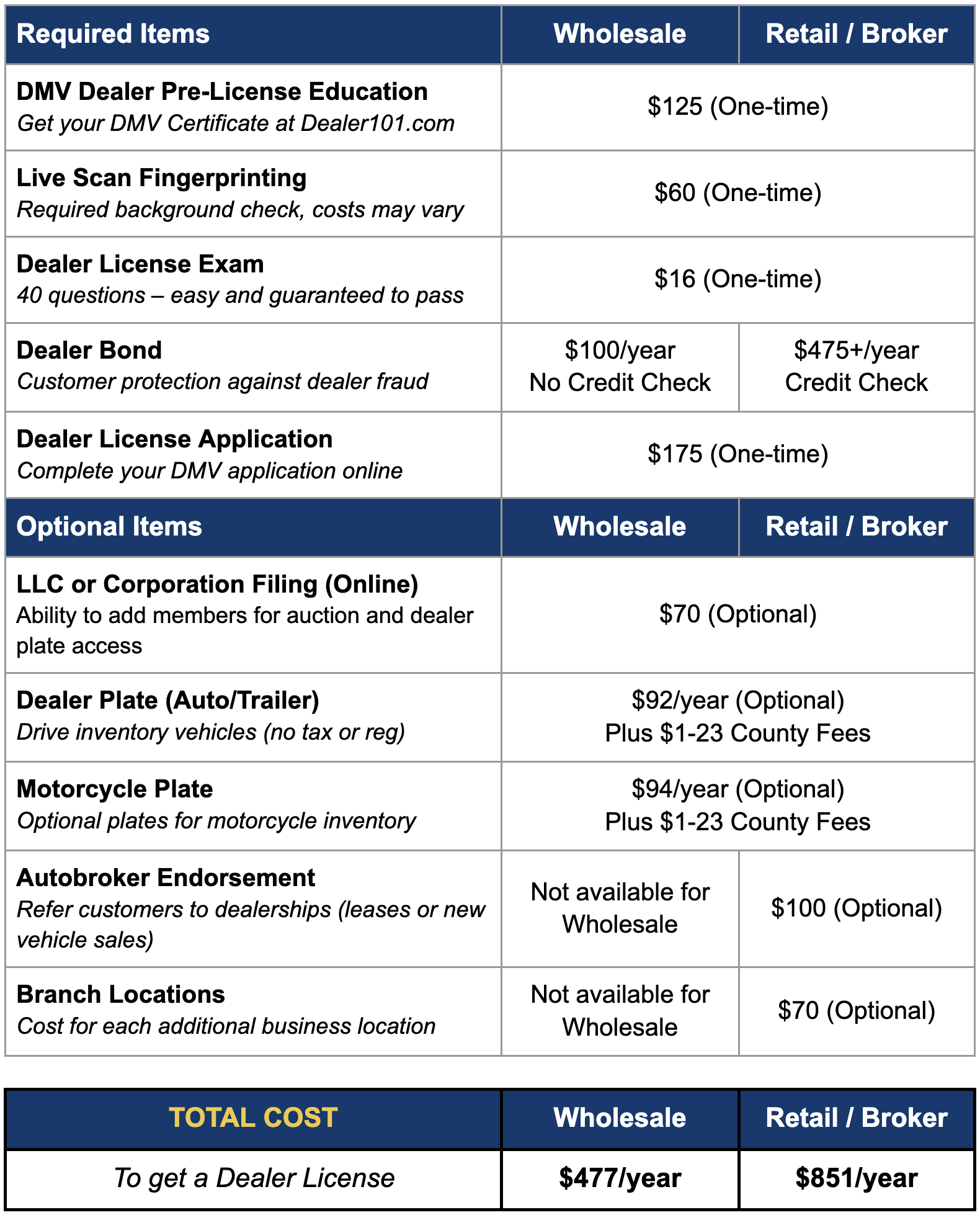
- Dealer Surety Bond: A financial guarantee (currently $50,000 for most dealer types) ensures that customers are protected if the dealer violates specific regulations. This bond acts as a safeguard and is a non-negotiable part of the licensing process.
- Dealer Education Program: Completion of an approved 6-hour pre-licensing course is mandatory for all new used car dealers. This course covers state and federal laws related to vehicle sales, consumer protection, and ethics, ensuring that new dealers are well-versed in their responsibilities.
- Fingerprints and Background Check: All applicants and partners must undergo a thorough background check, including live scan fingerprinting, to ensure compliance and uphold the integrity of the industry.
- Employer Identification Number (EIN): If you plan to operate as a corporation, partnership, or employ others, you will need an EIN from the IRS.
Navigating the Application Process
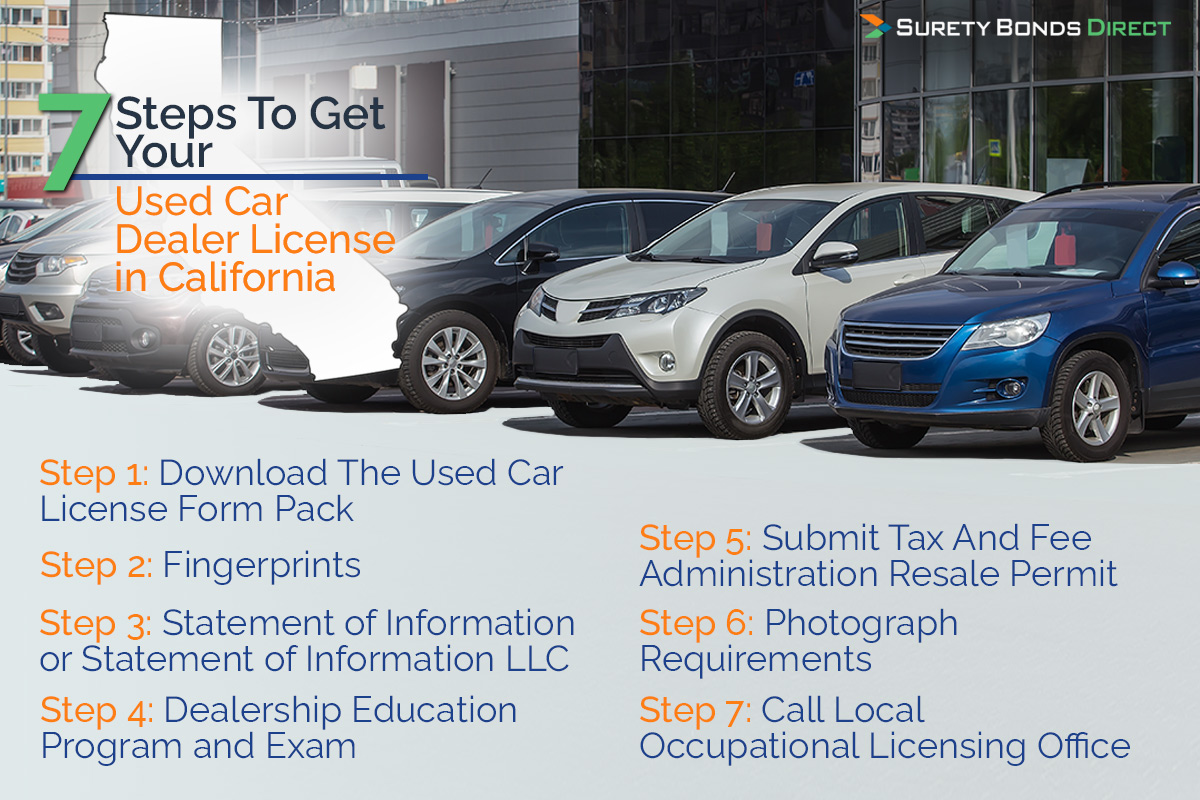
The application process for a California car dealer license involves several key steps, each requiring careful attention:
- Gather Required Documents: This includes proof of identity, business entity documents (LLC, Corporation, etc.), photos of your business location, copies of lease or property ownership, and evidence of your surety bond.
- Submit Forms to the DMV: You’ll need to complete and submit a comprehensive application packet, including forms such as the “Application for Occupational License” (OL 21A), “Request for Live Scan Service” (DMV 8016), and “Surety Bond” (DMV 2504).
- Undergo Inspection: Once your application is provisionally accepted, a DMV representative will inspect your business location to ensure it meets all physical requirements, including proper signage, display area, and office space. This is a critical step, as any deficiencies will need to be rectified before final approval.
- Await Approval: After all requirements are met and inspections passed, the DMV will process your application. This period can vary, but clear communication and readiness ensure a smoother experience.
It’s advisable to consult with a professional who specializes in occupational licensing for California dealers. Their expertise can help streamline the process, ensure all documentation is correct, and avoid common pitfalls, particularly for those looking to integrate their dealership with complex travel or accommodation services.
Leveraging Your Dealership for Travel & Lifestyle Businesses
With a California car dealer license in hand, the possibilities for integrating with the travel and lifestyle sectors are immense. The state’s tourism industry is a multi-billion dollar enterprise, attracting visitors from across the globe to iconic locations from San Diego to Redding. A dealership can become a strategic partner in this ecosystem, offering unique value propositions.
Supplying the California Tourism Industry
A licensed dealership can become a vital supplier for various entities within the California tourism industry.
- Rental Car Fleets: Partner with boutique hotels, resorts, or specialized tour operators that wish to offer exclusive vehicle rental options to their guests. Imagine a luxury hotel in Santa Barbara providing its guests with a curated selection of convertibles or premium SUVs, all sourced through your dealership.
- Tour Operators: Supply tour companies with minibuses, vans, or even custom adventure vehicles designed for specific excursions, whether it’s wine tours in Napa Valley or surf trips along the Orange County coast.
- Accommodation Providers: For hotels and short-term rental properties, having access to a reliable dealer for purchasing or leasing guest shuttle vehicles, maintenance vans, or even unique amenity cars (like classic cars for themed stays) can be a significant advantage. A dealer in Lake Tahoe could provide winter-ready vehicles to ski resorts, enhancing their guest experience.
By understanding the specific needs of these businesses, a dealer can tailor their inventory and services, creating a robust B2B segment that aligns perfectly with the state’s travel and accommodation infrastructure.
Curating Vehicles for the Ultimate California Road Trip
The California road trip is an iconic experience, and your dealership can be instrumental in making it unforgettable.
- Adventure Vehicles: Offer a range of SUVs, 4x4s, and even specialized camper vans or RVs for those embarking on journeys through national parks or desert landscapes. These vehicles often require specific features and maintenance, making a knowledgeable dealer invaluable.
- Luxury Cruisers: Cater to the demand for high-end vehicles for scenic drives along the coast or through wine country. Tourists often seek out specific car types, like convertibles for sunny Southern California drives, to enhance their vacation experience.
- Family-Friendly Options: Provide reliable, spacious sedans or minivans for families exploring major attractions like Disneyland Resort or Legoland California, ensuring comfort and safety throughout their travels.
A dealership can create specialized packages, perhaps even collaborating with travel agencies or accommodation providers to offer bundled deals that include both vehicle rental and curated itineraries, turning a simple car sale or rental into a comprehensive travel solution.
Expanding into Luxury and Specialty Markets
California’s affluent demographic and luxury tourism market present significant opportunities for dealers specializing in high-end and niche vehicles.
- Luxury Auto Sales: Focus on premium brands and models, catering to discerning buyers who prioritize performance, exclusivity, and status. This could involve importing specialized vehicles or sourcing rare models for collectors or high-net-worth individuals in areas like Beverly Hills or Palo Alto.
- Classic Car Sales: The state has a thriving classic car culture. A dealer could specialize in vintage vehicles, offering them for sale to enthusiasts, for use in film productions, or even for special events and tours.
- Customization and Bespoke Services: Go beyond selling by offering customization services, allowing clients to personalize their vehicles to fit unique lifestyle needs, whether for overland expeditions or for display at exclusive events.
By strategically positioning your dealership within these niche markets, you can carve out a unique identity, attract a loyal clientele, and command premium pricing, aligning your business with the sophisticated tastes often found within California’s luxury travel and lifestyle segments.
In conclusion, securing a car dealer license in California is more than just a regulatory hurdle; it’s an investment in a versatile business model that can profoundly impact the travel, lifestyle, and tourism industries. From empowering entrepreneurial ventures to supplying critical services for visitors and residents alike, the opportunities are as vast and varied as the Golden State itself. With careful planning, adherence to regulations, and a vision for innovation, your dealership can become a cornerstone of California’s vibrant economy.
LifeOutOfTheBox is a participant in the Amazon Services LLC Associates Program, an affiliate advertising program designed to provide a means for sites to earn advertising fees by advertising and linking to Amazon.com. Amazon, the Amazon logo, AmazonSupply, and the AmazonSupply logo are trademarks of Amazon.com, Inc. or its affiliates. As an Amazon Associate we earn affiliate commissions from qualifying purchases.