
The name California evokes images of sun-drenched beaches, towering redwoods, innovation, and a vibrant, diverse culture. It’s a land of dreams, a premier travel destination, and home to some of the world’s most iconic landmarks. But the origin of this storied name is not rooted in a geographic description or an indigenous tongue, nor was it bestowed by early explorers after a local feature. Instead, the name California springs directly from the pages of a fantastical 16th-century Spanish romance novel, a testament to the profound influence of literature on real-world discovery and naming. It’s a captivating tale that blends myth with exploration, offering a unique glimpse into the mindset of the Age of Exploration and the profound yearning for new, exotic lands.
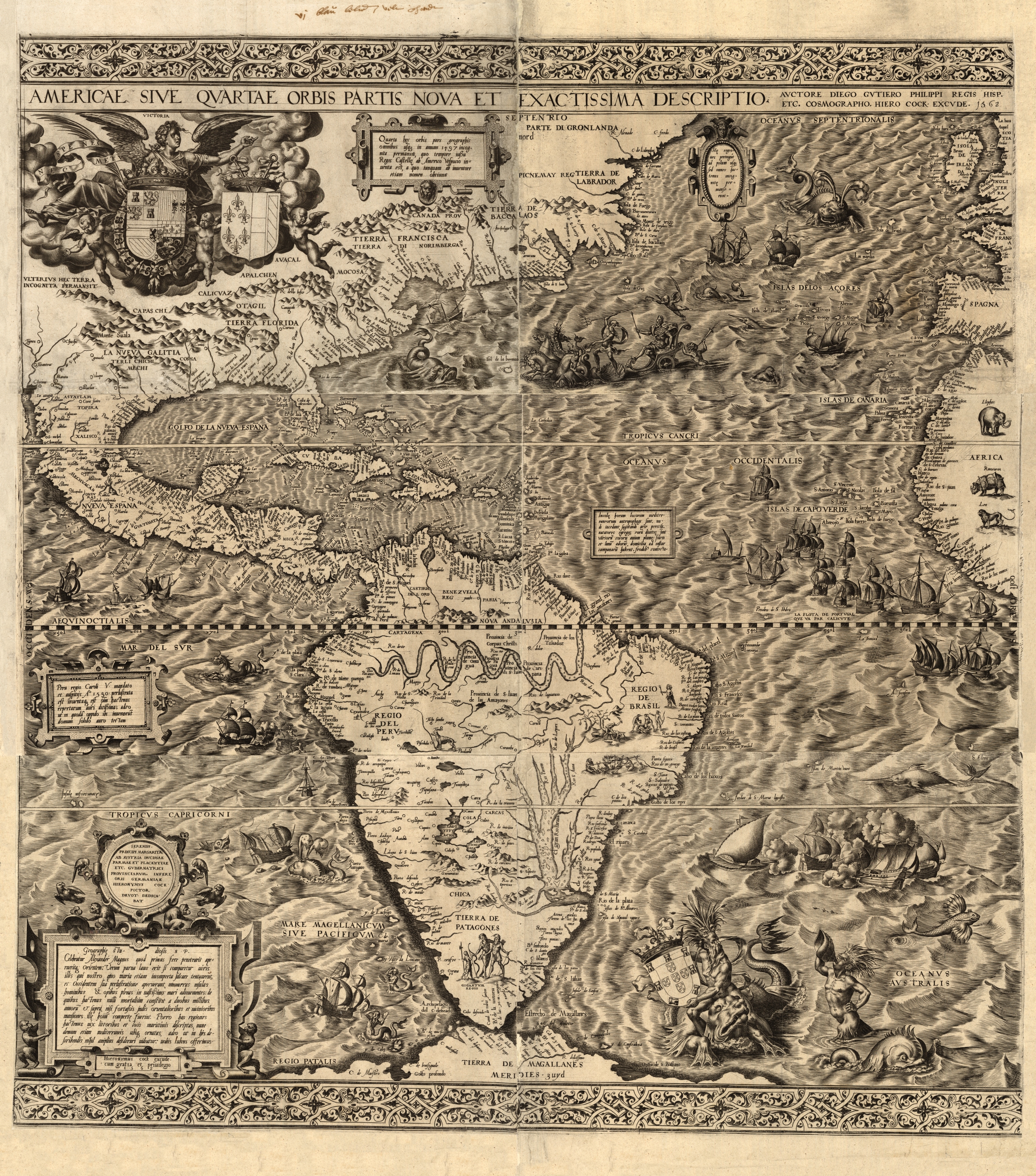
The Mythical Island of California: A Literary Genesis
To uncover the true origin of California’s name, we must journey back to the year 1510, a time when the Spanish Empire was rapidly expanding its reach across the globe. It was in this pivotal year that a chivalric romance novel titled “Las sergas de Esplandián” (The Adventures of Esplandián) was published in Spain. This highly popular book captured the imagination of a populace hungry for tales of heroism, distant lands, and the fantastical. Its influence extended far beyond mere entertainment, subtly shaping the perceptions and aspirations of the era’s greatest adventurers.
Garci Rodríguez de Montalvo and His Enduring Tale
The author of this influential work was Garci Rodríguez de Montalvo, a Spanish writer who is also credited with adapting the much earlier romance “Amadís de Gaula” from its original Portuguese. “Las sergas de Esplandián” served as a sequel to “Amadís de Gaula,” continuing the adventures of Amadís’s son, Esplandián. The novel is a classic example of the chivalric romance genre, filled with knights, sorcerers, monstrous beasts, and exotic kingdoms. These books were the blockbusters of their day, devoured by everyone from common folk to royalty, including the very conquistadors who would set sail for the New World.
Montalvo’s detailed descriptions of mythical places sparked the imaginations of an entire generation. His vivid narratives about uncharted territories, laden with gold and inhabited by fierce warriors, resonated deeply with the spirit of exploration that permeated Spain during the early 16th century. It created a mental map of what might be found beyond the known horizons, intertwining fiction with the very real ambitions of discovery. For many explorers, these books weren’t just stories; they were almost prophetic visions of the lands they hoped to conquer.
Queen Califia: A Figure of Power and Gold
At the heart of “Las sergas de Esplandián” is the description of a mythical island paradise, unlike any known place. Montalvo writes:
“Know, that on the right hand of the Indies there is an island called California very close to the terrestrial paradise; and it was inhabited by black women, without there being a single man among them, and they lived in the manner of Amazons. They were robust of body, with strong and fiery courage, and great strength. Their island was the strongest in the world because of its rugged rocks and great boulders. Their weapons were all of gold, and so were the harnesses of the wild beasts they tamed and rode, which were of all kinds. The queen of this island was Queen Califia, a woman of great stature, very beautiful, and in the prime of life, and she was the ruler of her island and the surrounding region.”
This description is crucial. The island of California was portrayed as a land of immense natural wealth, particularly gold, and ruled by a powerful, beautiful black queen named Queen Califia. Her kingdom was isolated, formidable, and filled with fantastic creatures. The women warriors, adorned in golden armor, rode griffins and engaged in fierce battles against Christian knights, eventually joining forces with Esplandián against the Turks in defense of Constantinople.
The allure of this mythical island, rich in gold and power, was immense. For Spanish Empire explorers, who were constantly searching for new sources of wealth and exotic lands in the New World, Montalvo’s California provided a powerful template for what they hoped to find. It became a geographical possibility in their minds, a potential reality waiting to be discovered just beyond the known horizons of Mexico.
Spanish Explorers Encounter the “New World”
As the 16th century progressed, Spanish explorers pushed ever further into the lands they called the New World. Their expeditions were driven by a trifecta of motivations: God, Gold, and Glory. The search for precious metals, in particular, was an obsession, fueled by tales of Aztec treasures and the promise of more riches lying just beyond the next mountain range or across the next sea. It was this fervent search that inevitably led them north from present-day Mexico.
Cortés and the Baja California Peninsula
One of the most prominent figures in the Spanish exploration of the Americas was Hernán Cortés, the renowned conquistador who brought down the Aztec Empire. After consolidating Spanish control in what is now Mexico City, Cortés turned his attention westward, drawn by rumors of islands rich in pearls and gold. These rumors, coupled with the popular imagery from Montalvo’s novel, suggested a land much like the fictional California.
In 1533, one of Cortés’s captains, Fortún Jiménez, was the first European to set foot on what is now known as the Baja California Peninsula. He landed near present-day La Paz, discovering a small bay and, indeed, pearls. However, his expedition ended tragically, with Jiménez and many of his crew killed by indigenous inhabitants.
Undeterred by the failure of his subordinate, Cortés himself led an expedition in 1535, sailing across the Gulf of California (which he initially believed to be the passage to the Indies) and landing at the same bay. He claimed the land for Spain, calling it Santa Cruz. However, the harsh desert environment proved challenging, and the anticipated gold and vast riches like those of the Aztec Empire did not materialize. The expedition was eventually abandoned.
It was during these early voyages, and in the subsequent years, that the name “California” began to be associated with this newly encountered peninsula. The exact moment and person responsible for first applying the name are debated, but it’s widely believed that Cortés and his men, familiar with Montalvo’s popular novel, recognized the remote, seemingly isolated nature of the land and its perceived wealth (pearls, if not gold) as fitting the description of the mythical island. The fact that the peninsula was initially believed to be an island further solidified the connection to Montalvo’s tale. The name “California” first appeared in a Spanish account of Cortés’s voyages, written by Preciado, in 1540.
Early Maps and the Persistent Myth
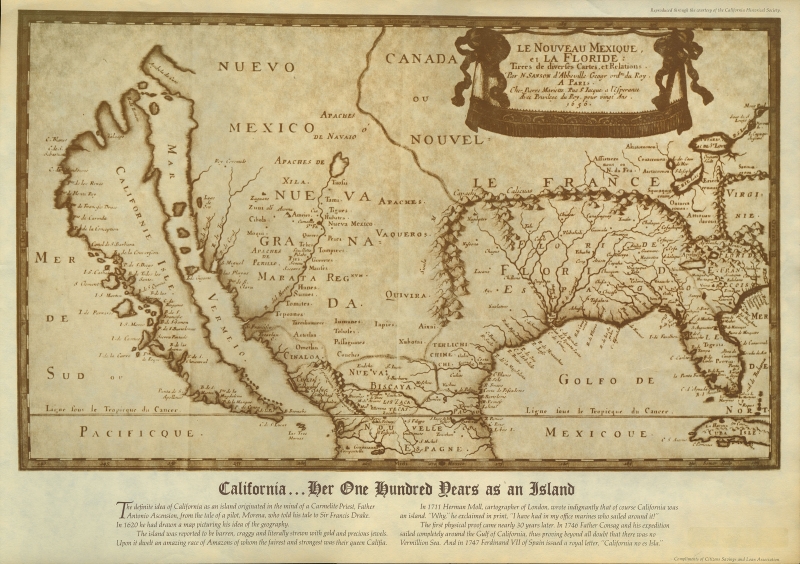
The early cartography of the region reflects this literary influence and the evolving understanding of the geography. For many years, maps depicted Baja California as an island, separate from the mainland. This misconception persisted for centuries, reinforcing the notion that the land was indeed the island of Queen Califia. It wasn’t until the 18th century that expeditions definitively proved the Baja California Peninsula was connected to the North American continent.
This persistent cartographical error highlights the powerful grip that Montalvo’s fictional California had on the European imagination. Explorers and mapmakers, often operating on incomplete information and guided by the desire to find legendary places, allowed the literary myth to inform their understanding of the real world. The name, steeped in visions of a remote, resource-rich land, became indelibly linked to the desert peninsula and, eventually, to the vast territories to its north.
From Peninsula to Golden State: The Name Takes Hold
As Spanish exploration continued northward along the Pacific Ocean coast, the name “California” expanded its reach, applying to an ever-larger and more ambiguous territory. What began as a name for a peninsula slowly grew to encompass a vast, unexplored expanse.
Unveiling Alta California
The explorations of Juan Rodríguez Cabrillo in 1542, and later Sebastián Vizcaíno in 1602, pushed further north, charting what would eventually be known as Alta California (Upper California) – the region that largely corresponds to the modern United States state of California. They encountered a coastline rich in natural beauty, abundant marine life, and a varied landscape, though still no mythical Amazons or cities of gold. Despite the absence of the fantastical elements from Montalvo’s novel, the name “California” stuck, perhaps because of its exotic ring and the continued hope that vast wealth might still be found in the interior.
Over the centuries, the name evolved from referring to a mythical island, then to a desert peninsula, and finally to the expansive, resource-rich region we know today. It transcended its fictional origins to become a real place name, a label for a territory that would eventually become one of the most powerful and influential states in the world. The transition from a literary construct to a geographical designation underscores the human tendency to project dreams and narratives onto unknown territories.

The Enduring Allure and Modern Significance
Today, the state of California is a global icon, a hub for innovation, entertainment, and tourism. Its name, derived from a 16th-century fantasy, continues to evoke a sense of allure and opportunity. When we think of California, we picture the vibrant city life of Los Angeles and San Francisco, the stunning natural beauty of Yosemite National Park, the iconic Golden Gate Bridge, and the creative powerhouse of Hollywood. Each of these landmarks and experiences contributes to the modern mystique of California, making it a prime travel destination for millions.
From the sun-kissed beaches of San Diego to the majestic forests of the North Coast, California offers an unparalleled variety of attractions and experiences. Visitors can explore world-class museums, indulge in diverse culinary scenes, embark on epic road trips along scenic routes, or relax in luxurious resorts. The “lifestyle” associated with California – often depicted as laid-back, innovative, and adventurous – is itself a major draw for tourism and a reflection of the state’s enduring appeal.
The name California has become synonymous with a certain dream – a dream of prosperity, freedom, and boundless opportunity, not unlike the golden riches promised by Queen Califia’s island. The “Golden State” nickname itself subtly echoes Montalvo’s description of a land rich in gold, a prophetic resonance that found its true fulfillment centuries later with the California Gold Rush.
In conclusion, the story of how California got its name is a fascinating journey through literature, history, and exploration. It reminds us that sometimes, the greatest discoveries are not just found on maps, but first imagined in the vivid pages of a story. The mythical island of Queen Califia, born from the creative mind of Garci Rodríguez de Montalvo, lives on, not in a forgotten fable, but as the enduring name of one of the world’s most dynamic and iconic places – a testament to the power of human imagination to shape the very geography of our world.
LifeOutOfTheBox is a participant in the Amazon Services LLC Associates Program, an affiliate advertising program designed to provide a means for sites to earn advertising fees by advertising and linking to Amazon.com. Amazon, the Amazon logo, AmazonSupply, and the AmazonSupply logo are trademarks of Amazon.com, Inc. or its affiliates. As an Amazon Associate we earn affiliate commissions from qualifying purchases.