
California, a state synonymous with innovation, natural beauty, and a vibrant lifestyle, draws millions of visitors and prospective residents each year. From the sun-drenched beaches of Santa Monica and Malibu to the majestic peaks of the Sierra Nevada and the bustling metropolises of Los Angeles and San Francisco, the Golden State offers an unparalleled array of experiences. Whether you’re planning a luxurious escape to a Napa Valley vineyard, an adventurous trek through Yosemite National Park, or considering a long-term stay in one of its charming cities, understanding the financial landscape is key. Property ownership in California is a significant investment, and for those looking to establish roots, whether as a primary residence or a strategic part of a lifestyle plan, navigating property taxes is essential.
For many, the dream of calling California home is deeply intertwined with financial prudence. Property taxes, while a necessary contribution to local services that enhance our daily lives and maintain the very infrastructure that supports our travel and tourism industries, can represent a substantial annual cost. However, the state offers various property tax exemptions that can significantly alleviate this burden, making living in this desirable destination more accessible. These exemptions are not just abstract financial details; they are practical tools that can free up disposable income, allowing for more frequent travel, enhanced accommodation choices like a stay at a premium resort or a charming boutique hotel, or simply a more comfortable and enriched lifestyle within California’s diverse communities.
This guide delves into who qualifies for property tax exemptions in California, providing valuable insights for current and prospective homeowners. By understanding these provisions, you can better manage your finances, potentially unlocking more opportunities for exploring California’s myriad attractions, from the historical allure of Alcatraz Island to the family-friendly fun of Disneyland or Legoland California.
Understanding Property Taxes in California: A Foundational Overview
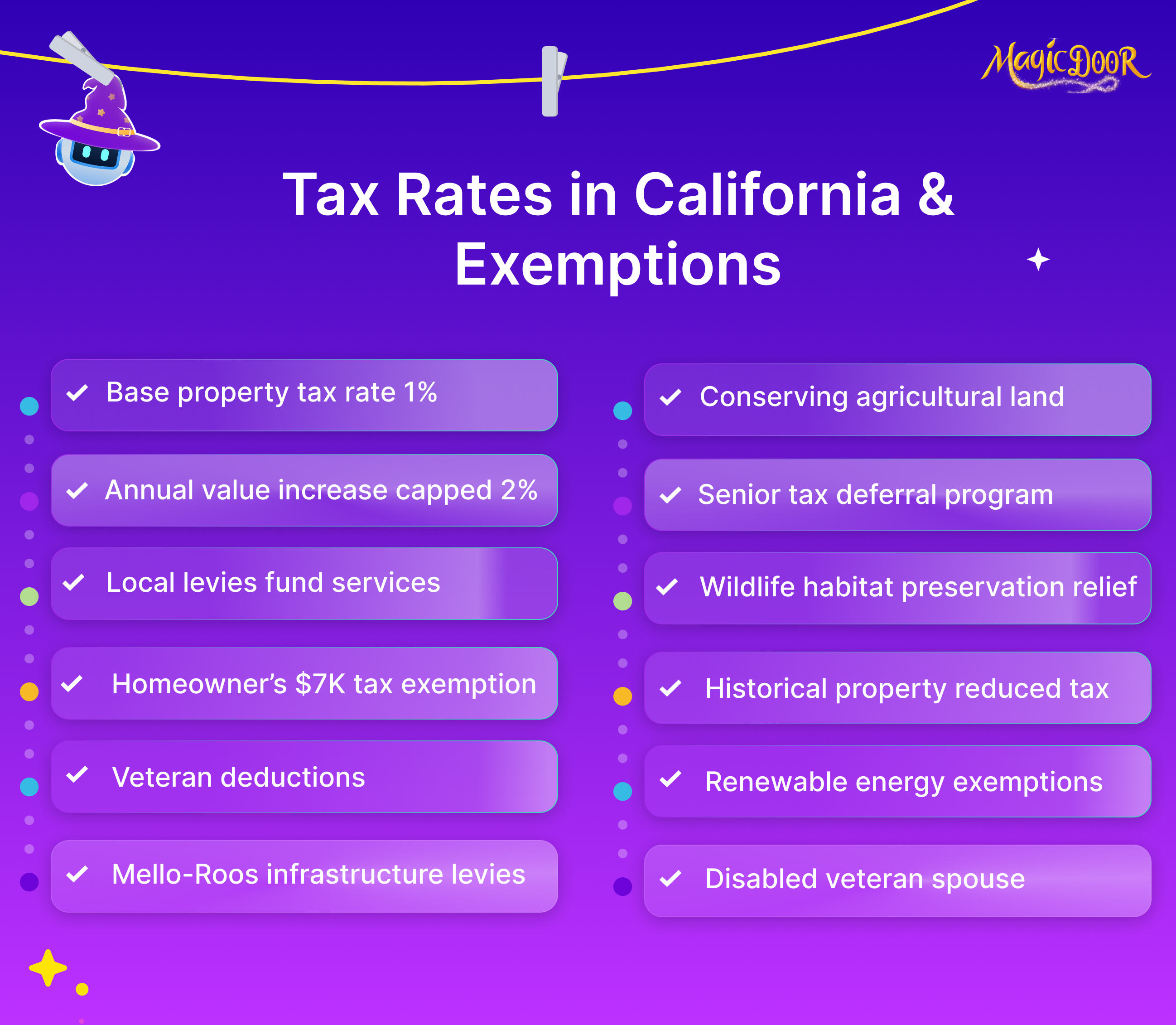
Property taxes in California are primarily governed by Proposition 13, which limits the annual increase in assessed value and sets the base property tax rate at approximately 1% of the property’s assessed value, plus any approved local bonds or special assessments. These funds are crucial for supporting local public services, including schools, fire departments, police, parks, and libraries – all elements that contribute to the quality of life and the attractiveness of an area for residents and tourists alike. Imagine visiting a beautifully maintained park in San Diego or enjoying safe, well-paved roads connecting the diverse culinary experiences of Monterey to the scenic beauty of Big Sur; these are all services that rely on local tax revenues.
For individuals considering long-term accommodation, investing in a vacation rental, or even just relocating for business opportunities, understanding these taxes is paramount. A lower property tax bill directly translates into reduced monthly expenses, which in turn can augment your travel budget. This means more funds available for exploring California’s stunning coastline, indulging in the culinary delights of San Francisco, or even extending your stay at a luxurious Four Seasons Hotel or a unique boutique accommodation.
The Homeowners’ Exemption: A Foundation for Residents
The most widely applicable and common property tax exemption in California is the Homeowners’ Exemption. This exemption is a significant benefit for individuals who own and occupy their property as their principal place of residence. It’s designed to provide direct relief to the vast majority of homeowners across the state, from the sprawling suburbs of Orange County to the historic neighborhoods of Sacramento.
Who Qualifies?
To qualify for the Homeowners’ Exemption, you must:
- Own the property: You must be the record owner of the property (or a co-owner, provided you meet other criteria).
- Occupy the property as your principal place of residence: This means the dwelling must be your permanent home, where you ordinarily reside, and not a secondary residence, vacation home, or rental property. If you own multiple properties, only one can qualify for this exemption.
- Occupy the property on January 1st: Your occupancy must be established by 12:01 AM on January 1st of the assessment year for which the exemption is claimed.
What is the Benefit?
The Homeowners’ Exemption reduces the taxable assessed value of your property by $7,000. While this might seem like a modest amount compared to California’s high property values, at the standard 1% tax rate, it translates to a direct annual saving of approximately $70 on your property tax bill. This saving, though seemingly small, is consistent and reliable. Over many years, it adds up, providing a continuous financial advantage that can be redirected towards a memorable California experience, whether it’s a weekend getaway to Lake Tahoe or an immersive cultural tour in San Francisco.
Applying for this exemption is typically a one-time process. Once granted, it generally continues automatically as long as you maintain eligibility. If you move or rent out your qualifying property, you are obligated to notify the county assessor. This exemption underscores California’s commitment to supporting its residents, fostering a stable environment for those who choose to make the state their permanent home.
Specialized Exemptions for Specific Groups: Enhancing Community and Lifestyle
Beyond the general Homeowners’ Exemption, California offers a range of specialized property tax exemptions designed to support particular groups or encourage specific types of property use. These exemptions reflect the state’s broader social and economic objectives, from honoring veterans to fostering non-profit activities that enrich local communities. For anyone considering a move to California or investing in property, understanding these nuanced exemptions can be crucial, particularly for those with unique circumstances or philanthropic interests. Such considerations can significantly influence one’s lifestyle choices, including the ability to partake in local tourism or invest in long-term accommodation options.
Disabled Veterans’ Exemption: Honoring Service
The Disabled Veterans’ Exemption is a significant benefit designed to honor and support eligible veterans or their unmarried surviving spouses. This exemption provides substantial relief from property taxes, recognizing the sacrifices made by those who served our nation.
Who Qualifies?
To qualify for this exemption, a claimant must be:
- A veteran who is blind in both eyes.
- A veteran who has lost the use of two or more limbs.
- A veteran who is totally disabled as a result of injury or disease incurred in military service (service-connected disability).
- The unmarried surviving spouse of a deceased veteran who would have qualified.
What is the Benefit?
There are two levels of the Disabled Veterans’ Exemption:
- Basic Exemption: For eligible low-income claimants, this exemption fully or partially exempts a property’s assessed value up to a certain indexed amount, which changes annually. For 2024, this amount is around $168,000.
- Augmented Exemption: For eligible veterans with higher incomes, a lower indexed amount applies, currently around $250,000 of assessed value.
The income limits for both the basic and augmented exemptions are adjusted annually based on the California Consumer Price Index. These exemptions can significantly reduce, or even eliminate, property tax liability for qualifying individuals. This financial relief can be transformative, enabling veterans to live comfortably in areas like Palm Springs or near military installations in San Diego, freeing up resources for healthcare, leisure activities, or travel to family and friends. It facilitates their ability to enjoy California’s offerings, whether it’s exploring historical sites or taking advantage of specialized veteran travel programs.

Welfare Exemption: Supporting Community Initiatives
The Welfare Exemption is perhaps the broadest and most complex of California’s specialized exemptions, aimed at non-profit organizations that serve the public good. This exemption is crucial for a vast array of institutions that contribute to the social, cultural, and educational fabric of the state, many of which are key attractions for tourists and residents alike.
Who Qualifies?
Property is eligible for the Welfare Exemption if it is:
- Owned and operated by a non-profit organization.
- Used exclusively for charitable, religious, hospital, scientific, or educational purposes.
- Not used for profit-making activities.
What is the Benefit?
The Welfare Exemption, when granted, fully exempts the qualifying property from property taxes. This allows non-profit organizations to dedicate more of their resources directly to their mission.
Connection to Travel and Tourism:
This exemption has a profound, albeit indirect, impact on travel and tourism. Many of California’s cherished landmarks and cultural attractions benefit from the Welfare Exemption:
- Museums and Art Galleries: Institutions like the Getty Center in Los Angeles or the San Francisco Museum of Modern Art, often run by non-profits, use this exemption to maintain their collections, fund exhibitions, and offer educational programs that draw visitors from around the globe.
- Historical Societies and Preservation Trusts: Properties maintained by these organizations, such as certain historical homes or sites, are preserved for public enjoyment and education, enriching local culture and drawing history enthusiasts.
- Botanical Gardens and Zoos: Many of these attractions, like the San Diego Zoo or the Huntington Library, Art Museum, and Botanical Gardens in San Marino, are non-profits whose ability to operate and expand is supported by this exemption.
- Educational Institutions: Universities and colleges often have properties that benefit, indirectly enhancing the intellectual and cultural landscape of cities like Berkeley or Palo Alto, which in turn attracts academic tourism and business travelers.
- Hospitals and Healthcare Facilities: While not directly tourist attractions, these essential services provide crucial infrastructure, especially for long-term residents or those requiring medical attention while traveling, making communities safer and more attractive.
By fostering these institutions, the Welfare Exemption indirectly contributes to California’s appeal as a diverse destination, offering a rich tapestry of cultural, educational, and recreational experiences.
Other Notable Exemptions
California also provides several other specific exemptions that address various property uses:
- Religious Exemption: For properties used exclusively for religious worship. This supports the spiritual life of communities and often preserves architecturally significant buildings that become local landmarks.
- Museums & Libraries Exemption: A specialized exemption for publicly owned or non-profit museums and free public libraries. This directly supports cultural tourism and educational experiences. Imagine visiting the California Academy of Sciences in San Francisco or local community libraries, vital hubs of knowledge and local culture.
- Public Property Exemption: Applies to property owned by government entities (federal, state, or local) and used for public purposes, such as parks, administrative buildings, and infrastructure. This ensures that public lands like national forests and state parks (e.g., portions of Big Sur) and public amenities remain accessible and well-maintained.
- Exemption for Property Used for Low-Income Housing: This supports the development and maintenance of affordable housing, a critical component of any healthy community. For travelers considering long-term stays or relocation, the availability of diverse accommodation options, including affordable ones, is a significant factor.
These exemptions collectively work to shape the economic, social, and cultural environment of California, making it a more desirable place to live, visit, and explore.
Applying for Exemptions and Maximizing Your Savings
Understanding who qualifies for property tax exemptions is only the first step; the next crucial phase is successfully applying for them. The process, while generally straightforward, requires attention to detail and adherence to specific deadlines set by the county assessor’s office in each of California’s 58 counties. For new residents, property investors, or those managing long-term accommodation, navigating these administrative steps correctly ensures you maximize your savings and enhance your overall financial well-being, freeing up more resources for leisure and travel.
Navigating the Application Process
Each exemption has its own specific application form and documentary requirements, though the general process often follows a similar pattern:
- Obtain the Correct Form: Property tax exemption forms are typically available on your county assessor’s website (e.g., Los Angeles County Assessor, San Diego County Assessor, San Francisco County Assessor). For the Homeowners’ Exemption, look for form BOE-266. For the Welfare Exemption, a multi-part application (BOE-267 series) is required.
- Understand Eligibility Criteria: Carefully review the specific requirements for the exemption you are applying for. For instance, the Homeowners’ Exemption requires the property to be your principal residence on January 1st. The Disabled Veterans’ Exemption requires proof of service-connected disability.
- Gather Necessary Documentation: This might include proof of ownership, residency (e.g., utility bills, driver’s license), disability verification from the Department of Veterans Affairs, or non-profit organizational documents.
- Adhere to Deadlines:
- Homeowners’ Exemption: The deadline for filing for the full $7,000 exemption is February 15th for the upcoming tax year. If you file between February 16th and December 10th, you can still receive 80% of the exemption. Missing these deadlines means you might miss out entirely for that tax year.
- Disabled Veterans’ Exemption and Welfare Exemption: These exemptions also have specific filing periods, typically by February 15th for the full benefit, with partial exemptions often available for later filings. It’s crucial to check with your specific county assessor’s office for exact dates and any specific requirements, as they can vary slightly or be subject to legislative changes.
- Submit Your Application: Completed forms and supporting documents should be mailed or submitted in person to your county assessor’s office. Keep copies of everything for your records.
- Annual Review (for some exemptions): While the Homeowners’ Exemption is generally a one-time application (unless your eligibility changes), certain exemptions, particularly the Welfare Exemption, may require annual re-filing or review to ensure continued compliance with eligibility criteria.
For new property owners, it’s highly recommended to file for any applicable exemptions as soon as possible after purchasing your property, even if the January 1st assessment date has passed. Early filing ensures you don’t miss out on potential savings for future tax years.
The Broader Impact: Lifestyle and Travel Opportunities
Successfully securing property tax exemptions has a direct and positive impact on your financial health, which in turn opens up a world of lifestyle and travel opportunities within and beyond California. When your fixed housing costs are reduced, you gain more disposable income.
This extra financial flexibility can be channeled into:
- Enhanced Travel Experiences: Instead of a budget stay, you might opt for a more comfortable or luxurious accommodation, perhaps a beachfront villa in San Diego or a chic downtown apartment in Los Angeles. You could embark on more frequent weekend getaways, exploring hidden gems in California like the artistic community of Laguna Beach or the historic charm of Pasadena.
- Cultural Immersion: Extra funds can be allocated to exploring California’s rich cultural scene, attending world-class shows in Hollywood, dining at Michelin-starred restaurants, or visiting exclusive art exhibitions.
- Adventure and Recreation: For outdoor enthusiasts, savings could mean investing in better gear for hiking in Joshua Tree National Park, skiing in Mammoth Lakes, or enjoying water sports on Lake Tahoe.
- Long-Term Accommodation Upgrades: If you’re a long-term resident, these savings could contribute to home improvements, allowing you to create a more luxurious and comfortable living space, or even finance an additional property for use as a vacation rental, generating further income.
- Exploring Iconic Landmarks: The ability to save on taxes means more trips to iconic sites like the Golden Gate Bridge, Hearst Castle, or even spending a full day at theme parks like Universal Studios Hollywood or Knott’s Berry Farm without stressing the budget.
In essence, understanding and utilizing property tax exemptions in California is not just about reducing a bill; it’s about strategically managing your finances to unlock a richer, more fulfilling lifestyle filled with travel, unique experiences, and the comfort of a well-managed home base in one of the world’s most captivating destinations.
In conclusion, California offers a vital system of property tax exemptions designed to support its diverse population. From the fundamental Homeowners’ Exemption for primary residents to the specialized provisions for disabled veterans and non-profit organizations, these exemptions provide tangible financial relief. For anyone considering property ownership in the Golden State, whether for a permanent move, a long-term investment, or as part of a lifestyle strategy that includes extensive travel and exploration, understanding these qualifications is indispensable. By diligently applying for and securing the exemptions you’re eligible for, you can significantly reduce your financial burden, thereby enhancing your capacity to enjoy all that California has to offer, from its breathtaking landscapes and vibrant cities to its rich cultural tapestry and world-class attractions. This financial savvy empowers you to live more fully and travel more freely, truly experiencing the life out of the box that California promises.
LifeOutOfTheBox is a participant in the Amazon Services LLC Associates Program, an affiliate advertising program designed to provide a means for sites to earn advertising fees by advertising and linking to Amazon.com. Amazon, the Amazon logo, AmazonSupply, and the AmazonSupply logo are trademarks of Amazon.com, Inc. or its affiliates. As an Amazon Associate we earn affiliate commissions from qualifying purchases.