
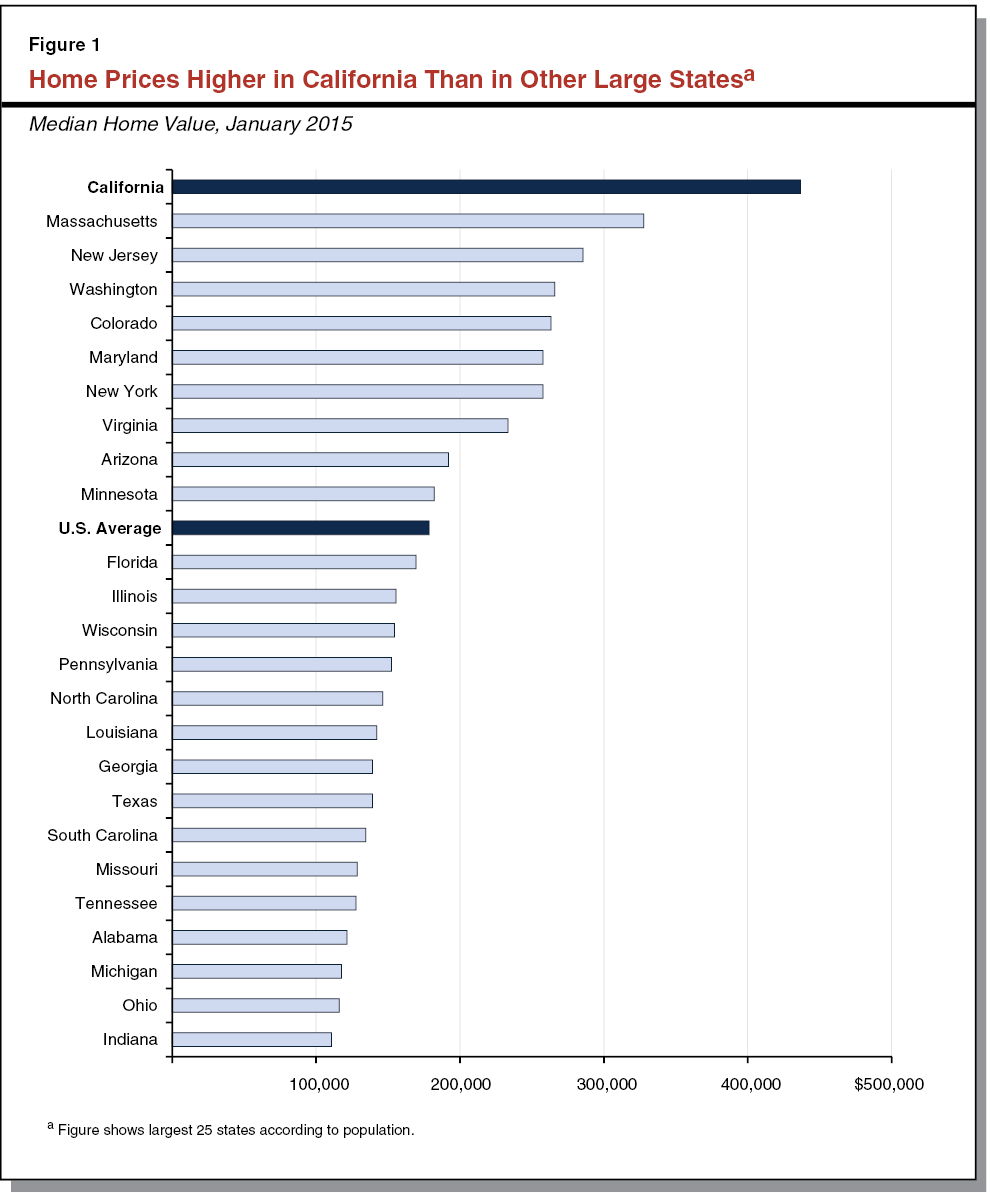
California, often hailed as the Golden State, conjures images of sun-drenched beaches, towering redwoods, innovative tech hubs, and a lifestyle envied worldwide. From the iconic glamour of Hollywood to the tranquil vineyards of Napa Valley and the majestic peaks of the Sierra Nevada Mountains, the state offers an unparalleled blend of natural beauty, cultural richness, and economic opportunity. Yet, beneath this glittering facade lies a persistent and pressing challenge: the extraordinarily high cost of housing. Whether you’re considering a permanent move, planning an extended stay, or simply booking a luxury resort for a vacation, understanding the dynamics of California’s housing market is crucial. The question “Why is housing so expensive in California?” isn’t just about real estate; it’s a deep dive into economics, geography, policy, and the very essence of the California dream.
For travelers exploring destinations or seeking unique experiences, the cost of accommodation, from boutique hotels to vacation rentals, is directly influenced by the wider housing market. Tourists keen on immersing themselves in local culture or enjoying outdoor activities might find their budgets stretched, not just by attractions but by the fundamental expense of a place to stay. This article delves into the multifaceted reasons behind California’s steep housing costs, exploring how a confluence of factors – from its magnetic appeal and limited land to intricate regulations and economic forces – conspires to create one of the most competitive and expensive housing markets on the planet.
The Golden State’s Irresistible Allure: Demand Outstripping Supply
The primary driver behind any high-cost market is often a simple equation: demand far outstrips supply. California embodies this principle perfectly, acting as a global magnet for individuals, families, and businesses alike. Its unique blend of economic opportunity, desirable climate, and vibrant lifestyle continually attracts a robust influx of new residents, creating an insatiable appetite for housing that the current market struggles to satisfy.
A Magnet for Talent and Innovation
At the heart of California’s economic prowess is its reputation as a global epicenter of innovation. Silicon Valley, centered around cities like San Jose and Palo Alto, is synonymous with tech giants, burgeoning startups, and venture capital, drawing some of the brightest minds from across the globe. Companies like Apple, Google, and Meta offer high-paying jobs that command substantial salaries, enabling employees to afford higher housing costs than the national average. This concentration of wealth creates a unique microclimate where property values are pushed upwards, not just in the immediate vicinity of these tech campuses but across broader metropolitan areas like the San Francisco Bay Area and even extending south to Los Angeles and San Diego, where biotech and entertainment industries thrive.
The strong job market isn’t limited to tech. California’s diverse economy includes aerospace, agriculture (Central Valley), entertainment, and advanced manufacturing, all contributing to a robust employment landscape. This consistent job growth, coupled with the promise of career advancement, makes the state an attractive destination for professionals, further fueling housing demand. As more people move to the state for these opportunities, the competition for available homes intensifies, driving prices up through sheer bidding wars and sustained buyer interest.
Climate, Culture, and Coastal Dreams
Beyond economics, California’s lifestyle appeal is undeniable. The state boasts an incredibly diverse geography, from the serene beaches of Malibu and Santa Monica to the snowy peaks of Lake Tahoe and the majestic redwood forests. Its Mediterranean climate, particularly along the coast, offers mild winters and sunny summers, making outdoor activities a year-round possibility. This ideal climate is a significant draw for those seeking a high quality of life, far from the harsh weather conditions found in other parts of the United States.
Culturally, California is a melting pot of innovation, art, and diversity. Los Angeles is a global hub for entertainment and fashion, offering world-class museums, theaters, and a vibrant nightlife. San Francisco, with its iconic Golden Gate Bridge and historic cable cars, is a center for progressive thought and artistic expression. These cultural hubs, combined with the state’s natural beauty – including renowned landmarks like Yosemite National Park, Joshua Tree National Park, and the scenic drive along Big Sur – create a powerful incentive for people to want to live here. This strong lifestyle appeal is not just for permanent residents; it also drives a significant tourism industry, which in turn impacts the housing market through short-term rentals and competition for properties. The dream of living near the Pacific Ocean, or within easy reach of national parks and bustling city centers, adds an intrinsic value to California real estate that is hard to quantify but undeniable in its market impact.
The Tourism Boom and Accommodation Challenges
California’s status as a premier global travel destination further complicates its housing supply. Millions of tourists flock to the state annually, visiting attractions like Disneyland in Anaheim, the theme parks of Universal Studios Hollywood, and the historic missions that dot the landscape. This massive influx of visitors creates an enormous demand for accommodation. While traditional hotels and resorts, from luxury suites in Beverly Hills to budget-friendly motels near coastal towns, cater to a significant portion of this demand, the rise of short-term rental platforms has introduced a new dynamic.
Property owners increasingly opt to convert residential units into short-term vacation rentals, especially in popular tourist areas like Palm Springs, San Diego, and the coastal communities. While this offers flexibility for travelers and income for property owners, it directly removes housing stock from the long-term rental or purchase market. This reduction in available housing for permanent residents exacerbates the supply shortage, driving up both rental prices and home values. Local governments in some cities are attempting to regulate short-term rentals to mitigate their impact on housing affordability, but the challenge remains significant. The tourism boom, while a vital part of California’s economy, indirectly contributes to the high cost of living for those seeking permanent residence.
Navigating the Regulatory Labyrinth and Land Constraints
Even with high demand, a robust supply could theoretically keep prices in check. However, California’s ability to build new housing units is severely constrained by a combination of strict regulatory policies and inherent geographical limitations. These factors collectively restrict the pace and scale of development, creating an artificial scarcity that inflates housing costs.
The Straitjacket of Zoning and Permits
California’s regulatory environment is notoriously complex and often cited as a major contributor to housing unaffordability. Local zoning laws, in particular, play a significant role. Many cities are characterized by extensive single-family zoning, which restricts the construction of denser housing types like apartments, condominiums, or townhouses. This “not in my backyard” (NIMBY) phenomenon, driven by existing homeowners wishing to preserve neighborhood character and property values, effectively limits the amount of housing that can be built in desirable areas.
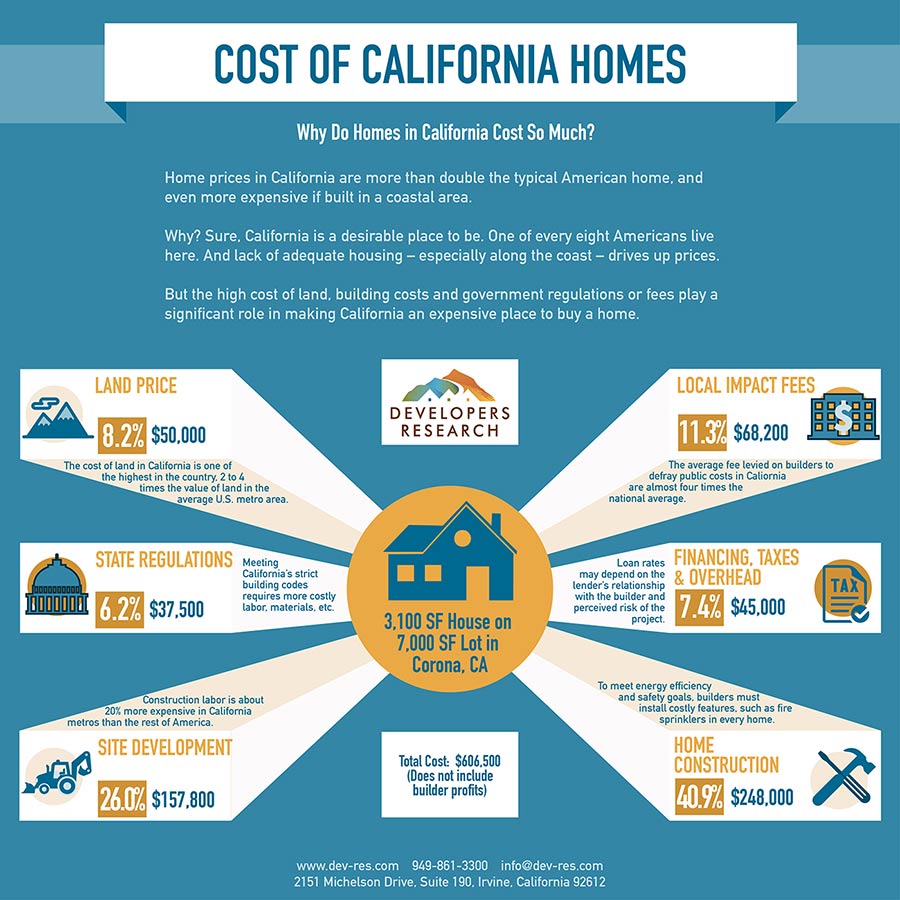
Furthermore, the process for obtaining building permits in California is often protracted and expensive. Developers face numerous hurdles, including lengthy environmental reviews, compliance with stringent building codes designed to withstand seismic activity and wildfires, and extensive public comment periods. Each step adds time, legal fees, and administrative costs to a project, which are ultimately passed on to the buyer or renter in the form of higher prices. Environmental regulations, while crucial for protecting California’s unique ecosystems, can also significantly slow down or halt development, especially in sensitive areas or near natural landmarks. The cumulative effect of these regulations is a slow, costly, and unpredictable development process that discourages new construction, especially for affordable housing projects.
Geography’s Embrace: Limited Buildability
Adding to the regulatory challenges are the immutable facts of California’s geography. The state is blessed with incredible natural beauty, but much of its land is simply not developable. To the west, the Pacific Ocean forms a natural barrier, limiting expansion. To the east, the towering Sierra Nevada Mountains, arid deserts like Death Valley National Park, and vast agricultural lands in the San Joaquin Valley present formidable obstacles. Within its developable areas, significant portions are protected as state or national parks, forests, and conservation easements, further restricting the land available for residential construction.

The major population centers – Los Angeles, San Francisco, San Diego – are often hemmed in by these natural features, creating “urban containment” zones where land is exceptionally scarce and therefore incredibly valuable. This scarcity drives up the cost of land itself, which is a foundational component of overall housing costs. When developable land is at a premium, even modest construction becomes expensive. The challenges of building on difficult terrain, coupled with the need for extensive infrastructure in densely populated areas, means that every square foot of buildable land in California comes with a high price tag.
Economic Forces and the Cost of Living Premium
Beyond demand and supply-side constraints, broader economic forces contribute significantly to California’s high housing costs. The state’s economic vitality, while a boon for job seekers, creates a premium that permeates various aspects of life, including accommodation.
High Incomes and Investment Appeal
The aforementioned concentration of high-paying jobs in technology, entertainment, and finance means that many California residents earn significantly above the national average. While beneficial for individual wealth, this also sets a higher baseline for what people can afford in terms of housing. When a large segment of the population has substantial disposable income, it naturally pushes up prices, especially in desirable neighborhoods. This phenomenon creates a feedback loop: high incomes allow for higher housing costs, which then attract more high-income earners, further inflating prices.
Moreover, California real estate is viewed as a highly attractive investment. Both domestic and international investors see property in cities like San Francisco and Los Angeles as stable, appreciating assets. This investment activity, particularly from those not intending to occupy the homes, adds another layer of demand, transforming housing from a basic necessity into a financial commodity. The influx of investment capital can drive up prices beyond what local wages alone would support, making homeownership increasingly out of reach for many long-term residents.
Construction Costs and Infrastructure Demands
The actual cost of building a home in California is inherently higher than in many other states. Labor costs are elevated due to higher wages for construction workers, electricians, plumbers, and other tradespeople. Material costs can also be higher, partly due to transportation expenses within a geographically diverse state and partly due to tariffs and market demand.
Beyond these basic inputs, California’s stringent building codes – designed to ensure safety against earthquakes, wildfires, and other natural disasters – add significant expense. Projects often require specialized engineering, more robust materials, and advanced fire suppression systems. Furthermore, the development of new housing often necessitates upgrades to existing infrastructure, such as roads, water systems, and schools. The cost of these infrastructure improvements, whether borne by developers or municipalities, ultimately trickles down to the housing consumer, contributing to the overall premium. In existing urban areas, the cost and complexity of tearing down old structures and rebuilding or renovating also add to the expense, making infill development a costly endeavor.
The Ripple Effect of Rental Markets and Tourism
The relationship between the tourism industry and the long-term housing market is a delicate balance. As mentioned earlier, the popularity of short-term rentals in scenic spots like Big Bear Lake or bustling cities directly reduces the supply of long-term housing. This impact isn’t just felt by aspiring homeowners; it also significantly inflates rental prices. If a property owner can earn more by renting out a unit daily or weekly to tourists than monthly to a long-term tenant, they are incentivized to do so, shrinking the pool of available rentals and driving up costs for everyone else.
Moreover, the high demand for hotels and resorts, particularly in prime locations like Santa Barbara or Monterey, can sometimes push developers towards building more lucrative tourism-focused accommodation rather than residential housing. While luxury hotels and exclusive resorts contribute to California’s economy and travel appeal, they don’t alleviate the fundamental housing shortage for residents. This indirect competition for land and resources further tightens the housing market, creating a ripple effect where even accommodation for short-term visitors becomes more expensive due to the underlying land value and construction costs.
Impact on Lifestyle and Travel in California
The exorbitant cost of housing in California is not merely an economic statistic; it profoundly shapes the lifestyle of its residents and influences the travel experiences of its visitors. It forces trade-offs, redefines accessibility, and challenges the very notion of the California dream.
Balancing the Dream: Affordability and Quality of Life
For many California residents, particularly in major metropolitan areas like Oakland, San Francisco, and Los Angeles, the dream of homeownership has become increasingly elusive. Even renting can consume a significant portion of income, leading to financial strain. This financial pressure often forces difficult choices:
- Longer Commutes: Many residents choose to live in more affordable outlying cities and suburbs, enduring multi-hour commutes to reach their workplaces in urban centers. This impacts personal time, increases transportation costs, and contributes to traffic congestion, a common complaint in California.
- Smaller Homes: Even for those who can afford to buy or rent, the available housing stock is often smaller or less luxurious than what could be obtained for the same price in other states. The trade-off is often space for location.
- Delayed Milestones: High housing costs contribute to delayed milestones, such as starting families or saving for retirement, as a larger portion of income is allocated to housing.
- Brain Drain: While California attracts talent, the high cost of living can also drive away middle-income workers, essential service providers, and even some tech professionals seeking a more affordable quality of life elsewhere. This can impact community diversity and economic stability.
The paradox is that while California offers an unparalleled quality of life in terms of climate, culture, and economic opportunity, accessing that life increasingly requires significant financial sacrifice or living further from the core attractions.
The Accommodation Landscape for Visitors
For travelers, the high cost of housing translates directly into elevated accommodation prices. Whether you’re planning a luxury travel experience with a stay in a five-star resort overlooking the Pacific Ocean or a budget travel adventure through national parks, the expense of lodging will likely be a significant portion of your trip budget.
- Hotels and Resorts: From boutique hotels in San Diego’s Gaslamp Quarter to sprawling resorts near Disneyland, prices for hotel rooms are benchmarked against the state’s high property values and operating costs. Even basic hotel suites can command premium rates, especially during peak seasons or major events.
- Vacation Rentals: While offering more space and amenities like kitchens, vacation rentals are also subject to the high property values and often aim to maximize income, making them expensive alternatives.
- Booking and Comparison: Tourists must often invest more time in booking and comparison shopping for accommodation in California to find options that fit their budget. Early booking, especially for popular destinations, is often essential to secure reasonable rates.
- Long-term Stays: For those considering extended travel or business stays, the prospect of long-term accommodation presents similar challenges to residents, often leading to considerations of staying further afield or compromising on amenities.
The high housing costs in California mean that planning a trip to the state requires a keen awareness of accommodation prices. While the state offers an incredible array of attractions and experiences, from exploring historic landmarks to indulging in world-class cuisine, visitors must budget accordingly for the fundamental expense of a place to stay. This reality shapes travel guides and tips, often emphasizing strategies for cost-effective accommodation without compromising the overall experience of the Golden State.
In conclusion, the question “Why is housing so expensive in California?” elicits a complex answer rooted in the state’s undeniable appeal, its inherent geographical limitations, a challenging regulatory environment, and powerful economic forces. This confluence of factors creates a housing market that is both highly desirable and notoriously expensive, profoundly impacting the lives of its residents and the travel experiences of its many visitors. Understanding these dynamics is key to navigating the unique landscape of the Golden State.
LifeOutOfTheBox is a participant in the Amazon Services LLC Associates Program, an affiliate advertising program designed to provide a means for sites to earn advertising fees by advertising and linking to Amazon.com. Amazon, the Amazon logo, AmazonSupply, and the AmazonSupply logo are trademarks of Amazon.com, Inc. or its affiliates. As an Amazon Associate we earn affiliate commissions from qualifying purchases.