
The journey between two of the Midwest’s most dynamic cities, Chicago and Cleveland, is a frequently traveled path for business, leisure, and personal connections. Whether you’re planning a thrilling road trip, a quick flight, or a leisurely train ride, understanding the distance and the various ways to traverse it is key to an enjoyable experience. This comprehensive guide will delve into the specifics of the journey, explore the best transportation options, highlight must-see attractions in both urban centers, and offer practical tips for making your trip seamless and memorable. From luxury accommodations to budget-friendly stays, and from iconic landmarks to hidden cultural gems, we’ll cover everything you need to know about traveling between these two vibrant Great Lakes cities.
Unpacking the Distance: Chicago to Cleveland
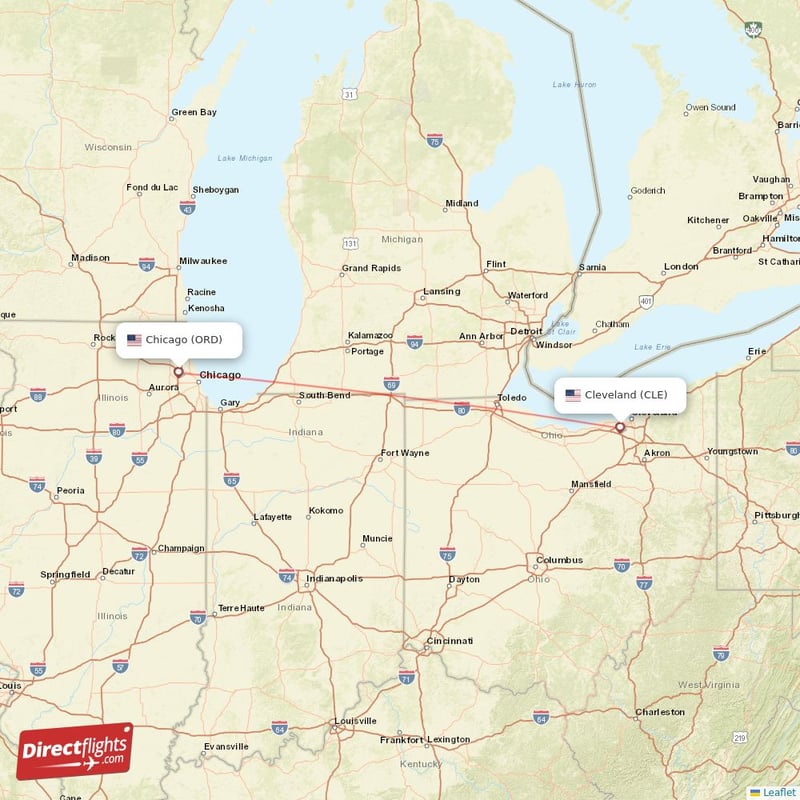
The question “How far is Chicago from Cleveland?” is more nuanced than a simple number, as the answer depends on whether you’re measuring the direct line or the actual travel route. Each offers a different perspective on the journey and influences your planning significantly.
The Straight Line vs. The Open Road
As the crow flies, the approximate aerial distance between Chicago, Illinois, and Cleveland, Ohio, is about 290 miles (467 kilometers). This direct measurement is primarily relevant for air travel, giving you an idea of the most efficient path an airplane might take.
However, for those planning a journey by land, the actual driving distance is considerably longer. The standard road route stretches approximately 340 to 350 miles (547 to 563 kilometers). This difference accounts for the winding nature of roads, geographical features, and the necessity of navigating through various towns and cities. Understanding this distinction is crucial for setting realistic expectations for travel time, fuel consumption, and potential rest stops.
Driving the I-80/I-90 Corridor
For the vast majority of travelers making the overland journey, the primary route connecting Chicago and Cleveland is via the Interstate 80 / Interstate 90 corridor. This major highway system forms a relatively straight and well-maintained path across Illinois, Indiana, and Ohio.
Driving time for this route typically ranges from 5.5 to 6 hours, assuming good weather conditions and no significant traffic delays. However, this is a non-stop estimate. Many factors can influence the actual travel time, including:
- Traffic Congestion: Especially when passing through or around major metropolitan areas like Gary in Indiana, or approaching Cleveland’s urban core. Peak travel times, such as weekday rush hours or holiday weekends, can add substantial delays.
- Rest Stops and Meals: A journey of this length usually warrants at least one or two stops for gas, stretching your legs, or grabbing a bite to eat. Factor in an additional 30 minutes to an hour for these essential breaks.
- Toll Roads: A significant portion of the I-80/I-90 route involves toll roads, specifically the Indiana Toll Road and the Ohio Turnpike. While these roads are generally well-maintained and offer efficient travel, drivers should be prepared for toll payments, either through cash, credit card, or electronic toll passes like E-ZPass. Budgeting for tolls is an important part of planning a road trip along this corridor.
The scenery along the route is largely agrarian, with vast stretches of farmland interspersed with smaller towns. While not as dramatically scenic as some coastal drives, it offers a quintessential Midwestern landscape and a straightforward journey for travelers focused on reaching their destination efficiently.
Navigating Your Journey: Transportation Options
Choosing the right mode of transportation between Chicago and Cleveland depends on your priorities: budget, time, comfort, and desired travel experience. Each option offers unique advantages.
By Car: The Classic American Road Trip
Driving is arguably the most popular way to travel between these two cities, offering unparalleled flexibility and the opportunity for spontaneous stops.
- Benefits:
- Flexibility: Depart and arrive on your own schedule.
- Luggage Capacity: No airline restrictions on what you can bring.
- Cost-Effective for Groups: When split among passengers, fuel and toll costs can be cheaper than individual plane or train tickets.
- Scenic Detours: While the main route is direct, you have the option to explore charming small towns in Indiana or Ohio if you choose a slightly longer path.
- Considerations:
- Driver Fatigue: A 5.5-6 hour drive can be tiring; consider sharing driving duties or planning an overnight stop if you’re prone to fatigue.
- Tolls: As mentioned, be prepared for tolls on the Indiana Toll Road and Ohio Turnpike.
- Weather: Midwestern winters can bring snow and ice, potentially extending travel times and making driving hazardous. Summer construction can also cause delays.
Taking to the Skies: Air Travel Between the Cities
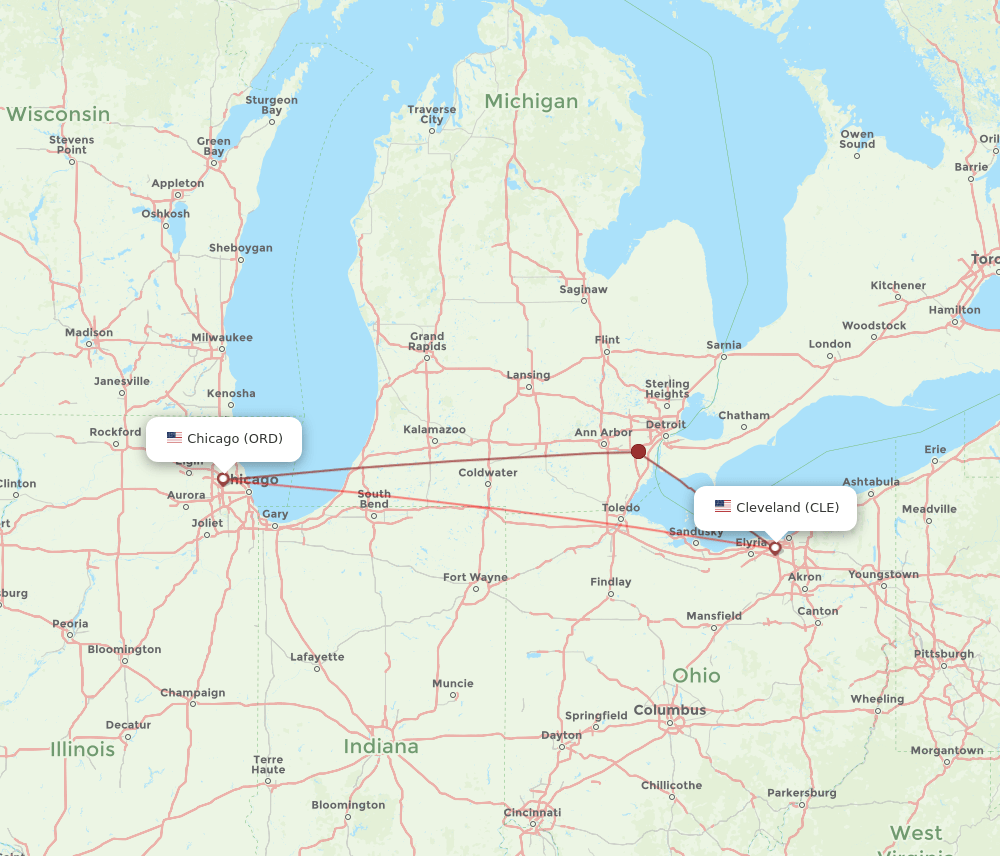
For those prioritizing speed, flying is the quickest way to bridge the distance, transforming a half-day drive into a short hop.
- Airports:
- Chicago: Served primarily by O’Hare International Airport (ORD) and Midway International Airport (MDW). O’Hare is one of the busiest airports globally, offering numerous flight options.
- Cleveland: Served by Cleveland Hopkins International Airport (CLE), a convenient and modern airport.
- Flight Duration: Direct flights between Chicago and Cleveland typically last around 1 hour to 1 hour and 15 minutes.
- Overall Travel Time: While the flight itself is short, factor in time for:
- Getting to and from the airport (potentially 1-2 hours each way).
- Security checks and boarding (1.5-2 hours before departure).
- Waiting for luggage upon arrival.
- In total, door-to-door air travel can often amount to 4-6 hours, making it comparable to driving in some scenarios, especially for those living far from the airports.
- Cost: Airfare can vary widely depending on booking time, airline, and demand. It’s often more expensive than driving, particularly for solo travelers, but competitive deals can be found.
Rail and Bus: Scenic and Economical Alternatives
For a more relaxed pace or budget-conscious travel, trains and buses offer viable options.
- Train (Amtrak): Amtrak provides service between Chicago’s Union Station and Cleveland’s Louis Stokes Windermere Station or Cleveland Lakefront Station.
- Journey Time: Train journeys are significantly longer than driving or flying, typically taking 5 to 6.5 hours, depending on the specific route and potential delays. The Lake Shore Limited is one such route.
- Experience: Train travel offers a comfortable and often scenic experience, allowing passengers to relax, work, or enjoy the view without the stress of driving. There’s more legroom than in a car or plane, and usually a dining car or snack bar.
- Cost: Ticket prices can be competitive, especially if booked in advance.
- Bus (Greyhound, Megabus): Several bus companies operate routes between the cities.
- Journey Time: Bus travel is typically the longest option, often ranging from 6.5 to 8 hours or more, due to multiple stops and potential traffic.
- Cost: Buses are usually the most budget-friendly option, making them popular among students and travelers seeking the lowest fares.
- Amenities: Modern buses often include Wi-Fi, power outlets, and reclining seats, improving comfort for longer journeys.
Beyond the Miles: Exploring Chicago and Cleveland
The journey itself is just one part of the adventure. Both Chicago and Cleveland are rich in culture, history, and attractions, making them fantastic destinations in their own right.
Discovering the Best of Chicago
Chicago, often called the “Windy City,” is a global metropolis renowned for its stunning architecture, vibrant arts scene, and delectable food.
- Iconic Landmarks and Attractions:
- Millennium Park: Home to the famous Cloud Gate sculpture (affectionately known as “The Bean”), outdoor concerts, and beautiful gardens.
- Art Institute of Chicago: One of the oldest and largest art museums in the United States, boasting an impressive collection spanning centuries and cultures.
- Navy Pier: A historic landmark offering entertainment, dining, a Ferris wheel, and stunning views of Lake Michigan and the city skyline.
- Magnificent Mile: A shopper’s paradise along Michigan Avenue, featuring upscale boutiques, department stores, and luxury hotels.
- Willis Tower (formerly Sears Tower): Ascend to the Skydeck for panoramic views from one of the tallest buildings in the Western Hemisphere.
- Museum Campus: Home to the Field Museum, Shedd Aquarium, and Adler Planetarium, offering a day of exploration for all ages.
- Culinary Scene: Chicago is a food lover’s dream. Don’t leave without trying:
- Deep-dish pizza: Legendary establishments like Lou Malnati’s and Gino’s East offer this iconic dish.
- Chicago-style hot dogs: A unique culinary experience with a specific set of toppings.
- A diverse array of Michelin-starred restaurants, ethnic eateries, and trendy cafes.
- Accommodation: From the lavish Four Seasons Hotel Chicago and Hyatt Regency Chicago to boutique hotels in River North and budget-friendly options, Chicago offers a vast range of accommodations to suit every preference and budget.
Unveiling Cleveland’s Charm
Often overlooked, Cleveland is a city undergoing a remarkable renaissance, boasting a thriving arts and culture scene, beautiful parks, and a welcoming atmosphere.
- Major Landmarks and Cultural Institutions:
- Rock & Roll Hall of Fame: An architectural marvel on the shores of Lake Erie, this iconic museum is a must-visit for music enthusiasts, celebrating the history and legends of rock and roll.
- West Side Market: Cleveland’s oldest continuously operating public market, offering an incredible array of fresh produce, meats, baked goods, and international foods under a beautiful arched ceiling. A true sensory experience and a taste of local culture.
- Cleveland Museum of Art: Located in University Circle, this world-class museum offers free admission to its extensive and diverse collection, spanning global art from antiquity to the present day.
- Great Lakes Science Center: An interactive museum perfect for families, exploring science, technology, engineering, and math, often featuring a NASA Glenn Visitor Center exhibit.
- Playhouse Square: The second-largest performing arts center in the United States, outside of New York City’s Broadway. It hosts Broadway shows, concerts, and local productions in its historic theaters.
- Culinary Experiences: Cleveland’s food scene has exploded, with innovative chefs and diverse dining options.
- From farm-to-table restaurants in areas like Ohio City and Tremont to classic Eastern European fare, there’s something for every palate.
- Breweries and distilleries have also become a prominent feature of the city’s nightlife.
- Accommodation: Cleveland offers a growing selection of accommodations, from the luxurious Hilton Cleveland Downtown connected to the Convention Center, to the charming Kimpton Schofield Hotel in a historic building, and various budget-friendly options across the city.
Making the Most of Your Trip: Travel Tips and Accommodation
Regardless of your chosen mode of transport or destination, a well-planned trip enhances the overall experience. Consider these essential tips for a smooth and enjoyable journey.
Where to Stay: Hotels and Accommodation in Both Cities
Finding the right accommodation is crucial for any trip, whether it’s a quick business stay or an extended family vacation. Both Chicago and Cleveland offer a spectrum of choices tailored to different budgets and travel styles.
- Luxury Travel: For those seeking premium experiences, both cities boast five-star hotels with world-class amenities, concierge services, and gourmet dining. Look for properties near downtown areas or upscale districts like Magnificent Mile in Chicago or near Public Square in Cleveland for prime locations.
- Budget Travel: Travelers on a tighter budget will find numerous options, including well-known hotel chains offering comfortable stays, independent motels, and a growing number of hostels in central locations. Booking in advance and considering stays slightly outside the immediate city center can often yield better rates.
- Family Trips: When traveling with family, look for hotels that offer suites, complimentary breakfast, swimming pools, or are close to family-friendly attractions. Many hotel brands cater specifically to families with amenities like kid-friendly menus and activity programs.
- Business Stays: For business travelers, hotels offering dedicated workspaces, high-speed internet, meeting facilities, and easy access to convention centers or corporate offices are paramount. Properties like the Hilton Cleveland Downtown or the Hyatt Regency Chicago are often top choices.
- Alternative Accommodations: Beyond traditional hotels, consider vacation rentals (apartments, villas) through platforms like Airbnb or serviced apartments for longer stays or a more home-like experience. These can be particularly appealing for groups or those seeking to experience local neighborhoods.
- Booking and Reviews: Always check recent reviews on reputable travel sites. Comparing prices across different booking platforms can help you secure the best deal. For long-term stays, inquire about extended-stay discounts directly with hotels or explore furnished apartment options.

Essential Travel Tips for a Smooth Journey
- Plan Ahead: Book flights, train tickets, or rental cars well in advance, especially during peak seasons or holidays, to secure better prices and availability.
- Check Weather Forecasts: Midwestern weather can be unpredictable. Pack layers and be prepared for sudden changes, especially if driving.
- Traffic Apps: Utilize navigation apps like Google Maps or Waze for real-time traffic updates, which can be invaluable for driving and even for estimating airport travel times.
- Parking: Research parking options at your destination. Downtown areas in both Chicago and Cleveland can have expensive parking. Consider public transport or rideshares once you arrive.
- Local Culture and Etiquette: While generally similar, be open to local customs. In Chicago, for example, tipping is standard, and navigating crowded public spaces requires a degree of assertiveness. In Cleveland, expect a friendly, laid-back demeanor.
- Stay Hydrated and Energized: Whether driving or flying, bring snacks and water to avoid unnecessary stops or discomfort.
The journey from Chicago to Cleveland offers a rich tapestry of travel experiences, from the open road of the Midwest to quick flights connecting two bustling cities. Each destination, with its distinct character and array of attractions, promises a memorable visit. By understanding the distances, exploring transportation options, and planning your stay with these tips in mind, you’re set for an incredible adventure between these Great Lakes gems. Safe travels!
LifeOutOfTheBox is a participant in the Amazon Services LLC Associates Program, an affiliate advertising program designed to provide a means for sites to earn advertising fees by advertising and linking to Amazon.com. Amazon, the Amazon logo, AmazonSupply, and the AmazonSupply logo are trademarks of Amazon.com, Inc. or its affiliates. As an Amazon Associate we earn affiliate commissions from qualifying purchases.