
The islands of Hawaii, a breathtaking archipelago nestled in the heart of the Pacific Ocean, are renowned for their vibrant culture, stunning landscapes, and the warm aloha spirit that permeates every interaction. While many visitors arrive with the expectation of communicating solely in English, a deeper dive into the linguistic tapestry of these islands reveals a fascinating and rich heritage that extends far beyond a single tongue. Understanding the languages spoken in Hawaii not only enhances a traveler’s appreciation of the local culture but also unlocks a more profound connection with its history and its people. From the ancient chants of the native Hawaiians to the diverse tongues brought by immigrants from around the globe, Hawaii is a true linguistic melting pot, a testament to its storied past and its dynamic present.
This exploration into the languages of Hawaii will guide you through the official languages, the resurgence of the indigenous tongue, and the influences of various immigrant communities that have shaped the islands’ unique linguistic identity. Whether you’re planning a luxurious escape to a Waikiki resort, seeking adventurous experiences on the Big Island, or immersing yourself in the local food scene in Honolulu, understanding these linguistic nuances will undoubtedly enrich your journey.
The Official Tongues of Aloha
Hawaii holds a unique distinction among U.S. states for having not one, but two official languages: English and Hawaiian. This dual designation is a powerful symbol of the islands’ commitment to preserving its indigenous heritage while embracing its place within the United States.
English: The Lingua Franca of Modern Hawaii
As in all of the United States, English is the primary language of commerce, government, education, and everyday communication for the vast majority of residents and visitors in Hawaii. You will find that you can navigate your entire trip, from booking accommodations at a Grand Hyatt Hotel to ordering a plate lunch in a local diner, with ease using English. This is the language of tourism, ensuring that travelers from all over the world can comfortably experience the islands’ attractions, from the historical significance of Pearl Harbor to the natural splendor of Diamond Head.
However, the English spoken in Hawaii is not monolithic. It often carries influences from the diverse linguistic backgrounds of its speakers, a phenomenon known as Hawaiian Pidgin, or simply “Pidgin.” While not a formal language in the same vein as English or Hawaiian, Pidgin is a creole language that developed as a means of communication between speakers of different languages, particularly during the plantation era. It incorporates vocabulary and grammatical structures from English, Hawaiian, and various Asian languages. Hearing Pidgin spoken can be a delightful part of the Hawaii experience, adding a unique flavor to local conversations and interactions. While most locals are fluent in standard English, understanding or at least recognizing Pidgin can offer a deeper insight into the local culture and community.
‘Ōlelo Hawai’i: The Resurgent Indigenous Language
The story of the Hawaiian language, or ‘Ōlelo Hawai‘i, is one of resilience and revival. For centuries, ‘Ōlelo Hawai‘i was the sole language of the Native Hawaiians, a rich and complex language with a sophisticated oral tradition. It was the language of chants, stories, navigation, and governance. However, with the overthrow of the Hawaiian Kingdom in 1893 and the subsequent annexation by the United States, the use of ‘Ōlelo Hawai‘i was actively discouraged and even suppressed in schools and public life. This period of decline led to a drastic decrease in the number of native speakers.
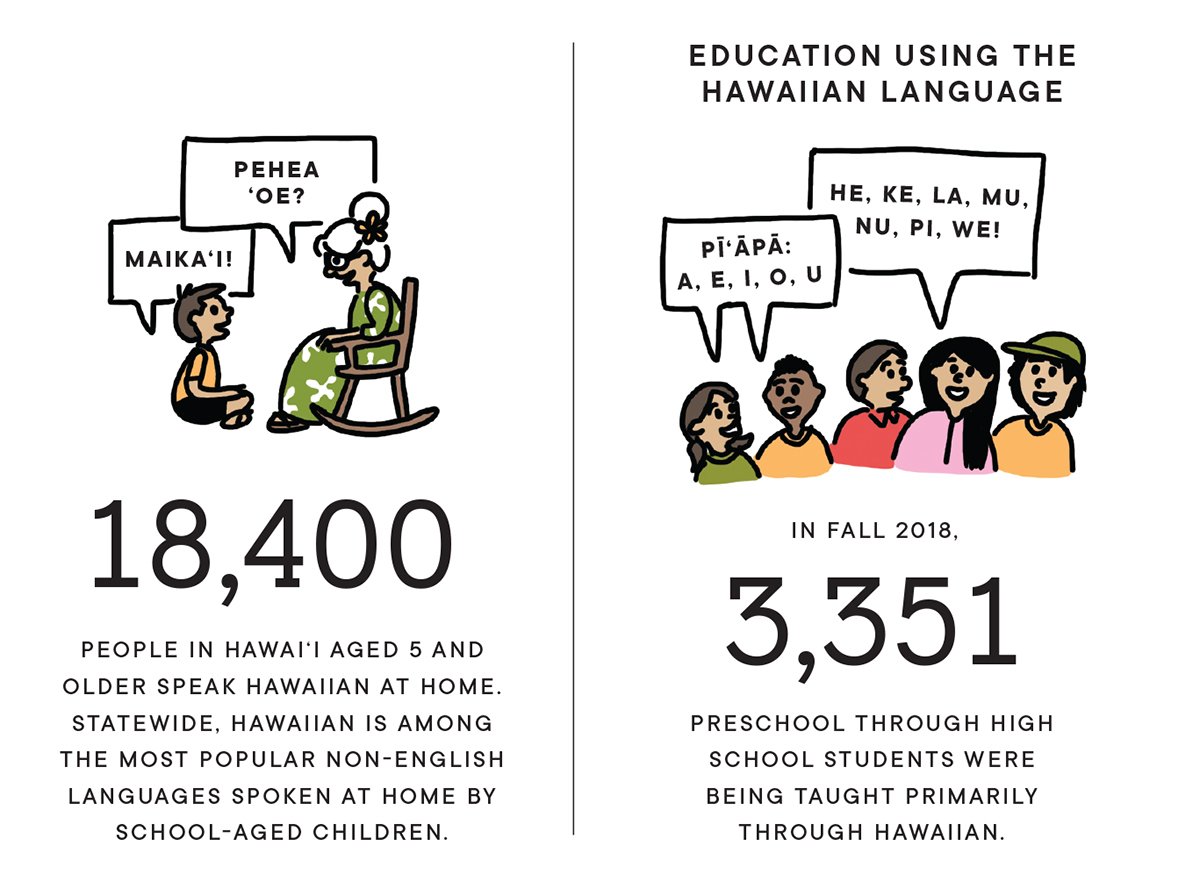
Despite these challenges, a dedicated movement to revitalize ‘Ōlelo Hawai‘i began in the late 20th century. This powerful resurgence has led to the establishment of immersion schools, such as the Pūnana Leo preschools and Kula Kaiapuni K-12 programs, where children are educated entirely in the Hawaiian language. Universities now offer degrees in Hawaiian studies and language. Today, while the number of fluent native speakers remains small compared to the total population, the number of individuals learning and speaking ‘Ōlelo Hawai‘i is steadily growing. You’ll encounter its beauty in place names across the islands, in official signage, and in cultural events. Hearing ‘Ōlelo Hawai‘i spoken, even if you don’t understand it, is a deeply moving experience that connects you to the soul of Hawaii. Many hotels and tour operators are also increasingly incorporating Hawaiian greetings and phrases into their services, further promoting its visibility and use.
A Symphony of Global Voices: Immigrant Languages in Hawaii
Hawaii’s history as a major destination for labor on sugar and pineapple plantations attracted a vast array of immigrants from across the globe. These diverse communities, each with their own languages and traditions, have left an indelible mark on the linguistic landscape of the islands, contributing to the rich cultural tapestry that visitors experience today. While many descendants of these immigrants now speak English or Pidgin as their primary language, echoes of their ancestral tongues can still be heard and are actively preserved by community groups.

East Asian Influences
-
Japanese: Beginning in the late 19th century, a significant wave of Japanese laborers arrived in Hawaii. For many decades, Japanese was widely spoken in homes and communities, and Japanese language schools were prevalent. While the number of daily fluent speakers has decreased, Japanese remains an important part of Hawaii’s cultural heritage. Many older generations still converse in Japanese, and cultural events often feature Japanese language and performances. You might notice Japanese characters on signs in certain neighborhoods or hear it spoken by descendants of the immigrant communities. The influence is also seen in Hawaii’s cuisine and traditions.
-
Chinese: Chinese laborers, including those from Canton (Guangdong province), were among the earliest immigrant groups to arrive in Hawaii. Cantonese and later Mandarin were spoken widely. Chinatown in Honolulu remains a vibrant hub where Chinese language and culture are actively celebrated. You can find restaurants, shops, and community centers that primarily operate in Chinese, offering a glimpse into this enduring linguistic presence.
-
Korean: Korean immigrants also contributed to the linguistic diversity of Hawaii. While smaller in number compared to other groups, the Korean language and culture continue to be maintained by the community. You may encounter Korean businesses and cultural organizations, particularly in areas with a significant Korean population.
Southeast Asian and Other Influences
-
Filipino Languages: The Philippines has a substantial diaspora in Hawaii, with many immigrants arriving from various islands. Consequently, a number of Filipino languages, such as Tagalog, Ilokano, and Cebuano, are spoken. These languages are vital to the identity of the large Filipino community in Hawaii. You’ll find Filipino communities, restaurants, and cultural events where these languages are actively used.
-
Samoan and Other Pacific Island Languages: As a Polynesian people with close cultural ties to Native Hawaiians, Samoans and speakers of other Pacific Island languages like Tongan and Marshallese have also found homes in Hawaii. These communities maintain their languages and traditions, adding another rich layer to the islands’ linguistic mosaic. You might encounter these languages in specific communities or during cultural festivals celebrating Pacific Islander heritage.
Navigating Hawaii: Language and the Traveler’s Experience
For travelers, understanding the linguistic landscape of Hawaii can significantly enhance their journey. While English is universally spoken and understood in tourist areas, making it easy to book a stay at a luxurious Four Seasons Resort Oahu at Ko Olina or explore the natural wonders of Hanauma Bay, making an effort to acknowledge other languages can lead to more meaningful interactions.
Embracing the Aloha Spirit
The spirit of aloha is fundamentally about kindness, hospitality, and mutual respect. Learning a few basic phrases in ‘Ōlelo Hawai‘i, such as “Aloha” (hello/goodbye/love) and “Mahalo” (thank you), is always appreciated by locals. These simple gestures demonstrate an appreciation for the indigenous culture and can open doors to warmer exchanges. You might hear these greetings used by staff at hotels like the Halekulani Hotel or by guides leading historical tours of places like the Iolani Palace.
Beyond the Tourist Trail
If your travels take you away from the main tourist hubs like Lahaina or Kailua-Kona and into more local neighborhoods or on excursions that delve into the rural aspects of the islands, you may encounter conversations in Pidgin or even some of the immigrant languages. While not essential for navigation, recognizing these linguistic variations adds to the authenticity of the experience. It’s a reminder that Hawaii is a living, breathing cultural entity shaped by centuries of migration, interaction, and the enduring spirit of its people.
Ultimately, the languages spoken in Hawaii are as diverse and captivating as its volcanic landscapes and turquoise waters. From the official embrace of English and the proud resurgence of ‘Ōlelo Hawai‘i to the lingering echoes of Japanese, Chinese, Filipino, and other tongues, the islands offer a rich linguistic symphony. For every visitor, whether seeking a budget-friendly apartment rental or a luxurious villa, engaging with this linguistic diversity, even in small ways, promises a more profound and rewarding exploration of the Aloha State.
LifeOutOfTheBox is a participant in the Amazon Services LLC Associates Program, an affiliate advertising program designed to provide a means for sites to earn advertising fees by advertising and linking to Amazon.com. Amazon, the Amazon logo, AmazonSupply, and the AmazonSupply logo are trademarks of Amazon.com, Inc. or its affiliates. As an Amazon Associate we earn affiliate commissions from qualifying purchases.