
San Francisco. The very name conjures images of the iconic Golden Gate Bridge gleaming in the fog, cable cars clinging precariously to impossibly steep inclines, and a vibrant cityscape that tumbles towards the sparkling San Francisco Bay. But for anyone who has ever visited or lived in this captivating city, one question invariably arises: why are San Francisco’s roads so incredibly steep? It’s a question that delves into the city’s dramatic topography, its rapid growth, and a touch of engineering ingenuity.
The Undulating Terrain: A Foundation of Hills
The primary reason behind San Francisco’s legendary inclines lies in its natural geography. The city is perched on the northern tip of the San Francisco Peninsula, a landmass characterized by a series of rolling hills and dramatic elevation changes. These hills are not merely gentle undulations; they are substantial mounds of earth, carved by ancient geological forces.
Geological Sculpting by Nature
The San Francisco Peninsula was formed by tectonic activity, specifically the collision of the Pacific Plate and the North American Plate. This complex interplay of tectonic forces has uplifted and sculpted the land over millions of years, creating the distinctive hilly terrain that defines the city. The bedrock beneath the city is primarily Franciscan Assemblage, a complex mix of rock types that has been subjected to immense pressure and deformation. This geological foundation has given rise to the dramatic rise and fall of the land, which consequently dictates the pathways of the city’s streets.
The Bay’s Embrace: A Peninsula’s Limits
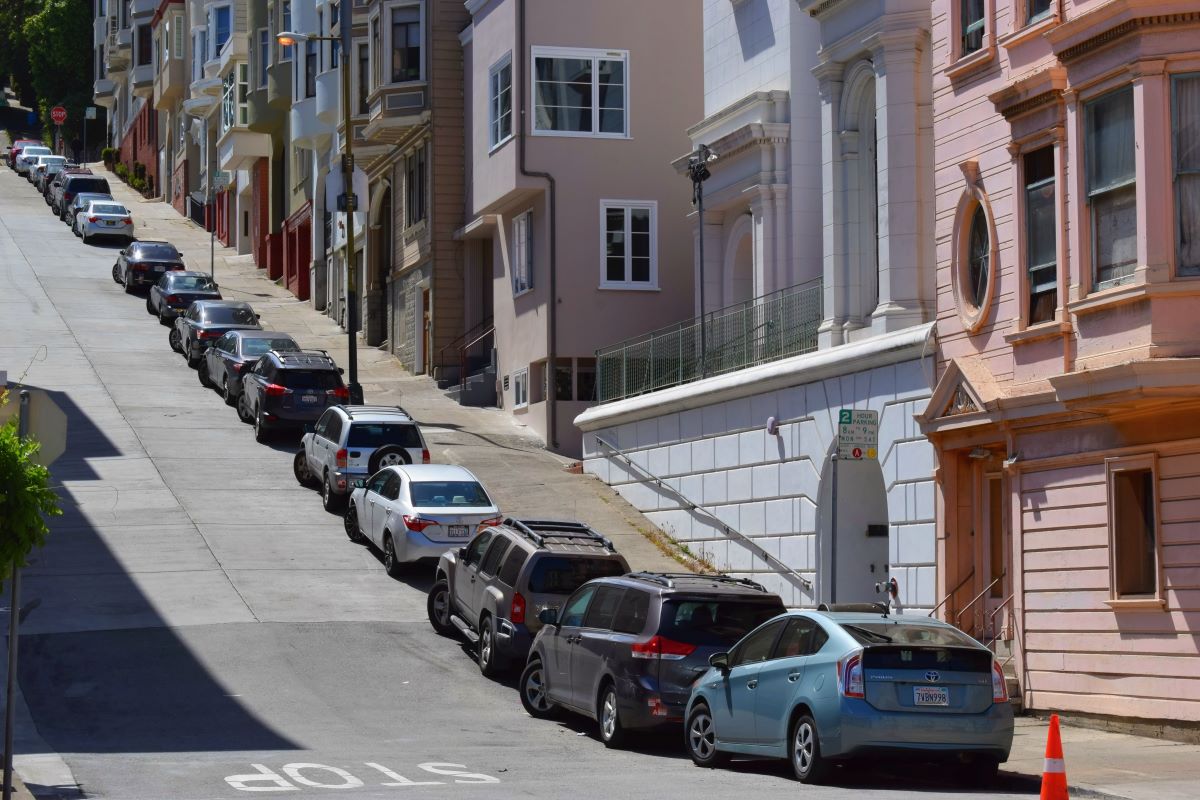
San Francisco’s unique peninsula location further accentuates the impact of its hilly landscape. Bordered by the vast Pacific Ocean to the west and the San Francisco Bay to the east and north, the city’s physical footprint is inherently constrained. As the population boomed, developers had to build on and around these natural elevations, rather than having vast flat expanses to spread across. This meant that streets had to be laid out to navigate the existing topography, leading directly to the steep gradients we see today.
A City Built on Speed and Ambition: The Gold Rush Era
While nature provided the canvas, the ambitious spirit of San Francisco’s past dramatically shaped how its streets were laid out upon it. The city’s explosive growth, particularly during the California Gold Rush in the mid-19th century, necessitated rapid development and a grid-like street plan that, while practical in flatter areas, proved challenging in the hilly regions.
The Grid System’s Influence
In the early days of settlement, developers and city planners often favored a rectilinear grid system for laying out streets. This system, common in many American cities, was intended to create orderly neighborhoods and simplify land division. However, San Francisco’s founders did not always account for the extreme slopes they were working with. When the grid was imposed upon the hilly terrain, it resulted in streets that climbed relentlessly upwards or plunged dramatically downwards, creating some of the steepest urban inclines in the world. The straight lines of the grid were forced to conform to the contours of the land, leading to the distinctive, and often breathtaking, inclines.
Engineering Challenges and Innovations

The steepness of San Francisco’s roads presented significant engineering challenges, both for the initial construction and for the ongoing maintenance and transportation systems. Overcoming these challenges has led to some of San Francisco’s most iconic engineering feats. The famous cable cars, for instance, were invented specifically to tackle these formidable hills. Developed by Andrew Smith Hallidie in the 1870s, the cable car system uses an underground cable to pull cars up and down the steep gradients, providing a unique and enduring solution to the transportation problem posed by the topography. Today, these cable cars remain a beloved San Francisco attraction and a testament to the city’s innovative spirit.
Navigating the Inclines: Iconic Streets and Experiences
San Francisco’s steep roads are not just a geographical quirk; they are an integral part of the city’s identity and offer unique experiences for residents and visitors alike. From breathtaking views to challenging drives, these inclines contribute to the city’s distinctive charm.
Lombard Street: The Crookedest Path
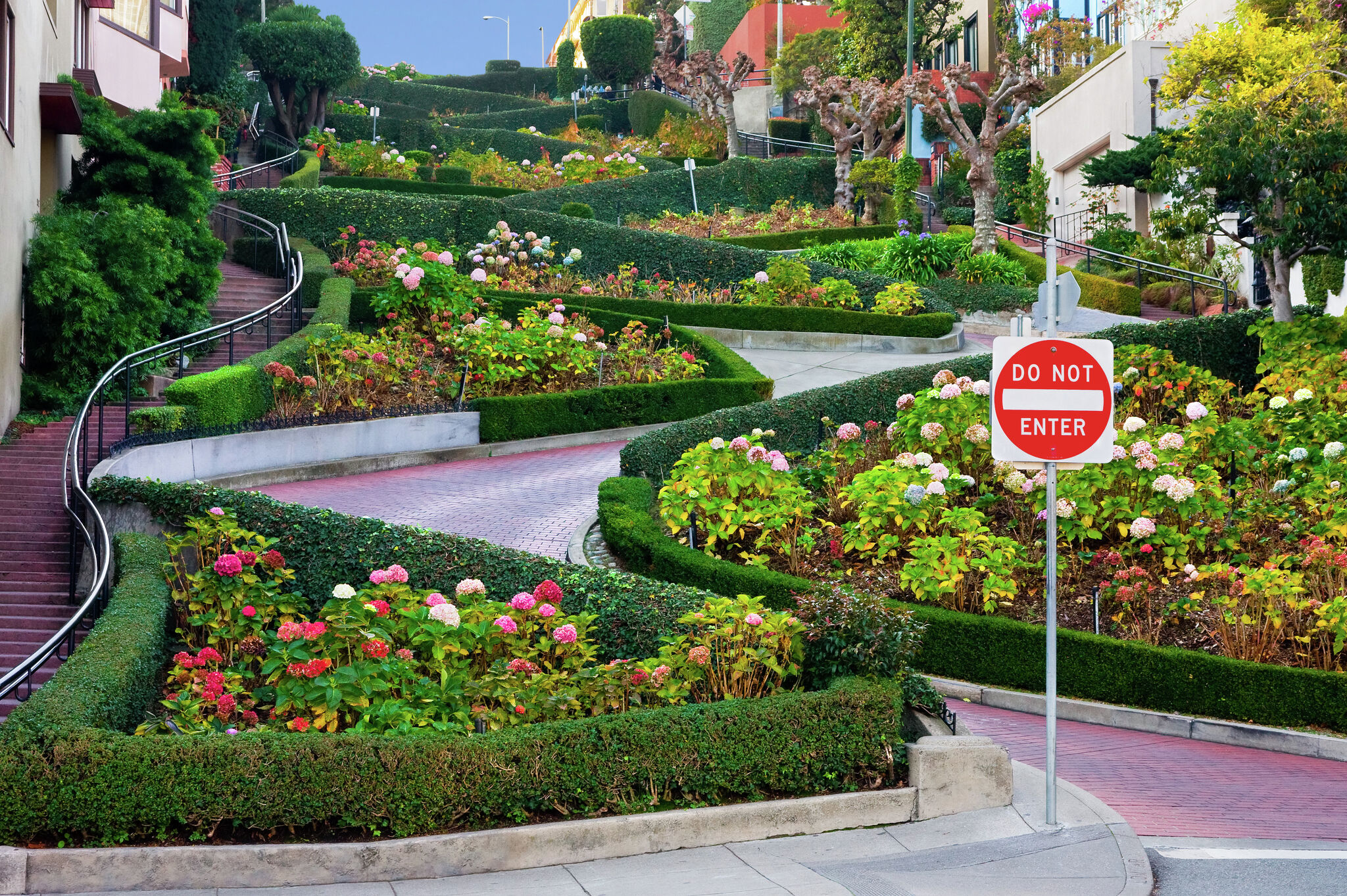
Perhaps the most famous example of San Francisco’s steep roads is Lombard Street. While not the absolute steepest, its unique design has earned it worldwide recognition. In the early 20th century, the notoriously steep section of Lombard Street between Hyde Street and Leavenworth Street was redesigned to mitigate the danger to vehicles and pedestrians. Engineers created a one-way section with eight sharp hairpin turns, lined with beautiful landscaping, effectively transforming a daunting hill into a picturesque tourist attraction. This serpentine stretch of road has become a must-see San Francisco landmark, drawing crowds eager to witness its unique design and capture memorable photographs.
Driving, Cycling, and Walking the Hills
For those who choose to traverse San Francisco’s inclines by car, the experience can be both exhilarating and nerve-wracking. Drivers must be adept at handling steep ascents and descents, often navigating sharp turns and traffic. The visual reward for such efforts, however, is often spectacular, with panoramic views of the city, the Golden Gate Bridge, and the bay unfolding as one climbs higher.
Cycling in San Francisco is a true test of endurance and skill. While some may opt for the electric assist on their bikes, many dedicated cyclists embrace the challenge, using the hills as a demanding workout. The city has also made strides in improving cycling infrastructure, with dedicated bike lanes and paths, though navigating the steepest sections remains a formidable undertaking.
Walking, of course, is another quintessential San Francisco experience. While it can be a workout, strolling through its hilly neighborhoods offers an intimate connection with the city’s character. Discovering hidden staircases, charming homes, and unexpected vistas is part of the joy. Many residential streets are complemented by public stairways, offering pedestrian shortcuts and adding to the city’s unique urban fabric. These stairways, often adorned with mosaics and greenery, are often as much a destination as the streets themselves.
The Value of Elevation: Views and Neighborhoods
The steep topography of San Francisco has also contributed to the creation of distinct neighborhoods, each with its own character and elevated advantages. Neighborhoods situated on higher ground, such as Nob Hill and Telegraph Hill, were historically favored by the city’s wealthy elite, offering sweeping vistas and a sense of grandeur. Today, these areas continue to be highly sought-after for their stunning views and prestigious addresses. The constant presence of the bay and the ocean, visible from many vantage points, adds an undeniable allure to these elevated communities. The unique character of each incline, from the bustling streets of the Financial District to the residential charm of Pacific Heights, is intrinsically tied to the dramatic shifts in elevation.
Beyond the Tourist Trails: Local Life on the Slopes
While tourists flock to Lombard Street, the reality of living with steep roads is a daily consideration for San Franciscans. It influences everything from real estate values to the efficiency of public transportation. The constant up and down shapes the daily commutes, the placement of local businesses, and the very rhythm of life in the city. The local experience of these hills is one of adaptation and appreciation for the unique environment. It’s about finding the most efficient walking routes, enjoying the unexpected bursts of ocean air at higher elevations, and understanding the effort it takes to simply get from one point to another. The steep roads are not an inconvenience to be endured, but a defining characteristic to be embraced.
In conclusion, San Francisco’s steep roads are a fascinating interplay of natural geography and human endeavor. The city’s foundation on a hilly peninsula, shaped by millennia of geological forces, provided the dramatic backdrop. The rapid growth fueled by the Gold Rush and the imposition of a grid system then solidified the network of inclines. Ultimately, these steep streets have become an indelible part of San Francisco’s identity, offering unique challenges, breathtaking views, and an enduring symbol of the city’s spirit and ingenuity. Whether you’re experiencing them via a historic cable car, a challenging bike ride, or a scenic walk, San Francisco’s hills are an essential part of its captivating allure.
LifeOutOfTheBox is a participant in the Amazon Services LLC Associates Program, an affiliate advertising program designed to provide a means for sites to earn advertising fees by advertising and linking to Amazon.com. Amazon, the Amazon logo, AmazonSupply, and the AmazonSupply logo are trademarks of Amazon.com, Inc. or its affiliates. As an Amazon Associate we earn affiliate commissions from qualifying purchases.