
The story of Seattle’s founding is a captivating tale of resilience, vision, and the pioneering spirit that shaped one of the Pacific Northwest’s most vibrant metropolises. While often associated with its modern-day reputation for tech innovation, coffee culture, and breathtaking natural beauty, its origins are rooted in a much humbler, yet equally significant, beginning. Understanding when and how this city came to be offers a fascinating glimpse into the forces that propelled its growth from a small settlement to a global hub.
The Genesis of a City: Early Settlers and Strategic Location
The official founding date of Seattle is often cited as November 13, 1851. This was the day the Denny Party, a group of pioneers led by Arthur Denny, arrived at Alki Point, on the western shore of Puget Sound. Their journey across the country was arduous, filled with the challenges and uncertainties that defined the westward expansion of the United States. They were seeking fertile land, a place to build a new life, and, crucially, access to a port for trade.
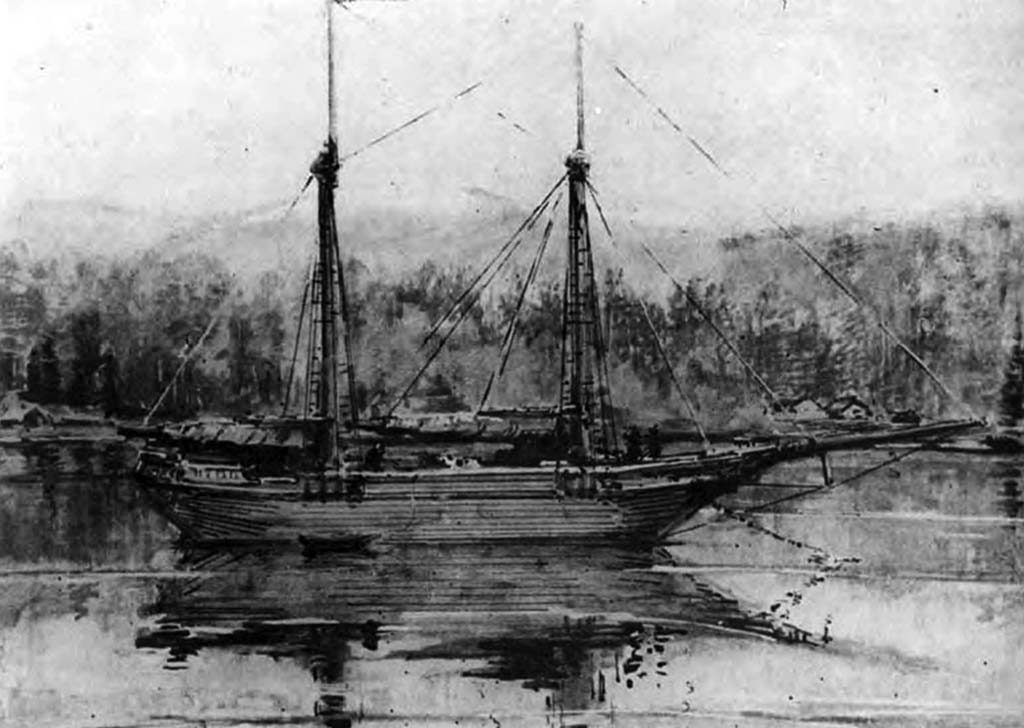
The Denny Party was not the first to set foot in this region. Indigenous peoples, such as the Suquamish and Duwamish tribes, had inhabited the area for millennia, developing a deep understanding of the land and its resources. Their presence and complex societies predated any European or American settlement by thousands of years. The Duwamish people, in particular, had a significant presence around the river that now bears their name and the surrounding inlets. Their ancestral lands provided rich fishing grounds, abundant game, and a strategic vantage point for intertribal trade and movement.
Upon their arrival, the Denny Party initially established their settlement at what is now known as Alki Point, a name derived from a Chinook Jargon word meaning “by and by” or “eventually.” This location offered a scenic view and access to the Puget Sound, but it proved to be less than ideal for long-term development due to its exposed position and lack of readily available resources compared to other nearby areas.
The Move to Smith Cove and the Birth of Seattle
The challenging conditions at Alki Point soon prompted a relocation. In the spring of 1852, the Denny Party, along with other settlers, moved inland across Elliott Bay to the more sheltered location that would become the heart of Seattle. This new site offered deeper harbors, closer proximity to timber resources, and better access to the freshwater of the Duwamish River. It was here, on the shores of what is now Smith Cove, that the foundational elements of the city began to take shape.
The name “Seattle” was eventually chosen to honor Chief Sealth (or Si’ahl), a respected leader of the Suquamish and Duwamish tribes who had befriended some of the early settlers and advocated for peaceful coexistence. This act of naming the nascent settlement after a local leader was a significant gesture, acknowledging the indigenous heritage of the land and the desire for a harmonious relationship.
The early years of Seattle were characterized by hard work and a focus on resource extraction, primarily logging. The vast forests of old-growth timber surrounding the settlement were a major draw for pioneers and investors. The abundant timber not only provided building materials but also became a crucial commodity for export, laying the groundwork for Seattle‘s maritime trade and economic growth. The establishment of sawmills and the development of rudimentary docks marked the initial steps towards a commercial center.
Early Growth and Development: Challenges and Opportunities
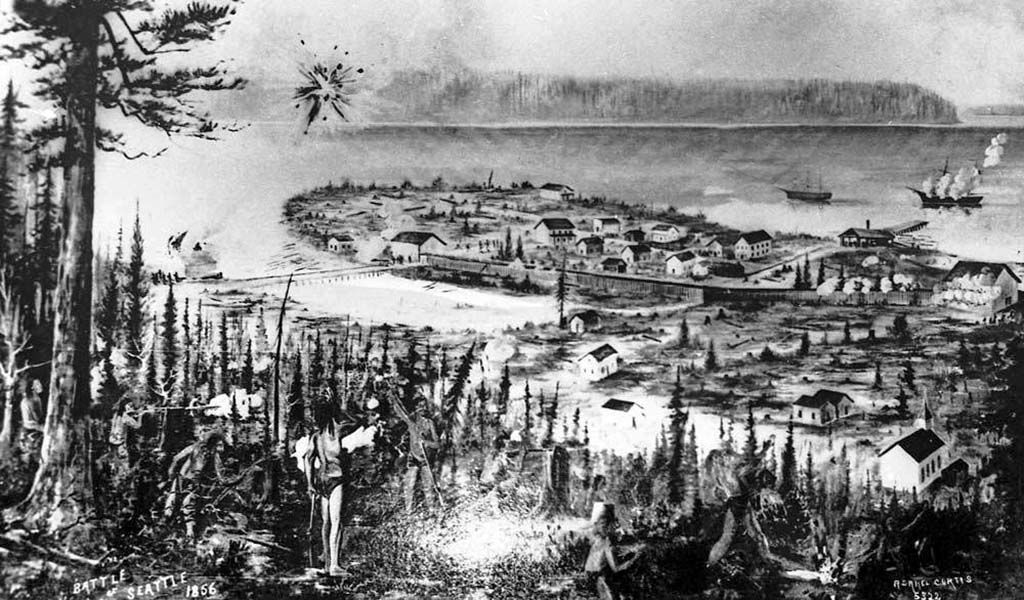
The period immediately following its founding was a testament to the pioneers’ determination. The settlers faced numerous challenges, including harsh weather, the isolation of their location, and the constant need to adapt to a new environment. Building infrastructure from scratch was a monumental task. Homes, businesses, and public spaces had to be constructed using the available timber and their own labor.
Despite these difficulties, Seattle’s strategic location on Puget Sound quickly became apparent. Its deep-water port was ideal for shipping lumber and other goods to markets across the continent and beyond. The arrival of steamships and the eventual establishment of regular shipping routes were pivotal in connecting Seattle to the wider world.
The Washington Territory was organized in 1853, and Seattle was designated as its county seat for King County. This political recognition further solidified the settlement’s importance and attracted more settlers and investment. The city’s growth was further spurred by the discovery of gold in Alaska and the Yukon Territory in the late 19th century. Seattle became a critical supply and departure point for prospectors heading north, experiencing a boom in population and economic activity during the Klondike Gold Rush. This era transformed the city, with new businesses, hotels, and infrastructure springing up to support the influx of people and trade.
Key Figures and Early Institutions
Beyond the Denny Party, several other individuals and families played crucial roles in the early development of Seattle. Doc Maynard, a physician and early entrepreneur, was instrumental in establishing the city’s first general store and hospital. His influence extended to advocating for Seattle‘s development and its eventual designation as the territorial capital (though it would later lose this status to Olympia).
The establishment of educational institutions was also vital for the city’s long-term vision. In 1861, the precursor to the University of Washington was founded as the Territorial University of Washington in downtown Seattle. While it later moved to its current campus, its early establishment signaled a commitment to learning and intellectual growth, contributing to the city’s evolving identity.
The development of a diverse economy, moving beyond just timber, was also a gradual process. As the population grew, so did the demand for various services and goods. The fertile lands surrounding Seattle began to support agriculture, and fishing remained a vital industry. The city’s port continued to be a central hub for trade, facilitating the movement of goods and people.
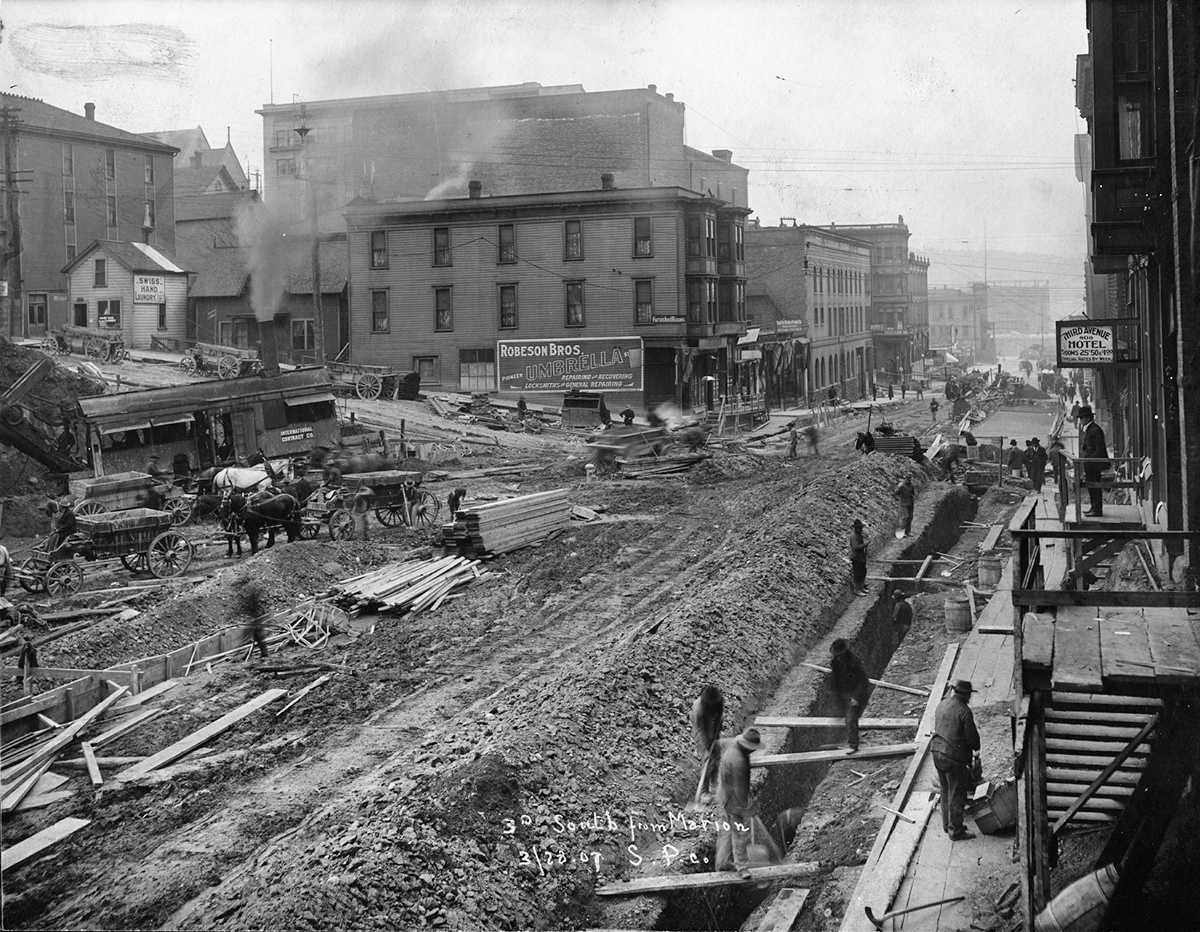
Seattle’s Enduring Legacy and Modern Identity
The founding of Seattle in 1851 marked the beginning of a journey that continues to this day. From its humble origins as a small pioneer settlement, it has transformed into a global center for technology, commerce, and culture. The spirit of innovation that characterized its early days, though applied differently, is still evident in its cutting-edge industries and forward-thinking urban development.
The city’s connection to the natural environment, a primary draw for its earliest inhabitants, remains a defining characteristic. Seattle is renowned for its stunning setting between Puget Sound and Lake Washington, with the majestic Olympic Mountains and Cascade Range providing a dramatic backdrop. Parks, waterways, and nearby natural attractions offer residents and visitors ample opportunities for outdoor recreation, a legacy of the appreciation for nature that has persisted since the city’s inception.
When exploring Seattle today, whether you’re staying at a luxury resort like the Four Seasons Hotel Seattle or a charming boutique hotel, you can feel the echoes of its past. The historic Pioneer Square district, with its well-preserved Victorian architecture, offers a tangible link to the city’s early days. This area, once the heart of the original settlement, now buzzes with activity, housing art galleries, unique shops, and acclaimed restaurants. Visiting landmarks like the Smith Tower, one of the city’s first skyscrapers, allows a perspective on how the city has grown vertically and horizontally.
The journey from the Denny Party‘s arrival at Alki Point to the bustling metropolis of the 21st century is a remarkable story of American enterprise and adaptation. The founding of Seattle was not merely an event but the start of a continuous process of building, evolving, and dreaming. It is a city that honors its past while boldly forging its future, making it a truly dynamic destination for travelers, residents, and history enthusiasts alike. The principles of exploration, resourcefulness, and community that guided its founders continue to shape the character and destiny of Seattle.
LifeOutOfTheBox is a participant in the Amazon Services LLC Associates Program, an affiliate advertising program designed to provide a means for sites to earn advertising fees by advertising and linking to Amazon.com. Amazon, the Amazon logo, AmazonSupply, and the AmazonSupply logo are trademarks of Amazon.com, Inc. or its affiliates. As an Amazon Associate we earn affiliate commissions from qualifying purchases.