
Navigating the complexities of divorce can be an emotionally taxing and legally intricate process, particularly when it involves the intricacies of California’s legal system. This guide aims to demystify the steps involved in filing for divorce in the Golden State, providing a clear and comprehensive overview for individuals embarking on this significant life transition. While this article offers valuable information, it is crucial to remember that legal advice should always be sought from a qualified attorney specializing in family law.
Understanding the Basics of California Divorce
California is a “no-fault” divorce state, meaning that neither spouse needs to prove wrongdoing by the other to obtain a dissolution of marriage. This simplifies the grounds for divorce, focusing instead on the irreconcilable differences that have led to the breakdown of the marital union. This philosophical underpinning of no-fault divorce aims to reduce acrimony and facilitate a smoother resolution.
Residency Requirements
Before initiating divorce proceedings in California, specific residency requirements must be met. One of the spouses must have resided in the state of California for at least six months and in the specific county where the divorce petition is filed for at least three months. These requirements ensure that the court has jurisdiction over the marriage. Failure to meet these criteria will result in the dismissal of the divorce petition.
Types of Divorce Proceedings
California offers several pathways to divorce, each suited to different circumstances and levels of agreement between spouses. Understanding these options is the first step in choosing the most appropriate route for your situation.
Summary Dissolution
A summary dissolution is the simplest and quickest way to end a marriage in California. It is available only to couples who meet strict criteria, including being married for less than five years, having no children together (born or adopted), owning limited community property, and having no separate property exceeding a certain threshold. Both spouses must also agree to waive spousal support and have not owned real estate within the last three years. This streamlined process avoids the need for extensive court appearances and legal battles, making it an attractive option for qualifying couples.
Standard Dissolution (Uncontested or Contested)
The majority of divorces in California fall under the standard dissolution process. This involves filing a Petition for Dissolution of Marriage with the court.
Uncontested Divorce
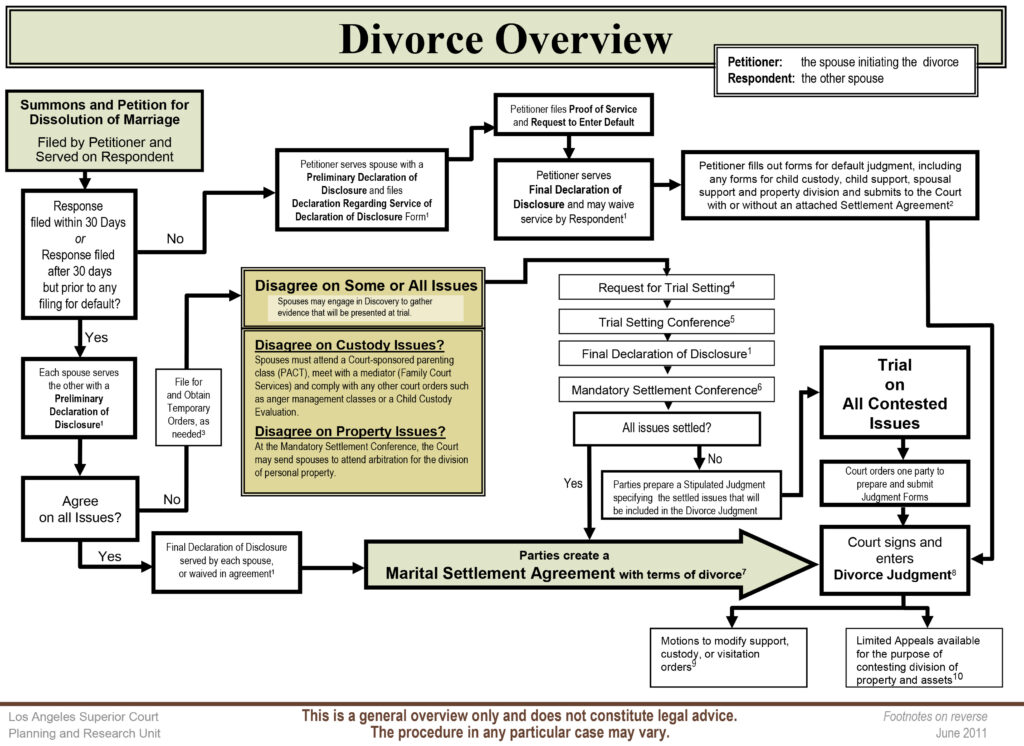
An uncontested divorce occurs when both spouses agree on all issues related to the divorce, including the division of assets and debts, child custody and visitation, and spousal support. Once the petition is filed, both parties can work together to draft a Marital Settlement Agreement. This agreement is then submitted to the court for approval. This is generally the most cost-effective and least stressful way to finalize a divorce.
Contested Divorce
A contested divorce arises when spouses cannot agree on one or more issues. In such cases, the court will intervene to make decisions. This process can involve extensive negotiation, mediation, or litigation, potentially leading to more significant time and expense. The court will consider factors such as the best interests of the children when making decisions regarding custody and support.
The Divorce Filing Process in California
Initiating a divorce in California involves a series of formal legal steps that must be followed precisely. Adherence to these procedures is crucial for the case to proceed through the court system.
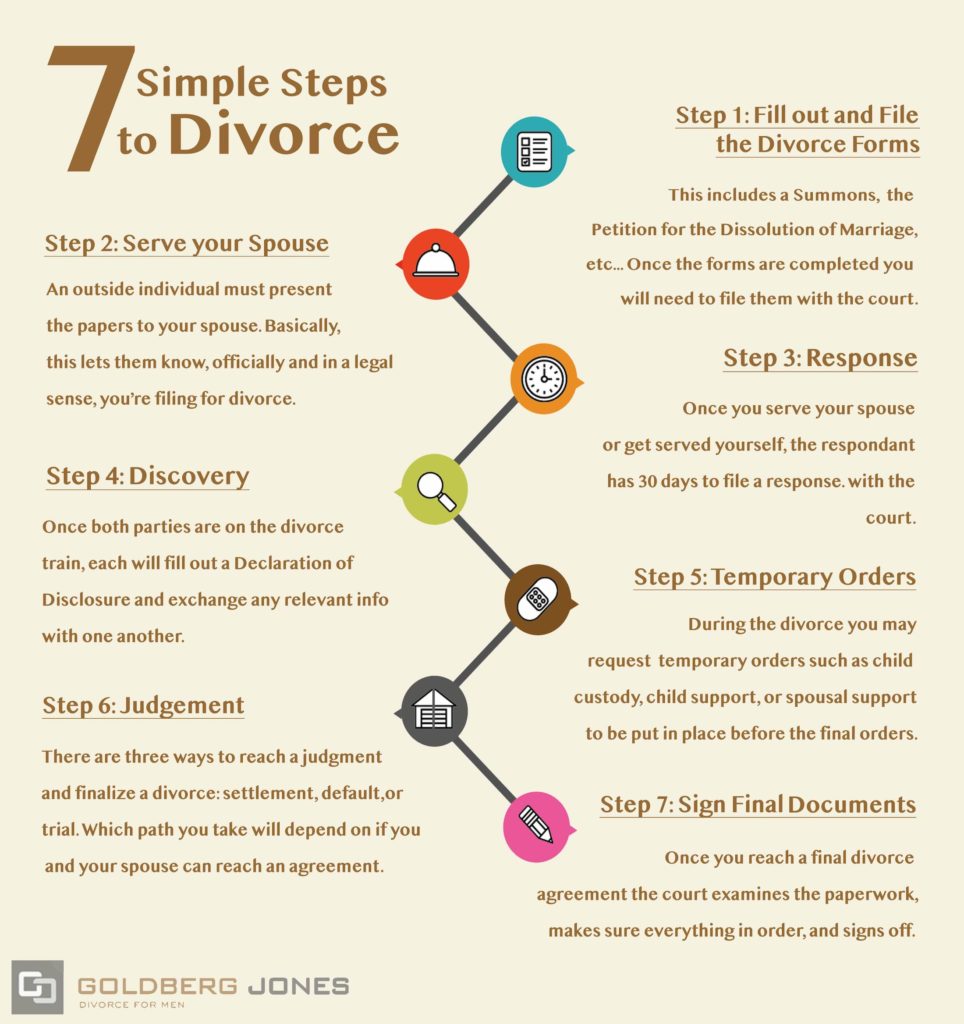
Step 1: Filing the Petition and Summons
The process begins when one spouse, known as the “petitioner,” files a Petition for Dissolution of Marriage (Form FL-100) with the Superior Court in the appropriate county. Along with the petition, the petitioner must also file a Summons (Form FL-110). These documents officially notify the other spouse, the “respondent,” that divorce proceedings have commenced.
Step 2: Serving the Papers on the Respondent
After filing, the petitioner must formally “serve” the respondent with a copy of the filed Petition and Summons. This is a critical legal requirement, ensuring the respondent is aware of the lawsuit and has an opportunity to respond. Service can be performed by a sheriff, a professional process server, or any adult who is not a party to the case. The server must then complete and file a Proof of Service with the court. It is important to note that self-service is not permitted.
Step 3: The Respondent’s Response
Once served, the respondent has a limited time, typically 30 days, to file a Response (Form FL-120) with the court. This document allows the respondent to agree or disagree with the claims made in the petition and to raise any of their own issues. If the respondent fails to file a response within the designated timeframe, the petitioner may be able to proceed with a default judgment, meaning the court may grant the requested relief without the respondent’s input.

Step 4: Financial Disclosures
A fundamental aspect of California divorce law is the mandatory exchange of financial information between spouses. Both parties are required to complete and exchange detailed financial declarations, disclosing all income, expenses, assets, and debts. This process ensures transparency and allows for a fair division of marital property and the determination of support obligations. The primary forms for this disclosure are the Declaration of Disclosure – Income and Expense (Form FL-150) and the Declaration of Disclosure – Assets and Debts (Form FL-140).
Step 5: Reaching a Settlement or Going to Court
Once financial disclosures are complete, spouses can either work towards a Marital Settlement Agreement or proceed to court.
Negotiating a Settlement Agreement
If spouses can communicate and compromise, they can draft a comprehensive Marital Settlement Agreement that addresses all aspects of their divorce. This agreement outlines the division of property, child custody arrangements, child support, and spousal support. Once signed by both parties and approved by the court, it becomes a legally binding document. Mediation services can be incredibly beneficial in facilitating constructive dialogue and reaching mutually agreeable terms.
Litigation and Trial
If an agreement cannot be reached, the case will proceed to litigation. This involves court hearings, discovery (gathering evidence), and potentially a trial where a judge will make the final decisions on all contested issues. Litigation can be a lengthy, emotionally draining, and financially burdensome process.
Step 6: Finalizing the Divorce
Once all issues are resolved, either through a settlement agreement or court order, the final judgment of dissolution is prepared and submitted to the court for approval. California law mandates a minimum six-month waiting period from the date the respondent was served with the Summons and Petition before the divorce can be finalized. This waiting period allows for potential reconciliation and ensures that all legal requirements are met. The final judgment officially terminates the marriage and outlines all court-ordered provisions.
Key Considerations in California Divorce Proceedings
Beyond the procedural steps, several crucial considerations play a significant role in the outcome of a California divorce. Understanding these elements can help individuals better prepare for the process.
Child Custody and Support
When children are involved, child custody and support become paramount. California courts prioritize the “best interests of the child” when determining legal and physical custody arrangements. This can include joint legal custody, where both parents share decision-making authority, and various physical custody schedules. Child support is calculated based on specific state guidelines, taking into account parental income, time spent with each parent, and the number of children.
Division of Marital Property and Debts
California is a community property state. This means that any assets or debts acquired by either spouse during the marriage are generally considered community property and are subject to equal division between the spouses. Separate property, such as gifts or inheritances received by one spouse before or during the marriage, typically remains the property of that individual. A fair division requires careful identification and valuation of all assets and debts.
Spousal Support (Alimony)
Spousal support, often referred to as alimony, is financial assistance paid by one spouse to the other. The court considers various factors when determining spousal support, including the length of the marriage, the earning capacity of each spouse, the standard of living during the marriage, and the ability of the payor spouse to support the recipient spouse. Spousal support can be temporary, lasting only during the divorce proceedings, or long-term, continuing after the divorce is finalized.
Seeking Professional Assistance
While this guide provides a foundational understanding of the divorce process in California, the legal landscape can be intricate and nuanced.
The Role of an Attorney
A qualified family law attorney can provide invaluable guidance throughout the divorce proceedings. They can explain your rights and obligations, help you navigate complex legal documents, represent your interests in court, and negotiate on your behalf. An attorney can help ensure that your settlement agreement is fair and legally sound, or effectively advocate for your position if your case goes to trial.
Mediation Services
For couples seeking a more amicable resolution, mediation can be an excellent alternative to traditional litigation. A neutral third-party mediator helps facilitate communication and negotiation between spouses, assisting them in reaching agreements on all divorce-related issues. Mediation can be less adversarial, more cost-effective, and empower couples to maintain greater control over the outcome of their divorce.
By understanding the steps, key considerations, and available resources, individuals can approach the process of filing for divorce in California with greater clarity and confidence, paving the way for a more peaceful and constructive resolution.
LifeOutOfTheBox is a participant in the Amazon Services LLC Associates Program, an affiliate advertising program designed to provide a means for sites to earn advertising fees by advertising and linking to Amazon.com. Amazon, the Amazon logo, AmazonSupply, and the AmazonSupply logo are trademarks of Amazon.com, Inc. or its affiliates. As an Amazon Associate we earn affiliate commissions from qualifying purchases.