
The vastness of a geographical area can be a fascinating concept, especially when comparing regions that evoke distinct images and experiences. For many, Texas conjures up images of sprawling ranches, endless highways, and a rugged frontier spirit. Meanwhile, Germany, a cornerstone of European history and culture, brings to mind picturesque villages, bustling metropolises, and a rich tapestry of historical landmarks. But when it comes to sheer physical size, how do these two prominent entities stack up against each other? The question of “How Big Is Germany Compared To Texas?” is more than just a geographical curiosity; it can inform our understanding of travel distances, logistical considerations for exploring either region, and the very perception of scale within different global contexts.

This exploration delves into the comparative landmass of Germany and Texas, examining their respective areas and what those figures truly mean in practical terms. Understanding these dimensions is crucial for anyone planning a journey, whether it’s an immersive cultural tour through the heart of Europe or an adventurous road trip across the diverse landscapes of the American Southwest. We’ll consider the implications for travel, from the time it takes to traverse these areas to the sheer variety of destinations and attractions they contain.
Unpacking the Dimensions: A Tale of Two Sizes
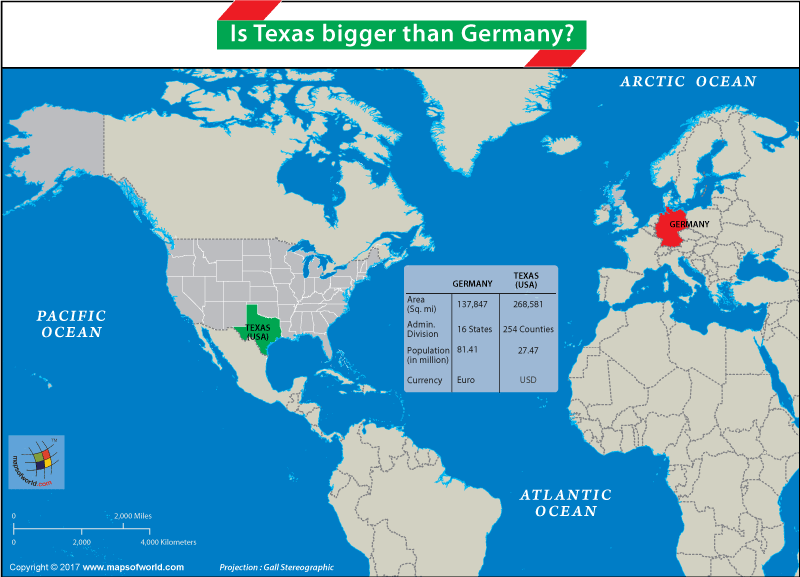
To begin our comparison, let’s establish the hard numbers. Texas, the second-largest state in the United States by both area and population, boasts an impressive land area of approximately 268,596 square miles (695,662 square kilometers). This colossal size is a significant factor in its identity, contributing to its reputation for open spaces and long drives between its major cities.
Germany, on the other hand, is a nation of considerable size within Europe. It covers an area of about 137,988 square miles (357,386 square kilometers). At first glance, the numbers might suggest a clear winner in the size contest. Texas is nearly twice the size of Germany. This substantial difference in landmass has profound implications for how one experiences and explores each region.
The Scale of Travel: Navigating Vastness
The difference in size between Germany and Texas is not merely an academic point; it directly impacts the experience of travel. Planning a trip to Texas often necessitates a different approach to logistics compared to exploring Germany.
Traversing Texas: Endless Horizons
When considering Texas, the sheer distances involved are a primary concern. Driving from El Paso in the west to Beaumont in the east can take over ten hours of uninterrupted driving, a journey longer than driving from Paris to Berlin. This means that to truly experience the diverse offerings of Texas, from the desert landscapes of West Texas to the piney woods of East Texas, and from the vibrant culture of Austin to the historical significance of San Antonio, one often needs to prioritize certain regions or allocate significant travel time.
The state’s vastness encompasses a wide array of landscapes and attractions. You can explore the sprawling metropolis of Houston, home to the Space Center Houston, or delve into the rich history of the Alamo in San Antonio. The natural beauty of Big Bend National Park offers rugged mountain trails and desert vistas, while the coastline along the Gulf of Mexico provides a different kind of natural splendor. Each of these destinations, while within the same state, requires considerable travel time to reach, underscoring the expansive nature of Texas.
For travelers seeking to cover a lot of ground, internal flights might be a more efficient option for reaching distant cities like Dallas or Fort Worth. However, the quintessential Texas road trip experience often embraces the long drives, allowing travelers to witness the changing scenery and the sheer scale of the state. This is where the concept of Lifestyle travel, particularly Budget Travel or Luxury Travel depending on the mode of transport and accommodation, becomes relevant. A road trip can be an economical choice for families with a car, or it can be a more indulgent affair with stops at upscale roadside resorts.
Exploring Germany: A Compact Continent
In contrast, Germany offers a more concentrated travel experience. While still a substantial country, its size means that intercity travel is generally quicker and more accessible. Driving from Hamburg in the north to Munich in the south takes approximately 7-8 hours, a journey comparable to driving from New York City to Chicago. This makes it far more feasible to visit multiple major cities and regions within a single trip.
Germany is renowned for its efficient public transportation system, particularly its high-speed rail network, the Deutsche Bahn. This allows travelers to move seamlessly between cities like Berlin, Frankfurt, and Cologne, experiencing diverse Landmarks, Architecture, and Local Culture in a relatively short period. For instance, a traveler could start their journey in the historic capital of Berlin, marveling at the Brandenburg Gate, then take a train to the vibrant cultural hub of Hamburg, and subsequently explore the medieval charm of Rothenburg ob der Tauber, all within a week.
The compactness of Germany also means that distinct regional identities and attractions are more readily accessible from a central point. From the fairy-tale castles of Bavaria, such as Neuschwanstein Castle, to the picturesque vineyards along the Rhine River, and the rugged beauty of the Black Forest, a variety of experiences can be woven into a single itinerary without the need for extensive cross-country travel. This density of attractions makes Germany an ideal destination for those who prefer a varied itinerary with shorter travel times between points of interest.
When it comes to Accommodation, the accessibility within Germany means that even short stays can be incredibly productive. You can easily book a city apartment in Munich for a few days or a charming guesthouse in a Black Forest village, and still have ample time to explore the surrounding areas.
Destinations and Attractions: Variety within Scale
The size of a region directly influences the sheer number and diversity of its destinations and attractions. While both Texas and Germany offer a wealth of experiences, the way these experiences are distributed and accessed differs significantly due to their geographical scale.
The Texas Spectrum: From Deserts to Coastlines

Texas encompasses a remarkable spectrum of environments and attractions. Its western regions are dominated by arid deserts and dramatic canyons, exemplified by Big Bend National Park, a paradise for hikers and nature enthusiasts. As you move east, the landscape transitions into rolling hills and then into lush forests, particularly in the East Texas region. The state also boasts a significant coastline along the Gulf of Mexico, with popular destinations like Galveston offering beach resorts and a distinct coastal Lifestyle.
In terms of Attractions, Texas is a treasure trove. History buffs can immerse themselves in the Alamo and the rich Texan Revolution history in San Antonio, or explore the oil boom heritage in towns like Midland. For those interested in space exploration, Space Center Houston is an unmissable landmark. The state is also a melting pot of cultures, reflected in its vibrant music scenes in Austin, its significant Mexican-American heritage in South Texas, and its diverse culinary offerings, from authentic Tex-Mex to world-class barbecue.
The scale of Texas means that these diverse attractions are often geographically separated, requiring dedicated travel planning. A trip focused on the natural wonders of West Texas might be entirely separate from a deep dive into the historical sites and cultural hubs of Central and East Texas. This allows for focused exploration of specific facets of the state, catering to niche Travel interests.
Germany’s Rich Tapestry: Cultural Hubs and Natural Wonders
Germany, despite its smaller landmass compared to Texas, is exceptionally rich in diverse destinations and attractions. Its geographical position in the heart of Europe has endowed it with a unique history, evident in its numerous UNESCO World Heritage sites, medieval towns, and grand palaces.
The country is punctuated by major cultural and historical centers. Berlin, the capital, is a vibrant city brimming with contemporary art, historical sites like the Reichstag Building and the Berlin Wall Memorial, and a dynamic nightlife. Further south, Munich offers a blend of traditional Bavarian charm, with its famous beer halls and the annual Oktoberfest, and modern sophistication. Cologne is known for its magnificent cathedral, while Hamburg boasts a bustling port and a lively entertainment district.
Beyond the cities, Germany offers stunning natural landscapes. The Bavarian Alps provide breathtaking mountain scenery and opportunities for skiing and hiking. The Black Forest is a region of dense woodlands, picturesque villages, and hiking trails. The Rhine Valley is famous for its vineyards, castles perched on hilltops, and charming river cruises.
The accessibility within Germany allows travelers to experience this rich tapestry without feeling overwhelmed by distances. It’s entirely possible to visit a historic castle in the morning, enjoy a scenic hike in the afternoon, and dine in a Michelin-starred restaurant in a nearby town in the evening. This density of experiences makes Germany an ideal destination for those seeking a comprehensive cultural immersion and a varied Tourism experience within a manageable timeframe.
For Accommodation providers, this density means a wide range of options, from luxurious suites in historic city hotels to cozy apartments in rural villages, catering to all Lifestyle preferences.
Practicalities and Perceptions: What Size Really Means
The comparison between Germany and Texas is not just about square miles; it’s about how that size influences our perception, our travel decisions, and the overall experience of visiting or living in these places.
The Texas Experience: Embracing the Grand Scale
The sheer size of Texas shapes its identity and the experiences it offers. It fosters a sense of boundless possibility and a spirit of self-reliance. When traveling in Texas, one learns to appreciate the vastness of the landscape, the long stretches of highway that connect communities, and the diversity that exists within its borders. This scale can be both exhilarating and daunting.
For Lifestyle travelers, Texas can cater to a variety of preferences. The Luxury Travel segment might find opulent resorts and exclusive ranches, while Budget Travel enthusiasts can explore the state through camping, hostels, and scenic drives. The agricultural heritage of Texas also influences its Food scene, with a strong emphasis on locally sourced produce and traditional dishes.
Understanding the size of Texas is crucial for effective Travel planning. It means acknowledging that a single visit might only scratch the surface of what the state has to offer, and that efficient use of time might involve prioritizing certain regions or utilizing internal flights. The perception of Texas is often one of immensity, and this is a perception that is deeply rooted in its physical dimensions.
The German Reality: Efficiency and Depth
Germany offers a different kind of experience, one that is characterized by efficiency and a deep concentration of cultural and historical wealth. Its size allows for a more intimate exploration, where the richness of its offerings can be savored without the fatigue of excessive travel.
The Tourism sector in Germany thrives on this accessibility. Visitors can easily explore multiple regions, from the industrial north to the scenic south, experiencing different Local Culture, culinary traditions, and historical periods. The country’s commitment to preserving its heritage means that Landmarks and historical sites are well-maintained and easily accessible, making it a dream destination for history and culture enthusiasts.
The Accommodation options in Germany reflect this accessibility, with a wide range of choices available to suit every budget and preference, from charming bed and breakfasts in historic towns to modern hotels in bustling city centers. The emphasis is often on quality and experience, whether it’s a five-star resort with extensive Amenities or a simple, clean apartment for a long-term stay.
In conclusion, while Texas may be significantly larger in landmass than Germany, both regions offer a wealth of unique experiences and attractions. The key difference lies in the scale of exploration required to fully appreciate them. Texas invites a grand, expansive journey, while Germany offers a concentrated, rich immersion into history, culture, and natural beauty, all within a more manageable geographical frame. The question of “How Big Is Germany Compared To Texas?” ultimately leads us to appreciate the distinct ways in which size shapes our understanding and experience of the world.
LifeOutOfTheBox is a participant in the Amazon Services LLC Associates Program, an affiliate advertising program designed to provide a means for sites to earn advertising fees by advertising and linking to Amazon.com. Amazon, the Amazon logo, AmazonSupply, and the AmazonSupply logo are trademarks of Amazon.com, Inc. or its affiliates. As an Amazon Associate we earn affiliate commissions from qualifying purchases.