
While the notion of marrying a sibling might evoke strong reactions and a flurry of legal and ethical questions, understanding the specific laws governing marriage in places like Alabama is crucial. This exploration delves into the legality of such unions within the United States, focusing on Alabama‘s specific statutes, while also touching upon broader marital laws and their historical context. The complexities of familial relationships and legal frameworks often intersect in surprising ways, and for those seeking to understand the boundaries of marriage law, especially in the context of familial ties, Alabama presents a particularly intriguing case study.

Our journey will navigate the intricacies of consanguinity laws, examining how different jurisdictions define prohibited degrees of kinship for marriage. We will also consider the broader societal and ethical implications that often underpin these legal restrictions. For travelers, those planning a wedding, or simply the academically curious, a clear understanding of marriage laws is essential, particularly when considering destination weddings or relocating to a different state. This article aims to provide clarity on a sensitive topic, grounded in legal fact and presented within the context of our website’s focus on travel, accommodation, and lifestyle.
Understanding Incest Laws and Marital Prohibitions
The question of whether it is legal to marry one’s sister in Alabama is rooted in the state’s incest laws, which are a subset of a broader legal framework across the United States aimed at preventing marriage between close blood relatives. These laws are not unique to Alabama; they are a common feature of legal systems worldwide, though the specific degrees of prohibited relationships can vary.
Consanguinity Laws: Defining Prohibited Marriages
Consanguinity refers to the state of being descended from the same ancestor. Laws prohibiting marriage based on consanguinity are designed to prevent genetic defects in offspring that can arise from interbreeding between close relatives, and also to uphold societal norms and prevent familial disruption.
In Alabama, as in most United States jurisdictions, marriage between individuals who are closely related by blood is prohibited. This prohibition typically extends to:
- Parent and Child: Any marriage between a parent and child is illegal. This is universally condemned and strictly enforced.
- Ancestor and Descendant: This includes any lineal ascendants (grandparents, great-grandparents) and descendants (grandchildren, great-grandchildren).
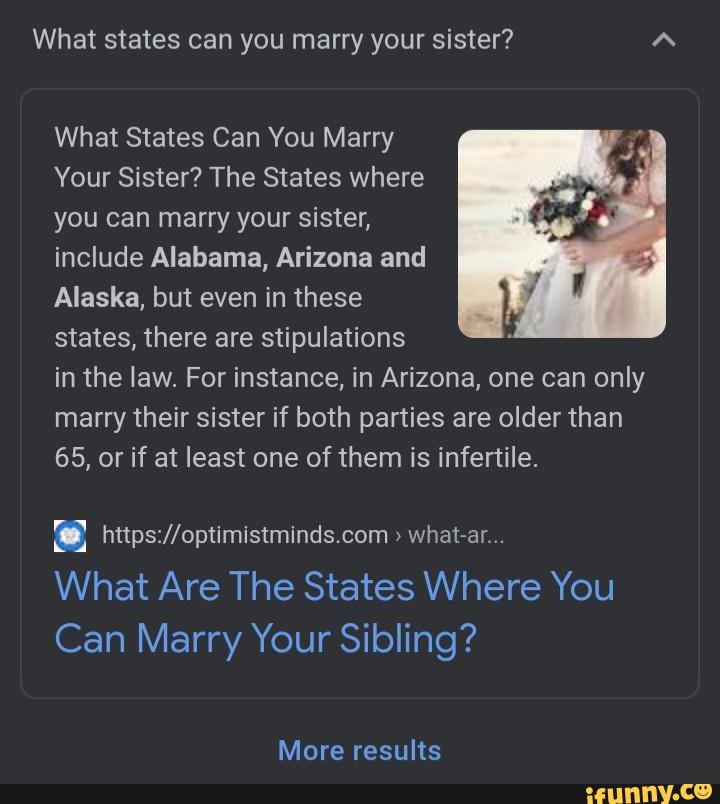
- Siblings: Marriage between full or half-siblings is prohibited. This is the direct answer to the title’s question regarding marrying one’s sister.
- Uncle/Aunt and Niece/Nephew: Marriage between an aunt or uncle and their niece or nephew is also illegal.
It’s important to note that these laws generally apply regardless of whether the individuals are full siblings (sharing both parents) or half-siblings (sharing only one parent). The degree of blood relation is the primary factor.
The Legal Framework in Alabama
Alabama‘s specific statutes on prohibited marriages are found within its Code of Alabama. The relevant sections typically define incestuous marriages as void. This means that any such marriage is considered null and without legal effect from its inception. Attempting to enter into an incestuous marriage can also carry criminal penalties, including fines and imprisonment, depending on the severity and circumstances.
The rationale behind these laws is multifaceted. Beyond the eugenics concerns, which have evolved over time as scientific understanding has advanced, these laws also serve to maintain clear family structures and prevent potential exploitation within families. Historically, concerns about maintaining social order and preventing the breakdown of traditional family units have played a significant role in shaping these regulations.
For individuals contemplating marriage, especially when considering a destination wedding in Alabama, it is imperative to be aware of these restrictions. Ignorance of the law is generally not considered a valid defense. Therefore, anyone with questions about the legality of a potential marriage, particularly concerning familial relationships, should consult legal counsel or the relevant authorities in Alabama to ensure compliance with state law.
Broader Implications of Marriage Laws for Travel and Lifestyle
While the specific question of marrying a sister in Alabama has a clear legal answer (it is illegal), the broader topic of marriage laws has significant implications for various aspects of travel, accommodation, and lifestyle choices. Understanding legal frameworks in different destinations is not only a matter of legal compliance but also a crucial element of responsible travel planning and cultural awareness.

Destination Weddings and Legal Requirements
The allure of a destination wedding is undeniable, with couples often dreaming of exchanging vows against the backdrop of a New Orleans courtyard, a Hawaiian beach, or a historic European castle. However, before booking flights to Paris or a resort in the Caribbean, couples must thoroughly research the marriage laws of their chosen destination.
Each state in the United States, and every country, has its own set of requirements for marriage. These can include:
- Residency Requirements: Some jurisdictions require a certain period of residency before a marriage license can be issued.
- Waiting Periods: There might be a waiting period between applying for a marriage license and when the ceremony can take place.
- Blood Tests or Medical Certificates: While less common now, some places may still require these.
- Age Restrictions: Legal age for marriage, with and without parental consent, varies.
- Prohibited Marriages: As discussed, incest laws are a universal prohibition. Additionally, some places may have restrictions on same-sex marriage (though this is increasingly rare in many parts of the world) or polygamy.
For a destination wedding, especially one involving individuals with complex familial relationships, ensuring compliance with both their home state’s laws and the destination’s laws is paramount. This is where the services of destination wedding planners, who are well-versed in local legalities, become invaluable. They can guide couples through the paperwork and ensure the marriage is legally recognized in their home country upon return.
For instance, a couple planning a wedding in Las Vegas might find the process relatively straightforward, with a wide range of services catering to tourists. However, the legal requirements for marrying a relative would still apply, regardless of the ease of obtaining a license.
Accommodation and Lifestyle Choices
The legal landscape surrounding marriage can also subtly influence accommodation choices and lifestyle decisions. For instance, understanding the legal definition of marriage is important for:
- Booking Accommodation: While hotels generally do not inquire about marital status, certain types of accommodation, like long-term rentals or villa bookings, might have specific clauses or expectations based on who is booking and for what purpose. Luxury travel or family trips might involve specific considerations that are indirectly linked to legal partnerships.
- Travel Insurance: The terms and conditions of travel insurance policies can differ based on whether one is traveling as a single person, a married couple, or a family. Understanding legal marital status can be important for accurate policy selection.
- Inheritance and Estate Planning: For those who are contemplating significant lifestyle changes, such as a long-term stay in a foreign country or the purchase of property, understanding how their marital status (or lack thereof) affects inheritance and estate planning is crucial. This is particularly relevant for individuals in less conventional familial structures.
The website’s focus on Travel, Hotels, Tourism, Accommodation, and Lifestyle provides a broad canvas upon which these legal questions can be viewed. A couple legally married in one state might have different rights and responsibilities when traveling to another or seeking accommodation than an unmarried couple or individuals with complex familial ties. While the question of marrying a sister in Alabama is a strict legal prohibition, the broader theme of understanding marriage laws is integral to navigating the complexities of modern travel and lifestyle choices.
Historical Context and Evolving Social Norms
The laws prohibiting marriage between close relatives are not static; they have evolved over centuries, reflecting changing societal attitudes, religious doctrines, and scientific understanding. Historically, many cultures had strict taboos against incest, often rooted in religious texts and societal structures designed to maintain distinct kinship lines and prevent the concentration of power and property within a family.
In the United States, the legal framework for marriage has been largely inherited from English common law. Early colonists brought these traditions with them, and they were subsequently codified into state laws. The specific degrees of prohibited relationships have seen some minor variations and reinterpretations over time, but the core prohibitions, including those against sibling marriage, have remained remarkably consistent.
The growing understanding of genetics in the 19th and 20th centuries provided a more scientific basis for concerns about consanguineous marriages, highlighting the increased risk of genetic disorders in offspring. While eugenics as a movement has been largely discredited due to its association with discriminatory practices, the biological rationale for caution regarding reproduction between very close relatives remains a factor in many legal systems.
Furthermore, societal norms around family structures are constantly evolving. However, even with increasing acceptance of diverse family forms, the legal definition of marriage and its associated rights and responsibilities remain anchored in traditional understandings of kinship, especially concerning prohibitions against incest.
For travelers and individuals making significant lifestyle choices, understanding this historical context can provide a deeper appreciation for the legal frameworks they encounter. When planning a trip to a place like Rome to explore ancient Landmarks, or booking a resort in the Mexican Riviera, recognizing that legal norms are shaped by historical and cultural forces can enhance the travel experience. The laws of Alabama, like those of other states and countries, are a product of this ongoing evolution, and for any legal union, especially one that skirts the edges of conventional norms, due diligence and a clear understanding of the law are always essential.
LifeOutOfTheBox is a participant in the Amazon Services LLC Associates Program, an affiliate advertising program designed to provide a means for sites to earn advertising fees by advertising and linking to Amazon.com. Amazon, the Amazon logo, AmazonSupply, and the AmazonSupply logo are trademarks of Amazon.com, Inc. or its affiliates. As an Amazon Associate we earn affiliate commissions from qualifying purchases.