
When planning a trip to the Golden State, you might find yourself wondering about the legality of carrying certain items, especially for self-defense or practical use. One item that frequently comes up in discussions is the OTF knife, or Out-The-Front knife. These knives, characterized by their spring-loaded blade that deploys and retracts straight out of the front of the handle, offer a unique mechanism. However, their legality can be a complex issue, particularly in a state like California with a nuanced approach to weapon laws.
Understanding the specific regulations surrounding knives in California is crucial for any visitor or resident. The allure of a convenient, single-action knife like an OTF is undeniable for many, but ignorance of the law can lead to serious legal consequences. This article aims to clarify the current legal standing of OTF knives in California, examining the relevant statutes and providing a comprehensive overview. Whether you’re exploring the vibrant streets of Los Angeles, hiking in Yosemite National Park, or enjoying the coastal beauty of San Diego, knowing what you can and cannot carry is paramount for a safe and lawful experience.
Navigating California’s Knife Laws
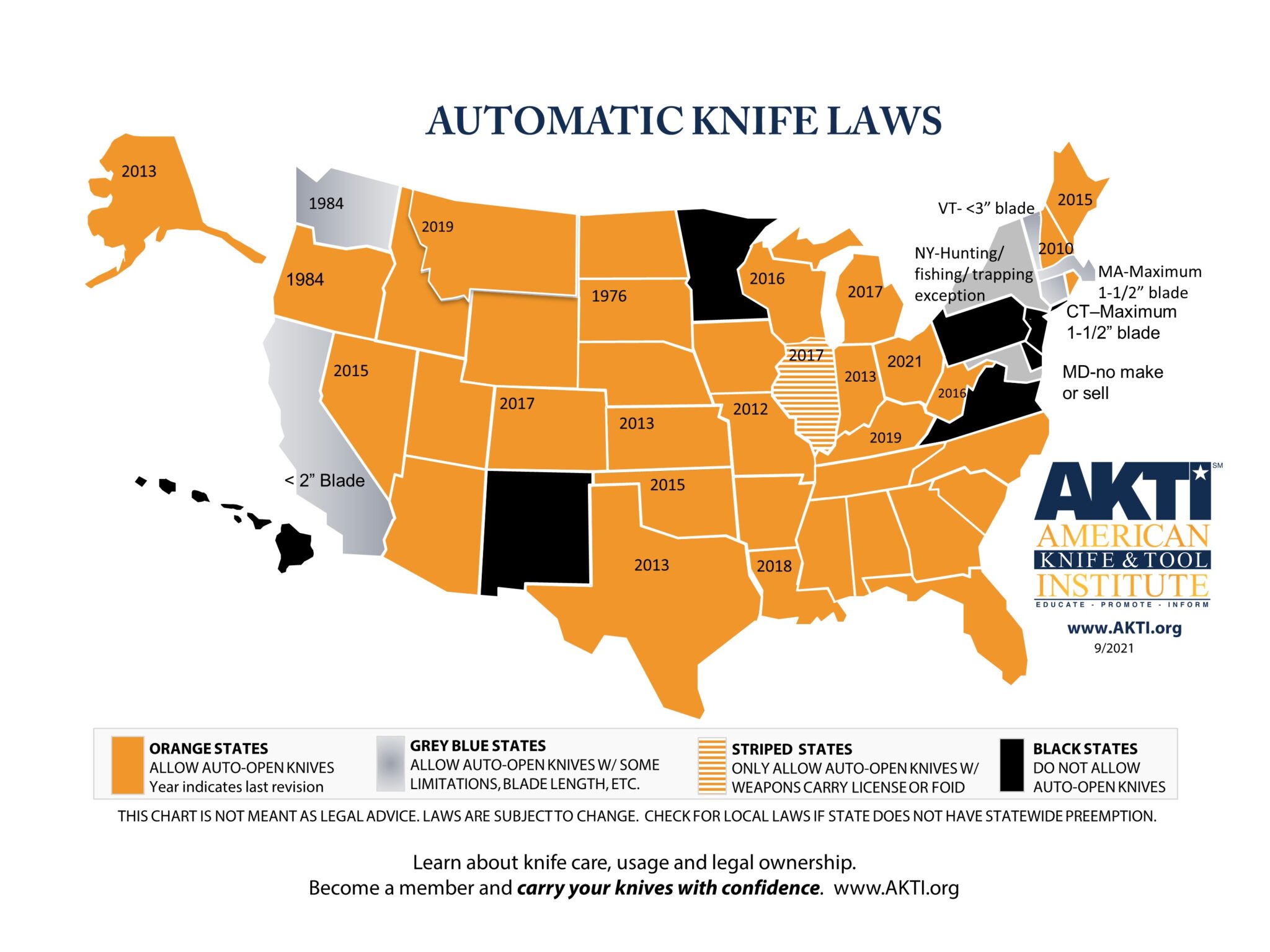
California has a generally permissive stance on the possession and carrying of most knives, but there are key distinctions that impact OTF knives. The state’s Penal Code, specifically Section 21310, is central to this discussion. This section addresses “dirks or daggers,” which are broadly defined. A crucial aspect of California knife law is the prohibition of carrying “any dirk or dagger concealed on the person.” The definition of a “dagger” in this context is critical. It generally refers to a knife with a double-edged blade or a knife with a blade that is designed to pierce.
What Constitutes a “Dirk or Dagger” in California?
The interpretation of “dirk or dagger” has evolved through case law and legislative amendments. Historically, this category was primarily associated with knives that had a fixed blade capable of stabbing. However, the law has been interpreted to encompass knives that, by their design, are readily capable of being used as stabbing weapons. This is where OTF knives often fall into a grey area, depending on their specific design and mechanism.
The primary concern for law enforcement and the courts when assessing an OTF knife is whether it can be readily deployed and used as a stabbing instrument. The rapid deployment mechanism of an OTF knife can be seen as a characteristic that aligns with the intent behind the prohibition of concealed daggers – to prevent individuals from carrying readily accessible stabbing weapons. While many OTF knives are designed for utility and not solely as weapons, their inherent functionality can lead to their classification as prohibited items under certain circumstances.
The law in California primarily focuses on the concealed carrying of such items. Therefore, openly carrying a knife, even one that might be considered a dagger by some definitions, is generally permissible, provided it’s not concealed. However, the concealed carry prohibition is strict. For an OTF knife, the question becomes whether its concealed presence on your person, regardless of whether the blade is deployed, is considered carrying a concealed dirk or dagger.
The Specifics of OTF Knife Legality
The core of the question “Are OTF Knives Legal in California?” hinges on how these knives are classified under state law, particularly in relation to concealed weapons. While California Penal Code Section 21310 prohibits the concealed carrying of dirks and daggers, the specific classification of OTF knives can be subject to interpretation.
Automatic Knives and Spring-Assisted Mechanisms
It is important to distinguish between different types of knives. California Penal Code Section 17230 specifically addresses “switchblades” (also known as automatic knives), defining them as knives with a blade that opens, whether automatically or manually, by means of pressure applied to the blade, the handle, or any spring or other device in the handle. However, the prohibition against carrying switchblades is generally limited to specific locations such as schools, courthouses, or airports.
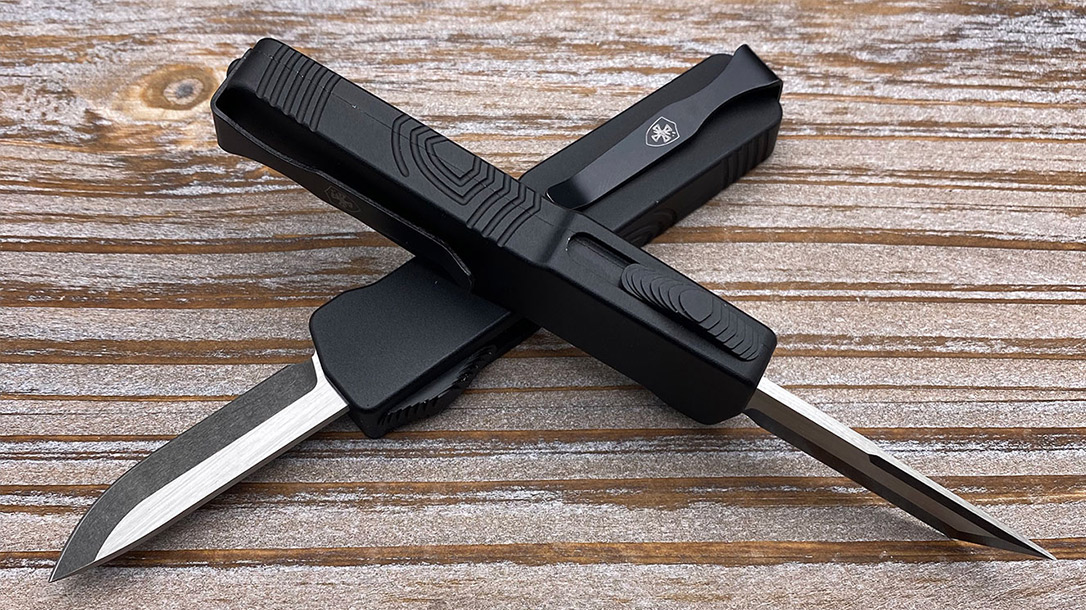
OTF knives, with their dual-action mechanism (deploying and retracting via a slider), are often categorized under the umbrella of automatic knives. The key differentiator is the direction of blade deployment. Unlike side-opening automatics, OTF blades move directly forward and backward.
The legality of carrying an OTF knife in California can be understood by examining the interplay of two main statutes:
-
California Penal Code § 21310 (Prohibition of Carrying Concealed Dirk or Dagger): This is the most relevant statute. If an OTF knife is deemed a “dirk or dagger,” then carrying it concealed on your person is illegal. The definition of a dirk or dagger is broad and can include knives with a blade that is designed primarily to pierce or stab. The mechanism of an OTF, which allows for rapid deployment, can be a factor in this interpretation.
-
California Penal Code § 17230 (Prohibition of Carrying Switchblade Knives): This section generally prohibits the carrying of switchblade knives. However, the prohibition on switchblades is not as broad as the prohibition on concealed dirks and daggers. It primarily applies to specific locations.
The Crucial Interpretation: Is an OTF a “Dirk or Dagger”?
The legal classification of an OTF knife in California often hinges on whether a court would consider it a “dirk or dagger” under Section 21310. This classification is not always clear-cut and can depend on the specific design of the OTF knife and the intent of the person carrying it.
- Dual-Action OTF Knives: These knives, where the blade can be deployed and retracted with a slider mechanism, are generally the most contentious. Their rapid deployment capability can lead to them being viewed as easily accessible stabbing weapons.
- Single-Action OTF Knives: Some OTF knives are designed to deploy the blade with one action and retract it with another, often requiring more deliberate manipulation. These might be viewed differently by law enforcement, though the distinction can be subtle.
General Consensus and Practical Advice
While the exact legal interpretation can be nuanced and subject to local enforcement, the general consensus and the most cautious approach for anyone traveling to or residing in California is to avoid carrying OTF knives that could be construed as concealed dirks or daggers.
This means that while possessing an OTF knife might be legal in your own home or for display, carrying one concealed in public places, such as on the streets of San Francisco, in a restaurant in Napa Valley, or at a concert in Hollywood, carries a significant risk of legal trouble.
Key takeaway: If an OTF knife has a blade that can be deployed with a spring or similar mechanism and is designed in a way that it can be easily concealed and used for stabbing, it is very likely to be considered a concealed dirk or dagger, making its concealed carrying illegal in California.
Exceptions, Local Ordinances, and Responsible Ownership
While California state law provides the overarching framework for knife regulations, it’s important to consider potential exceptions, the role of local ordinances, and the principles of responsible ownership. Understanding these facets can provide a more complete picture of knife legality in the state.
Law Enforcement Discretion and Interpretations
It is important to acknowledge that the enforcement of knife laws can sometimes involve elements of discretion by law enforcement officers. An officer’s interpretation of whether a specific OTF knife falls under the definition of a “dirk or dagger” can vary. Factors such as the overall design of the knife, its perceived intent, and the context in which it is found can influence this judgment. Therefore, even if a knife might technically exist in a grey area of the law, carrying it in public can still lead to an encounter with law enforcement and the potential for confiscation or legal proceedings.
Local Ordinances and Enhanced Restrictions
While state law sets the baseline, cities and counties within California may have their own ordinances that impose stricter regulations on knives. These local laws can further restrict the types of knives that are permissible to carry, or they may impose additional restrictions on where certain knives can be carried. For example, a city might have specific prohibitions on carrying any type of automatic knife, or it might ban certain knives in public parks or entertainment venues. When traveling to a specific destination within California, it is always advisable to research the local laws of that particular city or county. This is especially pertinent if you are planning to visit popular tourist spots like theme parks, historical sites, or event venues where security is heightened.
Responsible Ownership and Travel Tips
For travelers who are accustomed to carrying knives for utility or self-defense purposes, it is crucial to adapt to California’s regulations. The most prudent approach when it comes to OTF knives in California is to err on the side of caution.
- Leave them at home: If you are unsure about the legality of your specific OTF knife in California, the safest option is to leave it at home or in your vehicle. Most travelers will not require an OTF knife for their vacation activities, whether they are enjoying the luxury of a resort in Beverly Hills or exploring the natural wonders of the Redwood National and State Parks.
- Opt for legal alternatives: If you require a cutting tool for general utility during your travels in California, consider carrying a folding knife with a blade that does not open automatically. These are generally legal to carry concealed in California, as long as they are not locked open when concealed.
- Understand the definition of “concealed”: In California, a knife is generally considered concealed if it is not visible or apparent to an ordinary observer. This means carrying it in a pocket, purse, or bag without it being openly displayed.
- When in doubt, do not carry: The legal landscape can be complex. If you have any doubt about the legality of carrying an item, it is always best to refrain from carrying it in public. This principle extends to many areas of travel and lifestyle, ensuring a smooth and trouble-free experience.
By adhering to these guidelines and understanding the nuances of knife laws in California, travelers can ensure they comply with the law and avoid potential legal issues, allowing them to fully enjoy their visit to the Golden State, from its bustling cities to its serene natural landscapes.
LifeOutOfTheBox is a participant in the Amazon Services LLC Associates Program, an affiliate advertising program designed to provide a means for sites to earn advertising fees by advertising and linking to Amazon.com. Amazon, the Amazon logo, AmazonSupply, and the AmazonSupply logo are trademarks of Amazon.com, Inc. or its affiliates. As an Amazon Associate we earn affiliate commissions from qualifying purchases.