
The concept of “Castle Doctrine” evokes images of homeowners wielding firearms to defend their property and lives, a notion deeply ingrained in certain legal interpretations of self-defense. For travelers, residents, and even property owners in a state as diverse and dynamic as California, understanding the nuances of self-defense laws, including whether the state upholds a “Castle Doctrine,” is not just a matter of legal curiosity but a practical consideration for personal safety. This article delves into California’s legal framework surrounding self-defense, specifically addressing the presence and scope of what is commonly understood as the Castle Doctrine.

The website’s focus on travel, accommodation, tourism, and lifestyle naturally intersects with personal safety and the legal rights individuals possess within their living spaces. Whether you’re a tourist staying in a suite at the Ritz-Carlton Los Angeles, a family renting a villa in Napa Valley, or a long-term resident in an apartment in San Francisco, understanding your rights in a self-defense situation is paramount.
Understanding the Castle Doctrine: A General Overview
The Castle Doctrine, in its most basic interpretation, is a legal principle that grants individuals the right to use deadly force to defend themselves and their property, particularly within their own homes, without a duty to retreat. The underlying philosophy is that a person’s home is their castle, a sanctuary where they should not be forced to flee from an intruder. This doctrine often extends to other occupied spaces, such as a vehicle or a place of business.
Key tenets commonly associated with the Castle Doctrine include:
- No Duty to Retreat: In your home, you are not legally obligated to attempt to escape an attacker.
- Presumption of Reasonable Fear: The law may presume that a person has a reasonable fear of death or serious bodily harm when an intruder unlawfully enters their dwelling.
- Justification for Deadly Force: The use of deadly force is considered justified if it is necessary to prevent imminent death or great bodily injury to oneself or others, or to prevent the commission of a serious felony.
However, it’s crucial to recognize that the application and interpretation of the Castle Doctrine vary significantly from state to state. Some states have adopted explicit “stand your ground” laws, which are often seen as an expansion of the Castle Doctrine, further removing any duty to retreat even in public spaces. Other states maintain more nuanced approaches, with the duty to retreat still being a factor in certain circumstances.
California’s Approach to Self-Defense: Beyond the Castle Doctrine
While California does not have a specific statute explicitly titled “Castle Doctrine,” the state’s legal framework for self-defense does incorporate principles that are analogous to the doctrine, particularly concerning the sanctity of one’s home. California law recognizes the right to self-defense, but it is defined by specific statutes and judicial interpretations that create a unique legal landscape.
The Right to Self-Defense in California
California Penal Code Section 198.5 is often cited as the closest equivalent to a “Castle Doctrine” in the state. This section, enacted in 1975, states:
“Any person, using force reasonably and necessarily, or the use of which reasonably and necessarily produces a fear of imminent peril, to defend their home or dwelling place, or the home or dwelling place of another, against anyone who has unlawfully and forcibly entered the home or dwelling place of such person or another, is not required to attempt to retreat from such peril. Such person is justified in using any and all force reasonably necessary to repel invasion and to prevent injury, damage, harm, or death.”
This statute is significant because it explicitly removes the duty to retreat when defending one’s home against an unlawful and forcible entry. This means that if someone unlawfully breaks into your home, you are generally not required to try and escape the situation before using reasonable force to defend yourself.
Key Elements Under California Penal Code Section 198.5:
- Lawful Occupant: The law applies to individuals who are lawfully occupying the dwelling. This includes homeowners, renters, and even guests.
- Unlawful and Forcible Entry: The intruder must have entered the dwelling unlawfully and with force. This could involve breaking down a door, smashing a window, or using threats of violence to gain entry.
- Reasonable Necessity of Force: The force used must be reasonable and necessary to defend the home and its occupants. This is a crucial element, as excessive force can lead to criminal charges.
- Fear of Imminent Peril: The occupant must have a reasonable fear of imminent peril, such as death or great bodily injury.
It’s important to distinguish this from a general “stand your ground” law. California does not have a statewide stand your ground law that would permit the use of deadly force without a duty to retreat in any location where a person has a legal right to be. The duty to retreat, where applicable, remains a factor in public spaces or situations outside of the home.
Limitations and Nuances of Self-Defense in California
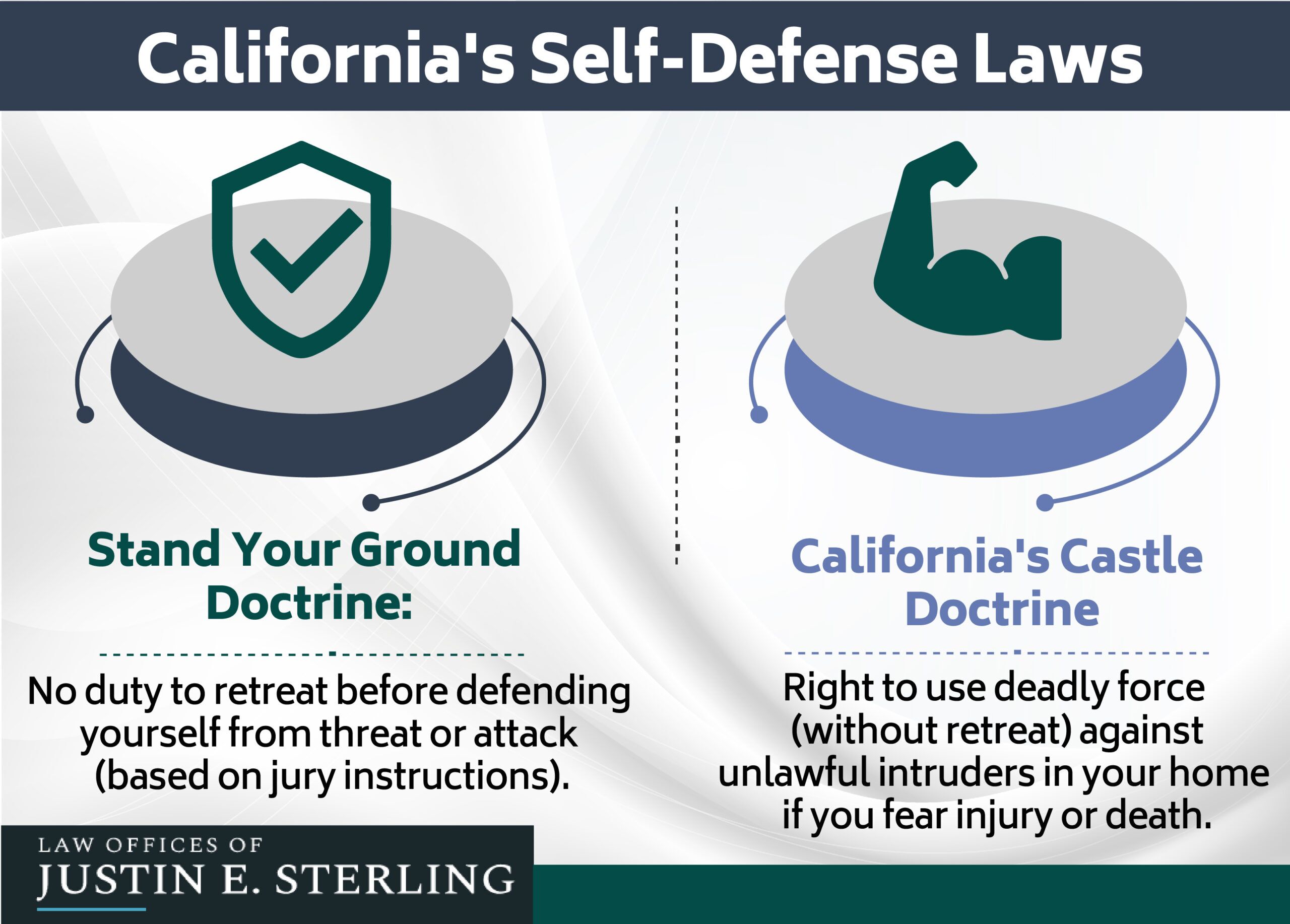
While California Penal Code Section 198.5 provides significant protection for those defending their homes, it’s vital to understand its limitations and the broader context of self-defense law. The interpretation and application of these laws are complex and depend heavily on the specific facts of each case.
Beyond the Dwelling: The Duty to Retreat
In situations outside of one’s home, California generally imposes a duty to retreat when faced with a threat, if doing so is possible and safe. This means that if you can safely disengage from a confrontation in a public place, such as on the street outside your hotel in San Diego or in a park near a landmark like the Golden Gate Bridge, the law may expect you to do so rather than resorting to deadly force.
However, this duty to retreat does not apply if:
- You are in a place you have a legal right to be.
- Retreating would expose you to greater danger.
- You are attempting to prevent a violent felony from being committed against yourself or another.
The application of the duty to retreat is a highly fact-specific inquiry. Judges and juries will consider all the circumstances surrounding the event to determine if retreat was a reasonable option.
Reasonable Force: A Subjective and Objective Standard
The concept of “reasonable force” is central to all self-defense claims in California. What constitutes reasonable force is not always clear-cut and can be interpreted differently by individuals and the legal system.
- Subjective Fear: The person claiming self-defense must have genuinely believed that they were in imminent danger of death or great bodily injury.
- Objective Reasonableness: A reasonable person in the same situation would have also believed that deadly force was necessary.
This means that even if you subjectively felt threatened, the use of deadly force might not be considered reasonable if an objective observer would not have perceived the threat to be that severe. For example, if you are staying in a luxury resort like the Auberge du Soleil and a guest in an adjacent villa becomes verbally aggressive but makes no physical threat, responding with deadly force would likely be deemed unreasonable.
Defense of Property vs. Defense of Life
It is also critical to understand that California law places a higher value on human life than on property. While California Penal Code Section 198.5 allows for the use of force to defend one’s home against forcible entry, the primary justification for the use of deadly force is the protection of human life or the prevention of serious bodily harm. Using deadly force solely to protect property, without any threat to life or limb, is generally not permissible and can lead to severe legal consequences. This distinction is vital for anyone staying in vacation rentals or hotels, where the focus of defense should always be on personal safety.
Practical Implications for Travelers and Residents
Understanding California’s self-defense laws has practical implications for everyone, whether you are a tourist exploring the vibrant culture of Los Angeles, a business traveler on an extended stay in San Jose, or a resident in your own home.
For Tourists and Visitors:
- Awareness of Surroundings: Always be aware of your surroundings, especially when staying in unfamiliar accommodations or visiting new areas. Familiarize yourself with the security measures in your hotel, such as the Fairmont San Francisco.
- Securing Your Accommodation: Ensure that the doors and windows of your hotel room, apartment, or villa are properly secured, especially at night.
- Avoiding Confrontation: In public spaces, prioritize de-escalation and avoidance of confrontation. If a situation appears to be escalating, remove yourself from it if it is safe to do so.
- Understanding Hotel Policies: Be aware of any specific policies your hotel or accommodation provider might have regarding security or guest conduct.

For Property Owners and Residents:
- Home Security: Invest in robust home security systems, including well-maintained locks and lighting, to deter potential intruders.
- Education on Laws: Familiarize yourself with California Penal Code Section 198.5 and its limitations. Consider consulting with a legal professional to fully understand your rights and responsibilities.
- Non-Lethal Deterrents: Explore non-lethal deterrents and security measures that do not involve firearms, if possible, to avoid the complexities and potential legal ramifications of using deadly force.
In conclusion, while California does not use the specific term “Castle Doctrine,” it does provide significant legal protection to individuals defending their homes against unlawful and forcible entry through California Penal Code Section 198.5. This law allows for the use of reasonable and necessary force, including deadly force, without a duty to retreat in such circumstances. However, outside of the home, California generally retains a duty to retreat, and the use of force, especially deadly force, must always be reasonable and necessary, with the primary justification being the protection of human life. For anyone living in or visiting California, understanding these legal principles is a crucial aspect of personal safety and legal preparedness.
LifeOutOfTheBox is a participant in the Amazon Services LLC Associates Program, an affiliate advertising program designed to provide a means for sites to earn advertising fees by advertising and linking to Amazon.com. Amazon, the Amazon logo, AmazonSupply, and the AmazonSupply logo are trademarks of Amazon.com, Inc. or its affiliates. As an Amazon Associate we earn affiliate commissions from qualifying purchases.