
Embarking on a career in real estate in the Golden State is an exciting prospect, especially given the dynamic and ever-evolving property market. California, with its diverse landscapes ranging from the sun-drenched beaches of Southern California to the majestic mountains of the Sierra Nevada, offers a unique and rewarding environment for real estate professionals. Whether you dream of helping clients find their perfect beachfront villa in Malibu, a bustling urban condo in San Francisco, or a sprawling vineyard estate in Napa Valley, obtaining a realtor license is your crucial first step. This comprehensive guide will walk you through the essential requirements and steps to secure your California real estate license, ensuring you’re well-prepared to navigate this exciting industry.
Understanding the California Real Estate Licensing Process
The path to becoming a licensed real estate salesperson in California is governed by the California Department of Real Estate (DRE). This state agency oversees all aspects of real estate licensing to ensure that all licensees meet a certain standard of knowledge and ethical conduct. The process is designed to equip aspiring realtors with the fundamental understanding of real estate law, principles, and practices necessary to serve the public effectively and protect consumer interests.
Eligibility Requirements: Laying the Foundation
Before you dive into courses and exams, it’s important to ensure you meet the basic eligibility criteria set forth by the DRE. These requirements are in place to maintain the integrity of the profession and ensure that only qualified individuals are granted licenses.
- Age: You must be at least 18 years of age to apply for a real estate salesperson license in California.
- Residency: While not a strict residency requirement in terms of how long you’ve lived in California, you must provide a valid California mailing address for your license. This is typically where your official license and any correspondence from the DRE will be sent.
- Honesty and Truthfulness: Applicants must be honest and truthful in their application. Any misrepresentation or omission of material facts can lead to denial of the license or disciplinary action if discovered later. The DRE conducts background checks, and applicants with certain criminal convictions may be ineligible. It’s advisable to contact the DRE directly if you have concerns about your criminal history and its impact on your eligibility.
- Legal Status: You must be legally present and authorized to work in the United States.
Meeting these foundational requirements ensures you can proceed with the licensing process without encountering any fundamental roadblocks.
The Educational Journey: Mastering Real Estate Principles
The California Department of Real Estate mandates specific educational courses designed to provide you with the knowledge and skills necessary to succeed as a real estate agent. These courses are crucial for both passing the state licensing exam and for effectively advising your clients on their real estate transactions.
Required Pre-Licensing Courses
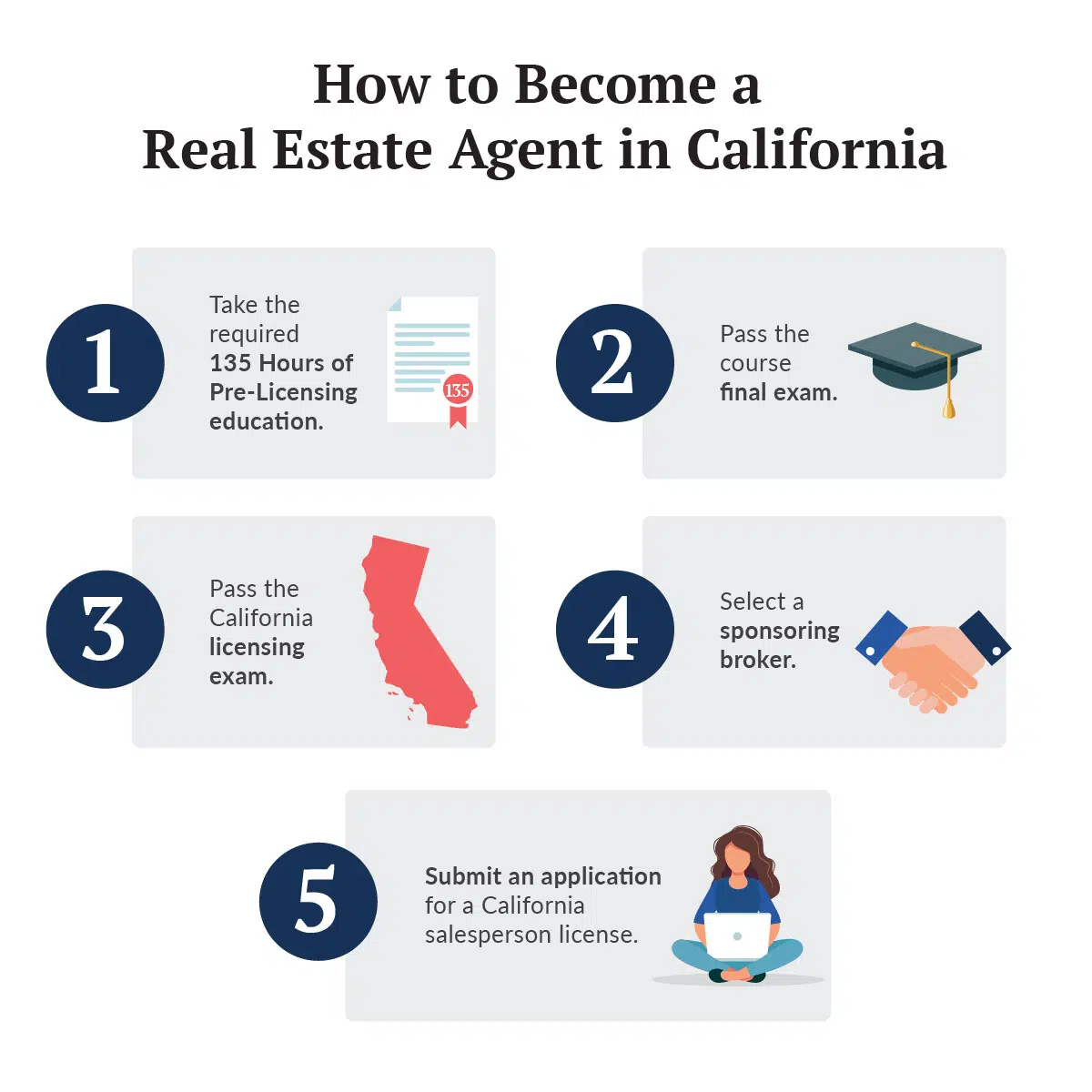
To qualify for the salesperson license examination, you must successfully complete three 45-hour courses, totaling 135 hours of approved education. These courses cover essential aspects of real estate practice and law.
- Real Estate Principles: This foundational course provides a comprehensive overview of the real estate industry. It covers fundamental concepts such as property rights, types of ownership, legal descriptions, contracts, agency relationships, financing, and the responsibilities of a real estate professional. You’ll learn about the various aspects of property valuation, market analysis, and the ethical considerations involved in real estate transactions. This course is vital for understanding the broad scope of the profession and the legal frameworks within which it operates.
- Real Estate Practice: This course delves into the practical application of real estate principles in day-to-day operations. It focuses on the skills and techniques required to conduct real estate business effectively. Topics include prospecting for clients, listing properties, marketing strategies, negotiation tactics, managing escrows, and closing transactions. You will also gain insights into common real estate forms, disclosure requirements, and the importance of professional conduct. This course is designed to prepare you for the hands-on aspects of being a realtor, from client interaction to transaction management.
- One Elective Course: In addition to the two core courses, you must complete one additional 45-hour elective course from a list approved by the DRE. Popular elective options include:
- Real Estate Appraisal
- Property Management
- Real Estate Law
- Real Estate Finance
- Real Estate Economics
- Legal Aspects of Real Estate
Choosing an elective that aligns with your interests or a specific niche you wish to pursue within real estate can be beneficial. For instance, if you are fascinated by historic homes and their unique architecture in cities like San Francisco or Savannah, a course focusing on real estate law or appraisal might be particularly insightful. If you envision yourself managing rental properties or assisting clients with investment portfolios in burgeoning markets like Austin, property management or real estate finance could be excellent choices.
Finding an Accredited Education Provider
You must complete these courses through a California Department of Real Estate-approved education provider. Numerous institutions offer these courses, both online and in traditional classroom settings. When selecting a provider, consider:

- Accreditation: Ensure the provider is officially recognized by the DRE.
- Format: Decide whether an online or in-person format best suits your learning style and schedule. Online courses offer flexibility, allowing you to study at your own pace, while in-person classes can provide more direct interaction with instructors and fellow students.
- Reputation and Reviews: Look for providers with positive reviews and a strong track record.
- Cost: Compare tuition fees across different institutions.
Upon successful completion of each course, the education provider will issue you a certificate. You will need to retain these certificates as proof of your completed education when you apply for your license.
The Examination and Application Process: Demonstrating Your Expertise
Once you have fulfilled the educational requirements, the next critical steps involve applying for the exam and then passing it. This phase requires careful attention to detail and a thorough understanding of the material covered in your pre-licensing courses.
Applying for the Salesperson Examination
After completing your required courses, you will need to submit an official application to the California Department of Real Estate. This application can be submitted online or via mail.
- Application Form: You will need to download and complete the “Real Estate Salesperson Examination Application” (RE 435) or apply online through the DRE‘s e-licensing portal.
- Education Certificates: You must attach copies of your course completion certificates to your application.
- Exam Fee: A non-refundable fee is required for the examination. The current fee can be found on the DRE‘s official website.
- Background Check: As part of the application process, you will undergo a background check, including fingerprinting. The DRE utilizes the California Department of Justice (DOJ) and the Federal Bureau of Investigation (FBI) for these checks. You will be provided with instructions on how to complete the fingerprinting process.
Once your application is reviewed and approved by the DRE, you will be issued an “Examination Schedule Notice,” which will inform you of the date, time, and location of your exam.
Preparing for and Taking the Salesperson Examination
The California real estate salesperson exam is a comprehensive test designed to assess your knowledge of real estate principles, laws, and practices as they apply in California.
- Exam Content: The exam covers a wide range of topics, including property ownership, deeds and title, contract law, agency, financing, property management, landlord-tenant laws, fair housing, ethics, and state-specific regulations. The DRE provides an Examination Content Outline, which is an invaluable resource for understanding the structure and topics covered in the exam.
- Study Strategies: Effective preparation is key. Utilize your course materials, consider purchasing study guides specifically designed for the California real estate exam, and take practice tests to identify areas where you need further review. Many DRE-approved education providers offer exam prep courses or materials. Focusing on understanding the underlying principles rather than just memorizing facts will be beneficial.
- The Exam Day: On the day of the exam, arrive at the testing center early and bring the required identification and your Examination Schedule Notice. The exam is typically a multiple-choice test administered on a computer. You will need to achieve a passing score to be issued a license.
- Retaking the Exam: If you do not pass the exam on your first attempt, you will need to reapply and pay the exam fee again. You can retake the exam as many times as necessary, provided your application remains valid.
The Final Step: Activation of Your License
Once you have successfully passed the salesperson examination, you are almost there. The final step is to complete the license activation process.
- License Application: You will be provided with a license application after passing the exam. This form confirms your intent to be licensed.
- Sponsorship: A crucial requirement for a salesperson license is to be sponsored by a licensed real estate broker. You cannot legally practice real estate independently as a salesperson. You will need to find a broker who is willing to sponsor your license. This often involves interviewing with different brokerage firms, such as Coldwell Banker in Pasadena or Keller Williams in San Diego, to find a good fit for your career aspirations and working style. Your sponsoring broker will be responsible for your actions as a salesperson and will provide you with guidance and supervision.
- License Fee: A license fee will be required upon submission of your activated license application.
Once your broker sponsorship is confirmed and all fees are paid, the California Department of Real Estate will issue your official real estate salesperson license. Congratulations, you are now a licensed realtor in California!
This structured approach, from meeting eligibility requirements and completing rigorous education to passing the state exam and securing a broker sponsorship, ensures that you are well-equipped to begin your rewarding career in California’s vibrant real estate market. Remember, continuous learning and ethical practice are paramount to long-term success in this dynamic profession. Whether you’re drawn to the luxury market of Beverly Hills, the family-friendly neighborhoods of Orange County, or the tech-driven real estate scene in Silicon Valley, your license is your ticket to helping others achieve their property dreams.
LifeOutOfTheBox is a participant in the Amazon Services LLC Associates Program, an affiliate advertising program designed to provide a means for sites to earn advertising fees by advertising and linking to Amazon.com. Amazon, the Amazon logo, AmazonSupply, and the AmazonSupply logo are trademarks of Amazon.com, Inc. or its affiliates. As an Amazon Associate we earn affiliate commissions from qualifying purchases.