
Navigating the intricacies of labor laws can be as complex as planning a memorable trip through the Golden State. For those working in California, understanding when double time kicks in is crucial for ensuring fair compensation and avoiding costly disputes. This isn’t just about a few extra dollars; it’s about recognizing the value of hard work and the importance of work-life balance, a concept that resonates deeply with the lifestyle promoted by exploring incredible destinations and experiencing unique attractions. Whether you’re a seasoned professional working in the heart of Los Angeles or a seasonal worker contributing to the vibrant tourism industry of San Francisco, knowing your rights regarding overtime pay is essential.
The framework for overtime pay in California is meticulously defined by the California Labor Code, designed to protect employees from excessive working hours and to incentivize employers to manage staffing efficiently. The fundamental principle is that certain hours worked beyond a standard workday or workweek must be compensated at a higher rate. This applies to a vast array of industries, from the bustling hospitality sector that services world-class resorts and hotels to the innovative tech companies shaping the future, and even to those working in the agricultural fields that feed the nation.
This article will delve into the specific triggers for double time pay in California, exploring the standard workweek, the daily overtime thresholds, and the exceptions that might apply. We’ll also touch upon the broader implications for both employees and employers, and how these regulations contribute to the overall lifestyle and economic health of the state, from the sun-drenched beaches of San Diego to the majestic redwoods of the north.
Understanding the Basics of Overtime in California
At its core, California‘s overtime laws are built around the concept of a standard workday and a standard workweek. Understanding these foundational elements is the first step to grasping when double time becomes applicable. The state’s regulations are notably employee-friendly, often exceeding federal standards and providing robust protections.
The Standard Workday and Workweek
In California, a standard workday is defined as any day in which an employee works eight (8) hours or more. Similarly, a standard workweek is any week in which an employee works 40 hours or more. These definitions are the bedrock upon which overtime calculations are made. Any hours worked beyond these established benchmarks are generally subject to overtime pay.
- Daily Overtime: Employees are entitled to overtime pay for hours worked beyond eight (8) hours in any single workday. This means if you work nine (9) hours in a day, the ninth hour is considered overtime.
- Weekly Overtime: Employees are also entitled to overtime pay for hours worked beyond 40 hours in any single workweek. This is calculated over a fixed, seven-day period, which is usually the employer’s designated payroll period.
The distinction between daily and weekly overtime is important. An employee might work fewer than eight hours on most days but exceed 40 hours by the end of the week, thus qualifying for weekly overtime. Conversely, an employee could work nine hours a day for four days, totaling 36 hours, and still trigger daily overtime for those nine-hour days, even if they don’t reach 40 hours for the week.
The Three-Tiered Overtime System
California distinguishes between time and a half and double time pay. This tiered system provides increasing compensation for longer working hours, acknowledging the greater strain and sacrifice involved.
-
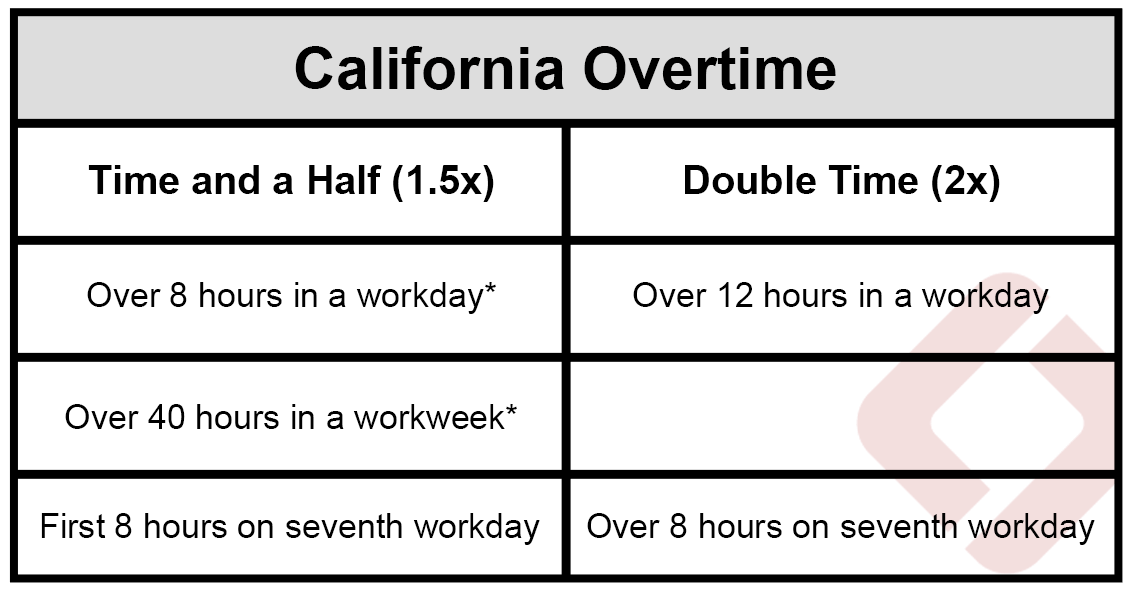
Time and a Half: This is the initial rate of overtime pay. Employees are entitled to time and a half (1.5 times their regular hourly rate) for:
- The first eight (8) hours worked in excess of a standard workday (i.e., hours 8.01 through 16 on any given day).
- The first eight (8) hours worked in excess of a standard workweek (i.e., hours 40.01 through 48 in any given week).
-
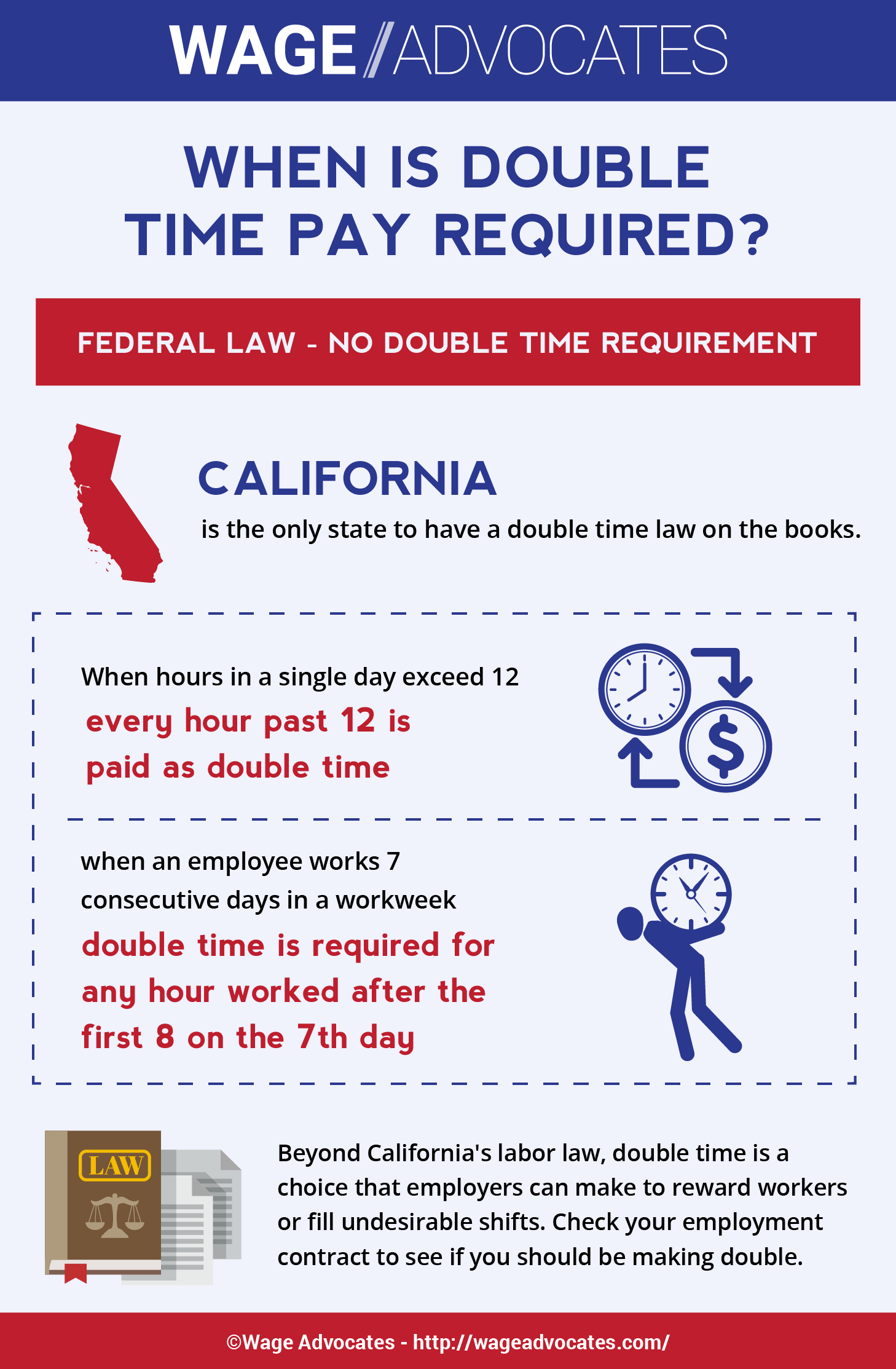
Double Time: This is the higher rate of overtime pay. Employees are entitled to double time (2 times their regular hourly rate) for:
- Any hours worked exceeding sixteen (16) hours in a single workday.
- Any hours worked exceeding eight (8) hours on the seventh consecutive day of work in a workweek, provided the employee has already worked at least 32 hours during that workweek.
This structure ensures that employees are significantly compensated for working exceptionally long hours or for working on their designated day of rest. It encourages employers to limit excessive overtime and to schedule staff more effectively, fostering a healthier work-life balance for employees, which is a core aspect of the lifestyle that many seek when visiting places like Napa Valley or exploring the diverse cuisines of Oakland.
When Does Double Time Specifically Start?
The article title, “When Does Double Time Start In California?”, directly addresses the more stringent conditions under which employees earn their highest overtime rate. These scenarios are designed to deter employers from pushing employees into extreme working conditions.
Daily Double Time Threshold
The most straightforward trigger for double time pay on a daily basis is when an employee works beyond a certain point in a single day.
- Exceeding 16 Hours in a Workday: If an employee works for more than sixteen (16) consecutive hours within a single workday, all hours worked beyond the 16th hour must be paid at the double time rate. For instance, if an employee works 17 hours in a day, the 17th hour is paid at double time. This applies regardless of how many hours they worked in previous days or how many hours they are scheduled to work on subsequent days. This protects employees from the physical and mental toll of exceptionally long shifts.
Weekly Double Time Triggers
Beyond the daily threshold, double time also applies under specific weekly conditions, particularly related to working on the seventh consecutive day of a workweek.
- Seventh Consecutive Day of Work: This is a critical condition for triggering double time. If an employee works on the seventh consecutive day of their workweek, any hours worked over eight (8) on that seventh day must be compensated at the double time rate.
- Important Caveat: This only applies if the employee has already worked at least thirty-two (32) hours during that specific workweek. This ensures that the benefit is for extended work, not just for picking up an extra shift on a day off after a short week.
- Example: An employee works 8 hours on Monday, 8 hours on Tuesday, 8 hours on Wednesday, and 8 hours on Thursday, totaling 32 hours. If they then work 9 hours on Friday (the sixth day), they receive time and a half for the 41st hour. If they then work on Saturday (the seventh consecutive day) and work 9 hours, the first 8 hours are paid at the regular rate (or potentially time and a half if they had worked more than 8 hours on Friday and it pushed them past 40), but the 9th hour on Saturday is paid at double time because it’s the 9th hour worked on the seventh consecutive day.
It’s important to note that the definition of a “workweek” is fixed by the employer and must be a regularly recurring period of 168 hours (seven consecutive 24-hour periods). Once established, the employer cannot change the workweek arbitrarily to avoid overtime.
Exceptions and Special Circumstances
While California‘s overtime laws are comprehensive, there are certain professions and situations that may have unique rules or exemptions. Understanding these exceptions is vital for accurate payroll processing and for employees to know their precise rights. These exceptions often relate to specific industries that have historically faced unique operational demands or to certain types of employees.
Exemptions from Overtime
Certain categories of employees are generally exempt from California‘s overtime laws. These typically include:
- Executive, Administrative, and Professional Employees: To qualify for this exemption, employees must meet specific salary thresholds (which are updated annually) and perform duties that are primarily executive, administrative, or professional in nature. This means their primary job duties must involve management, independent judgment, or specialized knowledge.
- Outside Salespersons: Individuals who customarily and regularly work away from their employer’s place of business, primarily in making sales, are usually exempt.
- Certain Agricultural Workers: While many agricultural workers are covered by overtime laws, there have historically been specific regulations and sometimes phased-in requirements for certain types of agricultural employment.
- Independent Contractors: Individuals classified as independent contractors are not employees and therefore are not subject to overtime laws. However, the classification of workers as employees versus independent contractors is a frequent area of legal scrutiny to prevent misclassification.
Industries with Specific Regulations
Some industries have historically operated under different scheduling patterns, leading to specific overtime rules. For example, the transportation industry, particularly trucking, and the healthcare sector have sometimes had alternative workweek schedules or specific regulations that might alter how overtime is calculated. However, the general principles of double time for excessive hours still largely apply.
The nuances of these exemptions and industry-specific rules can be complex. Employers are expected to be well-versed in these regulations to ensure compliance. For employees, if they believe they are misclassified or that their overtime is not being paid correctly, seeking clarification from their employer or consulting with the California Division of Labor Standards Enforcement is advisable. This is particularly relevant in industries that are cornerstones of California‘s economy and tourism, such as the hospitality sector around attractions like Disneyland or the vineyards of Sonoma Valley.

The Importance of Accurate Record-Keeping
For both employers and employees, accurate record-keeping is paramount when it comes to tracking hours worked and calculating overtime pay, including double time. Employers must maintain precise records of all hours worked by their employees. Employees are also encouraged to keep their own records of hours worked, as this can be invaluable in the event of a dispute.
When it comes to double time in California, the triggers are clear: working more than 16 hours in a single day, or working more than 8 hours on the seventh consecutive day of a workweek after having worked at least 32 hours in that week. Understanding these rules ensures fair compensation and supports the well-being of the workforce that powers California‘s dynamic economy and vibrant tourism sector, from the tech hubs of Silicon Valley to the scenic coastlines near Big Sur. Adhering to these regulations not only prevents legal issues but also fosters a more equitable and sustainable lifestyle for all.
LifeOutOfTheBox is a participant in the Amazon Services LLC Associates Program, an affiliate advertising program designed to provide a means for sites to earn advertising fees by advertising and linking to Amazon.com. Amazon, the Amazon logo, AmazonSupply, and the AmazonSupply logo are trademarks of Amazon.com, Inc. or its affiliates. As an Amazon Associate we earn affiliate commissions from qualifying purchases.