
The allure of gold has captivated humanity for millennia, a shimmering symbol of wealth, adventure, and the promise of a better life. For many, this dream is inextricably linked to the legendary California Gold Rush, a period of seismic change that not only reshaped the Golden State but also left an indelible mark on American history. But when exactly did this momentous discovery occur, and what ignited the fervent rush that followed? The answer lies in a seemingly unremarkable event in a humble sawmill, an event that would soon echo around the globe.

The Spark of Discovery: Sutter’s Mill and the Genesis of a Gold Rush
The story of gold in California begins not with a seasoned prospector, but with a Swiss immigrant named John Sutter. Sutter was a visionary, seeking to establish a vast agricultural empire in the undeveloped territory of Alta California, then a distant province of Mexico. In 1839, he received a large land grant from the Mexican government, establishing New Helvetia (modern-day Sacramento) as a thriving settlement and trading post. His ambition was to create a self-sufficient domain, and to achieve this, he needed a reliable source of lumber for his buildings and trade goods.
To fulfill this need, Sutter commissioned the construction of a sawmill on the American River, a tributary of the Sacramento River. The task of overseeing this project fell to James W. Marshall, a skilled carpenter and contractor, who arrived in California in 1845. Marshall set up camp near what would become Coloma, and construction of the sawmill began in earnest.
The fateful discovery occurred on January 24, 1848. While inspecting the tailrace of the sawmill, where water was being diverted to power the saw, Marshall spotted something unusual glinting in the shallow water. It was a small, metallic nugget, unlike anything he had seen before. Initially, he was cautious, unsure of its identity. He collected a few more specimens, tested them by hammering them to see if they would flatten (a characteristic of gold) and then by biting them (another test for gold’s softness). The results were undeniable: he had found gold.
News of the discovery, however, was not immediately broadcast to the world. Sutter, pragmatic and keen to protect his land and ventures, recognized the potential for chaos if word got out prematurely. He and Marshall tried to keep the discovery a secret, fearing it would disrupt the plans for New Helvetia. However, secrets of such magnitude are rarely kept for long.
The Slow Burn to Public Knowledge
Despite their best efforts, the secret of the gold began to leak out. The workers at the sawmill, privy to the discovery, started to seek out gold for themselves in their off-hours. The seeds of the gold fever had been sown. One of the key figures in disseminating the news was Samuel Brannan, a shrewd businessman and Mormon elder who owned a general store in Yerba Buena (which would soon be renamed San Francisco). Brannan realized the immense commercial opportunity presented by the gold. He reportedly began parading through the streets of San Francisco, waving a vial of gold dust and shouting, “Gold! Gold! Gold from the American River!”
The official confirmation of the discovery came just days before Mexico ceded California to the United States with the signing of the Treaty of Guadalupe Hidalgo on February 2, 1848. This treaty, which formally ended the Mexican-American War, ironically transferred ownership of the land where immense riches were about to be unearthed.
By the spring of 1848, the news had spread beyond the borders of California. Accounts in newspapers, though initially met with skepticism by some, began to paint a picture of a land suddenly overflowing with gold. Sailors jumped ship, farmers abandoned their fields, and merchants closed their stores, all drawn by the irresistible siren call of gold.
The Great Rush: A State Transformed
The year 1849 marked the true beginning of the California Gold Rush. While gold was discovered in January 1848, it took time for the news to travel and for people to organize expeditions and make the arduous journey. The moniker “Forty-Niners” became synonymous with these ambitious prospectors who descended upon California from all corners of the United States and beyond.
Destinations and Destinations: Where the Gold Was Found
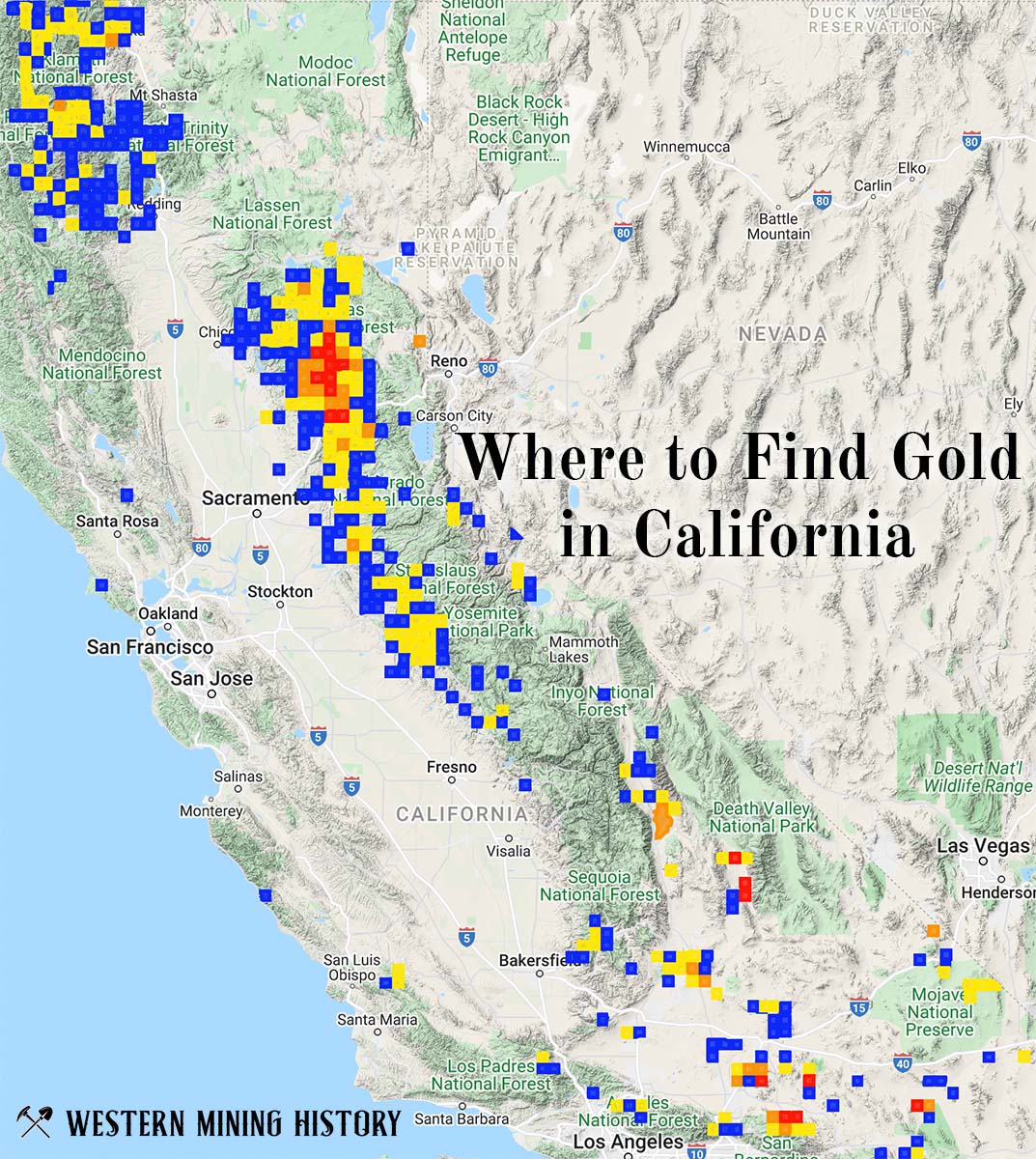
The initial discovery was made at Sutter’s Mill, near Coloma, but the gold wasn’t confined to this single location. Prospectors fanned out, following the rivers and streams, discovering rich placer deposits in a vast area. The foothills of the Sierra Nevada mountains became the epicenter of this frenzied search. Key areas that quickly became synonymous with gold discovery include:
- The American River Diggings: This was the original frontier, and the areas around Coloma, Placerville, and Auburn were among the first and most productive.
- The Feather River: The region around Oroville proved rich in gold, with countless claims staked along its banks.
- The Yuba River: The valleys and canyons of the Yuba River, including areas near Downieville and Smartville, yielded substantial amounts of gold.
- The Mother Lode: This legendary belt of gold-bearing quartz veins, stretching for over 120 miles through the western slopes of the Sierra Nevada, became a primary focus as surface placers were depleted. Towns like Jamestown, Columbia, and Nevada City sprang up along this rich geological feature.
- Southern California: While the northern goldfields captured the initial spotlight, discoveries were also made in Southern California, particularly in the San Bernardino Mountains, though on a smaller scale compared to the northern rushes.
The methods of extraction varied from the simple pan and sluice box to more complex operations like hydraulic mining, which used high-pressure water jets to wash away hillsides and expose gold-bearing gravel. While effective, hydraulic mining had devastating environmental consequences, silting up rivers and damaging landscapes.
The Impact: A New State and a Global Phenomenon
The Gold Rush was far more than just a scramble for treasure; it was a catalyst for profound change.
- Population Boom: California’s population exploded. In 1848, it was estimated to have around 15,000 non-native inhabitants. By 1852, this number had surged to over 220,000. People came from every continent, creating an incredibly diverse and dynamic society.
- Statehood: The influx of people and the establishment of a new economy accelerated the process of statehood. California was admitted to the Union as the 31st state on September 9, 1850, bypassing the territorial stage.
- Economic Revolution: The gold extracted fueled an economic boom that had far-reaching implications. It helped finance the United States’s westward expansion and development. New industries, such as banking, shipping, and agriculture, flourished to support the growing population and the mining operations.
- Infrastructure Development: The need to transport people, goods, and gold spurred the development of roads, stagecoach lines, and eventually, the transcontinental railroad.
- Cultural Transformation: The frontier spirit, the diverse mix of people, and the inherent risks and rewards of the Gold Rush forged a unique Californian identity. It was a melting pot of cultures, languages, and aspirations.
- Impact on Indigenous Peoples: Tragically, the Gold Rush had a devastating impact on the indigenous populations of California. Their lands were overrun, their resources exploited, and many suffered from violence and disease.
The Gold Rush was a period of immense opportunity for some, but also of hardship, lawlessness, and social upheaval for many. It laid the foundation for the economic and cultural powerhouse that California would become.
Experiencing the Legacy: Visiting Gold Rush Country Today
While the days of striking it rich with a pan are largely behind us, the spirit and legacy of the California Gold Rush live on. For travelers interested in history, adventure, and unique experiences, the Gold Rush country offers a fascinating glimpse into the past.
Landmarks and Living History
Numerous historical sites and attractions allow visitors to step back in time and understand the daily lives of the Forty-Niners.
- Columbia State Historic Park: Known as “Queen of the Sierra,” Columbia is a remarkably well-preserved Gold Rush town. Visitors can explore historic buildings, watch live demonstrations of blacksmithing and candlemaking, ride in a stagecoach, and even try their hand at gold panning. The park offers a genuine feel of a bustling mining town.
- Marshall Gold Discovery State Historic Park: Located at the site of James W. Marshall’s discovery, this park features a replica of Sutter’s Mill, the Marshall Monument, and exhibits detailing the story of the Gold Rush. It’s a must-visit for understanding the very beginning of it all.
- Nevada City and Grass Valley: These charming towns in the northern Gold Country retain much of their 19th-century architecture. Visitors can wander through historic downtowns, visit museums dedicated to mining history, and explore nearby former mining sites.
- Jamestown: Another preserved Gold Rush town, Jamestown offers a vibrant atmosphere with its historic buildings, saloons, and opportunities for gold panning.
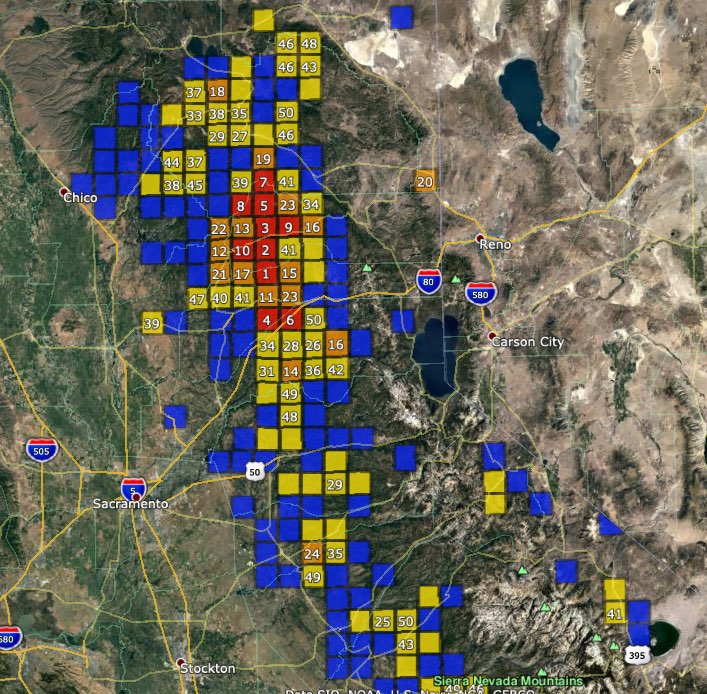
Beyond the specific towns, the entire region of the Sierra Nevada foothills is dotted with reminders of the Gold Rush. Old mining equipment, abandoned shafts, and historic cemeteries can be found by those willing to explore.
Accommodation and Experiences
Traveling through Gold Rush country today offers a unique blend of history and modern comfort. A range of accommodation options are available, from cozy bed and breakfasts in historic homes to boutique hotels and more contemporary lodging.
- Historic Hotels and Inns: Many towns boast hotels that were established during or shortly after the Gold Rush, offering a truly immersive experience. Staying in a place with a rich past adds another layer to the journey.
- Vacation Rentals and Villas: For families or groups, renting a cabin or a vacation home provides a comfortable and private base from which to explore the region.
- Camping and Nature: For the more adventurous, numerous campgrounds are scattered throughout the Sierra Nevada, allowing visitors to connect with the natural beauty that drew prospectors in the first place.
Activities extend beyond historical sites. Visitors can enjoy hiking and exploring the stunning natural landscapes that were once the focus of intense gold prospecting. Wine tasting in the burgeoning vineyards of the region, exploring local art galleries, and savoring the farm-to-table cuisine are also popular pursuits.
The California Gold Rush, ignited by a chance discovery in January 1848 at Sutter’s Mill, transformed a remote territory into a beacon of opportunity. It reshaped the demographics, economy, and destiny of California and left an enduring legacy that continues to inspire and fascinate visitors from around the world. Exploring this historic region is not just a journey into the past but an understanding of the forces that shaped the modern American West.
LifeOutOfTheBox is a participant in the Amazon Services LLC Associates Program, an affiliate advertising program designed to provide a means for sites to earn advertising fees by advertising and linking to Amazon.com. Amazon, the Amazon logo, AmazonSupply, and the AmazonSupply logo are trademarks of Amazon.com, Inc. or its affiliates. As an Amazon Associate we earn affiliate commissions from qualifying purchases.