
Glass Beach, a truly unique and visually stunning natural phenomenon, beckons travelers from around the globe to its shores in California. While its name evokes images of sparkling treasures, this iconic destination offers more than just a beautiful spectacle; it’s a testament to nature’s remarkable ability to reclaim and transform even the most unlikely of materials. For those planning a trip to the Golden State and seeking an unforgettable experience, understanding the precise location and nuances of Glass Beach is paramount to unlocking its full potential.
The allure of Glass Beach lies in its origin story, a fascinating blend of human history and environmental resilience. Once a dumping ground for refuse from the early 20th century, this stretch of coastline, particularly in Fort Bragg, has undergone a dramatic metamorphosis. Over decades, the relentless action of the Pacific Ocean waves has tumbled and smoothed discarded glass, pottery, and even metal into millions of tiny, polished pieces. These remnants of the past now form a vibrant, jewel-like carpet that sparkles under the California sun, creating a landscape unlike any other.

Discovering Glass Beach: Location and Access
The primary and most famous Glass Beach is situated within MacKerricher State Park in the coastal city of Fort Bragg, Mendocino County, California. This northern California gem is easily accessible and has become a significant draw for tourists and nature enthusiasts alike.
Getting to Fort Bragg
For visitors arriving from afar, the nearest major airport is San Francisco International Airport (SFO) or Oakland International Airport, both of which are approximately a three-hour drive north of Fort Bragg. Another option is the smaller Charles M. Schulz–Sonoma County Airport (STS) in Santa Rosa, which is about a 90-minute drive away.
From these airports, you can rent a car, which is highly recommended for exploring the scenic Highway 1 and the surrounding coastal beauty. The drive itself is a significant part of the experience, offering breathtaking ocean views, charming seaside towns, and redwood forests. Alternatively, shuttle services and some bus routes connect San Francisco and other Bay Area cities to Fort Bragg, although these options may be less frequent and flexible.
Navigating to Glass Beach from Fort Bragg
Once you’ve arrived in Fort Bragg, finding Glass Beach is straightforward. The main entrance to MacKerricher State Park is located off West Elm Street. Follow the signs towards the coast. There are several parking areas within the park that provide access to the beach.
It’s important to note that Glass Beach is not a single, monolithic stretch of sand. Historically, it comprised three distinct areas: “North Beach,” “Middle Beach,” and “South Beach.” The most popular and visually striking area, often referred to as “Glass Beach” in general conversation, is the former “South Beach.” However, due to the popularity and the subsequent removal of glass by visitors over the years, the glass density has diminished. Today, the best remnants of tumbled glass can be found along the shoreline of the former “Middle Beach” and “North Beach.” The park service encourages visitors to observe the glass rather than take it, preserving this natural wonder for future generations.
Experiencing the Magic of Glass Beach
Visiting Glass Beach is an experience that engages all the senses. The crunch of glass underfoot, the salty spray of the ocean, and the dazzling visual display create a memorable encounter with nature’s artistry.
What to Expect at Glass Beach
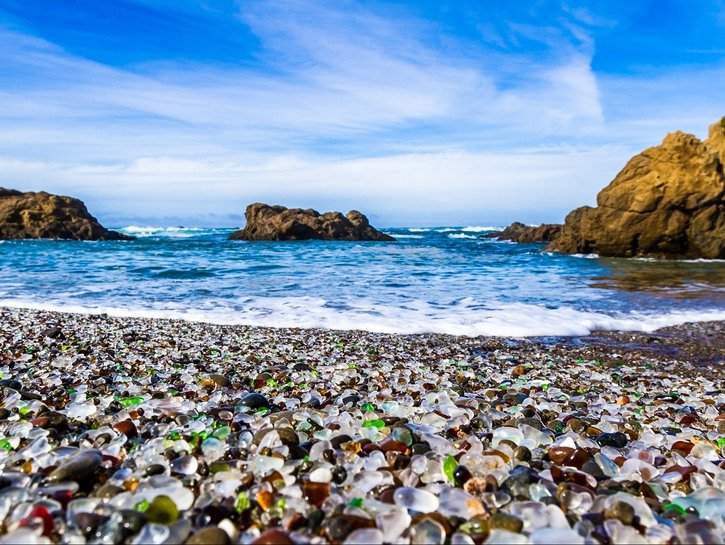
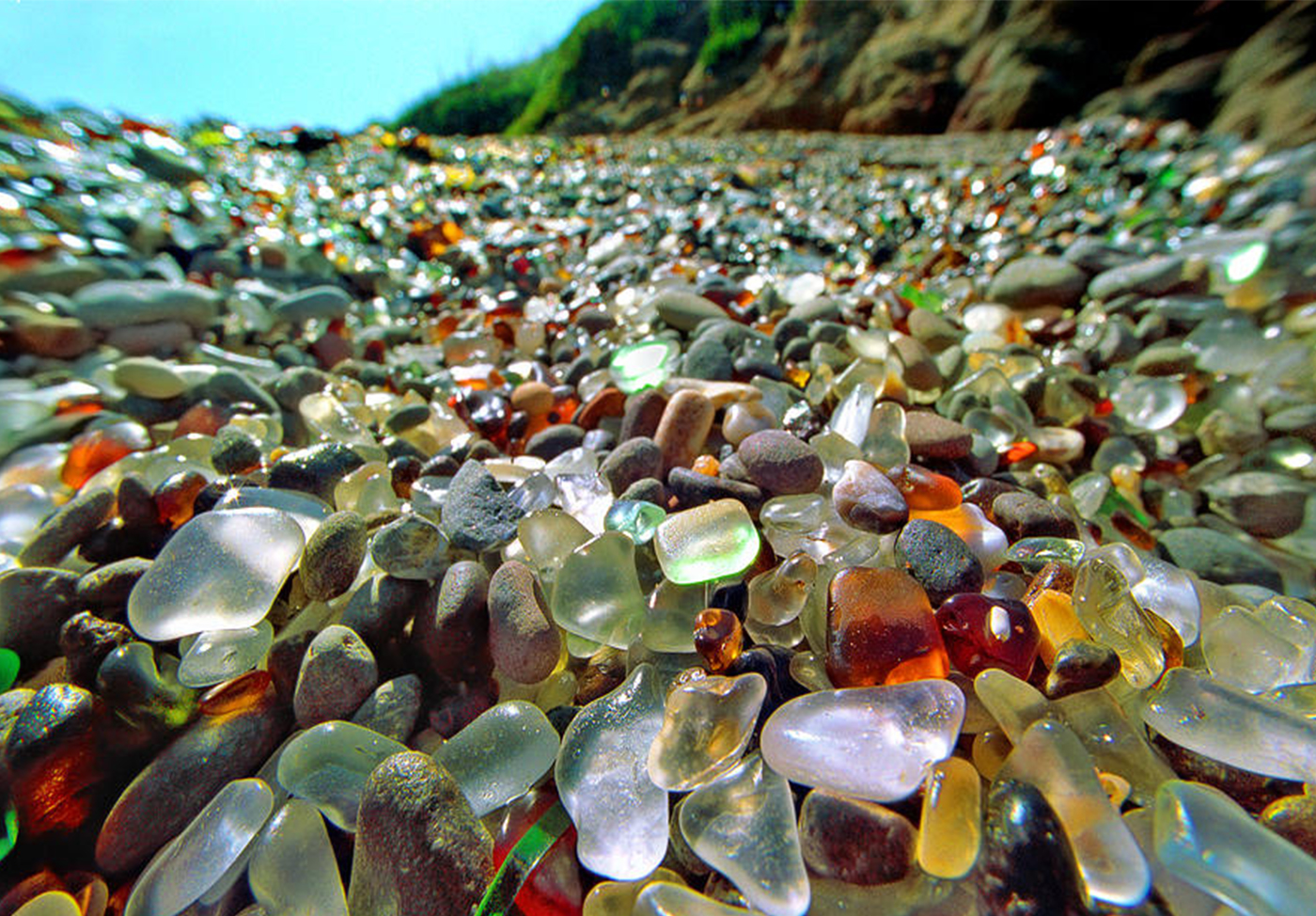
As you approach the shoreline, you’ll immediately notice the unusual, colorful pebbles that make up the beach. These are not ordinary stones; they are smoothed and rounded fragments of glass, ceramics, and other materials that have been polished by the ocean’s constant motion. The colors range from deep blues and greens to amber, clear, and even frosted whites.
While the term “beach” might suggest soft sand, Glass Beach is characterized by its rocky and pebbly terrain. Sturdy footwear is highly recommended for comfortable exploration. The waves can be powerful here, so be mindful of your surroundings and safety.
Activities and Nearby Attractions
Beyond marveling at the glass, Glass Beach offers opportunities for other enjoyable activities. Birdwatching is popular, as the coastal area is a habitat for various seabirds. Tide pooling can also be a fascinating pursuit during low tide, revealing a diverse array of marine life in the rocky crevices.
The city of Fort Bragg itself is a charming coastal town with a rich maritime history. Visitors can explore the historic Noyo Harbor, where fishing boats dock and fresh seafood is readily available. The Skunk Train offers scenic railway excursions through the redwood forests, providing a different perspective on the region’s natural beauty. The Mendocino Coast Botanical Gardens are also a must-visit, showcasing a stunning collection of plants that thrive in the coastal climate.
For those seeking accommodation, Fort Bragg and the surrounding Mendocino County offer a range of options, from cozy bed and breakfasts and boutique hotels to vacation rentals and more rustic inns. Whether you’re looking for a luxurious resort experience or a budget-friendly stay, you’ll find something to suit your needs. Many establishments offer ocean views and easy access to the coast.
Preserving the Beauty of Glass Beach
The story of Glass Beach is a powerful reminder of the impact human activity can have on the environment and nature’s incredible capacity for healing. It also underscores the importance of responsible tourism.
A Legacy of Transformation
From the early 1900s until 1967, the area was used as a municipal dump. Residents would drive their vehicles to the edge of the cliffs and simply push their trash over the side. This included everything from broken bottles and appliances to batteries and car parts. The ocean, however, began its slow but steady work of reclaiming the site. Over time, the relentless pounding of waves polished the glass and ceramics, transforming the discarded waste into the unique, colorful “jewels” we see today.
The most concentrated collection of glass was found on what was known as “Middle Beach.” In the late 1990s, efforts began to clean up the site, and a significant portion of the remaining glass was removed. While this was done with good intentions, it also meant a reduction in the sheer volume of glass visible on some parts of the beach.
Responsible Tourism and Conservation
Today, the California State Parks Department actively manages Glass Beach and MacKerricher State Park. Taking glass from the beach is prohibited to ensure that its unique character is preserved for future generations to appreciate. The emphasis is on observation and appreciation, not collection.
When visiting Glass Beach, remember to tread lightly and respect the natural environment. Stay on designated paths, avoid disturbing wildlife, and pack out everything you pack in. By practicing responsible tourism, you contribute to the ongoing preservation of this extraordinary natural landmark.
The question of “Where is Glass Beach located in California?” leads to a destination that is more than just a geographical point on a map. It’s a place of reflection, a testament to environmental resilience, and a truly unforgettable travel experience. From the scenic drives along the coast to the unique beauty of the glass-covered shores, Glass Beach offers a compelling reason to explore the wonders of northern California. Whether you are a seasoned traveler or embarking on your first adventure, the shimmering landscape of Glass Beach is sure to leave a lasting impression. It stands as a vibrant example of how nature can transform even the most man-made scars into something beautiful and awe-inspiring.
LifeOutOfTheBox is a participant in the Amazon Services LLC Associates Program, an affiliate advertising program designed to provide a means for sites to earn advertising fees by advertising and linking to Amazon.com. Amazon, the Amazon logo, AmazonSupply, and the AmazonSupply logo are trademarks of Amazon.com, Inc. or its affiliates. As an Amazon Associate we earn affiliate commissions from qualifying purchases.