
While the title “How To Cite A Book In Chicago?” might initially evoke images of navigating the bustling streets of the Windy City, it actually refers to a specific academic and journalistic style: the Chicago Manual of Style (CMS). This comprehensive guide, first published in 1906, offers two distinct citation systems: the Notes and Bibliography system and the Author-Date system. For those immersed in the worlds of travel, tourism, and lifestyle, understanding how to properly cite sources is crucial, whether you’re documenting your adventures in a personal travel journal, writing a blog post about your discoveries in Rome, or researching the history of a landmark like the Eiffel Tower. This article will guide you through citing a book using the Chicago style, focusing on its application for individuals documenting their experiences and knowledge within the realms of travel and accommodation.

The Chicago Manual of Style is a gold standard for many academic disciplines, as well as for publishers in the humanities and social sciences. Its emphasis on clarity, consistency, and thoroughness makes it an excellent choice for anyone wanting to present information credibly. When you’re exploring the intricacies of booking a luxurious suite at the Ritz-Carlton, comparing villa options in Bali, or delving into the local culture of Kyoto, you might encounter or wish to cite books that provide invaluable context or detailed information. Mastering the citation process ensures that you give credit where it’s due and allow your readers to find the original sources for their own exploration.
Understanding the Two Chicago Citation Systems
The Chicago Manual of Style provides two primary methods for citing sources, each suited to different contexts and preferences. Understanding these distinctions is the first step in accurately citing any book, whether it’s a travel guide to Paris, a historical account of Machu Picchu, or a lifestyle book on sustainable travel.
The Notes and Bibliography System
This system is widely used in literature, history, and the arts. It involves using superscript numbers within the text of your writing to refer to footnotes or endnotes, which then provide the full citation information. A bibliography, listing all the sources consulted, is also included at the end of the document. This method is particularly useful when you want to incorporate supplementary information or commentary without disrupting the flow of the main text.
For travelers and bloggers, this system can be excellent for adding rich details or personal anecdotes that are not strictly part of the core narrative. Imagine writing about a culinary journey through Vietnam and wanting to include a historical tidbit about a particular dish, sourced from a book, without interrupting the description of your dining experience at a renowned restaurant like Quan An Ngon. The footnote can provide this extra layer of information.
The Author-Date System
More common in the sciences and social sciences, this system uses parenthetical citations within the text, including the author’s last name and the year of publication. A reference list, alphabetically arranged by author’s last name, appears at the end of the work. This method is often preferred for its conciseness and straightforwardness, especially in works where extensive notes might become cumbersome.
If you are compiling research for a detailed guide to eco-tourism in Costa Rica, referencing multiple books on local biodiversity and conservation efforts, the author-date system can streamline your in-text citations. It allows your readers to quickly identify the source of a particular piece of information, such as a statistic on protected areas or a quote from an expert on sustainable resorts.
Citing a Book: Core Components of a Chicago Citation
Regardless of which system you choose, certain core pieces of information are essential for citing a book in Chicago style. These elements help your readers locate the exact source you consulted. When citing a book about the history of architecture in Barcelona or a guide to adventure travel in New Zealand, you’ll typically need the following:
- Author(s): The name(s) of the person or people who wrote the book.
- Title of the Book: The full title, including any subtitle, italicized.
- Publication Information: This includes the city of publication, the publisher’s name, and the year the book was published.
Let’s break down how these elements are used in both systems.
Notes and Bibliography System: Footnotes/Endnotes and Bibliography Entries
In the Notes and Bibliography system, you will create two types of citations: the footnote/endnote and the bibliography entry.
Footnote/Endnote Citation (First Reference):
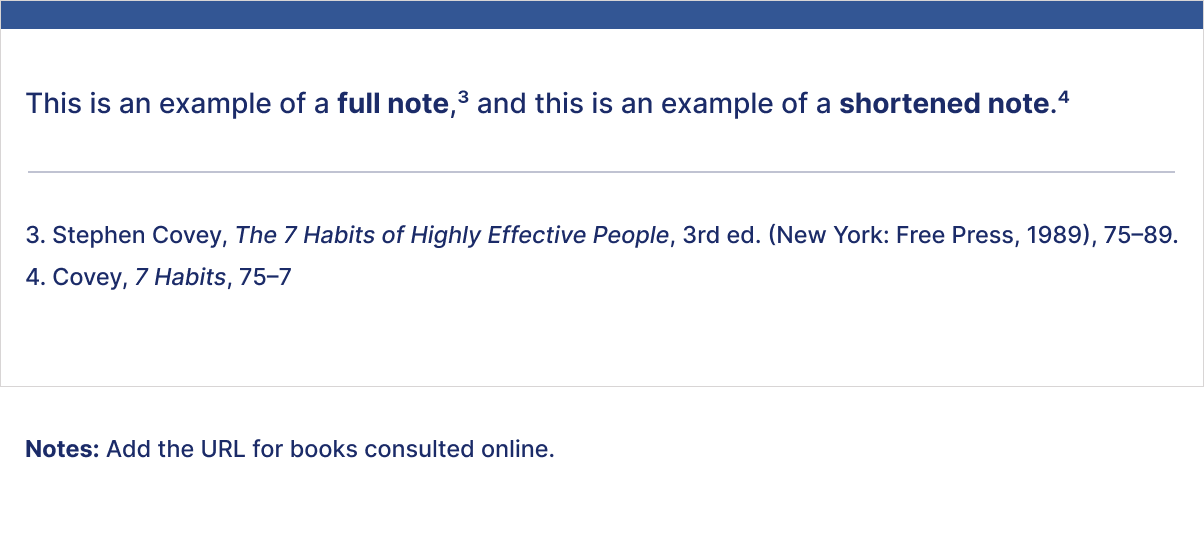
The first time you cite a particular book in a note, you will provide a more complete citation.
Example:
- [Author’s Full Name], [Title of Book] (Publisher City: Publisher Name, Year of Publication), [Page Number(s)].
-
For a Book with One Author:
- Example: 1. Eleanor Vance, The Art of Slow Travel (New York: Wanderlust Press, 2022), 45.
-
For a Book with Two or Three Authors:
- Example: 2. David Lee and Sarah Chen, Budget Backpacking Secrets (London: Adventure Books, 2021), 112.
-
For a Book with More Than Three Authors:
- Example: 3. Maria Garcia, et al., Global Cuisine: A Culinary Journey (Paris: Gourmet Publishing, 2023), 89. (Note: “et al.” is Latin for “and others” and is used when there are more than three authors. The first author’s name is listed in full, followed by et al.)
Subsequent Footnote/Endnote References:
After the first full citation, subsequent references to the same book can be shortened.
Example:
- [Author’s Last Name], [Shortened Title] (if different from the main title), [Page Number(s)].
- Example: 4. Vance, The Art of Slow Travel, 78.
- Example: 5. Lee and Chen, Budget Backpacking Secrets, 25.
Bibliography Entry:
The bibliography entry is similar to the first footnote/endnote but uses a slightly different format and omits the page number(s) unless you are citing a specific portion of a longer work, like an essay in an edited collection. Authors’ names are listed in reverse order (last name first).
Example:
- [Author’s Last Name], [Author’s First Name]. [Title of Book]. Publisher City: Publisher Name, Year of Publication.
-
For a Book with One Author:
- Example: Vance, Eleanor. The Art of Slow Travel. New York: Wanderlust Press, 2022.
-
For a Book with Two or Three Authors:
- Example: Lee, David, and Sarah Chen. Budget Backpacking Secrets. London: Adventure Books, 2021.
-
For a Book with More Than Three Authors:
- Example: Garcia, Maria, Javier Rodriguez, Anya Sharma, and Kenji Tanaka. Global Cuisine: A Culinary Journey. Paris: Gourmet Publishing, 2023. (Note: For more than three authors in the bibliography, list all authors’ names.)
Author-Date System: In-Text Citations and Reference List Entries

In the Author-Date system, citations appear directly in your text.
In-Text Citation:
The in-text citation typically includes the author’s last name, the year of publication, and the page number(s).
Example:
-
(Author’s Last Name Year, Page Number(s))
-
For a Book with One Author:
- Example: (Vance 2022, 45)
-
For a Book with Two or Three Authors:
- Example: (Lee and Chen 2021, 112)
-
For a Book with More Than Three Authors:
- Example: (Garcia et al. 2023, 89)
If the author’s name is mentioned in the sentence, you can omit it from the parenthetical citation.
- Example: Vance argues that slow travel is essential for deep cultural immersion (2022, 78).
Reference List Entry:
The reference list at the end of your document provides full details for each source cited in the text. It is arranged alphabetically by the author’s last name.
Example:
- [Author’s Last Name], [Author’s First Name]. Year of Publication. [Title of Book]. Publisher City: Publisher Name.
-
For a Book with One Author:
- Example: Vance, Eleanor. 2022. The Art of Slow Travel. New York: Wanderlust Press.
-
For a Book with Two or Three Authors:
- Example: Lee, David, and Sarah Chen. 2021. Budget Backpacking Secrets. London: Adventure Books.
-
For a Book with More Than Three Authors:
- Example: Garcia, Maria, Javier Rodriguez, Anya Sharma, and Kenji Tanaka. 2023. Global Cuisine: A Culinary Journey. Paris: Gourmet Publishing.
Citing Specific Types of Books and Special Cases
Beyond the standard book citation, Chicago style offers guidelines for various types of publications. When researching accommodations for a family trip to Disneyland, you might consult guidebooks, edited collections, or even e-books.
Edited Books
If you are citing a chapter or an entire book that has been compiled by an editor rather than a single author, the citation format changes slightly.
Notes and Bibliography System:
-
Footnote/Endnote (First Reference): [Chapter Author’s Full Name], “[Chapter Title],” in [Book Title], ed. [Editor’s Full Name] (Publisher City: Publisher Name, Year of Publication), [Page Number(s)].
- Example: Jane Doe, “The History of the Grand Bazaar,” in Istanbul: City of Contrasts, ed. Mehmet Özdemir (Istanbul: Bosphorus Press, 2020), 150.
-
Bibliography Entry: [Chapter Author’s Last Name], [Chapter Author’s First Name]. “[Chapter Title].” In [Book Title], ed. [Editor’s Full Name], [Page Range of Chapter]. Publisher City: Publisher Name, Year of Publication.
- Example: Doe, Jane. “The History of the Grand Bazaar.” In Istanbul: City of Contrasts, ed. Mehmet Özdemir, 145-170. Istanbul: Bosphorus Press, 2020.
Author-Date System:
-
In-Text Citation: (Chapter Author’s Last Name Year, Page Number(s))
- Example: (Doe 2020, 150)
-
Reference List Entry: [Chapter Author’s Last Name], [Chapter Author’s First Name]. Year of Publication. “[Chapter Title].” In [Book Title], ed. [Editor’s Full Name], [Page Range of Chapter]. Publisher City: Publisher Name.
- Example: Doe, Jane. 2020. “The History of the Grand Bazaar.” In Istanbul: City of Contrasts, ed. Mehmet Özdemir, 145-170. Istanbul: Bosphorus Press.
E-books
When citing an e-book, you will typically include a stable URL or a DOI (Digital Object Identifier) if available.
Notes and Bibliography System:
-
Footnote/Endnote (First Reference): [Author’s Full Name], [Title of Book] (Publisher City: Publisher Name, Year of Publication), [Page Number(s)], [URL or DOI].
- Example: John Smith, Digital Nomads Handbook (Berlin: Nomad Publishing, 2023), 88, https://www.example.com/digital-nomads-handbook.
-
Bibliography Entry: [Author’s Last Name], [Author’s First Name]. Year of Publication. [Title of Book]. Publisher City: Publisher Name. [URL or DOI].
- Example: Smith, John. 2023. Digital Nomads Handbook. Berlin: Nomad Publishing. https://www.example.com/digital-nomads-handbook.
Author-Date System:
-
In-Text Citation: (Author’s Last Name Year, Page Number(s))
- Example: (Smith 2023, 88)
-
Reference List Entry: [Author’s Last Name], [Author’s First Name]. Year of Publication. [Title of Book]. Publisher City: Publisher Name. [URL or DOI].
- Example: Smith, John. 2023. Digital Nomads Handbook. Berlin: Nomad Publishing. https://www.example.com/digital-nomads-handbook.
By adhering to these guidelines, whether you are documenting your travels to the iconic Statue of Liberty, planning a luxurious stay at the Burj Al Arab, or exploring the diverse culinary landscape of Mexico City, you can ensure your citations are accurate and professional. The Chicago Manual of Style provides a robust framework for crediting your sources, enhancing the credibility and readability of your written work.
LifeOutOfTheBox is a participant in the Amazon Services LLC Associates Program, an affiliate advertising program designed to provide a means for sites to earn advertising fees by advertising and linking to Amazon.com. Amazon, the Amazon logo, AmazonSupply, and the AmazonSupply logo are trademarks of Amazon.com, Inc. or its affiliates. As an Amazon Associate we earn affiliate commissions from qualifying purchases.