
The name “Colorado” evokes images of majestic Rocky Mountains, vibrant red rock canyons, and a rich tapestry of history and natural beauty. But have you ever stopped to wonder how this captivating state earned its distinctive moniker? The answer lies not in a single definitive moment, but rather in a journey through exploration, cartography, and linguistic evolution, deeply intertwined with the very landscape it represents. The story of Colorado’s name is a fascinating glimpse into the early days of westward expansion and the European explorers who charted unknown territories.
The Spanish Roots of “Colorado”
The most widely accepted origin of the name “Colorado” traces back to the Spanish language. During their extensive explorations of North America, Spanish conquistadors and cartographers were the first Europeans to extensively map and document the regions that would eventually become part of the modern-day United States. The Spanish Empire held significant influence over vast swathes of what is now the American Southwest, and their language became the primary medium for naming geographical features.
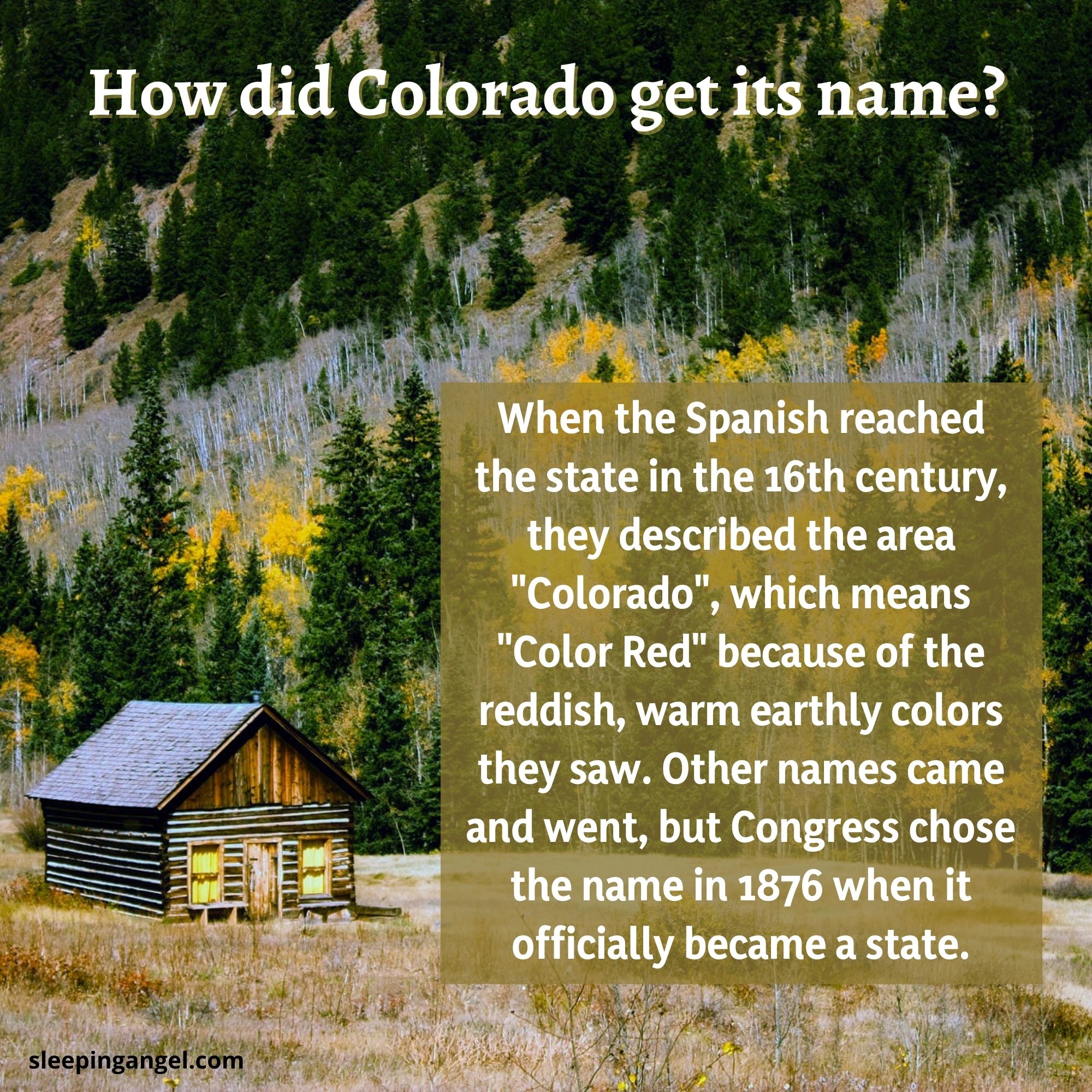
The word “colorado” in Spanish translates directly to “colored” or, more specifically, “red-colored.” This appellation is believed to have been inspired by the distinctive reddish hue of the soil and rock formations found throughout the region. Early Spanish explorers, traversing the rugged terrain, would have undoubtedly noticed the vibrant, earthy tones that characterize much of Colorado’s landscape.
The Colorado River: A Red-Tinted Inspiration
Central to this naming convention is the Colorado River. This mighty waterway, which carves its way through the iconic Grand Canyon and continues its journey through several states, was a significant landmark for early explorers. The water in the Colorado River often carries sediment, giving it a distinctly reddish or muddy appearance, especially after heavy rains or snowmelt. It is highly probable that the river was the initial geographical feature to be named “Río Colorado” by the Spanish.
-
Early Encounters and Naming Conventions: The Spanish, meticulous in their charting and documentation, applied descriptive names to prominent natural features. Rivers, mountains, and valleys were often named based on their perceived characteristics, such as size, shape, or color. The “red river” would have been a logical and fitting description for the waterway they encountered.
-
From River to Territory: As expeditions pushed further inland and mapping efforts progressed, the name associated with the Colorado River began to be extended to the surrounding lands. Territories and administrative regions were often named after major geographical features within them. Thus, the “land of the red river” gradually became known as Colorado.
Juan de Oñate and the First Recorded Use
While it’s difficult to pinpoint the exact individual or expedition that first applied the name, historical records suggest that Juan de Oñate, a Spanish explorer and conquistador, may have been among the first to document the name in relation to the region. He led an expedition in the late 16th and early 17th centuries, exploring areas that would later fall within New Mexico and Colorado. His reports and maps, though sometimes imprecise by modern standards, were instrumental in establishing European understanding of the geography of the Southwest.
Some historians point to the Colorado River as being named “Río de Nuestra Señora de Guadalupe” by Oñate in 1598, but later expeditions and cartographers increasingly adopted the simpler and more descriptive “Colorado” for the river and, by extension, the lands it watered. The enduring power of a simple, descriptive adjective often triumphs over more complex or formal nomenclature.
The Evolution of “Colorado” on Maps
The journey from a descriptive Spanish term for a river to the official name of a U.S. state was a gradual process, marked by shifting political boundaries and evolving cartographic practices.
From Spanish Claims to Mexican Rule
Following the initial Spanish explorations, the territory remained under Spanish and later Mexican control for centuries. During this period, the name “Colorado” likely continued to be used informally and in local contexts to refer to the river and its environs. However, formal governmental designations and recognized territorial boundaries were still in their nascent stages.
The Mexican-American War and the Birth of a Territory

The mid-19th century marked a pivotal turning point with the Mexican-American War (1846-1848). The Treaty of Guadalupe Hidalgo ceded vast territories from Mexico to the United States, including the lands that would eventually form Colorado. This acquisition opened the door for the organization of new U.S. territories.
It was in the aftermath of this war that the name “Colorado” began to be formally considered for political designation. The geographical characteristics, particularly the prominent Colorado River and the striking red rock formations, made the name a natural and fitting choice.
The Territory of Colorado (1861)
The official recognition of “Colorado” as a political entity came on February 28, 1861, when President James Buchanan signed the act organizing the Territory of Colorado. The bill establishing the territory explicitly adopted the name “Colorado,” solidifying its place on the map of the United States. This act was a direct result of the growing American presence and the need to establish governmental structures in the newly acquired lands. The naming was a testament to the enduring legacy of the Spanish explorers who first recognized and documented the region’s distinctive coloration.
The choice of “Colorado” for the territory was not arbitrary. It reflected a continuation of the nomenclature established by early explorers and a nod to the prominent geographical features that defined the region. The vivid red of the Gunnison River canyons, the San Juan Mountains, and the vast stretches of arid plains all contributed to the overall “colored” impression that the Spanish had noted centuries earlier.
Colorado Today: A Legacy of Color and Culture
Today, the name “Colorado” resonates with a sense of adventure, natural grandeur, and a rich historical narrative. From the towering peaks of the Rocky Mountains to the ancient cliff dwellings of Mesa Verde National Park, the state’s identity is deeply intertwined with its name.
Exploring the “Colored” Landscapes
When travelers visit Colorado, they are immediately struck by the diverse and vibrant landscapes that inspired its name.
-
The Red Rocks of the Front Range: Iconic geological formations like those found at Red Rocks Park and Amphitheatre near Denver showcase the striking red sandstone that gives Colorado its name. These natural wonders are not only visually stunning but also hold significant geological and historical importance.
-
Canyon Country: Further south, the canyons of Black Canyon of the Gunnison National Park and the vast expanse of the San Juan Basin continue to display the characteristic red and ochre hues. These landscapes offer breathtaking vistas and opportunities for hiking, photography, and exploring the geological history of the region.
-
The Colorado River’s Enduring Influence: The Colorado River itself remains a vital artery, supporting ecosystems and providing recreational opportunities. Its journey through Colorado is a constant reminder of the name’s origins. Travelers can experience its power and beauty through rafting trips or by visiting its scenic overlooks.

A Thriving Tourism and Lifestyle Destination
Colorado has evolved into a premier destination for tourism, outdoor recreation, and a desirable lifestyle. The allure of its natural beauty, coupled with its vibrant cities and charming mountain towns, draws millions of visitors each year.
-
Adventure and Outdoor Pursuits: Ski resorts like Aspen Snowmass and Vail Resorts, hiking trails in Rocky Mountain National Park, and mountain biking in towns like Moab (though technically in Utah, its influence extends to the Colorado border regions) are just a few examples of the adventure opportunities available. The state’s name, rooted in its natural features, perfectly encapsulates the adventurous spirit it embodies.
-
Cultural and Historical Exploration: Beyond its natural splendor, Colorado boasts a rich history, from Native American heritage to the Old West legacy of mining towns like Central City and Telluride. Visitors can immerse themselves in local culture, explore historical sites, and enjoy the unique culinary scenes of cities like Boulder and Fort Collins.
-
Accommodation and Hospitality: The state offers a wide range of accommodation options to suit every traveler’s needs. From luxurious resorts in Beaver Creek to cozy boutique hotels in Aspen and family-friendly apartments in Denver, visitors can find the perfect base to explore Colorado. The emphasis on connecting with nature and experiencing the local lifestyle is a hallmark of Colorado’s hospitality.
In conclusion, the name “Colorado” is far more than just a label; it is a vivid descriptor deeply rooted in the geological and historical narrative of the American Southwest. Born from the Spanish admiration for the region’s distinctive red hues, particularly those of the mighty Colorado River, the name has journeyed through centuries of exploration, territorial expansion, and statehood. It stands today as a proud testament to the enduring natural beauty and rich cultural heritage that continues to define this remarkable state. The “colored” lands, as first perceived by early explorers, have become a vibrant tapestry of landscapes, adventures, and a captivating lifestyle, all encapsulated within the simple yet powerful name of Colorado.
LifeOutOfTheBox is a participant in the Amazon Services LLC Associates Program, an affiliate advertising program designed to provide a means for sites to earn advertising fees by advertising and linking to Amazon.com. Amazon, the Amazon logo, AmazonSupply, and the AmazonSupply logo are trademarks of Amazon.com, Inc. or its affiliates. As an Amazon Associate we earn affiliate commissions from qualifying purchases.