
While the primary focus of Life Out of the Box is to inspire your next adventure, from exploring the vibrant culture of Miami to finding the perfect resort in the Florida Keys, we understand that the spirit of giving back and fostering community can be just as rewarding as any journey. For those passionate about making a difference within the Sunshine State, establishing a non-profit organization is a powerful way to channel that dedication. This guide will walk you through the essential steps involved in creating a non-profit organization in Florida, ensuring your mission has a strong and legal foundation.
Laying the Groundwork: Defining Your Mission and Purpose
Before you can navigate the legal intricacies, it’s crucial to solidify the very essence of your non-profit. This involves a clear articulation of your mission and a thorough understanding of your intended impact.
Crafting a Compelling Mission Statement
Your mission statement is the heart of your organization. It should be concise, memorable, and clearly state what you aim to achieve, for whom, and why. Think of it as your organization’s North Star, guiding all your activities and communications. For instance, a non-profit focused on preserving Florida’s natural beauty might have a mission statement like: “To protect and restore Florida’s vital coastal ecosystems through community engagement, education, and direct conservation efforts.”
When developing your mission statement, consider these questions:
- What problem are you trying to solve? Identify the specific need or challenge your organization will address.
- Who is your target beneficiary? Clearly define the population or cause you will serve.
- What is your unique approach? How will you achieve your goals? What are your core activities?
- What is your ultimate vision? What does success look like in the long term?
A well-crafted mission statement will not only guide your internal operations but also attract donors, volunteers, and supporters who resonate with your cause.
Identifying Your Target Audience and Impact Area
Understanding who you are serving and where you will operate is paramount. Will your non-profit focus on a specific city like Orlando, a particular region, or have a statewide reach? Consider the demographic and geographic scope of your intended impact. Are you aiming to support underprivileged youth in Tampa, provide resources for animal shelters across South Florida, or promote arts and culture in Jacksonville?
The clarity in defining your audience and impact area will inform your strategic planning, fundraising efforts, and program development. It ensures that your resources are directed effectively to make the most significant difference.
Assembling Your Founding Board of Directors
A non-profit organization requires a governing body, and in Florida, this is typically a Board of Directors. Your founding board members are instrumental in setting the organization’s direction, providing oversight, and ensuring legal compliance. Ideally, your board should comprise individuals with diverse skills, expertise, and a genuine passion for your mission. This might include individuals with experience in finance, law, marketing, fundraising, program management, and community outreach.
The board’s responsibilities are significant, including:
- Strategic Planning: Setting the organization’s long-term goals and objectives.
- Financial Oversight: Ensuring responsible management of funds and fiscal accountability.
- Legal Compliance: Adhering to all federal, state, and local regulations.
- Fundraising: Spearheading efforts to secure financial resources.
- Hiring and Oversight of Staff: If applicable, recruiting and managing key personnel.
Recruiting dedicated and knowledgeable individuals is a critical early step in building a strong foundation for your non-profit.
Navigating the Legal Landscape: Incorporation and Tax Exemption
Once your foundational elements are in place, you’ll need to navigate the formal legal processes to establish your non-profit as a recognized entity. This involves state-level incorporation and federal tax-exempt status.
Incorporating Your Non-Profit in Florida
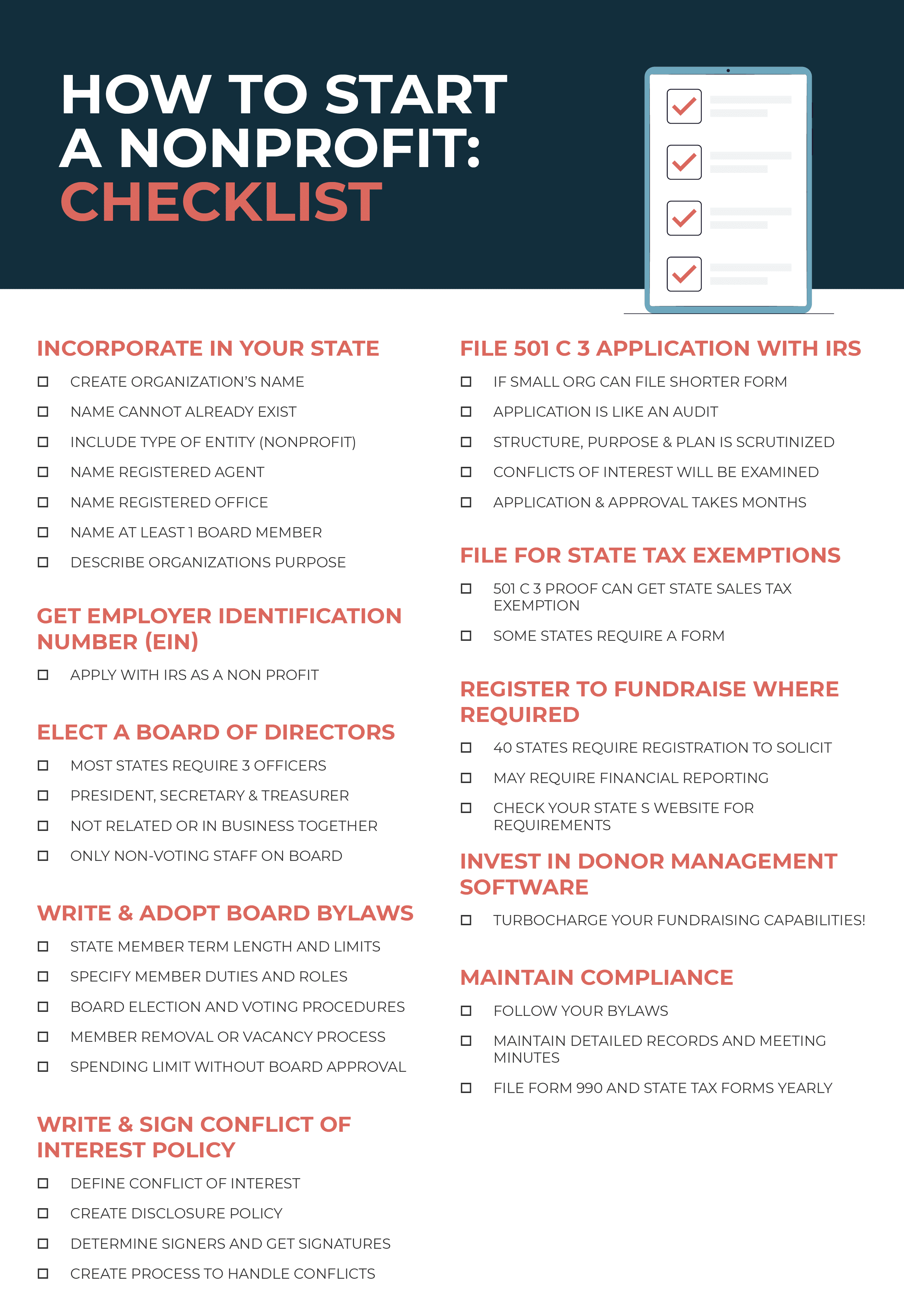
The first formal step is to incorporate your organization with the Florida Division of Corporations. This process involves filing Articles of Incorporation. You will need to choose a unique name for your non-profit, which must not be already in use by another entity in the state. It’s advisable to conduct a name availability search on the Division of Corporations website.
The Articles of Incorporation typically require the following information:
- Name of the Corporation: The official legal name of your non-profit.
- Registered Agent and Office: A designated individual or entity located in Florida responsible for receiving official legal and government documents on behalf of the non-profit.
- Purpose: A statement of the non-profit’s specific purpose, which should align with your mission statement.
- Membership Structure: Details on whether the organization will have members and, if so, how they will be admitted and their rights.
- Dissolution Clause: A statement outlining how the organization’s assets will be distributed if it is dissolved.
- Incorporator’s Name and Address: The individual filing the document.
Filing fees are associated with this process, and it’s essential to ensure all information is accurate and complete to avoid delays.
Applying for Federal Tax-Exempt Status (501(c)(3))
For your non-profit to be recognized by the Internal Revenue Service (IRS) as a public charity or private foundation, you must apply for tax-exempt status under Section 501(c)(3) of the Internal Revenue Code. This is a critical step that allows your organization to be exempt from federal income tax and enables donors to make tax-deductible contributions.
The primary form for this application is IRS Form 1023, Application for Recognition of Exemption Under Section 501(c)(3) of the Internal Revenue Code. This is a comprehensive document that requires detailed information about your organization, including:
- Organizational Structure: Information about your Articles of Incorporation and Bylaws.
- Activities: A detailed description of your current and planned activities, demonstrating how they further your exempt purpose.
- Financial Data: Past financial history (if any) and projected budgets for the next several years.
- Compensation Information: Details about compensation paid to officers, directors, and key employees.
- Public Support Test: Information to determine if your organization will qualify as a publicly supported organization.
The IRS application process can be complex and time-consuming. Many organizations choose to seek assistance from legal counsel or experienced non-profit consultants to ensure the application is accurate and complete. Once approved, your organization will receive an IRS Determination Letter, officially granting you tax-exempt status.
Obtaining State Tax Exemptions and Charitable Solicitations Registration
In addition to federal tax exemption, your non-profit may also be eligible for state-level tax exemptions, such as exemption from sales and use tax or property tax. You will need to contact the Florida Department of Revenue for specific requirements and application procedures.
Furthermore, if your non-profit intends to solicit charitable contributions from the public in Florida, you will likely need to register with the Florida Department of Agriculture and Consumer Services, Division of Consumer Services, under the Charitable Solicitations Act. This registration ensures transparency and accountability in fundraising activities. Failure to register can result in penalties.
Ongoing Compliance and Operational Best Practices
Establishing your non-profit is a significant achievement, but maintaining its status and ensuring its long-term success requires ongoing diligence and adherence to best practices.
Maintaining Corporate Records and Bylaws
Your non-profit must maintain accurate and up-to-date corporate records. This includes keeping minutes of all board meetings, maintaining a register of directors and officers, and ensuring your organizational bylaws are current. Bylaws are the internal rules that govern how your organization operates, including how board meetings are conducted, election processes for officers, and other operational procedures. Periodically reviewing and amending your bylaws to reflect the organization’s growth and evolving needs is essential.
Annual Filings and Reporting Requirements
Both the state and federal governments have annual reporting requirements for non-profit organizations.
- Federal: Most 501(c)(3) organizations are required to file an annual information return with the IRS, typically Form 990, Return of Organization Exempt From Income Tax. The specific version of Form 990 (990-EZ, 990-N, or the full 990) depends on the organization’s gross receipts and assets. This form provides a public record of your organization’s finances and activities.
- State: In Florida, non-profits generally need to file an Annual Report with the Division of Corporations. Additionally, if you are registered to solicit contributions, you will have ongoing reporting obligations with the Department of Agriculture and Consumer Services.
Staying on top of these filing deadlines is crucial to avoid penalties and maintain your good standing.
Developing a Fundraising Strategy and Ethical Practices
A robust fundraising strategy is vital for the sustainability of any non-profit. This involves identifying diverse funding streams, such as individual donations, grants from foundations, corporate sponsorships, and events. Developing compelling narratives that showcase the impact of your work will be key to inspiring generosity.
Ethical fundraising practices are non-negotiable. Transparency with donors about how their contributions are used, honest representation of your organization’s needs and achievements, and strict adherence to all fundraising regulations are paramount. Building trust with your supporters is the bedrock of long-term financial health.

Building Community and Fostering Partnerships
Beyond legal and financial considerations, the success of your non-profit hinges on its ability to connect with and serve its community. Actively engaging with beneficiaries, volunteers, and other stakeholders fosters a sense of shared purpose.
Exploring partnerships with other non-profits, community organizations, local businesses, and even tourism-related entities can amplify your impact. For instance, a non-profit focused on environmental education might partner with a Florida state park to offer educational programs, or a cultural heritage organization could collaborate with a local museum or hotel to promote cultural experiences to visitors. These collaborations can open doors to new resources, audiences, and opportunities for growth.
Establishing a non-profit organization in Florida is a journey that combines passion with purpose and a commitment to legal and ethical operations. By meticulously following these steps, you can create a robust and impactful organization that contributes meaningfully to the communities and causes you hold dear, much like how a well-planned trip can enrich your life and broaden your horizons.
LifeOutOfTheBox is a participant in the Amazon Services LLC Associates Program, an affiliate advertising program designed to provide a means for sites to earn advertising fees by advertising and linking to Amazon.com. Amazon, the Amazon logo, AmazonSupply, and the AmazonSupply logo are trademarks of Amazon.com, Inc. or its affiliates. As an Amazon Associate we earn affiliate commissions from qualifying purchases.