
Florida, a vibrant tapestry of sun-drenched beaches, bustling cities, and rich cultural experiences, beckons travelers from across the globe. Whether you’re planning a whimsical escape to Walt Disney World, seeking the thrill of a Miami nightlife, or simply looking to unwind on the serene shores of the Florida Keys, understanding the state’s telecommunications landscape, including its area codes, can be a surprisingly helpful aspect of your travel preparation. While not a primary concern for most tourists, knowing how Florida’s area codes are structured can offer a deeper insight into the state’s diverse geography and population distribution. This article delves into the world of Florida area codes, exploring their origins, evolution, and how they map onto the Sunshine State’s most popular destinations.

The concept of area codes, also known as telephone exchange codes, emerged in the United States in the late 1940s with the introduction of the North American Numbering Plan (NANP). Initially, these codes were assigned based on geographic regions, and their primary purpose was to facilitate the efficient routing of long-distance telephone calls. As the population grew and the demand for phone lines surged, the original area codes became insufficient, leading to the implementation of overlay codes and the splitting of existing geographic areas into new ones. Florida, with its rapid population growth and extensive tourism industry, has been a prime example of this evolution, necessitating a dynamic approach to its telecommunications infrastructure.
The state of Florida is currently served by a significant number of area codes, reflecting its status as the third-most populous state in the United States. These codes are not randomly assigned but are intricately woven into the state’s geography, often delineating major metropolitan areas, coastal regions, and interior counties. Understanding these codes can offer a subtle yet informative layer to your travel planning, particularly if you’re trying to get a sense of the specific region you’ll be visiting or if you’re coordinating with local contacts.
Unraveling Florida’s Area Code Landscape
Florida’s area codes are a fascinating reflection of its growth and development. From the early days of limited numbering to the complex overlay systems of today, the state has continuously adapted to meet the ever-increasing demand for telephone services. These codes can often provide a quick geographical marker, helping to orient you within the state even before you arrive. For instance, knowing that a particular number begins with a code associated with South Florida can immediately tell you that your contact is likely in or around Miami, Fort Lauderdale, or Palm Beach. Similarly, an area code linked to Central Florida suggests a connection to the theme park mecca of Orlando or the space coast around Cape Canaveral.
The Genesis and Evolution of Area Codes in Florida
The initial introduction of area codes in Florida was part of a nationwide effort to modernize the telephone network. Early codes were assigned to broad geographical regions. As the state’s population boomed, particularly in the latter half of the 20th century, these original codes began to saturate. This saturation necessitated the “splitting” of existing area codes, where a geographic region was divided, and a new area code was assigned to one of the newly formed sub-regions. This process ensures that there are enough unique 10-digit phone numbers (area code + 7-digit local number) to accommodate the growing number of residents and businesses.
More recently, Florida, like many other states, has adopted “overlay” area codes. An overlay code is assigned to the same geographic area as an existing code. This means that callers within that region may encounter calls from numbers with either the original code or the new overlay code. This system is less disruptive than splitting an area code, as it avoids the need for users to change their existing phone numbers. However, it does require callers to dial all 10 digits (area code + local number) for all calls within the overlay area, even local ones. This shift has been a gradual but significant change in how Floridians and visitors alike make phone calls.
Major Florida Area Codes and Their Associated Regions
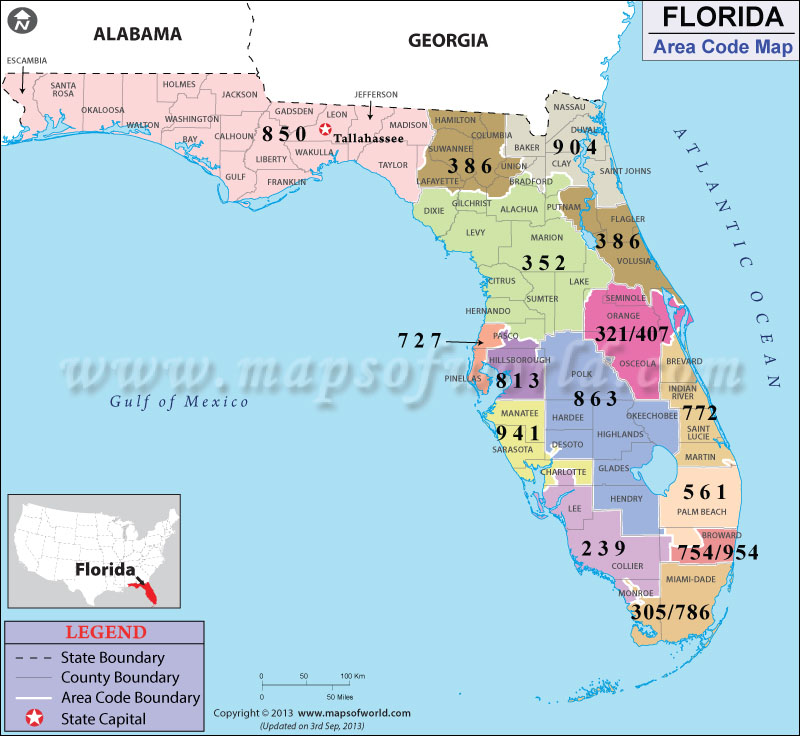
Florida’s area codes are diverse, with many serving specific counties or metropolitan areas. Here’s a look at some of the key area codes and the regions they typically cover:
-
305/786: These codes are synonymous with Miami-Dade County, encompassing the vibrant metropolis of Miami, the bustling beaches of South Beach, and the international hub of Miami International Airport. If you’re headed to explore the Art Deco Historic District or enjoy the culinary delights of Little Havana, you’re likely in the 305 or 786 territory.
-
954/754: These area codes serve Broward County, home to Fort Lauderdale, known for its canals and stunning coastline, and the lively city of Hollywood. Visitors enjoying the beaches or exploring the Riverwalk in Fort Lauderdale will be dialing numbers within these codes.
-
561/833/934: Covering Palm Beach County, these codes are associated with the affluent city of Palm Beach, the elegant West Palm Beach, and numerous other communities along Florida’s southeastern coast. This region is renowned for its luxurious resorts and championship golf courses.
-
407/321/689: This central Florida group of area codes serves the greater Orlando metropolitan area and its surrounding counties. This is the heartland of theme park magic, including Walt Disney World Resort, Universal Orlando Resort, and SeaWorld Orlando. If your travel plans involve roller coasters, character meet-and-greets, or exploring attractions like EPCOT, you’re in this region. It also extends to the Space Coast, including Cape Canaveral and Kennedy Space Center.
-
813/941/727: These codes serve the Tampa Bay region on Florida’s west coast. This includes Tampa, a thriving urban center with a rich history, and the beautiful beach communities of St. Petersburg and Clearwater. Visitors exploring the Tampa Riverwalk, the Florida Aquarium, or the pristine sands of St. Pete Beach will be in these areas.
-
850/850: Primarily covering the Florida Panhandle, this area code is associated with cities like Tallahassee, the state capital, and the beautiful Gulf Coast beaches of Pensacola and Panama City Beach.
-
239: This code serves Southwest Florida, including the popular destinations of Naples, known for its upscale boutiques and pristine beaches, and Fort Myers, the gateway to the Everglades National Park and the islands of Sanibel and Captiva.
-
352: This area code covers a broad central and northern section of Florida, including areas like Gainesville (home to the University of Florida), Ocala (known for its horse farms), and parts of the Nature Coast.
-
863: Serving much of Central Florida, south of Orlando, this area includes the agricultural heartland and cities like Lakeland and Sebring.
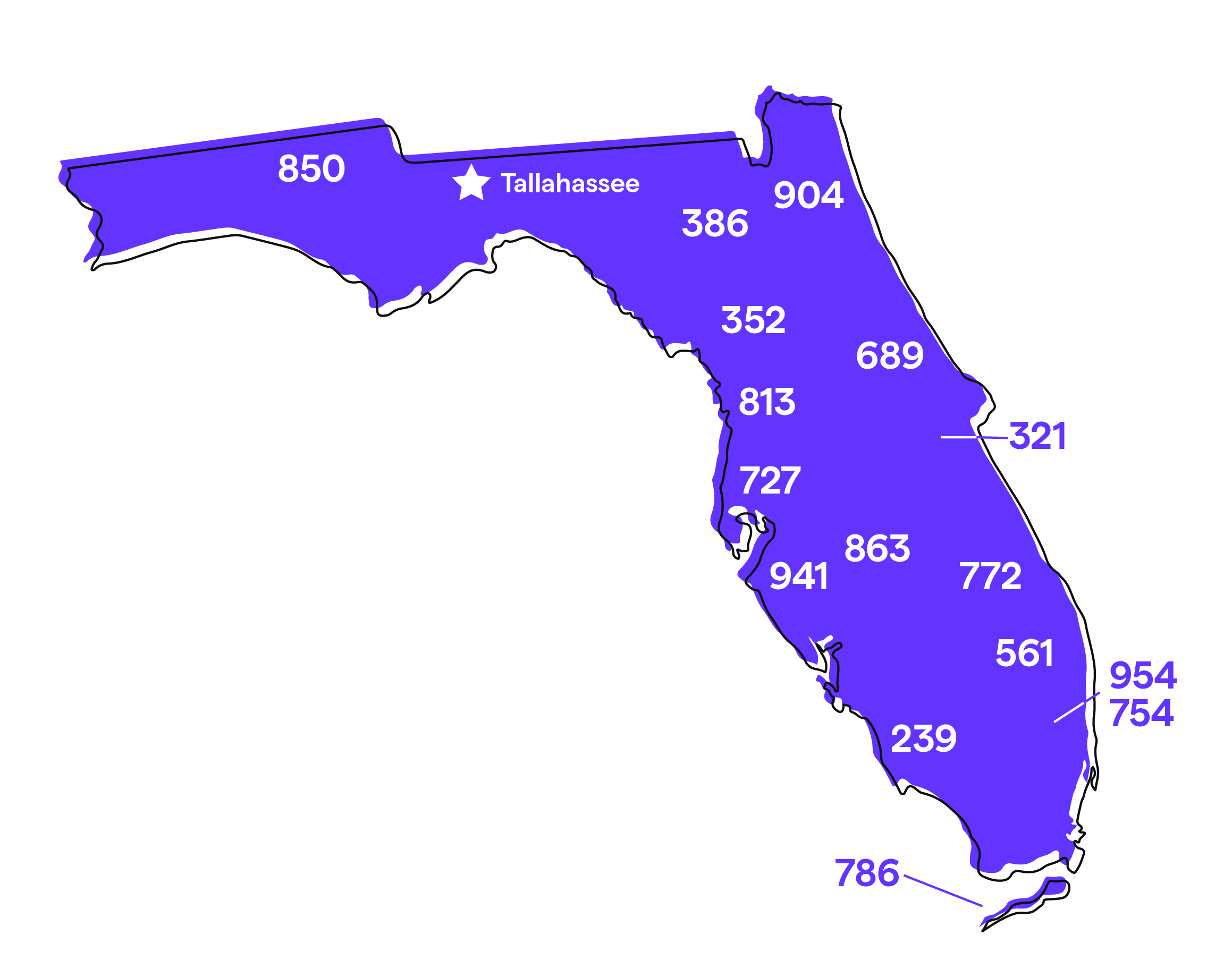
- 305/813/407/954/561/239/850/352/863/786/754/689/941/727/833/934: While these are the primary codes, overlays mean that a single geographic area can have multiple active codes. This is a common feature of modern telecommunications, ensuring sufficient phone numbers.
Navigating Florida: Practical Applications of Area Code Knowledge
While you don’t need to be an expert in Florida’s area codes to enjoy your vacation, a basic understanding can enhance your travel experience in subtle ways. For instance, if you’re booking a hotel or trying to reach a local tour operator, seeing an area code can give you an immediate sense of the location you’re connecting with.
Connecting with Local Services and Accommodations
When searching for accommodations, understanding area codes can indirectly help. If you’re looking for a resort on the Gulf Coast, you might expect to see an area code associated with the Tampa Bay or Southwest Florida regions. Similarly, if you’re planning a trip to a specific theme park, knowing its general location can help you anticipate the area code of any local businesses or services you might need to contact. For example, if you’re looking for a restaurant near Universal Studios, it’s highly probable that the restaurant’s phone number will start with one of the Central Florida area codes like 407, 321, or 689.
This knowledge is also useful when you’re trying to make reservations. Many websites and booking platforms will display phone numbers for local hotels, attractions, or restaurants. A quick glance at the area code can confirm that you’re looking at a service located in the part of Florida you intend to visit. This can save you time and effort, especially when planning complex itineraries that span different regions of the state.
Understanding Your Mobile Experience
For visitors using their mobile phones, understanding area codes can also shed light on your service. When you make calls within Florida, your phone will typically display the local area code. If you’re exploring Miami and see your calls originating from the 305 area code, it aligns with your geographical location. If you’re traveling through different parts of the state, you’ll notice these codes change, offering a subtle yet constant reminder of the vastness and diversity of Florida.
Furthermore, if you’re from out of state, you might be accustomed to a particular area code. Seeing different Florida area codes can help you differentiate between calls made within the state and those potentially from back home. This can be especially helpful for budgeting, as international roaming charges or specific plan limitations might apply differently based on the origin of a call.
Planning for Business and Extended Stays
For business travelers or those planning longer stays, understanding area codes can be even more practical. If you’re setting up a temporary office in Orlando or coordinating with a business partner in Tampa, knowing the relevant area codes can streamline communication. It can also assist in identifying local service providers for extended accommodation needs, such as serviced apartments or rental villas. For instance, if your business trip is centered around the convention centers in Orlando, you’ll likely be dealing with numbers from the 407 or its overlay codes.
For those considering long-term stays, familiarizing yourself with the area codes of prospective neighborhoods can offer insights into the local demographics and community characteristics. While not a definitive guide, area codes are often geographically contiguous, meaning that neighboring areas share the same or similar codes. This can be a small but useful piece of information when researching different parts of Florida for extended living.
Beyond the Numbers: Area Codes as a Map of Florida’s Identity
While the practicalities of telecommunications are the primary reason for area codes, in a place as diverse and geographically spread out as Florida, they also serve as an unofficial map of the state’s identity. The bustling metropolises of South Florida have distinct codes from the laid-back Panhandle or the family-friendly attractions of Central Florida.
The Distinct Flavors of Florida’s Regions
Consider the energy of Miami with its 305 code, a symbol of its vibrant nightlife, diverse culture, and international flair. Contrast this with the more relaxed pace often associated with the 850 area code in the Panhandle, home to historic cities and pristine natural beauty. This subtle distinction can even influence your travel expectations.
The Central Florida codes like 407 immediately evoke images of theme parks and family fun, while the 239 code in Southwest Florida points towards luxury resorts, beautiful beaches, and proximity to unique ecosystems like the Everglades. These associations, while not scientifically defined, are built over time through shared experiences and cultural narratives linked to specific geographic areas.
A Window into Florida’s Growth and Development
The introduction and evolution of Florida’s area codes tell a story of the state’s remarkable growth. The constant need for new codes and overlays is a direct consequence of its expanding population, burgeoning tourism industry, and economic development. From sparsely populated regions to densely packed urban centers, the changing telecommunications landscape mirrors the physical transformation of Florida itself.
For travelers, understanding this evolution can add a layer of appreciation for the state’s dynamic nature. The very existence of multiple area codes serving the same region highlights the density of activity and the sheer volume of people who call Florida home or who visit its shores each year. It’s a testament to the state’s enduring appeal as a premier destination for leisure, business, and life.
In conclusion, while the question “What Are Area Codes For Florida?” might seem straightforward, delving into the answer reveals a fascinating insight into the state’s geography, its development, and its diverse identity. From the vibrant streets of Miami to the magical lands of Orlando, each area code is a small but significant piece of the puzzle that makes up the incredible state of Florida. So, the next time you see a Florida phone number, take a moment to consider the region it represents – it’s a little piece of the Sunshine State’s story.
LifeOutOfTheBox is a participant in the Amazon Services LLC Associates Program, an affiliate advertising program designed to provide a means for sites to earn advertising fees by advertising and linking to Amazon.com. Amazon, the Amazon logo, AmazonSupply, and the AmazonSupply logo are trademarks of Amazon.com, Inc. or its affiliates. As an Amazon Associate we earn affiliate commissions from qualifying purchases.