
The Hawaiian Islands, a breathtaking archipelago shimmering in the vast Pacific Ocean, are synonymous with paradise. Think pristine beaches, lush volcanic landscapes, vibrant coral reefs, and a rich, unique culture. For many, these islands are the ultimate travel destination, offering everything from luxurious resorts and thrilling adventures to immersive cultural experiences. But how did this tropical haven, once an independent kingdom, become the 50th state of the United States? The journey of Hawaii from a sovereign nation to an American state is a complex tapestry woven with threads of trade, diplomacy, military strategy, and ultimately, annexation. Understanding this history is not just an academic exercise; it adds a deeper layer of appreciation for the destination that so many travelers cherish.
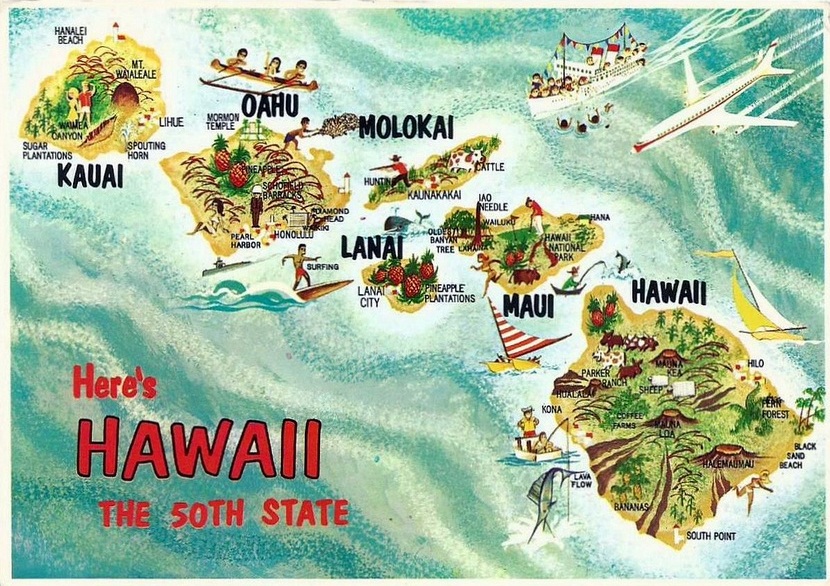
The story begins long before Western contact. For centuries, the islands were populated by the indigenous Polynesian people, who developed a sophisticated society with distinct social structures, traditions, and a deep spiritual connection to the land and sea. This independent kingdom, ruled by monarchs, thrived in isolation, developing its own unique way of life.
The Seeds of Change: Early Encounters and Growing Influence
The arrival of Captain James Cook in 1778 marked a pivotal moment, ushering in an era of increasing interaction with the Western world. While initially bringing new technologies and goods, this contact also introduced diseases that devastated the native population and began to erode the traditional way of life.
Economic Ties and American Business Interests
As whaling and trade routes expanded across the Pacific in the 19th century, Hawaii became an increasingly important stopover point. American missionaries and businessmen began to establish a significant presence, particularly in the lucrative sugar industry. These entrepreneurs, driven by profit, found the fertile volcanic soil and favorable climate ideal for large-scale sugar plantations. This economic foothold grew, and with it, so did American influence.
The influx of foreign capital and labor transformed the Hawaiian economy. While it brought modernization, it also led to the displacement of native Hawaiians from their lands and a shift in political power. American businessmen, increasingly dominant in the economy, began to exert pressure on the Hawaiian monarchy for policies that would benefit their enterprises, such as more favorable trade agreements with the United States.
The Push for Reciprocity and the Bayonet Constitution
A key goal for American planters was the removal of tariffs on Hawaiian sugar imported into the United States. This led to the Reciprocity Treaty of 1875, which allowed duty-free sugar to enter the U.S. in exchange for special trading privileges and the cession of Pearl Harbor to the United States for naval purposes. This treaty, while economically beneficial for some, further cemented Hawaii‘s dependence on the United States and deepened the influence of American business interests.
The growing power of the planter class, coupled with a desire for a more politically stable environment for their investments, led to increasing pressure on the Hawaiian monarchy. In 1887, a group of American and European businessmen, backed by a militia, forced King Kalākaua to sign a new constitution, often referred to as the “Bayonet Constitution.” This document significantly curtailed the monarch’s power, disenfranchised many native Hawaiians, and gave greater political influence to foreign property owners. This event was a major blow to Hawaiian sovereignty and a clear indication of the direction of political power.
The Overthrow of the Monarchy and the Dawn of Annexation
The seeds of the monarchy’s demise were sown by the increasing assertiveness of American business interests and the growing desire for Hawaii to become part of the United States, especially after the strategically important Pearl Harbor became an American naval base.
The Reign of Queen Liliʻuokalani and the Growing Resistance
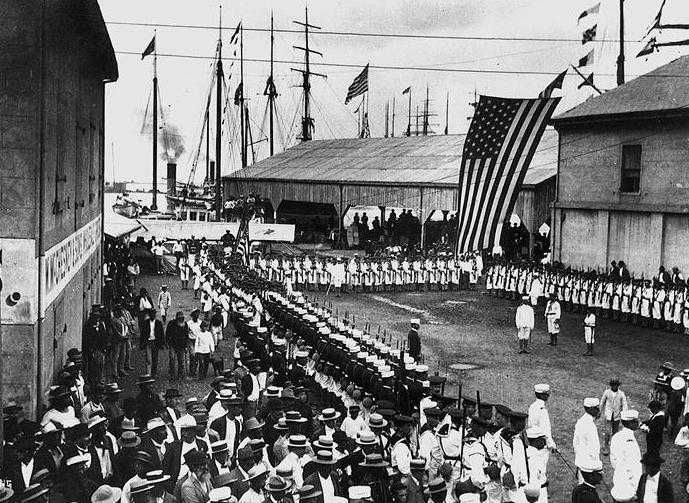
Following King Kalākaua’s death in 1891, his sister, Queen Liliʻuokalani, ascended to the throne. She was a passionate advocate for her people and sought to restore power to the monarchy and re-establish a more equitable distribution of political rights for native Hawaiians. She proposed a new constitution that would restore power to the monarch and enfranchise more native Hawaiians, a move that was met with fierce opposition from the American-dominated business community.
The Coup d’état of 1893
The queen’s efforts to enact her reforms were seen as a direct threat by the Committee of Safety, a group composed of American businessmen and their allies. In January 1893, this committee, with the support of the United States minister to Hawaii and the presence of U.S. Marines, launched a coup d’état. The queen, facing overwhelming force and seeking to avoid bloodshed, abdicated her throne under protest, stating that she yielded her authority “to the superior force of the United States of America.” The provisional government, established by the coup, was largely composed of the same individuals who had orchestrated the overthrow.
The Republic of Hawaii and the Path to Statehood
The provisional government quickly sought annexation by the United States. However, the administration of President Grover Cleveland recognized the illegitimacy of the overthrow and initially refused to annex Hawaii. A subsequent investigation by a U.S. commissioner found that the overthrow was indeed an illegal act.
Despite this, the political landscape shifted. The election of President William McKinley in 1896, who favored expansionist policies, created a more favorable environment for annexation. The strategic importance of Hawaii, particularly in light of the Spanish-American War, further bolstered the arguments for its incorporation into the United States. In 1898, following a period where Hawaii existed as an independent republic, the United States annexed the islands through the Newlands Resolution, a joint resolution of Congress. This annexation was a controversial act, carried out without the consent of the native Hawaiian people.
From Territory to State: The Final Chapter
The annexation of Hawaii in 1898 marked the end of its status as an independent kingdom and its beginning as a territory of the United States. The islands would remain a territory for nearly six decades, a period characterized by continued economic development, cultural assimilation, and persistent calls for full statehood.
Life as a U.S. Territory
As a U.S. territory, Hawaii saw significant infrastructure development, particularly in the lead-up to and during World War II. The military presence, especially at Pearl Harbor, became a defining feature of the islands. Economically, sugar and pineapple plantations continued to be the dominant industries, employing a diverse workforce drawn from Asia, Europe, and the mainland United States.
Culturally, this was a period of both preservation and change. While indigenous Hawaiian traditions and language faced challenges, there was also a growing movement to revitalize and celebrate them. The diverse ethnic makeup of the population led to a unique multicultural society, a characteristic that continues to define Hawaii today. Tourism began to emerge as an industry, though it was not yet the dominant force it is today. Visitors were drawn by the exotic allure and natural beauty of the islands, staying in nascent hotels and experiencing a burgeoning tourism infrastructure.

The Long Road to Statehood
The desire for full statehood grew among the residents of Hawaii. Proponents argued that statehood would grant them equal representation in the federal government, greater political autonomy, and economic benefits. The movement for statehood faced considerable opposition, particularly from those who feared the political implications of adding a Pacific state with a non-white majority to the union, and those who still harbored reservations about the circumstances of its annexation.
After decades of advocacy and several failed attempts, the political climate finally shifted. In the post-World War II era, with growing calls for decolonization and a more inclusive United States, the arguments for Hawaiian statehood gained momentum. Finally, on August 21, 1959, Hawaii was officially admitted as the 50th state of the United States. This historic event marked the culmination of a long and complex journey, transforming the islands from a distant kingdom to an integral part of the American nation.
Today, Hawaii remains a premier global travel destination, celebrated for its unparalleled natural beauty and vibrant culture. While the history of its acquisition by the United States is marked by controversy, understanding this past provides a more profound appreciation for the unique identity and resilience of the Hawaiian people and the archipelago they call home. From the majestic peaks of Haleakalā to the iconic shores of Waikīkī, the legacy of Hawaii‘s journey is etched into its landscape and its spirit, offering travelers an experience that is both breathtaking and deeply meaningful.
LifeOutOfTheBox is a participant in the Amazon Services LLC Associates Program, an affiliate advertising program designed to provide a means for sites to earn advertising fees by advertising and linking to Amazon.com. Amazon, the Amazon logo, AmazonSupply, and the AmazonSupply logo are trademarks of Amazon.com, Inc. or its affiliates. As an Amazon Associate we earn affiliate commissions from qualifying purchases.